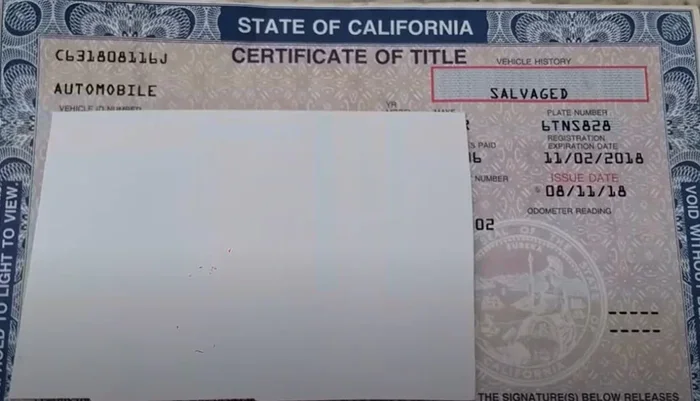
Can You Drive a Car With a Salvage Title and Find Out
So, can you drive a car with a salvage title? The short answer is no — you generally cannot legally drive a car with a salvage title on public roads. A salvage title means the vehicle has been declared a total loss by an insurance company or the DMV. In this guide, we break down everything you need to know about salvage title cars, your options, and how to move forward.
Key Takeaways
- Salvage title cars are not road-legal: You cannot drive a car with a salvage title on public roads in most states. The vehicle is flagged as a total loss.
- Insurance is harder to get: Many insurers refuse to cover salvage title cars, and those that do charge much higher premiums.
- Rebuilding is possible but costly: You can repair a salvage title car and apply for a rebuilt title, but the process involves inspections, fees, and significant expense.
- Resale value drops sharply: A salvage title car can lose 40-60% of its original value, making it a risky investment.
- State laws vary widely: Each state has different rules about salvage titles, registration, and driving. Always check your local DMV regulations.
- Hidden damage is a real risk: Salvage title cars may have undisclosed structural, electrical, or safety issues that are expensive to fix.
- Buying tips matter: If you still want to buy a salvage title car, get a pre-purchase inspection, verify the title, and budget for major repairs.
📑 Table of Contents
- What Is a Salvage Title?
- Can You Drive a Car With a Salvage Title Legally?
- What Happens If You Drive a Salvage Title Car Anyway?
- How to Legally Drive a Car That Once Had a Salvage Title
- Should You Buy a Salvage Title Car?
- How to Get Insurance for a Salvage Title Car
- Common Mistakes People Make With Salvage Title Cars
- Conclusion
What Is a Salvage Title?
Before we dive into whether you can drive a car with a salvage title, let us first understand what a salvage title actually means. A salvage title is a special brand placed on a vehicle’s title by a state DMV or insurance company. It means the car has been damaged beyond economic repair. In most cases, the cost of fixing the car would exceed its actual cash value.
When an insurance company totals out a vehicle, they pay the owner the car’s pre-accident value. The insurer then takes ownership and sells the car to a salvage yard. At that point, the car receives a salvage title brand. This brand follows the vehicle forever. It tells every future buyer and insurer that this car was once declared a total loss.
A salvage title is different from a clean title, which means the car has no major damage history. It is also different from a rebuilt title, which we will discuss later. Understanding these differences is critical before making any decisions.
Common Reasons a Car Gets a Salvage Title
Several situations can lead to a salvage title being assigned. Here are the most common ones:
- Major car accidents: When repair costs exceed the car’s value after a collision.
- Flood or water damage: Severe flooding can ruin engines, electronics, and interiors.
- Fire damage: Burned vehicles are almost always declared salvage.
- Theft recovery: If a stolen car is found badly damaged, it may get a salvage brand.
- Hail damage: In some states, extensive hail damage can trigger a salvage title.
- Mechanical failure: Rarely, catastrophic engine or transmission failure leads to a total loss declaration.
Each of these scenarios results in a car that the insurer considers too expensive to repair. The salvage title ensures this information is transparent to anyone who might want to buy or insure the vehicle later.
Can You Drive a Car With a Salvage Title Legally?
Now let us answer the big question: can you drive a car with a salvage title? The straightforward answer is no. In almost every state, driving a car with a salvage title on public roads is illegal. A salvage title car lacks valid registration and valid insurance in most cases. Without these, you simply cannot hit the road.
Here is why most states prohibit driving salvage title vehicles:
- Safety concerns: These cars have been seriously damaged. They may have hidden structural issues that make them unsafe to drive.
- Insurance gaps: Most insurance companies will not cover a salvage title car. Driving without insurance is illegal in every state.
- Registration issues: You cannot register a salvage title vehicle for road use. The DMV will not issue registration plates.
- State laws: Every state has specific DMV salvage title regulations. Nearly all of them prohibit road use until the title is rebuilt.
So, if you are wondering whether you can just hop in a salvage title car and drive to the store, the answer is a firm no. You could face fines, license suspension, and even vehicle impoundment.
The One Exception: Moving the Car Off the Road
There is one narrow exception in some states. You may be allowed to drive a salvage title car off public roads — for example, from your driveway to a repair shop or from one location to a salvage yard. However, this typically requires special permits or temporary tags. Even then, you are not covered by standard insurance. Always check your local state DMV regulations before attempting this.
What Happens If You Drive a Salvage Title Car Anyway?
Let us say you decide to ignore the rules and drive a salvage title car on public roads. What could happen? The consequences can be severe.
Legal Penalties
Driving an unregistered and uninsured vehicle is already a traffic violation. Add a salvage title to the mix, and the penalties escalate quickly. You could face:
- Heavy fines, sometimes exceeding $500
- Vehicle impoundment or towing
- License suspension or revocation
- Misdemeanor charges in some states
- Points on your driving record
If you get into an accident while driving an unregistered salvage car, the situation gets even worse. You could be held personally liable for all damages. The other driver’s insurance company will not cover you. You might even face civil lawsuits.
Insurance Complications
One of the biggest risks is the salvage title insurance problem. Since most insurers refuse to cover these vehicles, you are essentially driving without coverage. If something goes wrong, you are on the hook for everything. Medical bills, repair costs, and liability claims all come out of your pocket.
How to Legally Drive a Car That Once Had a Salvage Title
So, you cannot drive a car with a salvage title as-is. But can you make it road-legal? Yes — through a process called rebuilding the title. This is the path most people take if they want to get a rebuilt salvage title and drive the car again.
Step 1: Repair the Vehicle
First, you need to fix the car completely. All damage must be repaired to meet safety and emission standards. This often means:
- Repairing or replacing the frame and body structure
- Replacing damaged electrical systems
- Fixing or replacing the engine and transmission if needed
- Replacing all safety equipment like airbags and seatbelts
- Passing a full state safety inspection
This step alone can be incredibly expensive. In many cases, the repair costs approach or exceed the car’s pre-damage value. That is why insurers totaled the car in the first place.
Step 2: Apply for a Rebuilt Title
Once repairs are complete, you can apply for a rebuilt title through your state DMV. The process typically involves:
- Submitting the salvage title to the DMV
- Providing receipts and documentation for all repairs
- Passing a vehicle inspection (often more rigorous than a standard inspection)
- Paying applicable fees and taxes
- Waiting for the DMV to rebrand the title
The timeline varies by state. Some states process rebuilt titles in a few weeks. Others may take several months. Not all states allow rebuilt titles, so you need to verify this first.
Step 3: Get Insurance and Register the Car
With a rebuilt title in hand, you can now register the vehicle and shop for insurance. However, be prepared for higher premiums. Many insurers consider rebuilt title cars higher risk. You may need to shop around to find affordable coverage.
Quick Tips for the Rebuilding Process
- Always get a detailed repair estimate before starting work.
- Keep every receipt and document. The DMV will want proof.
- Use certified mechanics for structural repairs.
- Check your state’s specific requirements before you begin.
- Budget 20-30% more than the estimate for unexpected issues.
Should You Buy a Salvage Title Car?
Many budget-conscious buyers consider purchasing a salvage title car because of the low price tag. These vehicles can sell for 40-60% less than their clean title counterparts. But is it a smart move? It depends on your situation, goals, and risk tolerance.
Pros of Buying a Salvage Title Car
- Low upfront cost: You can often snag a salvage car for a few hundred to a few thousand dollars.
- Parts value: If you need specific parts, a salvage car can be a goldmine for DIY projects.
- Restoration projects: Car enthusiasts sometimes buy salvage cars for restoration purposes.
- Insurance option: Some insurers offer salvage title insurance for these vehicles, though at higher rates.
Cons of Buying a Salvage Title Car
- Hidden damage: You may not know the full extent of damage. Structural issues can lurk beneath the surface.
- Difficult to resell: A salvage title drastically reduces resale value. Future buyers will be wary.
- Insurance challenges: Getting coverage can be difficult and expensive.
- Safety risks: Even after repairs, the car may never be as safe as it was before the accident.
- Loan and financing issues: Most lenders will not finance a salvage title car. You will likely need to pay cash.
Comparison: Salvage Title vs Clean Title vs Rebuilt Title
Let us compare these three common title types so you can see the differences clearly.
| Feature | Clean Title | Salvage Title | Rebuilt Title |
|---|---|---|---|
| Road Legal? | Yes | No | Yes (after registration) |
| Insurance Available? | Easily | Difficult/Expensive | Available (higher premiums) |
| Resale Value | Full market value | 40-60% lower | 20-40% lower |
| Financing Options | Wide range of lenders | Very limited | Limited |
| Safety Confidence | High | Unknown (pre-repair) | Moderate (post-inspection) |
| Registration | Standard | Not for road use | Possible after inspection |
As you can see, a clean title is always the safest choice. But if budget is tight, a rebuilt title can be a workable middle ground.
Expert Insights on Buying Salvage Title Cars
Industry experts generally advise caution. According to consumer protection groups, the biggest risk with buying a salvage title car is hidden damage. A car that looks fine on the outside might have serious frame or electrical problems underneath. Always get a professional pre-purchase inspection before buying.
Mechanics also recommend checking the vehicle history report through services like Carfax or AutoCheck. These reports can reveal prior accidents, title brands, and ownership history. Combined with a physical inspection, this gives you the best picture of what you are buying.
How to Get Insurance for a Salvage Title Car
If you own a salvage title vehicle or are thinking about buying one, understanding the insurance landscape is essential. Standard auto insurance policies typically do not cover salvage title cars. However, some insurers specialize in this niche market.
Types of Coverage Available
- Liability-only coverage: This covers damage to other people and their property. It does not cover your car. This is the most common option for salvage title vehicles.
- Comprehensive coverage: Some insurers offer this for rebuilt titles, covering theft, fire, and weather damage.
- Collision coverage: Rare for salvage cars, but available through specialty insurers.
What to Expect for Premiums
Salvage title insurance premiums are typically 20-50% higher than standard policies. The exact rate depends on:
- The car’s make, model, and year
- The extent of original damage
- Your driving record
- Your state’s insurance regulations
- Whether the car has a rebuilt title or still a salvage title
Shopping around is crucial. Not all insurers treat salvage title cars the same. Some specialize in these policies and offer competitive rates. Others will simply deny coverage altogether.
Quick Tips for Getting Insurance
- Get quotes from at least three insurers before committing.
- Ask about discounts for safety features or defensive driving courses.
- Consider raising your deductible to lower monthly premiums.
- Keep all repair documentation handy. Insurers may request proof.
- Check if your state has assigned-risk pools for hard-to-insure vehicles.
Common Mistakes People Make With Salvage Title Cars
Many buyers make avoidable mistakes when dealing with salvage title vehicles. Here are the most common pitfalls to watch out for.
Mistake 1: Skipping the Vehicle History Report
Never buy a salvage car without pulling a full vehicle history report. The report tells you what happened to the car, how it was branded, and who owned it before. Skipping this step is like flying blind.
Mistake 2: Assuming All Damage Is Visible
Just because a car looks good does not mean it is good. Internal damage to the frame, suspension, or electrical systems can be invisible to the naked eye. Always hire an independent mechanic for a thorough inspection.
Mistake 3: Forgetting to Budget for Repairs
Repair costs for salvage cars often spiral beyond initial estimates. What looks like a simple fix can uncover deeper problems. Budget generously and set aside an emergency fund for unexpected issues.
Mistake 4: Trying to Hide the Title Brand
Some buyers attempt to hide or misrepresent a salvage title to get a better price. This is illegal in every state. It can void your insurance, lead to criminal charges, and cause serious financial harm. Always disclose the title status honestly.
Mistake 5: Not Checking State-Specific Laws
Every state handles title branding differently. What is legal in one state may be illegal in another. Always research your state’s specific rules about salvage titles, rebuilt titles, and registration before making any purchase.
Conclusion
So, can you drive a car with a salvage title? The answer, as we have covered, is generally no. A salvage title means the car has been declared a total loss, and most states prohibit driving it on public roads. You cannot register it, insure it easily, or sell it at a fair price.
However, you do have options. You can repair the vehicle, apply for a rebuilt title, and make it road-legal again. You can also buy a salvage title car for parts or as a restoration project. Just go in with your eyes wide open. Do your research, get professional inspections, and budget carefully.
The salvage title is not necessarily a deal-breaker. But it is a major red flag. Approach these vehicles with caution, and always prioritize safety and legal compliance over short-term savings. With the right knowledge and preparation, you can make smart decisions that protect your investment and your peace of mind.
Frequently Asked Questions
Can you drive a salvage title car in any state?
No, you cannot legally drive a salvage title car on public roads in any U.S. state. The vehicle is branded as a total loss and lacks valid registration and insurance. Some states allow you to move the car off public roads with a special permit, but regular driving is prohibited everywhere.
What is the difference between a salvage title and a rebuilt title?
A salvage title means the car has been declared a total loss and cannot be driven. A rebuilt title is what you get after repairing the salvage car and passing a state inspection. A rebuilt title allows the car to be registered and driven legally again, though it still carries a branded history.
Can you get full coverage insurance on a salvage title car?
Getting full coverage on a salvage title car is very difficult. Most insurers only offer liability-only coverage for these vehicles. Some specialty insurers may provide comprehensive and collision coverage, but premiums will be significantly higher than standard policies. Always compare multiple quotes.
How much does a salvage title reduce a car’s value?
A salvage title typically reduces a car’s value by 40 to 60 percent compared to a clean title vehicle. The exact reduction depends on the car’s make, model, year, and the extent of the original damage. Even after rebuilding, a rebuilt title car still sells for 20 to 40 percent less than a clean title equivalent.
Is it worth buying a salvage title car for a restoration project?
It can be worth it if you are a car enthusiast or mechanic who knows what you are doing. The low purchase price makes it an attractive option for restoration. However, you need to account for repair costs, inspections, title rebranding fees, and the time involved. Always get a vehicle history report and a professional inspection first.
Can you finance a car with a salvage title?
Most traditional lenders will not finance a salvage title car because the vehicle has a branded title and uncertain resale value. You will likely need to pay cash. Some credit unions or specialty lenders may offer loans, but interest rates tend to be higher. A rebuilt title car may have slightly more financing options available.