How Haval Compares to Its Top Competitors Right Now
Haval holds its own against major brands by offering strong value, modern hybrid tech, and solid safety features at lower price points. When you look at how Haval compares to its competitors, you will notice advantages in pricing, warranty length, and family-friendly design. However, some rivals still lead in brand reputation and long-term resale value. This guide breaks down every key area so you can make a smart buying decision.
Haval has grown from a relatively unknown name to a serious player in the global SUV market. If you are shopping for a new SUV, you have probably noticed Haval popping up more and more. But how does Haval really stack up against the brands you already trust? That is exactly what we are going to explore in this article.
When you compare Haval to its competitors, you need to look at several important factors. Price, fuel economy, safety features, reliability, and overall value all matter. Haval brings some real strengths to the table, but it also faces stiff competition from Toyota, Honda, Ford, and other well-known brands. This guide will walk you through every comparison so you can decide if Haval is the right choice for you.
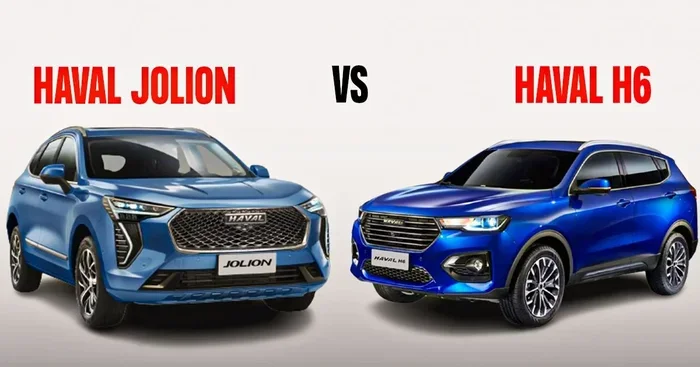
We will break down each area in simple, practical terms. No jargon, no fluff, just honest insights. Whether you are looking at the Haval H6, the Jolion Hybrid, or another model, this article will help you understand where Haval shines and where its competitors might have the edge.
Key Takeaways
- Haval offers excellent value for money: You get more features and tech for your dollar compared to many mainstream brands.
- Hybrid options are a strong suit: Haval’s hybrid SUVs deliver impressive fuel economy and smooth electric driving.
- Warranty coverage stands out: Haval often provides longer warranty periods than key competitors in the SUV segment.
- Safety features are competitive: Haval matches or exceeds rivals in standard safety equipment across its lineup.
- Resale value lags behind Toyota and Honda: These brands still hold value better on the used car market.
- Interior quality has improved dramatically: Haval now rivals premium brands in cabin materials and tech.
- Family-friendly design is a priority: Haval SUVs offer easy access and practical features for families with young children.
📑 Table of Contents
- Understanding Haval’s Market Position
- Haval vs. Toyota: The Big Comparison
- Haval vs. Honda and Hyundai
- Haval’s Hybrid Technology Deep Dive
- Safety and Technology Features
- Family-Friendly Practicality
- Value for Money and Ownership Costs
- Quick Tips for Choosing Between Haval and Its Competitors
- Common Mistakes Buyers Make When Comparing Brands
- Expert Insights on Haval’s Competitive Edge
- Conclusion
Understanding Haval’s Market Position
Where Haval Fits in the SUV Landscape
Haval is the premium SUV brand under Great Wall Motors, one of China’s largest automakers. In just a few years, Haval has expanded into dozens of countries. You can now find Haval dealerships in Australia, Europe, the Middle East, and beyond. This rapid growth shows that Haval is taking the global market seriously.
But what does this mean for you as a buyer? It means Haval has invested heavily in quality, design, and technology. The brand now competes directly with established names like Toyota, Honda, Hyundai, and Ford. Haval targets the compact and mid-size SUV segment, which is one of the most popular categories in the world.
Why Haval Has Grown So Fast
Several factors have driven Haval’s quick rise. First, the brand offers strong value for money. You often get more standard features at a lower price than comparable models from Japanese or American brands. Second, Haval has embraced hybrid technology early. Models like the Jolion Hybrid and the H6 Hybrid give buyers efficient options without paying a luxury premium.
Third, Haval has focused on design. Their SUVs look modern, stylish, and premium. This was not always the case, but Haval has made huge strides in aesthetics. The interiors now feature quality materials, large touchscreens, and driver-friendly layouts. All of these factors help explain why Haval has gained market share so quickly.
Haval vs. Toyota: The Big Comparison
Pricing and Value
When you set a Haval model next to a Toyota equivalent, the price difference is hard to ignore. Haval typically prices its SUVs lower than Toyota. For example, the Haval H6 often comes in several thousand dollars below the Toyota RAV4. This makes Haval very appealing for budget-conscious buyers who still want modern features.
However, Toyota has something Haval is still working to match: brand trust. Toyota has spent decades building a reputation for reliability. Many buyers are willing to pay more for that peace of mind. Haval is closing the gap, but it will take time to fully catch up in this area.
Reliability and Durability
Toyota’s reliability record is legendary. The brand consistently ranks at the top of reliability surveys worldwide. Haval, as a newer global brand, does not yet have the same track record. That said, Great Wall Motors has invested heavily in quality control, and early reports on Haval models are promising.
If long-term reliability is your top priority, Toyota still holds a slight edge. But if you are looking for a solid SUV with modern tech at a lower price, Haval deserves a close look. Just be sure to check the specific model’s reliability ratings and owner reviews before deciding.
Haval vs. Honda and Hyundai
Engine Performance and Powertrains
Honda is known for putting lively engines into its SUVs. The Honda CR-V and HR-V deliver responsive performance and excellent fuel economy. Hyundai, on the other hand, offers a wide range of powertrains, including efficient hybrids and plug-in hybrids.
Haval brings a different approach. The brand has embraced hybrid technology aggressively. Haval’s hybrid SUVs use a combination of electric motors and petrol engines to deliver strong performance while sipping fuel. In some cases, Haval’s hybrid systems feel more refined than those from Honda and Hyundai in the same price range.
One thing to note: Haval’s hybrid systems behave similarly to other brands in this space. For instance, you may wonder at what speed does the hybrid Escape switch to gas, and the same principles apply to Haval hybrids. The electric motor handles low-speed driving, and the petrol engine kicks in at higher speeds or under heavy load. This gives you the best of both worlds.
Fuel Economy Showdown
Fuel economy matters to almost every SUV buyer today. Haval’s hybrid models are designed to maximize efficiency. In many cases, Haval’s hybrid SUVs deliver better fuel economy than their petrol-only rivals. The Jolion Hybrid, for example, can achieve impressive results on a liter of petrol.
To put this in perspective, if you are curious about how far a liter of fuel can take you, Haval’s hybrid models often outperform traditional SUVs in this area. You can find detailed fuel economy comparisons for various vehicles to see exactly where Haval stands. The brand’s focus on efficiency gives it a real advantage, especially for buyers who drive long distances or commute daily.
Here is a quick look at how Haval’s fuel economy compares to key rivals:
- Haval Jolion Hybrid: Excellent fuel economy in the compact SUV class.
- Toyota RAV4 Hybrid: Strong efficiency, slightly higher price point.
- Honda CR-V Hybrid: Very good economy, well-rounded performance.
- Hyundai Tucson Hybrid: Competitive economy with a strong warranty.
Haval’s Hybrid Technology Deep Dive
How Haval’s Hybrid System Works
Haval uses a parallel hybrid system in many of its models. This means both the electric motor and the petrol engine can drive the wheels. The system automatically switches between power sources based on driving conditions. At low speeds, the electric motor takes over for quiet, efficient driving. When you need more power, the petrol engine joins in seamlessly.
Understanding when and how the system switches is important. Just like with other hybrid SUVs, there is a speed threshold where the transition happens. Many drivers ask, at what speed does a hybrid switch from electric to gas, and the answer depends on the specific model and driving conditions. Haval’s system is designed to make this transition smooth and nearly unnoticeable.
Benefits of Haval’s Hybrid Approach
Haval’s hybrid technology offers several real-world benefits. First, you save money on fuel. Second, you reduce your carbon footprint. Third, the electric motor provides instant torque, which means quick and responsive acceleration. Fourth, some Haval hybrid models offer regenerative braking, which captures energy during deceleration and feeds it back to the battery.
These benefits make Haval hybrids a compelling choice, especially if you compare them to non-hybrid competitors at similar price points. You get modern technology, strong efficiency, and a smooth driving experience all in one package.
Practical Tips for Hybrid Haval Owners
If you own or are considering a Haval hybrid, here are a few quick tips. Keep your driving smooth and steady to maximize electric-only range. Use regenerative braking settings if your model offers them. Stay on top of battery maintenance as recommended by your dealer. And remember that hybrid batteries are designed to last the life of the vehicle, so do not worry excessively about longevity.
Safety and Technology Features
Standard Safety Equipment
Safety is a top priority for Haval. Most Haval models come packed with advanced safety features as standard equipment. These typically include automatic emergency braking, lane-keeping assist, adaptive cruise control, and blind-spot monitoring. In many cases, Haval offers these features at a price point where competitors charge extra for them.
When you compare Haval’s safety lineup to Toyota, Honda, and Hyundai, you will find that Haval is very competitive. The brand has invested in active and passive safety systems that protect both the driver and passengers. Haval’s commitment to safety has earned it solid ratings in crash tests across multiple markets.
Technology and Infotainment
Inside a Haval SUV, you will find a modern and intuitive infotainment system. Large touchscreens, wireless smartphone integration, and digital instrument clusters are common across the lineup. Haval has kept pace with the tech demands of today’s buyers.
Some models even offer features like a 360-degree camera system, head-up display, and premium audio. These tech features are often standard or available at a lower cost than what you would pay for equivalent equipment from Western or Japanese brands. Haval understands that today’s buyers expect a connected, tech-rich cabin experience.
Family-Friendly Practicality
Space and Comfort
Haval SUVs are designed with families in mind. The cabins offer generous legroom and headroom for all passengers. Second-row seats are comfortable and easy to adjust. Cargo space is competitive, with many models offering over 500 liters of trunk capacity. This makes Haval a great choice for families who need space without buying a full-size SUV.
If you have young children, you will appreciate how easy it is to work with car seats in Haval models. The LATCH anchors are well-positioned, and the seats fold flat to make installation straightforward. In fact, the ease of removing and installing car seats in Haval SUVs is on par with many family-friendly brands. You can check detailed guides on how easy car seats are to take out for specific models to see how practical daily use really is.
Real-World Family Use
Haval SUVs handle real-world family life well. The smooth ride quality keeps everyone comfortable on long trips. The quiet cabin reduces fatigue on highway drives. And the strong safety features give parents peace of mind. Whether you are running school drop-offs or heading out for a weekend adventure, a Haval SUV can handle the job.
The brand has also thought about everyday convenience. Features like hands-free tailgates, multiple USB charging ports, and spacious door pockets make life easier for busy families. These details may seem small, but they add up to a much more enjoyable ownership experience.
Value for Money and Ownership Costs
Pricing Advantage
One of Haval’s biggest advantages is its pricing. Haval SUVs consistently undercut competitors from Toyota, Honda, and Ford. This pricing strategy makes premium features accessible to a wider range of buyers. You are getting a lot of SUV for your money.
When you factor in the standard features, strong warranty, and competitive pricing, Haval offers a compelling value proposition. The brand has clearly done its homework on what buyers want and delivered it at a price that makes sense.
Maintenance and Warranty
Haval typically offers a generous warranty package. Many models come with a five-year or longer warranty, which compares favorably to most competitors. This gives buyers confidence and reduces worry about unexpected repair costs.
Maintenance costs for Haval SUVs are generally reasonable. Parts are available, and service networks are expanding as the brand grows globally. While Haval may not yet match Toyota’s legendary low maintenance costs, the gap is narrowing. For most buyers, the total cost of ownership for a Haval SUV is competitive and fair.
Resale Value Considerations
Where Haval still faces challenges is in resale value. Toyota and Honda SUVs hold their value exceptionally well on the used market. Haval, as a newer brand in many markets, has not yet built the same level of used car demand. If resale value is a major concern for you, this is something to keep in mind.
However, Haval’s lower upfront price helps offset this. Even if the resale value is slightly lower, the total cost of ownership over several years can still be very competitive. The key is to buy a model with proven reliability and maintain it well.
Quick Tips for Choosing Between Haval and Its Competitors
Here are some practical tips to help you decide between Haval and other SUV brands:
- Define your budget first. Know what you can afford before you start shopping. Haval excels in the budget-friendly range.
- Prioritize your needs. If fuel economy matters most, look at Haval’s hybrid models. If reliability is your top concern, Toyota may be the safer bet.
- Test drive multiple models. Sit in each SUV, drive it on your typical routes, and see how it feels. Comfort and driving experience are personal.
- Check local dealer support. Make sure there is a Haval dealer or service center near you before committing to the brand.
- Read owner reviews. Real-world experiences from current Haval owners give you honest insights into daily ownership.
- Compare total cost of ownership. Factor in purchase price, fuel costs, insurance, maintenance, and expected resale value.
Common Mistakes Buyers Make When Comparing Brands
Avoid these common pitfalls when evaluating Haval against its rivals. First, do not focus only on the sticker price. The cheapest option is not always the best value when you consider fuel costs and maintenance. Second, do not ignore resale value. A slightly higher upfront cost may pay off if the vehicle holds its value better. Third, do not overlook warranty terms. A longer warranty can save you significant money on repairs.
Fourth, do not underestimate the importance of test driving. Every SUV drives differently, and your personal comfort matters. Fifth, do not skip the research on safety ratings. Even if a model looks great on paper, real-world crash test results tell the true story. Finally, do not rush the decision. Take your time, compare models side by side, and choose the SUV that fits your life best.
Expert Insights on Haval’s Competitive Edge
Industry experts have taken notice of Haval’s rapid improvement. Automotive journalists who have tested Haval models often praise the brand for its value proposition. Many note that Haval offers a package that would cost significantly more from established brands. The combination of modern design, strong hybrid options, and competitive pricing has earned Haval respect in the global market.
Experts also highlight Haval’s willingness to adopt new technology. The brand has been quick to integrate hybrid powertrains, advanced driver assistance systems, and connected car features. This forward-thinking approach positions Haval well for the future of the SUV market.
However, experts also caution that brand longevity is still a question mark. Toyota and Honda have decades of proven track records. Haval is building its reputation one model at a time. For buyers who are open to a newer brand with strong credentials, Haval is an excellent choice. For those who prefer established names, Haval is worth watching as it continues to grow and improve.
Conclusion
When you look at how Haval compares to its top competitors, the picture is clear. Haval offers a strong combination of value, technology, hybrid efficiency, and family-friendly design. The brand may not yet match Toyota or Honda in long-term reliability reputation or resale value, but it is closing the gap fast.
If you are in the market for a new SUV, Haval deserves a spot on your shortlist. The brand delivers modern features, strong performance, and competitive pricing that is hard to beat. Whether you choose a Haval hybrid for its fuel savings or a petrol model for its affordability, you are getting a quality SUV that punches above its weight class.
The SUV market is more competitive than ever, and Haval is a brand that is here to stay. Do your research, take test drives, and find the Haval model that fits your needs best. You may be pleasantly surprised by what this brand has to offer.
Frequently Asked Questions
Is Haval a reliable brand compared to Toyota?
Haval is a newer global brand, so its long-term reliability track record is not as extensive as Toyota’s. However, Great Wall Motors has invested heavily in quality, and early Haval models show promising reliability. If proven long-term reliability is your top priority, Toyota still holds a slight edge, but Haval is a strong contender.
Are Haval hybrids worth buying?
Yes, Haval hybrids offer excellent fuel economy, smooth electric driving, and strong value for money. The hybrid system is designed to be practical and efficient for daily driving. If you want a modern hybrid SUV without paying a luxury premium, Haval is a great option to consider.
How does Haval’s warranty compare to other brands?
Haval typically offers a five-year or longer warranty, which is competitive with or better than many rivals. Toyota and Honda usually offer similar coverage, but some brands like Hyundai go even longer. Haval’s warranty is generous and gives buyers good peace of mind.
Does Haval hold its value better than Chinese competitors?
Haval holds its value better than most other Chinese brands due to its focus on quality and global distribution. However, Japanese brands like Toyota and Honda still lead in resale value. If you plan to keep your SUV for many years, Haval’s lower depreciation may be less of a concern.
Can Haval SUVs handle family life well?
Absolutely. Haval SUVs are designed with families in mind. They offer spacious cabins, easy car seat installation, generous cargo space, and strong safety features. The practical design makes daily family routines smoother and more enjoyable for parents and children alike.
Where can I get Haval parts and service?
Haval’s service network is expanding rapidly in most markets where the brand is sold. Dealerships and authorized service centers are available in major cities across Australia, Europe, the Middle East, and other regions. Check with your local Haval dealer for the most up-to-date service availability in your area.