Do Other Companies Use the Toyota Production System
The Toyota Production System has revolutionized manufacturing since the 1950s, and yes, companies across the globe have adopted its core principles. From automakers to healthcare and software, lean manufacturing inspired by Toyota drives efficiency, reduces waste, and improves quality. This article explores how other companies use TPS concepts and why they keep delivering results.
The Toyota Production System changed how the world thinks about making things. It started in Japan back in the 1950s. Toyota built a system that focused on doing more with less. Less waste. Less inventory. Less waiting. And more quality. More speed. More value for customers.
Today, the question everyone asks is whether other companies use the Toyota Production System. The short answer is yes. A lot of them do. From car factories to hospitals to software companies, Toyota’s lean principles have spread far beyond Toyota itself. Let’s dig into how this works and why it matters.
The Toyota Production System, often called TPS, is more than a set of rules. It is a way of thinking. It teaches teams to respect people, improve constantly, and remove anything that does not add value. That simple idea has powered Toyota to become one of the most respected manufacturers on Earth. And now, companies everywhere are borrowing from that playbook.
Key Takeaways
- Widespread Adoption: Companies far beyond automotive have embraced Toyota Production System principles to improve operations.
- Core Lean Concepts: Just-in-time, kaizen, and waste elimination remain the backbone of TPS and its global adaptations.
- Industry Diversity: Healthcare, tech, construction, and food production all benefit from lean manufacturing methods.
- Measurable Results: Companies using TPS-inspired systems report significant gains in production efficiency and cost savings.
- Adaptability: TPS principles are flexible enough to fit small businesses and massive enterprises alike.
- Continuous Improvement: The philosophy of never stopping improvement keeps organizations competitive long-term.
- Toyota’s Hybrid Success: Toyota’s lean methods directly contributed to their hybrid dominance, proving the system works across product lines.
📑 Table of Contents
- What Is the Toyota Production System?
- How Other Companies Use the Toyota Production System
- Core TPS Principles That Drive Adoption
- Benefits Companies Experience From TPS Methods
- Challenges Companies Face When Adopting TPS
- Toyota’s Own Success Story
- How to Start Using TPS Principles in Your Company
- Final Thoughts
What Is the Toyota Production System?
Before we look at who else uses it, let us understand what TPS actually is. At its core, the Toyota Production System is a manufacturing philosophy. It was developed by Taiichi Ohno and Shigeo Shingo alongside Toyota engineers. They wanted to solve a big problem. Japanese factories after World War II had limited resources. They could not afford waste. So they built a system that eliminated waste at every step.
The system rests on two main pillars. The first is just-in-time production. This means making only what is needed, when it is needed, in the exact amount needed. The second pillar is jidoka, which means automation with a human touch. If something goes wrong on the line, the process stops. Workers have the power to fix problems immediately.
Together, these pillars create a production environment that is fast, flexible, and incredibly efficient. Toyota did not invent lean manufacturing overnight. It took decades of refinement. And that refinement is exactly why the system works so well today.
How Other Companies Use the Toyota Production System
The principles behind TPS have traveled well beyond Toyota’s factory floors. Companies in many industries now use lean manufacturing methods inspired by Toyota. Let us look at the biggest adopters and how they apply these ideas.
Automotive Manufacturers
It makes sense that car companies were among the first to follow Toyota’s lead. Companies like Ford, General Motors, and Volkswagen all studied Toyota’s methods. Ford, in particular, has embraced lean manufacturing across its global operations. The Ford Production System draws heavily from Toyota’s playbook.
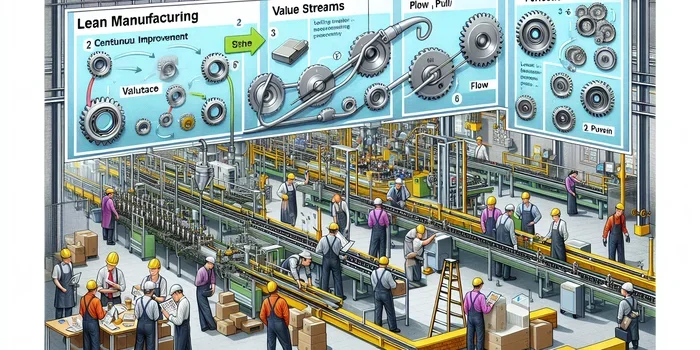
Many automakers now use value stream mapping. This is a TPS tool that helps teams see every step of the production process. By mapping the value stream, companies spot bottlenecks and waste. They can then remove those problems and improve flow.
Some smaller car parts suppliers also adopted lean methods. These companies found that TPS principles helped them compete with bigger firms. They could deliver higher quality parts faster and at lower cost.
Healthcare Organizations
This might surprise you. Hospitals and clinics around the world now use lean manufacturing ideas from Toyota. The healthcare industry faces many of the same challenges as car factories. Limited resources. Long wait times. Inconsistent quality. Lean principles help solve these problems.
Virginia Mason Medical Center in Seattle is a famous example. They modeled their entire operation after the Toyota Production System. They used tools like kaizen events, which are rapid improvement workshops. Staff members gather to identify problems and test solutions quickly.
The results have been impressive. Wait times dropped. Patient safety improved. Staff satisfaction rose too. Healthcare leaders now see that Toyota’s ideas work outside of factories. They work wherever people want to deliver better service.
Technology and Software Companies
Software development teams also borrowed from Toyota. The Agile methodology has strong roots in lean thinking. Many Agile practices come directly from TPS. Short development cycles mirror just-in-time production. Continuous testing mirrors jidoka.
Companies like Google and Spotify use lean startup principles. They build small, test quickly, and improve based on feedback. This approach reduces wasted effort. Teams do not spend months building features that nobody wants. They validate ideas early and often.
Even hardware companies in tech have adopted TPS methods. Electronics manufacturers use lean assembly lines. They reduce defects and speed up production. The principles translate surprisingly well from cars to circuit boards.
Food and Beverage Industry
The food industry has also found value in Toyota’s methods. Fast-food chains use lean principles to speed up service and maintain consistency. Every step of food preparation is analyzed for waste and efficiency.
Large beverage companies apply just-in-time inventory. They keep minimal stock on hand and order supplies as needed. This reduces storage costs and prevents spoilage. Small bakeries and craft breweries also use lean techniques to stay competitive.
Food safety benefits too. When every process is standardized and monitored, it is easier to catch problems early. This protects customers and builds trust in the brand.
Core TPS Principles That Drive Adoption
Why do so many companies keep coming back to Toyota’s system? Because the principles are powerful and universal. Let us break down the key ideas that make TPS so effective.
Waste Elimination
Toyota identified seven types of waste in production. These include overproduction, waiting time, unnecessary transport, extra processing, excess inventory, unnecessary movement, and defects. Every company that adopts TPS starts by attacking waste. Removing waste lowers costs and improves quality at the same time.
For example, reducing excess inventory frees up cash flow. Eliminating unnecessary movement keeps workers focused. Fixing defects early prevents costly rework downstream. Each type of waste removal delivers real, measurable results.
Continuous Improvement (Kaizen)
Kaizen is the Japanese word for continuous improvement. It is one of the most important concepts in the Toyota Production System. Kaizen means that every employee, at every level, looks for ways to do things better. It is not a one-time project. It is a daily habit.
Companies that practice kaizen create a culture of constant learning. Workers suggest small improvements every day. Over time, these small changes add up to massive gains. This is why Toyota stays ahead of competitors year after year.
Respect for People
TPS is not just about machines and processes. It is deeply human. Toyota believes that every worker has valuable ideas. Frontline employees often know more about problems than managers do. By respecting their input, companies unlock creativity and commitment.
This principle has inspired organizations far beyond manufacturing. Service companies, nonprofits, and government agencies all use respect-for-people approaches. When people feel valued, they do better work.
Benefits Companies Experience From TPS Methods
Companies that adopt Toyota Production System methods see real advantages. Let us look at the most common benefits they report.
- Lower Costs: Waste reduction directly cuts expenses. Companies spend less on materials, labor, and storage.
- Better Quality: Continuous improvement catches defects early. Customers receive more reliable products.
- Faster Delivery: Just-in-time methods shorten production cycles. Orders reach customers quicker.
- Higher Employee Engagement: When workers participate in improvement, they feel ownership and pride.
- Greater Flexibility: Lean systems adapt faster to market changes and customer demands.
- Improved Safety: Organized workspaces and standardized processes reduce accidents on the job.
These benefits explain why TPS-inspired systems keep spreading. The results speak for themselves. Companies that invest in lean manufacturing see strong returns over time.
Challenges Companies Face When Adopting TPS
Adopting the Toyota Production System is not easy. Many companies try and struggle. Understanding the challenges helps new adopters prepare.
First, TPS requires a long-term commitment. Quick fixes do not work with lean methods. Companies must be patient and persistent. Culture change takes time. Leaders must stay consistent even when results take longer to appear.
Second, frontline training is essential. Workers need to understand lean tools and thinking. Without proper training, efforts fall flat. Toyota invests heavily in developing its people. Other companies must do the same.
Third, some organizations resist change. Employees may fear job losses from efficiency gains. Leaders must communicate clearly and address concerns honestly. Toyota’s respect-for-people principle helps here too.
Finally, copying TPS surface-level does not work. Companies cannot just adopt the tools without embracing the philosophy. True lean transformation requires deep cultural change. It starts with leadership commitment and ends with every employee thinking differently.
When companies get this right, the transformation is remarkable. They become more agile, more efficient, and more competitive. The effort pays off in ways that last for decades.
Toyota’s Own Success Story
It is worth pausing to appreciate what Toyota has achieved. The company’s commitment to lean manufacturing made it the world’s largest automaker for many years. Toyota’s quality reputation is unmatched. Customers trust Toyota vehicles to last longer and need fewer repairs.
Toyota’s lean methods also extended into product innovation. Their hybrid technology, for example, benefited from the same efficiency mindset. Toyota did not just build better cars. They built a better way of building cars. That approach helped them lead the hybrid market for years.
Interestingly, Toyota’s methods also influence how customers think about car ownership. People who research Toyota vehicles often explore topics like fuel efficiency and maintenance. For instance, many drivers wonder whether they really save on gas with a hybrid. Toyota’s lean engineering plays a direct role in answering that question with real-world results.
The company also maintains strong relationships with its dealer network and service centers. When owners need help, they look for trusted advice. Whether it is learning about oil choices like can I use 5W30 instead of 5W20 or understanding how Toyota’s quality systems work, the brand’s reputation for excellence extends to every touchpoint.
Toyota’s success proves that the Toyota Production System is not just theory. It is a proven framework that delivers results across every aspect of a business.
How to Start Using TPS Principles in Your Company
If you are curious about applying Toyota Production System ideas in your own business, here are practical steps to get started.
- Learn the basics: Study the core TPS concepts like just-in-time, kaizen, and waste elimination. Read books and watch training videos.
- Start small: Pick one process or department to improve. Do not try to transform everything at once. Small wins build momentum.
- Engage your team: Involve employees in identifying waste and brainstorming solutions. They are the closest to the work.
- Standardize what works: When a process improvement succeeds, document it. Make it the new standard for everyone to follow.
- Measure results: Track key metrics like cycle time, defect rates, and customer satisfaction. Data shows what is working and what needs more attention.
- Keep improving: Lean is never finished. Even after big improvements, keep looking for the next opportunity to get better.
These steps work for companies of all sizes. A small shop and a multinational corporation can both benefit from lean thinking. The key is to start and stay consistent.
Many organizations also find value in external support. Lean consultants and coaches can guide the transformation process. They bring experience from other successful implementations. This accelerates learning and helps avoid common pitfalls.
Remember, adopting TPS is a journey, not a destination. Companies that commit to the path see lasting improvements in quality, efficiency, and employee satisfaction. The Toyota Production System remains one of the most powerful business frameworks ever created.
Final Thoughts
The answer to whether other companies use the Toyota Production System is a clear yes. From automakers to hospitals to tech firms, TPS principles have transformed industries worldwide. The core ideas of waste elimination, continuous improvement, and respect for people resonate across every sector.
Companies that embrace these methods see real benefits. Lower costs. Better quality. Faster delivery. Happier employees. These are outcomes that any organization can appreciate. The Toyota Production System proves that simple, disciplined thinking can create extraordinary results.
If your company has not yet explored lean manufacturing, now is a great time to start. The principles are timeless. They work. And the companies that adopt them today will lead their industries tomorrow.
Frequently Asked Questions
What is the Toyota Production System used for?
The Toyota Production System is a manufacturing philosophy focused on eliminating waste, improving quality, and increasing efficiency. It uses tools like just-in-time production and kaizen to create lean, responsive operations. Companies use it to deliver more value to customers while reducing costs.
Which industries have adopted Toyota Production System principles?
Many industries use TPS-inspired methods. Automotive manufacturing was the first adopter. Healthcare, technology, food and beverage, construction, and aerospace have all embraced lean manufacturing. Any industry that values efficiency and quality can benefit from TPS principles.
Is the Toyota Production System the same as lean manufacturing?
Yes, TPS is the foundation of modern lean manufacturing. Toyota developed the core ideas that lean philosophy is built on. While lean has evolved and expanded, its roots trace directly back to Toyota’s production methods and continuous improvement practices.
Can small businesses benefit from the Toyota Production System?
Absolutely. Small businesses often benefit the most from lean methods. They have less room for waste and inefficiency. TPS principles like value stream mapping and kaizen help small teams do more with fewer resources and compete effectively with larger companies.
How long does it take to implement TPS in a company?
TPS implementation is a long-term journey. Companies often spend years fully embedding lean principles into their culture. Quick wins can appear within months, but deep transformation requires sustained commitment. The most successful adopters treat it as an ongoing process, not a one-time project.
Why do companies fail when trying to copy the Toyota Production System?
Companies often fail because they copy the tools without embracing the philosophy. TPS is about culture, not just techniques. Without leadership commitment and employee engagement, lean efforts fall apart. True success requires a genuine belief in continuous improvement and respect for every team member.