500 lbs Towing Capacity Everything You Need to Know
500 lbs towing capacity is a common rating found on many vehicles and trailers. It means your vehicle can safely pull up to 500 pounds of trailer weight. Understanding this limit helps you choose the right gear and stay safe on the road.
You see the numbers on your vehicle’s door sticker or owner manual. 500 lbs towing capacity. But what does that really mean? Can you haul a small utility trailer? A boat? A load of firewood? The answer is yes, but with some important limits. Towing is not just about hooking up a trailer and driving. There are rules, gear, and safety steps you need to know. This guide breaks everything down in plain, simple language. Whether you are a first-timer or just brushing up on the basics, you will find the answers you need right here.
The world of towing can feel confusing at first. There are numbers, ratings, and terms flying everywhere. But once you understand the basics, it all makes sense. 500 lbs towing capacity is actually a very manageable starting point. Many compact SUVs, sedans, and trucks carry this rating. It is enough to haul a small trailer, a motorcycle, or camping gear. The key is knowing your limits and respecting them. That is what this article is all about. Let us dive in and make towing simple and safe for you.
Key Takeaways
- 500 lbs towing capacity means your vehicle can safely pull a trailer weighing up to 500 pounds.
- Tongue weight should be about 10-15% of the total trailer weight for safe towing.
- Always check your vehicle’s owner manual to confirm its exact towing limits.
- Using the right hitch, brakes, and safety chains is essential for a 500 lb load.
- Common mistakes like overloading or ignoring tongue weight can cause serious accidents.
- A 500 lbs towing capacity setup works great for small utility trailers and bike carriers.
📑 Table of Contents
- What Does 500 lbs Towing Capacity Mean?
- What Can You Tow With 500 lbs Towing Capacity?
- How to Tow Safely With 500 lbs Towing Capacity
- Common Mistakes People Make When Towing 500 Pounds
- Equipment You Need for 500 lbs Towing
- How 500 lbs Towing Capacity Compares to Other Ratings
- Expert Insights on Staying Safe at 500 lbs Towing Capacity
- Key Takeaways
- Conclusion
What Does 500 lbs Towing Capacity Mean?
Towing capacity is the maximum weight a vehicle can safely pull behind it. When a manufacturer says your vehicle has a 500 lbs towing capacity, they mean the trailer and everything inside it must weigh 500 pounds or less. This number is not a suggestion. It is a hard limit set by engineers who tested your specific vehicle. Going over this limit can damage your engine, brakes, and transmission. It can also make your vehicle dangerously hard to control.
There are a few terms you should know before you start towing. Gross Vehicle Weight Rating (GVWR) is the maximum weight your vehicle can weigh, including passengers and cargo. Payload capacity is how much weight your vehicle can carry in its bed or cabin. Tongue weight is the downward force the trailer puts on your hitch. For a 500 lbs towing capacity setup, your tongue weight should be around 50 to 75 pounds. That is about 10 to 15 percent of the total trailer weight. Keeping these numbers in check keeps you safe.
Why Towing Limits Matter
Every vehicle is different. A small car and a full-size truck have very different towing abilities. Manufacturers spend thousands of hours testing each model. They look at engine power, braking distance, frame strength, and suspension. When they set a 500 lbs towing capacity, they are saying this is the safe ceiling. Going over it puts stress on every part of your vehicle. Your brakes wear faster. Your engine runs hotter. Your suspension struggles. In worst-case scenarios, you could lose control of your vehicle. That is why it is so important to stay within your limits.
What Can You Tow With 500 lbs Towing Capacity?
Now for the fun part. What can you actually pull with a 500 lbs towing capacity? The answer might surprise you. There are plenty of useful trailers and loads that fall within this weight range. Let us look at some real-world examples.
Small Utility Trailers
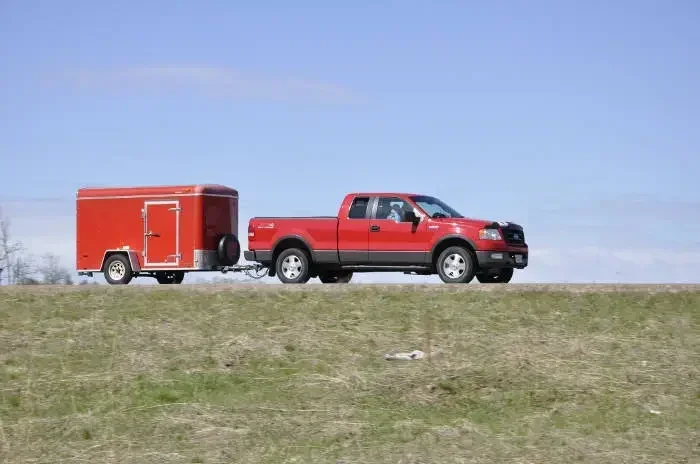
A small open utility trailer weighs about 200 to 350 pounds empty. That leaves room for about 150 to 300 pounds of cargo. You can haul lumber, garden supplies, or a load of mulch. These trailers are perfect for weekend projects or moving small items around town. They are lightweight and easy to maneuver. A 500 lbs towing capacity vehicle handles them with ease.
Motorcycle and ATV Trailers
Want to haul your motorcycle or ATV to the trails? A motorcycle trailer typically weighs around 300 to 400 pounds. With a full-size dirt bike or ATV loaded up, you might hit or slightly exceed 500 pounds. Always weigh your setup before you hit the road. A 500 lbs towing capacity trailer for one motorcycle usually works well. But if you plan to haul two bikes, you need to check the combined weight carefully.
Bike Carriers and Small Camping Trailers
Bike carriers that attach to a hitch are a great use of 500 lbs towing capacity. Most hitch-mounted bike racks weigh between 30 and 80 pounds. Add a few bikes, and you are still well under the limit. Small camping trailers, also called teardrop trailers, often weigh between 500 and 1,500 pounds. A 500 lbs towing capacity vehicle may handle a very small teardrop if it is lightweight. Always double-check the trailer weight before you buy.
Boats and Personal Watercraft
Small jon boats or inflatable boats can sometimes fall within a 500 lbs towing capacity range. A lightweight inflatable kayak or a small aluminum boat might work. But you need to factor in the weight of the motor, fuel, and gear. A 5-horsepower outboard motor weighs around 50 to 60 pounds. Add a tank of gas and some gear, and the numbers add up fast. Always weigh everything together before you tow.
How to Tow Safely With 500 lbs Towing Capacity
Towing safely is about more than just hitting the road. There are steps you must take before you leave and while you drive. Here is a practical guide to make sure your 500 lbs towing capacity setup is safe and smooth.
Step 1: Check Your Vehicle’s Towing Specs
Start by reading your owner manual. Look for the towing section. Find the 500 lbs towing capacity number and any related details. Some vehicles have a towing package that includes a stronger hitch, a cooling system, or a transmission cooler. If your vehicle has a towing package, it is designed to handle the extra load. If it does not, you may still be able to tow 500 pounds, but you should be extra careful.
Step 2: Choose the Right Hitch
Your hitch is the connection between your vehicle and the trailer. For a 500 lbs towing capacity load, a Class I or Class II hitch receiver is usually enough. Class I hitches handle up to 2,000 pounds of towing weight. Class II hitches handle up to 3,500 pounds. Both are perfect for a 500-pound trailer. Make sure the hitch ball size matches your trailer’s coupler. A 1-7/8 inch ball is common for smaller trailers. Always check that the hitch is securely bolted to your vehicle.
Step 3: Use Safety Chains and Wiring
Safety chains are a must. They connect the trailer to your vehicle in case the hitch fails. Cross the chains under the trailer tongue to create a cradle. This prevents the trailer from dropping to the ground if it separates. You also need to wire up your trailer lights. Brake lights, turn signals, and tail lights must work on the trailer. This is not just a safety issue. It is the law in most states. A simple wiring harness plugs into your vehicle’s socket and connects to the trailer’s lights.
Step 4: Load Your Trailer Properly
How you load your trailer matters a lot. Place heavy items over the axle or just in front of it. This keeps the tongue weight in the right range. If the back of the trailer is too heavy, the rear of your vehicle will sag. If the front is too heavy, the trailer may sway. For a 500 lbs towing capacity load, aim for 50 to 75 pounds of tongue weight. Use a bathroom scale to check this before you drive. It is a quick and easy step that makes a big difference.
Step 5: Drive With Care
Once you are on the road, driving changes a bit. Leave more following distance. Braking takes longer with a trailer. Avoid sudden stops and sharp turns. Slow down before curves. Keep your speed steady. Most experts recommend staying at or below 55 mph when towing. Wind can push a trailer sideways, especially with a lighter load. Stay alert and drive smoothly. Your 500 lbs towing capacity setup will feel stable if you follow these tips.
Common Mistakes People Make When Towing 500 Pounds
Even with a light trailer, mistakes can happen. Here are the most common ones and how to avoid them.
Ignoring Tongue Weight
Many people forget about tongue weight entirely. They load the trailer and go. But if the tongue weight is too low, the trailer will sway. If it is too high, it will lift the back of your vehicle. Both situations are dangerous. Always check your tongue weight with a scale. For a 500 lbs towing capacity trailer, the target is 50 to 75 pounds. A cheap bathroom scale works fine for this.
Overloading the Trailer
It is easy to add one more bag of supplies or a few extra tools. But every pound counts. If your trailer is rated for 500 pounds and you load 550, you are over the limit. This puts stress on your hitch, tires, and brakes. It also makes your vehicle harder to stop and steer. Weigh your load before you leave. Stay at or below 500 lbs towing capacity at all times.
Skipping the Pre-Trip Inspection
Before every trip, do a quick walk-around. Check the tire pressure on both your vehicle and the trailer. Look at the hitch connection. Make sure the safety chains are secure. Test the trailer lights. Check that the load is tied down. This takes five minutes but can prevent a major problem on the road. A 500 lbs towing capacity setup is light, but that does not mean you can skip safety checks.
Using the Wrong Tires
Trailer tires are different from car tires. They are designed to handle side loads and sit flat for long periods. Using old or worn tires on a trailer is risky. Check the tire date code on the sidewall. Tires older than six years should be replaced, even if they look fine. For a 500 lbs towing capacity trailer, make sure the tires are rated for the load. This is a small detail that makes a big difference.
Equipment You Need for 500 lbs Towing
Having the right gear makes towing easier and safer. Here is a list of what you need for a 500 lbs towing capacity setup.
- Hitch Receiver: A Class I or Class II receiver fits most vehicles with a 500 lbs towing capacity rating.
- Hitch Ball: A 1-7/8 inch ball is standard for small trailers. Make sure it matches your trailer coupler.
- Safety Chains: Always use two safety chains crossed under the trailer tongue.
- Trailer Wiring Harness: This connects your trailer lights to your vehicle. Plug-and-play harnesses are easy to install.
- Tongue Weight Scale: A simple bathroom scale works. You can also buy a dedicated tongue weight scale for under $30.
- Tie-Down Straps: Use ratchet straps or bungee cords to secure your load. Loose cargo is a safety hazard.
- Trailer Brakes (Optional): For a 500-pound trailer, brakes may not be required by law. But they add extra stopping power. Check your local regulations.
Quick Tips for a Smooth Towing Experience
- Practice backing up in an empty parking lot before your trip.
- Keep your mirrors adjusted to see the full length of the trailer.
- Do not tow with a trailer that bounces or sags.
- Take breaks on long drives to check your load and tires.
- Store your hitch ball and wiring harness in a dry place when not in use.
How 500 lbs Towing Capacity Compares to Other Ratings
Not all towing capacities are the same. Different vehicles have different limits. Here is how 500 lbs towing capacity compares to other common ratings.
| Towing Capacity | Typical Vehicle | Good For |
|---|---|---|
| 500 lbs | Compact SUV, sedan, small truck | Bike racks, small utility trailers |
| 1,000 lbs | Mid-size SUV, mid-size truck | Small camping trailers, ATVs |
| 2,500 lbs | Full-size truck, large SUV | Boat trailers, larger cargo trailers |
| 5,000 lbs | Heavy-duty truck, full-size SUV | Horse trailers, large campers |
As you can see, a 500 lbs towing capacity is on the lower end of the spectrum. It is perfect for light-duty towing. If you need to haul heavier loads, you would need a vehicle with a higher rating. But for everyday tasks like hauling yard waste or a motorcycle, 500 pounds is plenty. Many drivers never need more than this amount.
Expert Insights on Staying Safe at 500 lbs Towing Capacity
We asked experienced tow vehicle owners and mechanics for their top advice. Here is what they said about towing at the 500 lbs towing capacity level.
“The biggest mistake I see is people not checking their tongue weight,” says Mike, a mechanic with 15 years of experience. “Even with a light trailer, bad tongue weight causes swaying and loss of control. Spend five minutes checking it before every trip.”
“Another thing people overlook is tire pressure,” adds Sarah, a long-time RV enthusiast. “Both the vehicle and the trailer tires need to be at the right pressure. Under-inflated tires are the number one cause of trailer tire blowouts. It is an easy fix that saves lives.”
“Respect the numbers on your vehicle,” warns Tom, a retired truck driver. “The manufacturer set those limits for a reason. If your vehicle says 500 lbs towing capacity, do not try to pull 600. The extra 100 pounds can change everything on the road.”
Key Takeaways
- 500 lbs towing capacity means your vehicle can safely pull a trailer weighing up to 500 pounds.
- Tongue weight should be about 10 to 15 percent of the total trailer weight.
- Always check your vehicle’s owner manual to confirm its exact towing limits.
- Using the right hitch, safety chains, and wiring is essential for a 500 lb load.
- Common mistakes like overloading or ignoring tongue weight can cause serious accidents.
- A 500 lbs towing capacity setup works great for small utility trailers, bike carriers, and motorcycle haulers.
- Drive carefully, leave extra stopping distance, and always do a pre-trip inspection.
Conclusion
500 lbs towing capacity is a practical and useful rating for many drivers. It gives you the freedom to haul small trailers, carry extra gear, and enjoy weekend adventures without needing a heavy-duty truck. The key is to understand what this number means and to follow the safety guidelines. Check your vehicle’s specs, use the right equipment, load your trailer properly, and drive with care. Towing does not have to be complicated or scary. With the right knowledge, you can tow confidently and safely every time you hit the road.
Remember, the numbers on your vehicle exist to protect you and others on the road. Stay within your 500 lbs towing capacity, and you will have a great towing experience. Now get out there, hook up your trailer, and enjoy the ride.
Frequently Asked Questions
Can a sedan tow 500 pounds?
Yes, many sedans and compact SUVs have a 500 lbs towing capacity. Check your owner manual or the door jamb sticker to confirm your specific model. Always use the right hitch and safety equipment before towing.
Do I need a special license to tow 500 pounds?
In most states, you do not need a special license to tow a trailer under 500 pounds. However, towing laws vary by location. Check your local Department of Motor Vehicles regulations to be sure you are following the rules.
What happens if I exceed my 500 lbs towing capacity?
Exceeding your towing limit puts extra stress on your engine, brakes, and transmission. It can also make your vehicle harder to steer and stop. In an accident, exceeding the rated capacity may affect your insurance claim. Always stay within the manufacturer’s limits.
How do I measure tongue weight for a 500 lb trailer?
You can use a bathroom scale to measure tongue weight. Place the trailer tongue on the scale and read the number. For a 500 lbs towing capacity trailer, aim for 50 to 75 pounds of tongue weight. Some auto parts stores also have free tongue weight scales you can use.
Do I need trailer brakes for a 500 pound load?
In most cases, trailer brakes are not required for loads under 500 pounds. However, brakes can improve stopping power and safety. Check your local laws and your vehicle owner manual for specific brake requirements. When in doubt, consider adding them for extra safety.
Can I tow a 500 lb trailer in the rain?
Yes, but you need to drive more carefully in wet conditions. Trails and wet roads increase the risk of swaying. Reduce your speed, increase your following distance, and avoid sudden maneuvers. A 500 lbs towing capacity trailer is light enough to be affected by wind and rain more than a heavier load.