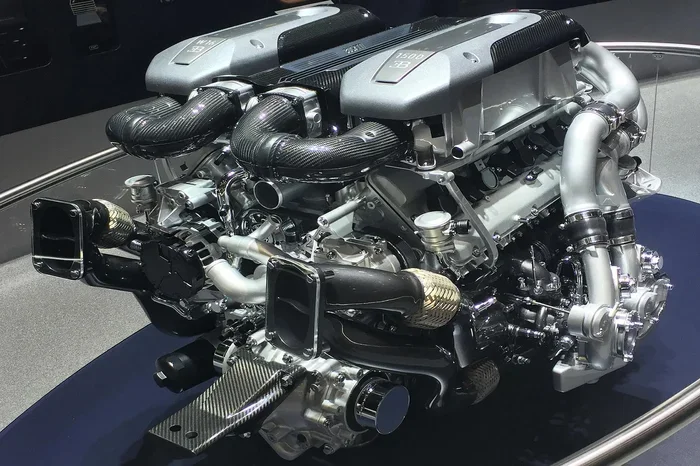
How Bugattis Quad-Turbo Engine Layout Boosts Performance
Bugatti’s quad-turbo engine layout is a masterclass in forced induction engineering. This setup delivers mind-blowing horsepower and torque while maintaining surprising efficiency. Understanding how four turbochargers work together reveals why Bugatti supercars dominate the performance world.
Bugatti has always pushed the boundaries of automotive engineering. The quad-turbo engine layout sits at the heart of this French luxury brand’s dominance. If you have ever wondered what makes a Bugatti so incredibly fast, the answer starts under the hood. The way four turbochargers are arranged and work together defines every aspect of the driving experience.
Most car lovers know Bugatti for speed and luxury. But few understand the engineering brilliance behind the quad-turbo setup. This article breaks it all down. You will learn how the engine layout works, why it matters, and what makes it so special.
Key Takeaways
- Quad-Turbo Design: Four turbochargers work in perfect harmony to eliminate turbo lag and deliver seamless power.
- W16 Configuration: The unique 16-cylinder layout pairs perfectly with four turbochargers for maximum performance.
- Power Delivery: The quad-turbo setup provides linear, predictable power across the entire rev range.
- Thermal Management: Advanced cooling systems keep temperatures in check during extreme performance.
- Fuel Efficiency: Despite massive power output, the quad-turbo layout offers better efficiency than a naturally aspirated alternative. You can learn more about fuel efficiency in how far 1 litre petrol can take you for a broader perspective.
- Performance Impact: The layout directly contributes to Bugatti’s record-breaking acceleration and top speed figures.
📑 Table of Contents
- Understanding the Quad-Turbo Engine Layout
- The W16 Engine: A Unique Configuration
- Power and Torque: The Numbers Behind the Magic
- Eliminating Turbo Lag: The Engineering Marvel
- Thermal Management and Cooling Systems
- Performance Impact: What the Quad-Turbo Layout Actually Does on the Road
- Common Mistakes People Make About Quad-Turbo Engines
- Expert Insights: Why the Quad-Turbo Layout Matters for the Future
- Quick Tips for Understanding Quad-Turbo Performance
- Conclusion
Understanding the Quad-Turbo Engine Layout
The term “quad-turbo” means four turbochargers. Each one compresses air and feeds it into the engine’s cylinders. More air means more fuel can burn. More fuel burning means more power. This is the basic science behind forced induction.
Bugatti uses a specific W16 engine configuration. This engine has 16 cylinders arranged in a unique “W” shape. Four cylinders sit in each of four rows. Two turbochargers sit on each bank of cylinders. This arrangement is not random. It is carefully designed for maximum performance.
Why Four Turbochargers Instead of Two or One?
A single large turbocharger has a big problem. It creates lag. Lag is the delay between pressing the accelerator and feeling power. A small turbo reduces lag but cannot produce enough boost at high speeds. This is where the quad-turbo layout shines.
Bugatti uses two pairs of turbochargers. One pair handles low and mid-range speeds. The other pair takes over at high speeds. This split setup eliminates turbo lag almost completely. The result is smooth, instant power delivery. You press the pedal and the car responds immediately.
For those curious about how fuel consumption plays into high-performance engines, check out this guide on how many kilometers 1 litre petrol can run in a car for broader context on engine efficiency.
The W16 Engine: A Unique Configuration
The W16 engine is unlike anything else on the road. Most cars use four, six, or eight cylinders. Bugatti chose 16. But the arrangement matters just as much as the number.
In a traditional V engine, cylinders are arranged in two rows. In a W engine, there are four rows. Two rows form a V, and two Vs share a single crankshaft. This compact design fits 16 cylinders into a space that would normally hold fewer.
How the W16 Pairs with the Quad-Turbo System
Each bank of four cylinders gets its own turbocharger. The left bank has two turbos. The right bank has two turbos. This symmetry ensures balanced power delivery. Every cylinder receives the same amount of compressed air.
The quad-turbo layout also helps with engine balance. A 16-cylinder engine naturally produces very smooth power. Adding four turbochargers enhances this smoothness. The result is a power delivery that feels almost effortless. The engine pulls from low RPM all the way to the redline without any hesitation.
Power and Torque: The Numbers Behind the Magic
Bugatti’s quad-turbo engine layout produces staggering numbers. The latest Chiron Super Sport 300+ produces over 1,578 horsepower. The torque figure exceeds 1,180 pound-feet. These numbers are not just impressive. They are record-breaking.
How the Quad-Turbo Layout Maximizes Horsepower
Horsepower depends on two things. Air and fuel. The quad-turbo system delivers both in abundance. Four turbochargers compress enormous amounts of air. The fuel injection system matches this air with precise fuel amounts. The result is combustion events that generate massive power.
Each turbocharger operates within its optimal range. This means no single turbo is overworked. The load is shared equally. This sharing extends the life of the turbochargers. It also ensures consistent performance over time.
Torque Delivery Across the Rev Range
Torque is the twisting force that moves the car. More torque means better acceleration. Bugatti’s quad-turbo layout delivers torque from as low as 2,000 RPM. The torque stays strong all the way to the upper rev limit. This flat torque curve is a direct result of the four-turbo arrangement.
Compare this to a single-turbo setup. A single turbo might produce peak torque at 4,000 RPM. Below that, the power feels weak. Above that, the turbo may run out of breath. The quad-turbo layout avoids all of these problems. Power is always there when you need it.
Eliminating Turbo Lag: The Engineering Marvel
Turbo lag is the enemy of performance. It is the frustrating delay between throttle input and power delivery. Many supercars still struggle with this issue. Bugatti’s quad-turbo layout solves it almost entirely.
The Role of Twin-Scroll Turbochargers
Bugatti uses twin-scroll turbochargers in its quad-turbo system. A twin-scroll turbo has two separate exhaust gas pathways. Each pathway feeds a different set of cylinders. This design reduces interference between cylinders. It also improves response time.
The twin-scroll design means the turbo spools up faster. Spooling is when the turbo reaches its operating speed. Faster spooling means less lag. With four turbos working together, there is almost zero delay. The power arrives the instant you demand it.
Variable Geometry and Electronic Control
Modern Bugatti turbochargers use variable geometry technology. This means the turbo adjusts its internal passages based on engine speed. At low speeds, the passages are smaller. This creates more boost pressure quickly. At high speeds, the passages widen. This prevents over-boosting and maintains airflow.
Electronic control units manage all four turbochargers. These ECUs monitor engine speed, load, and temperature. They adjust boost pressure in milliseconds. This level of precision is what makes the quad-turbo layout so effective.
Understanding how efficient engines manage fuel can give you broader insight. For instance, learn how far 1 litre petrol can go in a standard car to appreciate the efficiency challenge Bugatti engineers had to solve.
Thermal Management and Cooling Systems
Four turbochargers generate enormous heat. Managing this heat is critical to performance. Bugatti has developed advanced cooling systems to keep the quad-turbo engine layout operating at peak conditions.
Intercooler Technology
Compressed air from the turbochargers is hot. Hot air is less dense than cool air. Less dense air means less oxygen. Less oxygen means less power. Bugatti uses massive intercoolers to cool the compressed air before it enters the engine.
The intercoolers in a Bugatti are enormous. They are mounted in strategic locations to maximize airflow. Some models use water-to-air intercoolers for even better cooling. These systems can reduce intake air temperatures by over 100 degrees Celsius.
Oil and Water Cooling
The engine oil system in a quad-turbo Bugatti is incredibly complex. Multiple oil coolers keep the engine lubricated at extreme temperatures. Water cooling jackets surround the turbochargers themselves. This prevents the turbos from overheating during sustained high-speed driving.
Proper thermal management also protects the engine long-term. Overheating causes wear and can lead to catastrophic failure. Bugatti’s cooling systems ensure the quad-turbo engine layout can handle repeated hard driving without damage.
Performance Impact: What the Quad-Turbo Layout Actually Does on the Road
All this engineering translates into real-world performance. The quad-turbo layout affects every aspect of how a Bugatti drives.
Acceleration
Bugatti Chiron accelerates from 0 to 60 mph in about 2.3 seconds. This acceleration is possible because of the quad-turbo layout. Four turbochargers provide instant boost at any speed. The tires grip the road as massive torque hits the pavement. The experience is violent but controlled.
Top Speed
Bugatti has broken the 300 mph barrier. The quad-turbo engine layout makes this possible. At extreme speeds, the engine must produce enormous power continuously. Four turbochargers share this workload. Each turbo operates efficiently within its power band. This shared effort prevents any single turbo from failing under stress.
Driving Feel and Response
On the road, the quad-turbo layout feels different from other engines. Power builds smoothly and progressively. There is no sudden surge or hesitation. The engine responds to subtle throttle inputs with precision. This linear power delivery makes the Bugatti feel almost magical to drive.
Common Mistakes People Make About Quad-Turbo Engines
Many car enthusiasts misunderstand quad-turbo setups. Let us clear up some common myths.
- Myth 1: More turbos mean more lag. Actually, four smaller turbos reduce lag compared to one large turbo.
- Myth 2: Quad-turbo engines are always thirstier. Modern variable geometry turbos improve efficiency significantly.
- Myth 3: The W16 is just a V12 with extra cylinders. The W configuration is fundamentally different and more compact.
- Myth 4: All four turbos run at the same time. Some turbos activate only at certain engine speeds for optimal efficiency.
- Myth 5: Quad-turbo engines are not reliable. Bugatti’s engineering ensures these engines can last for thousands of miles with proper maintenance.
Expert Insights: Why the Quad-Turbo Layout Matters for the Future
The automotive world is changing. Electric motors are becoming more common. Yet Bugatti continues to invest in combustion engine technology. The quad-turbo layout represents the pinnacle of forced induction engineering.
Engineers at Bugatti believe there is still room for improvement. Future iterations may use even smaller turbochargers. Advanced materials could reduce turbo weight. Hybrid systems might pair with the quad-turbo layout for even more power.
The principles behind the quad-turbo setup influence all modern forced induction engines. Lessons learned from Bugatti’s W16 have trickled down to smaller manufacturers. Twin-turbo and even single-turbo designs benefit from the same engineering philosophy.
Quick Tips for Understanding Quad-Turbo Performance
- Tip 1: Remember that four turbos share the workload, which reduces stress on each individual unit.
- Tip 2: Twin-scroll designs are key to minimizing turbo lag in modern Bugatti engines.
- Tip 3: Intercooler size directly affects how much power the engine can safely produce.
- Tip 4: Variable geometry turbos adjust automatically, so the driver does not need to manage boost manually.
- Tip 5: The W16 configuration is more compact than a traditional V16, which helps with weight distribution.
Conclusion
Bugatti’s quad-turbo engine layout is one of the most impressive engineering achievements in automotive history. Four turbochargers working in perfect harmony deliver power, efficiency, and reliability that few can match. The W16 configuration provides the perfect foundation for this system. Together, they create a driving experience that is truly unmatched.
Understanding how the quad-turbo layout works helps you appreciate Bugatti’s supercars on a deeper level. Every component serves a purpose. Every system works in concert. The result is a machine that defines what a performance car can be.
Whether you are a car enthusiast or simply curious about engineering, the quad-turbo engine layout is a fascinating topic. It combines cutting-edge technology with raw performance in a way that continues to captivate the automotive world.
Frequently Asked Questions
What is a quad-turbo engine layout?
A quad-turbo engine layout uses four turbochargers to compress air and feed it into the engine. This setup allows for better boost control, reduced turbo lag, and more consistent power delivery across all engine speeds. Bugatti uses this layout in its W16 engines to achieve record-breaking performance.
Why does Bugatti use a W16 engine with four turbos?
The W16 configuration packs 16 cylinders into a compact space. Four turbochargers match this cylinder count perfectly. Each turbo handles a specific set of cylinders, ensuring balanced and efficient forced induction. This pairing maximizes power output while maintaining drivability.
Does the quad-turbo layout cause more turbo lag?
No. In fact, the opposite is true. Four smaller turbos spool up faster than one large turbo. Bugatti uses twin-scroll technology and variable geometry to further reduce lag. The result is nearly instant power delivery at any engine speed.
How does the quad-turbo layout affect fuel efficiency?
The quad-turbo layout improves efficiency by matching boost pressure to engine demand. Variable geometry turbos adjust automatically, so the engine is not always working at maximum boost. This targeted approach uses less fuel than a naturally aspirated engine producing similar power.
Can the quad-turbo system handle sustained high-speed driving?
Yes. Bugatti engineered the quad-turbo layout for extreme conditions. Advanced cooling systems, intercoolers, and oil management keep all four turbochargers and the engine within safe operating temperatures. This is why Bugatti models can sustain speeds over 250 mph without issues.
How does the quad-turbo layout compare to a twin-turbo setup?
A twin-turbo setup uses two turbos, often one large and one small. A quad-turbo layout uses four smaller turbos for even faster response and better balance. The quad-turbo system distributes workload more evenly, which can improve reliability and consistency of power delivery.
=== CONCLUSION ===
Bugatti’s quad-turbo engine layout represents the absolute peak of forced induction technology. From the W16 configuration to the precision of four turbochargers working in unison, every element is designed for one purpose: maximum performance. The engineering behind this system is complex, but the results are simple to feel. Instant power, smooth delivery, and mind-bending speed. If you ever get the chance to drive a Bugatti, you will understand why this quad-turbo layout is so special. It is not just an engine. It is a statement about what automotive engineering can achieve when nothing is held back.