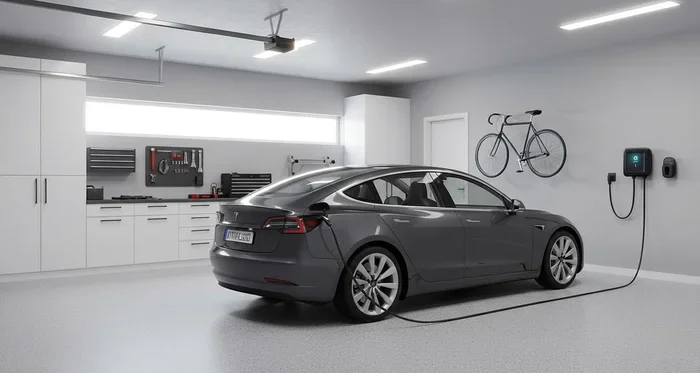
Can I Use a Dryer Outlet to Charge My Tesla at Home
Yes, you can use a dryer outlet to charge your Tesla at home, but there are important limits. A standard 240-volt NEMA 14-50 dryer outlet provides Level 2 charging, adding roughly 30-35 miles of range per hour. It is a budget-friendly alternative to a Tesla Wall Connector, but you need the right adapter and electrical setup.
So you just got a Tesla. Congratulations. Now the real question hits you: how do you charge it at home? You have heard about Tesla Wall Connectors, but what if you do not want to spend the money or wait for installation? What if you already have a dryer outlet in your garage or laundry room?
That is exactly where this guide comes in. You are about to learn everything you need to know about using a dryer outlet to charge your Tesla. We will cover whether it works, how fast it charges, what you need, and whether it is safe. Let us get into it.
Key Takeaways
- A dryer outlet works: A NEMA 14-50 240-volt outlet can charge your Tesla using the mobile connector.
- Charging speed is moderate: Expect 30-35 miles of range per hour, slower than a Wall Connector.
- Safety matters: Your electrical panel and wiring must support the load safely.
- You need an adapter: The Tesla mobile connector comes with a NEMA 14-50 plug or you may need to swap adapters.
- Not a permanent solution: A dryer outlet is great for temporary or supplemental charging but a Wall Connector is better long-term.
- Installation costs vary: Hiring an electrician to install a dedicated circuit adds cost but improves safety.
- Compare your options: If you want faster charging, check Can I Charge My Hybrid Car At Home for more home charging ideas.
📑 Table of Contents
- What Exactly Is a Dryer Outlet?
- Can You Actually Charge a Tesla with a Dryer Outlet?
- How Fast Does a Dryer Outlet Charge a Tesla?
- Is It Safe to Charge a Tesla from a Dryer Outlet?
- Step-by-Step: How to Set Up Dryer Outlet Charging
- Dryer Outlet vs. Tesla Wall Connector: Which Is Better?
- Common Mistakes People Make with Dryer Outlet Charging
- Expert Tips for Optimizing Dryer Outlet Charging
- The Bottom Line
What Exactly Is a Dryer Outlet?
A dryer outlet is a 240-volt electrical outlet that most homes in the United States have. It is the large, three-prong or four-prong plug you use for your clothes dryer. The most common type is called a NEMA 14-50 outlet. This outlet can handle up to 50 amps of electrical current, which is a lot of power.
Here is why that matters. Tesla vehicles use a home charging setup that also relies on 240-volt power. So the dryer outlet and a Tesla charger share the same electrical foundation. That is the reason a dryer outlet can work for Tesla charging at all. It is not magic. It is just matching voltage and amperage.
Now, not every dryer outlet is the same. Some homes have older three-prong outlets that do not meet modern safety standards. Before you plug anything in, you need to know what kind of outlet you have. Look at the plug on your dryer. If it has four prongs, you have a NEMA 14-50. If it has three prongs, you may have an older NEMA 10-50, which is less safe and not recommended for Tesla charging.
Can You Actually Charge a Tesla with a Dryer Outlet?
The short answer is yes. The longer answer is yes, but with some caveats. Tesla vehicles come with a Mobile Connector in the trunk. This cable has interchangeable plugs on the end. You can swap in a NEMA 14-50 plug and plug it into your dryer outlet. It really is that simple.
However, there is a catch. A dryer outlet is not designed specifically for electric vehicle charging. It was designed for your clothes dryer, which runs for a set amount of time and then turns off. A Tesla charger, on the other hand, can run for many hours overnight. This means your outlet, wiring, and circuit breaker need to handle continuous load safely.
If you are wondering how this compares to other home charging options, you might want to read about Can I Charge My Hybrid Car At Home for a broader look at home charging setups. It covers similar concepts that apply to Tesla charging too.
The Tesla Mobile Connector
The Tesla Mobile Connector is the cable that comes with every new Tesla. It plugs into your car on one end and into a standard or 240-volt outlet on the other. For dryer outlet charging, you need the NEMA 14-50 adapter. Tesla sells this adapter separately, and it is also sometimes included in the box.
The Mobile Connector supports up to 32 amps of current when connected to a 240-volt outlet. This means it will not use the full 50 amps that a NEMA 14-50 outlet can handle. But 32 amps is still plenty for overnight home charging. You will get a full charge on most Tesla models overnight, especially if you set a charging limit.
How Fast Does a Dryer Outlet Charge a Tesla?
This is the question everyone wants answered. And the answer depends on several factors. Your Tesla model, your outlet type, your electrical panel, and even the length of your wiring all play a role.
In general, a NEMA 14-50 dryer outlet adds about 30 to 35 miles of range per hour of charging. Let us break that down by Tesla model:
Charging Speed by Tesla Model
Here is a rough breakdown of what you can expect when charging your Tesla from a dryer outlet:
- Tesla Model 3: Approximately 30-35 miles of range per hour. A full charge from near empty takes roughly 8-10 hours.
- Tesla Model Y: Similar to the Model 3, about 30-35 miles per hour. Overnight charging works well for daily commutes.
- Tesla Model S: Expect around 30 miles per hour. The larger battery means it takes longer to fill up.
- Tesla Model X: Also around 30 miles per hour. This model has a bigger battery pack, so plan accordingly.
Compare this to a Tesla Wall Connector, which can add up to 44 miles of range per hour. The Wall Connector is faster, but the dryer outlet is still a solid option for most daily driving needs.
If you are curious about how charging speeds compare across different power sources, check out At What Speed Does A Hybrid Switch From Electric To Gas for insights on power transitions that relate to charging behavior.
What Affects Charging Speed?
Several factors can make your actual charging speed faster or slower than the numbers above:
- Wire gauge and length: Longer or thinner wires reduce the power reaching your car.
- Circuit breaker rating: If your breaker is rated for 40 amps instead of 50, your charging speed drops.
- Shared circuits: If other devices share the same circuit, the available power drops.
- Ambient temperature: Cold weather can slightly slow charging speeds.
- Battery temperature: Tesla manages battery temperature, which can affect the charge rate.
Is It Safe to Charge a Tesla from a Dryer Outlet?
Safety is the big question. And it is a valid one. A dryer outlet can be safe for Tesla charging, but only if your electrical system is in good shape. Here are the key safety considerations you need to know.
Check Your Electrical Panel
Your home’s electrical panel needs to support a dedicated 240-volt circuit for the dryer outlet. Most modern homes have a 50-amp double-pole breaker for the dryer. This is what you want to see. If your panel is older or already near capacity, adding a Tesla charger could be risky.
Here is a quick checklist to evaluate your setup:
- Do you have a dedicated 240-volt circuit for the dryer?
- Is the circuit breaker rated for 50 amps?
- Are the wires in good condition with no signs of wear or overheating?
- Is the outlet a modern four-prong NEMA 14-50?
- Does your electrical panel have spare capacity for additional loads?
If you answered no to any of these, you should consult a licensed electrician before plugging in your Tesla. Electrical fires are no joke, and cutting corners here is never worth the risk.
The Importance of a Dedicated Circuit
A dedicated circuit means that nothing else shares that electrical line. Your dryer outlet should not be powering your dryer and your Tesla at the same time. If it is, you are overloading the circuit, and that is dangerous. A dedicated circuit ensures that all the power goes to your Tesla while it charges.
If you do not have a dedicated dryer outlet, consider having an electrician install one. The cost is typically between $200 and $800, depending on your home’s wiring and the distance from your panel. It is a small price to pay for peace of mind.
Step-by-Step: How to Set Up Dryer Outlet Charging
Setting up your dryer outlet for Tesla charging is straightforward if your electrical setup is already in place. Here is the process step by step.
Step 1: Verify Your Outlet Type
Look at the outlet where your dryer plugs in. Count the prongs. You want four prongs in a rectangular configuration. This is the NEMA 14-50. If you have a three-prong round outlet, you need an upgrade before proceeding.
Step 2: Get the Right Adapter
Tesla sells the NEMA 14-50 adapter for the Mobile Connector. You can also find third-party adapters, but sticking with Tesla’s official adapter ensures compatibility and safety. Plug the adapter into the Mobile Connector.
Step 3: Plug In and Configure
Plug the Mobile Connector into the dryer outlet. Then open your Tesla’s touchscreen. Go to Settings, then Charging, and set your preferred amperage. For a dryer outlet, set it to 30 or 32 amps to stay within safe limits.
Step 4: Set a Charging Schedule
One of the best features of Tesla charging is the scheduling option. Set your car to charge overnight when electricity rates are often lower. This also ensures your car is ready every morning with a full battery.
Step 5: Monitor Your Setup
Check your dryer outlet and charging cable periodically. Look for signs of wear, overheating, or damage. If anything feels off, stop using the setup and have an electrician inspect it.
Dryer Outlet vs. Tesla Wall Connector: Which Is Better?
Now that you know how dryer outlet charging works, you might wonder how it compares to the official Tesla Wall Connector. Let us look at the key differences.
| Feature | Dryer Outlet | Tesla Wall Connector |
|---|---|---|
| Cost | Low (uses existing outlet) | $400-$600 plus installation |
| Charging Speed | 30-35 miles per hour | Up to 44 miles per hour |
| Amperage | Up to 32 amps (Mobile Connector limit) | Up to 48 amps |
| Installation | None if outlet exists | Professional installation recommended |
| Aesthetics | Bulky adapter and cable | Sleek, wall-mounted unit |
| Safety | Depends on existing wiring | Built for continuous EV charging |
| Best For | Temporary or budget charging | Long-term daily charging |
As you can see, the dryer outlet wins on cost and ease of setup. The Wall Connector wins on speed, safety, and long-term reliability. If you charge your Tesla every night and drive more than 30 miles per day, the Wall Connector is the better investment. But if you are on a budget or just need a backup option, the dryer outlet works well.
If you are also considering the speed factor, you might find it helpful to read At What Speed Does The Hybrid Escape Switch To Gas for a broader perspective on how power delivery works in different vehicle types.
Common Mistakes People Make with Dryer Outlet Charging
Before you set up your dryer outlet for Tesla charging, here are some mistakes to avoid.
- Using an old three-prong outlet: These outlets are outdated and not safe for continuous high-amperage use. Upgrade to a NEMA 14-50 four-prong outlet.
- Overloading the circuit: Do not run your dryer and charge your Tesla on the same circuit at the same time.
- Ignoring wire gauge: The wiring must be thick enough to handle 30+ amps. Thin wires overheat and create fire risks.
- Setting amperage too high: Keep the Mobile Connector at 30 or 32 amps max on a dryer outlet to stay safe.
- Skipping the electrician: If you are unsure about your electrical setup, pay for a professional inspection. It is worth every penny.
- Using damaged cables: Frayed or damaged charging cables are a serious hazard. Replace them immediately.
Expert Tips for Optimizing Dryer Outlet Charging
Want to get the most out of your dryer outlet setup? Here are some expert tips that make a real difference.
Tip 1: Charge during off-peak hours. Many utility companies offer lower electricity rates at night. Set your Tesla to charge between 11 PM and 6 AM to save money.
Tip 2: Keep your battery between 20% and 80% for daily use. Constantly charging to 100% can reduce battery lifespan over time. Use the mobile app or touchscreen to set a daily charging limit.
Tip 3: Keep the charging cable cool. If the cable feels hot during charging, unplug it and let it cool down. Hot cables are a sign of electrical strain.
Tip 4: Label your circuit breaker. Put a label on the breaker that controls your dryer outlet. This prevents someone from accidentally turning it off.
Tip 5: Consider a dedicated EV circuit. If you find yourself relying on dryer outlet charging every day, it might be time to invest in a dedicated 240-volt EV circuit. An electrician can install this for you, and it will be safer and more efficient than using a dryer outlet long-term.
The Bottom Line
So, can you use a dryer outlet to charge your Tesla? Absolutely. It is a practical, affordable, and workable solution for home charging. You get Level 2 charging speeds that can add 30-35 miles of range per hour. You just need the right outlet type, the Tesla Mobile Connector with a NEMA 14-50 adapter, and a safe electrical setup.
That said, a dryer outlet is best suited as a temporary or supplemental charging solution. If you charge your Tesla every single day and drive long distances, investing in a Tesla Wall Connector or a dedicated EV circuit will serve you better in the long run. It charges faster, it is safer for continuous use, and it looks cleaner on your wall.
Either way, the fact that you have options is great news. You do not need a expensive installation to start charging your Tesla at home. A dryer outlet gets you on the road with a full battery, night after night. Just stay safe, check your wiring, and enjoy the convenience of home charging.
For more information on home charging options, you can also explore our guide on Can I Charge My Hybrid Car At Home to see how different vehicles approach home charging solutions.
Frequently Asked Questions
Can I charge my Tesla from a regular 120-volt outlet?
Yes, you can. Tesla comes with a Mobile Connector that works with standard 120-volt household outlets. However, charging is very slow, adding only about 3-5 miles of range per hour. It is fine for overnight top-ups but not practical for daily driving.
Do I need an adapter to charge my Tesla from a dryer outlet?
Yes, you need a NEMA 14-50 adapter for the Tesla Mobile Connector. This adapter is sold separately by Tesla and plugs into the end of the Mobile Connector. Make sure your dryer outlet is a modern four-prong NEMA 14-50 type.
How long does it take to fully charge a Tesla from a dryer outlet?
It depends on your Tesla model and battery size. A Model 3 with a depleted battery takes roughly 8-10 hours to fully charge from a NEMA 14-50 dryer outlet. Larger models like the Model S or Model X may take 10-12 hours or more.
Is it safe to leave my Tesla charging overnight from a dryer outlet?
Yes, it is safe as long as your electrical setup is in good condition. Use a dedicated circuit, set the amperage to 30 or 32, and make sure your outlet and wiring are modern and undamaged. Tesla vehicles also have built-in safety features that manage charging automatically.
Can I use my dryer and charge my Tesla at the same time?
No, you should not. Both a dryer and a Tesla charger draw significant power. Using the same circuit for both can overload it, trip the breaker, or create a fire hazard. Always use a dedicated circuit for Tesla charging.
Should I upgrade from a dryer outlet to a Tesla Wall Connector?
If you charge your Tesla daily and want faster, safer, and more reliable charging, yes. The Tesla Wall Connector adds more range per hour, is built for continuous use, and looks cleaner. But a dryer outlet is a great starting point if you are on a budget or need a temporary solution.