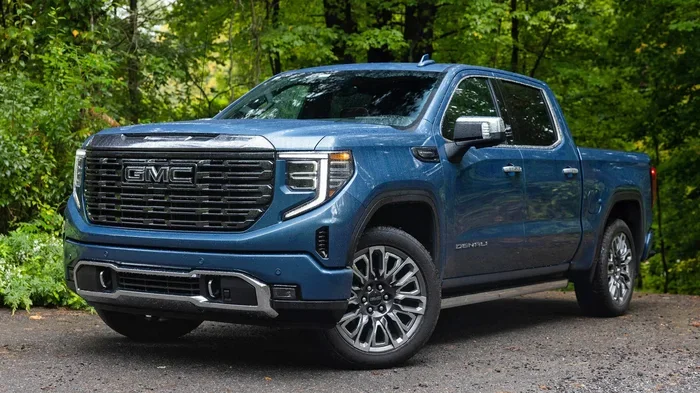
How Much Does a GMC Sierra Weigh and Why It Matters
The GMC Sierra weighs between 4,200 and 5,800 pounds depending on the model and configuration. Knowing your truck’s weight helps with towing safety, fuel economy, and road legality. Whether you drive a Sierra 1500 or a heavy-duty 3500, understanding curb weight, GVWR, and payload capacity makes every trip safer and smarter.
Have you ever wondered how much your GMC Sierra actually weighs? It might seem like a simple question, but the answer is more complex than you might think. The weight of your truck affects everything from towing capacity to fuel economy. It even plays a role in how safe your vehicle is on the road.
Whether you just bought a new GMC Sierra or you are thinking about upgrading, understanding your truck’s weight is essential. In this guide, we break down the numbers for every Sierra model. We also explain why weight matters and how it impacts your daily driving. By the end, you will know exactly what your truck weighs and why those numbers matter to you.
The GMC Sierra weight depends on several factors. These include the model year, trim level, engine type, and cab configuration. A regular cab short bed weighs very differently from a crew cab with a long bed. Add in the different engine options, and the numbers can vary quite a bit. That is exactly why we created this detailed guide. We want to give you clear, accurate, and useful information in one place.
Key Takeaways
- Weight Varies by Model: The Sierra 1500 starts around 4,200 pounds, while the Sierra 3500 can exceed 5,800 pounds.
- Curb Weight Is Key: This is the weight of the truck with no passengers or cargo but with a full tank of fuel.
- GVWR Matters for Safety: Exceeding your truck’s Gross Vehicle Weight Rating can damage components and void your warranty.
- Payload and Towing Are Affected: Heavier trucks carry less payload and may need stronger braking systems.
- Fuel Economy Drops With Weight: A heavier Sierra uses more gas, so keeping weight down saves money at the pump.
- Know Your Truck: Checking your specific model’s weight helps you stay within legal limits and drive more confidently.
📑 Table of Contents
- What Is Curb Weight and Why Should You Care?
- GMC Sierra 1500 Weight: What to Expect
- GMC Sierra 2500 and 3500 Weight Breakdown
- How Truck Weight Affects Towing and Payload
- Does Truck Weight Impact Fuel Economy?
- Why Knowing Your Sierra Weight Matters for Safety
- How to Find Your Exact GMC Sierra Weight
- Common Mistakes People Make With Truck Weight
- Expert Insights on GMC Sierra Weight
- Final Thoughts
What Is Curb Weight and Why Should You Care?
Before we dive into specific numbers, let us talk about what curb weight actually means. Curb weight is the weight of your truck when it is empty. It includes a full tank of fuel, all standard equipment, and fluids like oil and coolant. But it does not include passengers, cargo, or any aftermarket additions.
Understanding curb weight helps you figure out how much your truck can safely carry. If you exceed the weight limits, you risk damaging your vehicle. You could also face legal issues on the road. Vehicle curb weight is the baseline number that every other weight measurement builds from.
Here are some key terms you should know when talking about truck weight:
- Curb Weight: The weight of the empty truck with a full fuel tank.
- Gross Vehicle Weight Rating (GVWR): The maximum safe weight your truck can be, including cargo and passengers.
- Payload Capacity: How much weight your truck can carry in the bed and cabin combined.
- Towing Capacity: The maximum weight your truck can pull behind it with a trailer.
- Axle Weight: The amount of weight each axle supports.
These numbers are not just random specs. They are carefully engineered limits designed to keep your truck performing safely. Ignoring them can lead to blown tires, brake failure, or even engine damage over time.
GMC Sierra 1500 Weight: What to Expect
The GMC Sierra 1500 is the most popular model in the Sierra lineup. It is a half-ton truck that balances work capability with everyday comfort. But how much does it actually weigh?
The curb weight of a Sierra 1500 typically falls between 4,200 and 4,800 pounds. The exact number depends on your chosen configuration. Let us break it down by the different options available.
How Configuration Affects the Sierra 1500 Weight
Every choice you make when building your Sierra adds or removes weight. Here is how different configurations change the number:
- Regular Cab: The lightest option, usually around 4,200 to 4,400 pounds.
- Crew Cab: Adds extra space and structure, pushing weight to 4,500 to 4,700 pounds.
- Short Bed: A shorter truck bed reduces weight by about 50 to 100 pounds.
- Long Bed: Adds length and weight, bringing the total up slightly.
- Engine Choice: The standard V6 is lighter than the V8 options, which can add 100 to 200 pounds.
When you start adding aftermarket accessories like running boards, bed liners, or tonneau covers, the weight creeps up further. These small additions might not seem like much, but they add up quickly. Always keep your truck gross weight in mind when adding extras.
GMC Sierra 2500 and 3500 Weight Breakdown
The Sierra 2500 and 3500 are classified as heavy-duty trucks. They are built for serious towing and hauling. Because of this, they weigh significantly more than the Sierra 1500.
Sierra 2500 Weight Specifications
The GMC Sierra 2500 weight typically ranges from 5,200 to 5,600 pounds. This model is a three-quarter-ton truck, meaning it can handle heavier loads than the 1500. The crew cab long bed configuration tends to sit at the higher end of that range.
Key factors that influence the 2500’s weight include:
- The Duramax diesel engine option, which adds weight compared to the gasoline V8.
- The dual rear wheel (DRW) configuration, which can add several hundred pounds.
- Heavy-duty suspension components and reinforced frame parts.
- Larger braking systems designed to stop a heavier vehicle safely.
Sierra 3500 Weight Specifications
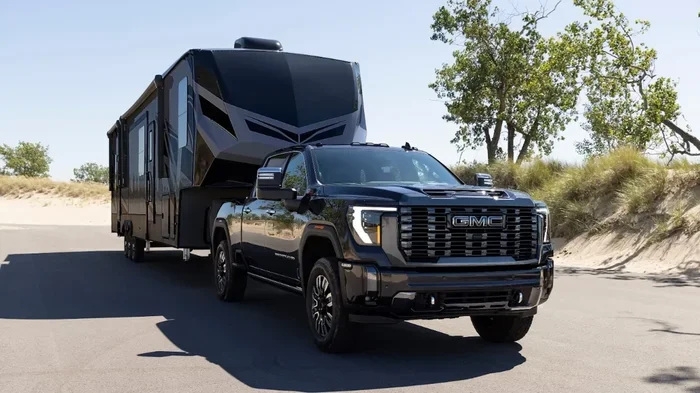
The GMC Sierra 3500 weight can exceed 5,800 pounds in some configurations. This is the heaviest Sierra model and is built for the most demanding towing jobs. With the dual rear wheel setup and the diesel engine, you are looking at the upper end of the weight spectrum.
Here is a quick comparison of the three main Sierra models:
- Sierra 1500: 4,200 to 4,800 pounds curb weight.
- Sierra 2500: 5,200 to 5,600 pounds curb weight.
- Sierra 3500: 5,600 to 5,800+ pounds curb weight.
As you can see, moving up to a heavy-duty model adds a significant amount of weight. This is important to consider when thinking about fuel costs, tire wear, and road restrictions in your area.
How Truck Weight Affects Towing and Payload
Truck weight has a direct relationship with towing and payload capacity. It might seem counterintuitive, but a heavier truck does not always mean more towing power. Let us explain how this works.
Your truck’s towing capacity depends on the engine, transmission, axle ratio, and frame strength. However, your payload capacity is calculated by subtracting the curb weight from the GVWR. So a heavier truck has less room for cargo and passengers.
Here is a simple way to think about it:
- Find your truck’s GVWR. This number is on the door jamb sticker.
- Subtract the curb weight from the GVWR.
- The result is your maximum payload capacity.
For example, if your Sierra 1500 has a GVWR of 7,000 pounds and a curb weight of 4,500 pounds, your payload capacity is 2,500 pounds. That covers passengers, cargo, and anything else in the truck. Keep this in mind when loading up your truck bed for a move or a camping trip.
Towing works differently. The truck’s towing capacity is limited by factors like engine torque, transmission cooling, and brake strength. Always consult your owner’s manual or the manufacturer’s website for the exact towing specs for your specific configuration.
Does Truck Weight Impact Fuel Economy?
The short answer is yes. Heavier trucks use more fuel. This is one of the most practical reasons to understand your GMC Sierra weight. The more your truck weighs, the more energy it takes to move it down the road.
Let us look at how weight affects fuel economy in real terms. A lighter Sierra 1500 with the V6 engine will naturally get better gas mileage than a Sierra 3500 with the diesel V8. The difference can be significant over time.
Here are some factors that connect truck weight to fuel economy:
- Engine Workload: A heavier truck demands more power from the engine, which burns more fuel.
- Rolling Resistance: Heavier trucks put more pressure on the tires, increasing rolling resistance.
- Braking Distance: Heavier vehicles need more energy to stop, which affects overall efficiency.
- Aerodynamics: While not directly related to weight, larger heavy-duty trucks tend to have less aerodynamic profiles.
If you are curious about how fuel efficiency compares across different vehicles, you might find it interesting to learn about how far a single litre of petrol can take you in various cars. Even though the Sierra is a truck and not a compact car, understanding fuel efficiency principles helps you make smarter choices at the pump. Similarly, knowing how many kilometers you can cover per liter of fuel gives you a practical benchmark for comparing your truck’s efficiency against other vehicles.
Here are some quick tips to improve fuel economy in your Sierra:
- Keep your truck bed empty when you do not need the cargo space.
- Remove roof racks and accessories when they are not in use.
- Keep your tires properly inflated to reduce rolling resistance.
- Drive at steady speeds and avoid aggressive acceleration.
- Use cruise control on highways to maintain consistent fuel burn.
Small changes add up over thousands of miles. Every pound you remove from your truck is a pound your engine does not have to move.
Why Knowing Your Sierra Weight Matters for Safety
Safety is the most important reason to understand your truck’s weight. When you know your vehicle’s limits, you drive more confidently and responsibly. Exceeding weight limits is one of the leading causes of truck accidents on the road.
Here is how weight affects safety in practical terms:
- Braking Performance: Heavier trucks need more distance to stop. Overloading your Sierra can mean the difference between a safe stop and a collision.
- Handling and Stability: A truck loaded beyond its capacity is harder to control, especially in turns and on wet roads.
- Tire Wear and Failure: Excess weight causes tires to overheat, increasing the risk of blowouts.
- Bridge and Road Limits: Many roads and bridges have weight limits. Knowing your truck’s weight helps you avoid fines and structural damage.
On the road, unexpected situations happen all the time. For instance, if a deer suddenly darts in front of your truck, the weight of your vehicle plays a role in how much damage occurs. A heavier truck may cause more structural damage in a collision, and understanding whether hitting a deer can total your car depends partly on the vehicle’s weight and speed at impact. Always drive at safe speeds and keep your truck properly maintained to handle whatever the road throws at you.
Another safety consideration is how your truck’s weight interacts with other vehicles. Heavier trucks can cause more damage in accidents involving smaller vehicles. This is why staying within your truck’s weight limits is not just about protecting your vehicle. It is about protecting everyone on the road.
How to Find Your Exact GMC Sierra Weight
Now that you understand why weight matters, you might be wondering how to find the exact number for your specific truck. There are a few reliable ways to do this.
First, check the door jamb sticker. Every new truck comes with a label on the driver’s side door that lists the GVWR, curb weight, and payload capacity. This is the most accurate source for your specific vehicle.
Second, consult your owner’s manual. The manual provides detailed specifications for your exact model year and configuration. Look for the section on vehicle specifications or technical data.
Third, visit the manufacturer’s website. GMC offers a vehicle lookup tool where you can enter your model, year, and trim to get the exact weight figures.
Finally, if you want to know the actual weight of your loaded truck, you can visit a truck scale. Many truck stops and commercial weigh stations offer public access to scales for a small fee. This is especially useful if you haul cargo regularly and want to make sure you are within legal limits.
Knowing your exact weight also helps when you are planning a trip. Some campgrounds, ferries, and bridges have weight restrictions. Having your truck’s weight handy prevents surprises and keeps your journey smooth.
Common Mistakes People Make With Truck Weight
Even experienced truck owners make mistakes when it comes to weight. Here are some common errors to avoid:
- Ignoring the Owner’s Manual: The manual has the most accurate weight specs for your exact truck. Guessing can lead to overloading.
- Forgetting Aftermarket Additions: Lift kits, larger wheels, and bed accessories all add weight. Factor these in when calculating your payload.
- Confusing Curb Weight with Gross Weight: These are very different numbers. Always know which one you are working with.
- Overloading the Bed: Just because the bed looks empty does not mean you have room for more weight. Stay within payload limits.
- Neglecting Tire Upgrades: Heavier trucks may need upgraded tires. Using the wrong tires for your weight can be dangerous.
Avoiding these mistakes keeps your truck running well and keeps you safe on the road. It also protects your investment by preventing premature wear on your suspension, brakes, and engine.
Expert Insights on GMC Sierra Weight
We asked automotive experts what they wish more truck owners understood about vehicle weight. Here is what they had to say:
“The weight of your truck affects every system in the vehicle,” says one certified mechanic. “From the brakes to the transmission to the tires, everything is engineered for a specific weight range. Stay within those limits, and your truck will last longer and perform better.”
Another expert emphasizes the importance of understanding weight distribution. “It is not just about total weight. Where the weight is placed matters just as much. A heavy load in the bed affects handling differently than the same weight in the cab. Always distribute weight evenly and secure your cargo properly.”
These insights remind us that weight is not just a number on a spec sheet. It is a fundamental part of how your truck operates every single day.
Final Thoughts
Understanding how much your GMC Sierra weighs is about more than curiosity. It is about safety, performance, and making the most of your truck. Whether you drive a lightweight Sierra 1500 or a heavy-duty Sierra 3500, knowing your truck’s weight helps you make smarter decisions every time you get behind the wheel.
Remember the key numbers: curb weight, GVWR, payload capacity, and towing capacity. Keep your truck within its designed limits, and you will enjoy years of reliable service. Pay attention to how weight affects fuel economy, braking, and handling, and you will be a more informed and responsible truck owner.
The next time you load up your Sierra for a trip or a project, take a moment to think about the weight. A little awareness goes a long way toward keeping you, your truck, and everyone else on the road safe. Drive smart, stay within your limits, and enjoy everything your GMC Sierra has to offer.
Frequently Asked Questions
How much does a GMC Sierra 1500 weigh?
The GMC Sierra 1500 curb weight typically ranges from 4,200 to 4,800 pounds depending on the cab style, bed length, and engine option. The regular cab short bed is on the lighter end, while the crew cab long bed with a V8 engine is on the heavier end. Always check your specific model’s door jamb sticker for the exact number.
What is the GVWR for a GMC Sierra?
The GVWR varies by model and configuration. For the Sierra 1500, it typically ranges from 6,000 to 7,000 pounds. Heavy-duty models like the 2500 and 3500 have higher GVWRs, often exceeding 7,000 pounds. You can find the exact GVWR on the door jamb label or in your owner’s manual.
Does a heavier Sierra have less towing capacity?
Not necessarily. Towing capacity depends on engine power, axle ratio, and frame strength, not just curb weight. However, a heavier truck does have less payload capacity. This means you can tow more but carry less cargo and passengers at the same time. Always check the specific towing specs for your configuration.
How can I reduce my GMC Sierra’s weight?
You can reduce weight by removing unnecessary accessories, keeping the truck bed empty when not in use, and avoiding aftermarket additions that are not essential. Using lighter wheels and tires within the recommended size range can also help. Every pound removed improves fuel economy and handling.
Why is it important to know the exact weight of my truck?
Knowing your truck’s exact weight helps you stay within legal limits, avoid overloading, and drive safely. It also affects your insurance, fuel costs, and how your truck handles on the road. In many areas, bridges and roads have weight restrictions that you need to be aware of.
How does the Sierra 3500 weight compare to the 1500?
The Sierra 3500 is significantly heavier than the Sierra 1500. While the 1500 weighs around 4,200 to 4,800 pounds, the 3500 can exceed 5,800 pounds. This extra weight comes from the heavier-duty frame, suspension, brakes, and larger engine options. The trade-off is greater towing and hauling capability.
=== CONCLUSION ===
The GMC Sierra weight is a crucial piece of information that every truck owner should understand. From the lightweight Sierra 1500 to the heavy-duty Sierra 3500, each model has its own unique weight profile that affects performance, safety, and efficiency. By knowing your truck’s curb weight, GVWR, and payload capacity, you can drive with confidence and avoid costly mistakes.
Take the time to check your specific truck’s weight today. Refer to your door jamb sticker, owner’s manual, or the manufacturer’s website. Use this knowledge to make better decisions about loading, towing, and maintaining your Sierra. Your truck, your wallet, and your safety will all thank you for it.