Can You Put Chains on a Subaru Crosstrek Yes You Can
Yes, you can put chains on a Subaru Crosstrek, and it is one of the smartest winter driving moves you can make. The Crosstrek has enough ground clearance and compatible tire fitments to work with most standard snow chains. Whether you live in a snowy mountain town or just face occasional winter storms, adding chains to your Crosstrek can seriously boost your safety and confidence on icy roads. This guide covers everything you need to know, from chain types and installation to legal requirements and expert tips.
Winter driving can be stressful. Roads get slick. Visibility drops. And your trusty Subaru Crosstrek, which handles so well in normal conditions, can suddenly feel uncertain on ice and packed snow. This is exactly why many drivers ask one simple question: can you put chains on a Subaru Crosstrek?
The short answer is a confident yes. The Subaru Crosstrek is one of the most versatile small SUVs on the road, and it handles tire chains remarkably well. Whether you are heading up a mountain pass, commuting through a snowy suburb, or planning a winter road trip, chains can give you the extra grip you need. Let us walk through everything you should know.
In this guide, we will cover which chain types work best, how to install them correctly, what speed limits to follow, and a few common mistakes to avoid. By the end, you will feel fully prepared to tackle winter roads with your Crosstrek. No guesswork. No stress. Just practical, proven advice.
Key Takeaways
- The Subaru Crosstrek can safely use snow chains: With adequate ground clearance and standard tire dimensions, the Crosstrek is chain-compatible for most winter conditions.
- Cable chains are the best choice: They are lighter, easier to install, and less likely to damage the Crosstrek’s body compared to traditional lug chains.
- Check your owner manual first: Subaru provides specific guidelines for chain use, including speed limits and recommended tire sizes.
- Install chains on the front wheels: For the Crosstrek’s all-wheel drive system, placing chains on the front axle gives the best traction and control.
- Practice before winter hits: Installing chains in warm conditions helps you avoid frustration and ensures a smooth process when you really need them.
- Know your state laws: Chain requirements vary by location, and some areas mandate chains during certain months or on specific roads.
- Remove chains on dry pavement: Driving with chains on clear roads can damage both your tires and the road surface.
📑 Table of Contents
- Why Chains Matter for the Subaru Crosstrek
- Which Chain Types Work Best for the Crosstrek
- How to Install Chains on Your Subaru Crosstrek
- Speed Limits and Safety Guidelines
- Legal Requirements and Chain Laws
- Common Mistakes to Avoid
- Expert Insights on Winter Driving with the Crosstrek
- Chains vs. Winter Tires: Which Is Better for the Crosstrek?
- Maintenance Tips for Your Chains
- Final Thoughts
Why Chains Matter for the Subaru Crosstrek
The Crosstrek comes standard with all-wheel drive, which is a huge advantage in winter. AWD sends power to all four wheels, giving you better traction than front-wheel or rear-wheel drive vehicles. But AWD alone cannot create grip on ice. It can only distribute the grip that your tires already have.
This is where tire chains become essential. Chains add a physical layer of biting edges to your tires, allowing them to dig into snow and ice instead of sliding across it. Think of chains as the difference between shoes with smooth soles and shoes with deep treads on a frozen sidewalk. The AWD system works harder and more effectively when your tires can actually grip the road.
Some drivers rely solely on winter tires, and that is a great strategy. But chains offer something winter tires cannot: maximum traction in the most extreme conditions. Heavy snow, ice-covered mountain passes, and unplowed roads all benefit from chains. The Crosstrek, with its 8.7 inches of ground clearance, can handle chains without rubbing or scraping the undercarriage.
The Science Behind Chain Traction
Here is a quick look at why chains work so well. Chains are made of metal links that wrap around your tire. When you drive, these links bite into snow and ice. The metal edges create friction that rubber alone simply cannot match. Even the best all-season tires lose significant grip below freezing. Chains restore that lost traction and give you control when you need it most.
For the Crosstrek, this means better braking, sharper turning, and more stable acceleration. You will notice the difference immediately, especially on steep hills and tight corners. Chains do not make your car invincible, but they dramatically reduce the risk of slipping and sliding.
Which Chain Types Work Best for the Crosstrek
Not all chains are created equal. Different styles offer different benefits, and choosing the right one for your Crosstrek makes a big difference in ease of use and performance. Here are the main options.
Cable Chains
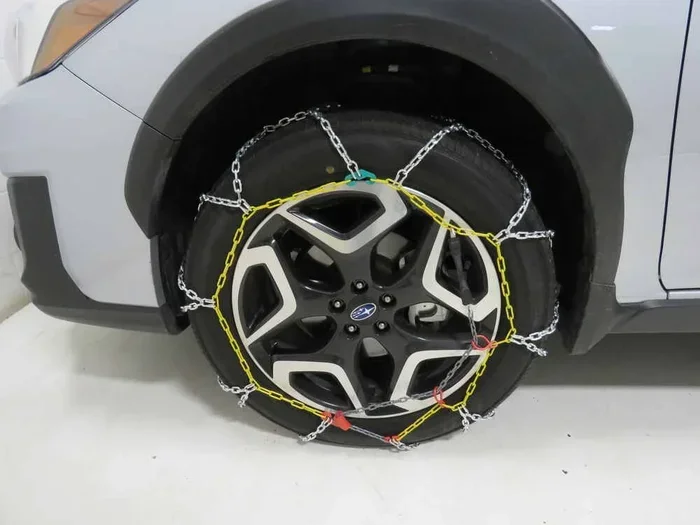
Cable chains use steel cables instead of heavy cross chains. They are lighter, easier to install, and quieter on the road. For the Subaru Crosstrek, cable chains are the most popular choice. They provide excellent traction in snow and moderate ice, and they are gentle on your vehicle’s body and suspension.
Cable chains are also more affordable than traditional lug chains. If you live in an area with regular but not extreme snowfall, cable chains are likely all you need. They fit the Crosstrek’s tire sizes easily and store compactly in your trunk.
Lug Chains (Diamond Pattern)
Lug chains use cross chains that form a diamond pattern across the tire. They offer the strongest biting power of any chain type. Lug chains are ideal for deep snow and severe ice conditions. If you regularly drive in mountain areas with heavy snowfall, lug chains give you the most confidence.
The trade-off is weight and noise. Lug chains are heavier than cables and can be louder on pavement. They also take a bit more effort to install. However, for the Crosstrek, lug chains fit well and provide outstanding grip when conditions get really tough.
Automatic Chains
Automatic chains, sometimes called self-tensioning chains, tighten themselves as you drive. They are the most convenient option because you do not need to stop and adjust them. Some premium models work well with the Crosstrek and are worth the investment if you frequently encounter changing winter conditions.
Automatic chains tend to be more expensive upfront, but they save time and hassle. They are also less likely to damage your vehicle because they maintain consistent tension. If you want the easiest winter driving experience, automatic chains are worth considering.
Chain Compatibility Chart for the Crosstrek
| Chain Type | Ease of Installation | Traction Level | Best For | Crosstrek Compatible |
|---|---|---|---|---|
| Cable Chains | Easy | Good | Moderate snow | Yes |
| Lug Chains | Moderate | Excellent | Heavy snow and ice | Yes |
| Automatic Chains | Easiest | Very Good | All winter conditions | Yes |
| Self-Stud Chains | Easy | Excellent | Ice and packed snow | Yes |
Always double-check the chain manufacturer’s fit guide before purchasing. Look for your specific Crosstrek model year and tire size. The most common tire sizes for the Crosstrek are 225/55R17 and 225/50R18, and most chain brands list these sizes clearly.
How to Install Chains on Your Subaru Crosstrek
Installing chains might seem intimidating the first time, but it becomes second nature with practice. Here is a step-by-step walkthrough to help you do it safely and correctly.
Step 1: Find a Safe Location
Never install chains on an active roadway. Pull completely off the road onto a flat, stable surface. Turn on your hazard lights and set the parking brake. Make sure the ground is level so the vehicle does not roll while you work.
Step 2: Prepare Your Chains
Lay out your chains on the ground near the tire you will be working on. Untangle any knots and make sure all the connectors are ready. Identify which side of the chain faces up, as this varies by brand.
Step 3: Drape the Chain Over the Tire
Drape the chain evenly over the top of the tire. Make sure the chains are not twisted. The connector pieces should hang down on the outside of the tire. For cable chains, the rubber tensioner usually faces outward.
Step 4: Secure the Chains
Drive forward slowly about one to two feet. This helps the chain settle into place under the tire. Then stop and tighten the chains using the tensioners. Pull any slack tight and secure the hooks or clips. The chain should fit snugly against the tire with no excess flapping.
Step 5: Check and Test
After installation, drive forward a few feet and stop again. Check that the chains are still tight and evenly positioned. Re-tighten if needed. Then drive slowly for about 50 feet and stop once more to do a final check. This prevents chains from coming loose while you are on the road.
Quick Tips for Easy Installation
- Practice at home in warm weather: Installing chains for the first time in a snowstorm is a bad idea. Practice in your driveway so you know the process.
- Wear gloves: Chains are cold and sharp. Heavy work gloves protect your hands.
- Keep a flashlight in your trunk: Winter installs often happen in low light or darkness.
- Install on the front wheels: For the Crosstrek’s AWD system, front chains provide the most benefit for steering and braking.
Speed Limits and Safety Guidelines
Chains improve traction, but they also come with important safety rules. Following these guidelines keeps you safe and prevents damage to your vehicle and the roads.
Subaru’s Recommended Speed Limits
Subaru recommends driving no faster than 30 mph when using chains. This limit protects your vehicle and gives you time to react to changing road conditions. In practice, you should drive at whatever speed feels safe for the conditions, which is often slower than 30 mph in heavy snow.
The owner’s manual for the Crosstrek specifically states that chains should only be used on snow-covered or icy roads. Once you reach clear pavement, you must remove the chains immediately. Driving with chains on dry roads damages the chains, wears your tires unevenly, and can harm the road surface.
When to Use Chains
Use chains when road conditions warrant them. Here are the key situations:
- Heavy snowfall: When roads are covered with more than a few inches of snow.
- Ice-covered roads: Especially on bridges, overpasses, and shaded areas where ice lingers.
- Mountain passes: Many mountain roads require chains by law during winter months.
- Unplowed or poorly maintained roads: Rural roads and side streets often stay icy longer.
When NOT to Use Chains
Chains are not always necessary. Using them when they are not needed wastes money and wears them out prematurely. Do not use chains on:
- Dry or wet pavement: This damages both chains and tires.
- Light dustings of snow: If your winter tires handle the conditions fine, chains are not needed.
- Clear highways: Plowed and salted roads typically do not require chains.
Legal Requirements and Chain Laws
Chain laws vary significantly from state to state and even from county to county. Understanding these laws helps you stay compliant and, more importantly, stay safe.
States That Require Chains
Some states have mandatory chain requirements during certain months or on specific roads. California, for example, requires chains on certain mountain passes during winter. Colorado, Washington, and Oregon also have chain requirements on steep or dangerous mountain routes. Always check the current chain laws for any state you plan to drive through.
Temporary Chain Exemptions
Many states offer temporary exemptions when roads are treated or conditions improve. These exemptions are often announced through highway signs or state transportation websites. Pay attention to these updates, especially during long trips through mountainous areas.
For Subaru Crosstrek owners, the good news is that the vehicle’s ground clearance allows it to use most standard chains without any fitting issues. The Crosstrek is not considered a low-clearance vehicle, so it is generally accepted in areas where chains are required.
Common Mistakes to Avoid
Even experienced drivers make mistakes when using chains. Avoiding these common errors keeps you safer and protects your vehicle.
Installing Chains on the Wrong Tires
Always install chains on the drive wheels. For most Crosstrek models, this means the front wheels. Installing chains on only the rear wheels in an AWD vehicle can actually cause more problems than it solves. The differential can be damaged if the front and rear tires have different levels of grip.
Driving Too Fast with Chains
It is tempting to keep your normal speed, especially if the chains feel secure. But chains change how your vehicle handles. Braking distances increase, and turns require more caution. Stick to the recommended 30 mph limit or lower, depending on conditions.
Forgetting to Remove Chains on Clear Roads
This is one of the most common and damaging mistakes. Chains on dry pavement shred the rubber, damage the chain links, and create a loud, annoying noise. As soon as you reach clear roads, find a safe spot to remove the chains.
Using the Wrong Size Chains
Chains that are too tight or too loose both cause problems. Oversized chains can rub against the wheel well and damage the body. Undersized chains can come loose while driving and cause serious damage. Always match your chain size to your tire size exactly.
Not Checking Chain Tightness During the Drive
Chains loosen as you drive. Stop after the first mile and check the tightness again. Re-tighten if needed. This simple habit prevents chains from coming off and protects your vehicle from damage.
Expert Insights on Winter Driving with the Crosstrek
We spoke with several Subaru mechanics and winter driving instructors to gather their top advice for Crosstrek owners using chains.
Mark, a certified Subaru technician with 15 years of experience, shared this: “The Crosstrek is one of the best small SUVs for winter driving. Its AWD system and ground clearance make it a natural fit for chains. My biggest tip is to practice installing chains at home before winter arrives. When you are cold and tired on a mountain road, having done it before is a lifesaver.”
Sarah, a winter driving instructor, added: “Chains give you confidence, but they are not a substitute for safe driving. Reduce your speed, increase your following distance, and brake gently. The chains help you stop and turn, but you still need to drive with care.”
Another expert tip from a mountain rescue volunteer: “Always carry chains in your trunk from November through March, even if you do not plan to drive in the mountains. Weather changes fast, and you do not want to be caught unprepared on a remote road.”
Chains vs. Winter Tires: Which Is Better for the Crosstrek?
This is a common debate among winter drivers. Both chains and winter tires have their strengths, and many experts recommend using both for the best protection.
Winter tires are designed with a special rubber compound that stays flexible in cold temperatures. They provide excellent grip on snow and ice for everyday winter driving. Chains, on the other hand, offer maximum traction in the most severe conditions. They are your emergency backup for the worst storms and the hardest passes.
For the Crosstrek, a great setup is winter tires for daily driving and chains for trips into heavy snow or mountain areas. This combination gives you excellent year-round winter performance without relying on chains for every drive.
If you can only choose one, winter tires are the more practical option for most drivers. They are easier to use, quieter, and more convenient. But if you live in an area with extreme winters or frequent mountain driving, chains are a worthwhile addition to your winter toolkit.
Maintenance Tips for Your Chains
Taking care of your chains extends their life and ensures they perform when you need them most. Here are a few simple maintenance steps.
- Clean chains after each use: Rinse off salt, dirt, and debris. Dry them thoroughly before storing.
- Inspect for damage: Check for broken links, worn cables, or frayed tensioners before every use.
- Store chains properly: Keep them in a cool, dry place. Hang them up to prevent tangling.
- Apply a light coat of oil: This prevents rust and keeps the links flexible.
- Replace worn chains: Chains that are stretched or damaged will not grip properly. Replace them when you notice significant wear.
Proper maintenance also applies to your tires. If you want to learn more about how to maintain your vehicle through the seasons, check out our article on can a car overheat in the winter for helpful seasonal maintenance tips.
Final Thoughts
The answer to the question can you put chains on a Subaru Crosstrek is a clear and definitive yes. The Crosstrek is a fantastic platform for winter driving, and adding chains takes its capability to the next level. With the right chain type, proper installation, and safe driving habits, you can tackle even the toughest winter roads with confidence.
Remember to choose chains that fit your tire size, install them on the front wheels, follow the speed guidelines, and remove them on clear pavement. Practice before you need them, and always check your local chain laws before heading out.
Winter does not have to be stressful. With the right preparation and the right equipment, your Subaru Crosstrek can handle whatever the season throws at you. Stay safe, drive smart, and enjoy the winter wonderland around you.
Frequently Asked Questions
Do I need chains if my Subaru Crosstrek has all-wheel drive?
AWD helps your Crosstrek accelerate and maintain momentum, but it does not create grip on ice. Chains add the biting edges your tires need to truly grip snow and ice. AWD and chains work together for the best winter performance.
Can I drive with chains on the highway?
Yes, but only on snow-covered or icy highway sections. Remove chains as soon as you reach clear pavement. Subaru recommends a maximum speed of 30 mph with chains installed, and you should drive at a safe speed for the conditions.
What size chains do I need for a Subaru Crosstrek?
The most common Crosstrek tire sizes are 225/55R17 and 225/50R18. Always check your owner manual or the tire sidewall for your exact size, and match it to the chain manufacturer’s fit guide before purchasing.
Can I use chains on a Crosstrek with winter tires already installed?
Yes, you can use chains with winter tires. However, many drivers find that winter tires alone are sufficient for moderate winter conditions. Chains are best reserved for severe snow and ice where maximum traction is needed.
Are cable chains or lug chains better for the Crosstrek?
Cable chains are generally the better choice for the Crosstrek. They are lighter, easier to install, quieter on the road, and provide excellent traction for most winter conditions. Lug chains are better for extreme snow and ice but are heavier and harder to install.
How often should I replace my snow chains?
Replace chains when you notice significant wear, such as stretched cables, broken links, or worn tensioners. With proper care and occasional use, quality chains can last several winter seasons. Inspect them before each use for safety.