Why Is My Hybrid System Not Working And How To Fix It
Your hybrid system may not be working due to a dead or degraded hybrid battery, electrical faults, low coolant, or software glitches. This guide covers the most common causes, diagnostic steps, and practical fixes so you can get back on the road safely.
Key Takeaways
- Weak hybrid battery: The most common reason a hybrid system fails, especially in older vehicles.
- 12-volt auxiliary battery issues: A dead auxiliary battery can disable the entire hybrid system.
- Coolant and fluid problems: Low or contaminated coolant can cause overheating and system shutdown.
- Power control module faults: Software glitches or hardware failures in the PCM can disrupt hybrid operation.
- Warning lights matter: Ignoring the check engine light or hybrid warning light leads to bigger problems.
- Regular maintenance prevents breakdowns: Simple upkeep keeps your hybrid powertrain running strong for years.
- Know when to seek help: Some repairs need a certified technician and professional diagnostic tools.
📑 Table of Contents
- Why Is My Hybrid System Not Working? The Most Common Causes
- Warning Signs Your Hybrid System Is About to Fail
- How To Diagnose Your Hybrid System Problem
- How To Fix Your Hybrid System When It Is Not Working
- Preventive Maintenance Tips to Keep Your Hybrid System Running
- When To Call a Professional
- Understanding How Your Hybrid System Works
- Common Mistakes Hybrid Owners Make
- Cost Considerations for Hybrid System Repairs
- Conclusion
Why Is My Hybrid System Not Working? The Most Common Causes
There is nothing worse than stepping into your car and realizing the hybrid system not working. You turn the key, the engine sputters, and you are stuck wondering what went wrong. Hybrid vehicles are more complex than traditional cars, and that complexity means more things can go wrong.
But here is the good news. Most hybrid system problems come from a small set of root causes. Once you understand what those are, diagnosing and fixing them becomes much easier. Let us break down the most common reasons your hybrid powertrain might be acting up.
Dead or Degraded Hybrid Battery
The hybrid battery is the heart of your vehicle’s electric system. Over time, these batteries lose their ability to hold a full charge. When that happens, your car cannot switch between gas and electric power the way it should.
You might notice your vehicle running only on gas even at low speeds. Or you may see a hybrid warning light on the dashboard. In some cases, the car will not start at all. A degraded hybrid battery is the number one reason owners report their hybrid system not working.
Most hybrid vehicle batteries last between 8 and 15 years, depending on driving habits and climate. Hot weather accelerates battery wear. So if you live in a warm climate, your battery may need replacement sooner.
Faulty 12-Volt Auxiliary Battery
Here is something many hybrid owners do not know. Your car has two batteries. There is the high-voltage hybrid battery that powers the electric motor. And there is a standard 12-volt battery that runs the computer systems and electronics.
If the 12-volt battery dies, the entire hybrid system shuts down as a safety measure. Your car will not start, and you will see warning lights everywhere. This is one of the easiest problems to fix but also one of the most overlooked.
Keep your 12-volt battery clean and fully charged. A simple jump start can sometimes bring your system back to life. But if the battery is old, replacement is the best long-term solution.
Coolant System Failures
Hybrid vehicles generate heat from both the engine and the electric motor. The coolant system keeps everything at the right temperature. When coolant levels drop or the system develops a leak, the hybrid system goes into protective mode.
Your car will limit power or shut down completely to prevent damage. This is a safety feature, not a random malfunction. If you notice your temperature gauge running hot or see a coolant warning, address it immediately.
Low coolant can also damage the inverter, which converts electrical energy for the motor. Replacing an inverter is expensive. So keeping your coolant system healthy saves you a lot of money.
Power Control Module Problems
The power control module is the brain of your hybrid system. It manages how power flows between the battery, motor, and engine. When this module fails, your car loses the ability to operate in hybrid mode.
Symptoms include sudden power loss, rough shifting, or the car staying in gas-only mode. Sometimes a software update from the dealer fixes the problem. Other times, the module needs to be replaced entirely.
Water damage is a common cause of PCM failure. If your car has been flooded or driven through deep water, check the module as part of your hybrid vehicle maintenance routine.
Warning Signs Your Hybrid System Is About to Fail
Catching problems early saves you time and money. Your car gives you plenty of warning before a complete hybrid system failure. Learning to read these signs is one of the best things you can do as a hybrid owner.
The Check Engine Light
The check engine light is your car’s way of telling you something is wrong. When it comes on, do not ignore it. A diagnostic scanner can read the error codes and point you in the right direction.
Common codes related to hybrid system not working include P0A0F (hybrid battery malfunction) and P0AA6 (high-voltage system fault). These codes tell a technician exactly what to investigate.
Reduced Fuel Economy
One of the biggest benefits of a hybrid is fuel economy. If you suddenly notice your gas mileage dropping, your hybrid system may not be functioning properly. The car might be running on the gas engine more than it should.
Track your fuel consumption over a few tanks. A sudden change is a red flag. Use your car’s trip computer to monitor energy usage and driving mode patterns.
Unusual Noises
Hybrid cars are quiet by design. So any new sound stands out. Listen for grinding, buzzing, or whining noises coming from the front of the car or under the hood.
A whining noise often points to the electric motor or inverter. Grinding sounds may indicate transmission problems. Any unusual noise paired with a loss of power means you should get your car inspected right away.
Dashboard Warning Lights Specific to Hybrids
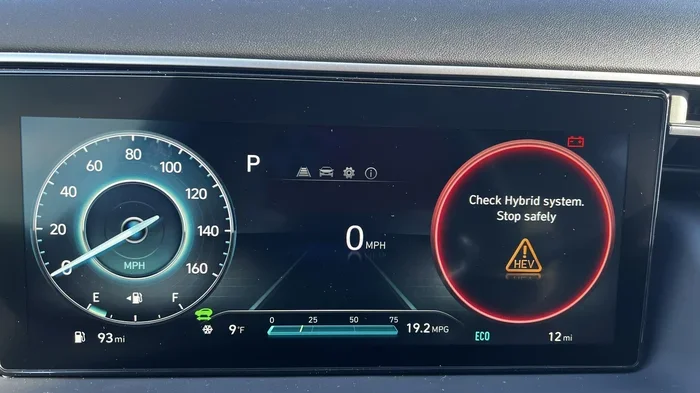
Most hybrids have a dedicated hybrid warning light. This light looks different from the check engine light. It may show a battery icon or the word “HYBRID.” When this light flashes or stays on, the hybrid system has detected a serious problem.
Do not keep driving with this light on. Pull over safely and turn off the engine. Continuing to drive can cause further damage to the powertrain and increase repair costs significantly.
How To Diagnose Your Hybrid System Problem
Diagnosing a hybrid system not working issue does not always require a trip to the mechanic. With the right approach, you can narrow down the problem yourself.
Step 1: Check the 12-Volt Battery
Start with the easiest fix first. Use a multimeter to test the 12-volt battery voltage. It should read at least 12.4 volts when the car is off. Anything below 12.0 volts means the battery needs charging or replacement.
If the battery is fine, move to the next step.
Step 2: Inspect the Hybrid Battery
Look for visible damage to the hybrid battery pack. Check for corrosion on the terminals. You can also use an OBD-II scanner to read battery health codes. A significant drop in battery capacity means the pack is aging.
Step 3: Check Fluid Levels
Open the hood and check the coolant level. Look for any puddles under the car that might indicate a leak. Also check the transmission fluid. Low or dirty fluid affects how the hybrid transmission shifts between electric and gas power.
Step 4: Use a Diagnostic Scanner
A quality diagnostic scanner reads codes from both the engine and hybrid systems. Plug it into the OBD-II port under your dashboard. Write down any codes you see and look them up in your vehicle’s service manual.
Many auto parts stores offer free code reading. Take advantage of this service before booking expensive repairs.
How To Fix Your Hybrid System When It Is Not Working
Once you have identified the cause, fixing the problem is the next step. Some repairs are simple enough for a DIY enthusiast. Others require professional help. Let us go through the most common fixes.
Reset Your Hybrid System
Sometimes the hybrid system just needs a reset. Turn off the engine and remove the key. Disconnect the 12-volt battery for about 15 minutes. Reconnect it and restart the car.
This process clears temporary error codes and resets the battery management system. It works like a soft reboot for your car’s computer. Many owners have fixed intermittent hybrid system issues this way.
Replace the 12-Volt Battery
If your 12-volt battery is dead or weak, replacing it is quick and affordable. You can buy a replacement at any auto parts store. Make sure to choose the correct group size for your vehicle model.
After installation, the hybrid system should power back up normally. If it does not, the problem lies elsewhere and you need to dig deeper.
Recondition or Replace the Hybrid Battery
A failing hybrid battery can sometimes be reconditioned rather than replaced entirely. Reconditioning involves balancing the individual cells within the battery pack. This restores capacity without the high cost of a full replacement.
If reconditioning is not an option, a new hybrid battery can cost anywhere from $1,500 to $4,000 depending on the vehicle model. Shop around for refurbished options. Many third-party suppliers offer quality rebuilt batteries at a fraction of the dealer price.
Repair the Coolant System
If a coolant leak caused your hybrid system not working, fix the leak and refill the system. Common leak points include the water pump, radiator hoses, and heater core. Use a coolant pressure tester to find hidden leaks.
After repairing the leak, flush the system and refill with the correct type of coolant specified in your owner’s manual. Using the wrong coolant can damage internal components.
Update or Replace the Power Control Module
For PCM issues, start by checking for software updates from the manufacturer. Many dealers can flash updated software to the module for free or at a low cost.
If the module is physically damaged, replacement is necessary. A new PCM can cost between $500 and $2,000. Always have a certified technician install and program the module to ensure compatibility with your vehicle.
Preventive Maintenance Tips to Keep Your Hybrid System Running
The best way to deal with a hybrid system not working is to prevent the problem from happening in the first place. Regular hybrid vehicle maintenance keeps everything running smoothly and extends the life of your powertrain.
Follow the Manufacturer’s Maintenance Schedule
Every hybrid comes with a recommended maintenance schedule. Stick to it. Regular inspections catch small problems before they become big ones. Your dealer or a qualified mechanic can perform these services quickly and affordably.
Monitor Your Battery Health
Check your hybrid battery health at least twice a year. Most modern hybrids have a battery health display in the instrument cluster. Watch for any downward trends in capacity over time.
If you notice a drop, have a technician perform a detailed battery test. Early detection can mean the difference between a simple reconditioning job and a full replacement.
Keep Fluids Fresh
Change your coolant according to the maintenance schedule. Use the correct type and grade. Also change your transmission fluid regularly. Clean fluid keeps the hybrid transmission shifting smoothly and reduces wear on internal components.
Drive Smart
Your driving habits affect your hybrid system health. Avoid aggressive acceleration and hard braking. These habits drain the hybrid battery faster and put extra stress on the regenerative braking system.
Use eco mode when possible. This setting optimizes power distribution for better efficiency and less strain on components. Smooth, steady driving also improves your overall fuel economy.
Store Your Vehicle Properly
If you store your hybrid for an extended period, keep the 12-volt battery connected to a maintainer. This prevents the auxiliary battery from dying and disabling the hybrid system. Also, keep the car in a cool, dry place to protect the high-voltage battery from heat damage.
When To Call a Professional
Not every repair is a DIY job. If you have checked the basics and your hybrid system is still not working, it is time to call in the experts. Here are situations where professional help is essential.
- High-voltage system faults: Working on high-voltage components is dangerous without proper training and equipment.
- Persistent warning lights: If lights keep coming back after clearing them, there is an underlying issue you cannot see.
- Complete power loss: A car that will not start or move at all needs immediate professional diagnosis.
- Burning smells or smoke: These are signs of serious electrical or mechanical failure. Stop driving and call for roadside assistance.
A certified hybrid technician has the tools and training to safely diagnose and repair complex hybrid powertrain issues. The cost of a professional diagnosis is small compared to the cost of making a mistake with high-voltage systems.
Understanding How Your Hybrid System Works
Knowing how your hybrid system operates helps you understand why things go wrong. A typical hybrid uses a gasoline engine and an electric motor working together. The inverter converts DC power from the battery to AC power for the motor.
The battery management system monitors cell voltages and temperatures. It decides when to charge the battery through regenerative braking and when to draw power for acceleration. The power control module coordinates all of these functions seamlessly.
When one component fails, the whole system suffers. That is why a systematic approach to diagnosis is so important. You do not just fix symptoms. You find and fix the root cause.
Understanding your vehicle also helps you communicate better with mechanics. Instead of saying “my car is acting weird,” you can describe specific symptoms. This saves time and money during the diagnostic process.
Common Mistakes Hybrid Owners Make
Avoid these common mistakes that make hybrid system problems worse or lead to unnecessary repairs.
- Ignoring warning lights: Even a small warning light can signal a serious issue brewing.
- Skipping regular maintenance: Hybrids still need oil changes, coolant flushes, and inspections.
- Using the wrong coolant: Not all coolants are the same. Check your owner’s manual for the correct specification.
- Charging the 12-volt battery improperly: Use a smart charger, not a traditional fast charger, to avoid damaging the system.
- Driving on a nearly dead hybrid battery: This strains the gas engine and reduces fuel economy significantly.
These mistakes are easy to avoid with a little awareness. Stay proactive and your hybrid system will reward you with years of reliable service.
Cost Considerations for Hybrid System Repairs
The cost to fix a hybrid system not working varies widely depending on the problem. A simple 12-volt battery replacement might cost $100 to $200. A new hybrid battery can run $1,500 to $4,000. Replacing a power control module typically falls in the $500 to $2,000 range.
Labor costs also add up. Hybrid systems require specialized knowledge, so hourly rates for hybrid technicians tend to be higher than for standard mechanics. Always get a detailed estimate before approving any major repair.
Warranty coverage can significantly reduce your out-of-pocket costs. Most hybrids come with a battery warranty of 8 to 10 years or 100,000 miles. Check your warranty before paying for expensive repairs.
Conclusion
A hybrid system not working is frustrating, but it is almost always fixable. The most common causes are a weak hybrid battery, a dead 12-volt auxiliary battery, coolant system failures, or power control module issues. By following the diagnostic steps in this guide, you can identify the problem and choose the right fix.
Remember to stay on top of hybrid vehicle maintenance. Regular checks of your fluids, battery health, and warning lights go a long way in preventing breakdowns. When you do encounter a problem, address it quickly. Small issues become big expensive repairs when ignored.
Your hybrid vehicle is a sophisticated machine, but it does not have to be mysterious. With the right knowledge and a little attention, you can keep your hybrid system running strong for years to come. Take action today, and your car will thank you tomorrow.
Frequently Asked Questions
Why did my hybrid system suddenly stop working?
A sudden failure usually points to a dead 12-volt auxiliary battery or a blown fuse in the high-voltage system. Check the auxiliary battery first, as it is the easiest and most common cause. If the battery is fine, use a diagnostic scanner to read error codes and narrow down the problem.
Can I drive my hybrid if the hybrid system is not working?
In most cases, yes. Your car will default to gas-only mode if the hybrid system fails. However, driving in this mode reduces power and fuel economy. It can also cause additional strain on the engine. Have the system repaired as soon as possible.
How much does it cost to fix a hybrid system not working?
Costs range from $100 for a 12-volt battery replacement to $4,000 for a new hybrid battery pack. Most common fixes like resetting the system or replacing falls fall between $100 and $500. Always get a professional diagnosis before committing to expensive repairs.
How do I reset my hybrid system?
Turn off the engine, remove the key, and disconnect the 12-volt battery for 15 minutes. Reconnect the battery and restart the car. This clears temporary error codes and resets the battery management system. If the problem persists, a deeper diagnosis is needed.
Is it safe to work on the hybrid battery myself?
No. The high-voltage components in a hybrid system can deliver a lethal shock. Always let a certified technician handle hybrid battery inspections and repairs. For the 12-volt battery, standard safety precautions apply and DIY replacement is safe.
How long do hybrid batteries last before causing system problems?
Most hybrid batteries last 8 to 15 years depending on driving habits and climate. Hot weather and frequent short trips reduce battery life. Regular maintenance and smart driving habits can extend the life of your hybrid battery significantly.