Are Hydrogen Cars Safe The Truth About Hydrogen Fuel
Hydrogen cars safe is a question many drivers ask before considering this emerging technology. The truth is that hydrogen fuel cell vehicles undergo rigorous safety testing and meet strict standards. While no vehicle is completely risk-free, hydrogen cars are designed with multiple layers of protection that make them a safe and viable option for eco-conscious drivers.
Are hydrogen cars safe? This is one of the most common questions people ask when they hear about hydrogen fuel cell vehicles. The short answer is yes. But the full story is much more interesting. When you dig into the engineering, the testing, and the real-world data, you find that hydrogen cars safe reputation is well-earned. These vehicles are not some wild experiment. They are the result of decades of research, testing, and refinement.
Hydrogen cars have been on roads since the early 2000s. Companies like Toyota, Hyundai, and Honda have invested billions in this technology. They have put these vehicles through crash tests, extreme temperature tests, and leak simulations. The results are reassuring. Hydrogen fuel safety is taken very seriously by every manufacturer and regulator involved.
So why do so many people still wonder, “Are hydrogen cars safe?” The answer lies in a mix of misinformation, unfamiliarity with the technology, and natural caution about anything new. This article breaks down everything you need to know. You will learn how hydrogen cars work, what safety features they have, and how they compare to electric vehicles. By the end, you will have a clear picture of hydrogen vehicle safety and whether this technology makes sense for you.
Key Takeaways
- Hydrogen cars safe rating is backed by extensive crash testing and engineering standards.
- Hydrogen fuel cells produce only water vapor as a byproduct, making them environmentally clean.
- Hydrogen tanks are built from carbon fiber and undergo extreme pressure and impact tests.
- Hydrogen leaks are detected quickly by advanced sensors that shut down the system automatically.
- Hydrogen cars vs electric cars each have unique safety profiles worth understanding.
- Hydrogen refueling stations follow strict safety protocols to prevent accidents.
- Hydrogen vehicle technology continues to improve safety features every year.
📑 Table of Contents
What Are Hydrogen Cars and How Do They Work?
The Basics of Hydrogen Fuel Cell Technology
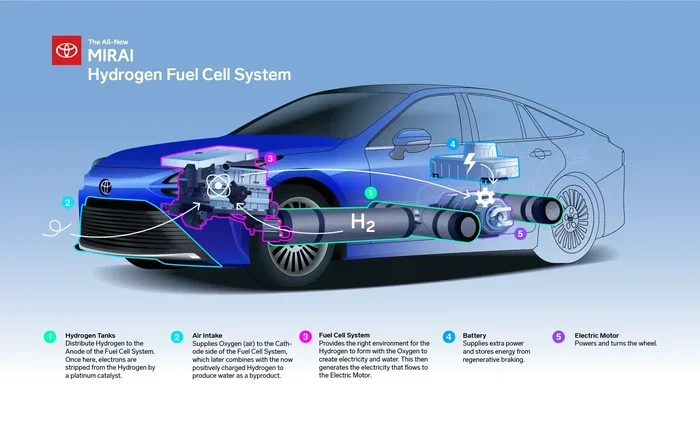
A hydrogen car uses a fuel cell to generate electricity. This electricity powers an electric motor that turns the wheels. The process is simple. Hydrogen gas stored in a tank combines with oxygen from the air inside the fuel cell. This reaction produces electricity, heat, and water. That is it. No combustion. No exhaust fumes. Just clean energy and water vapor coming out of the tailpipe.
The hydrogen is stored in special tanks. These tanks are made from carbon fiber and other strong materials. They are designed to hold hydrogen at very high pressures, usually around 700 bar. That is about 350 times the pressure of a car tire. You might think that sounds dangerous. But these tanks are built to survive bullets, crashes, and extreme heat. They are among the most rigorously tested components in any vehicle.
How Hydrogen Fuel Cells Generate Power
Inside the fuel cell, a membrane separates hydrogen and oxygen. The hydrogen molecules pass through the membrane, and in doing so, they release electrons. These electrons flow through a circuit and create electricity. The oxygen on the other side combines with the hydrogen ions and electrons to form water. This water exits the car as steam.
The beauty of this system is that it produces no harmful emissions. No carbon dioxide. No nitrogen oxides. No particulate matter. The only output is pure water. This is why hydrogen fuel cell vehicles are considered a clean hydrogen transportation solution. They offer the range and refueling speed of a gasoline car but with zero tailpipe pollution.
Are Hydrogen Cars Safe? Understanding the Risks
What Happens During a Hydrogen Leak?
One of the biggest concerns people have is about hydrogen leaks. Hydrogen is a highly flammable gas. So the idea of storing it in a car might sound risky. But here is what most people do not realize. Hydrogen is lighter than air. When it leaks, it rises and disperses quickly. It does not pool on the ground like gasoline vapor. This makes it less likely to ignite in a spill scenario.
Modern hydrogen cars are equipped with multiple leak detection sensors. These sensors monitor the fuel system constantly. If a leak is detected, the system takes action immediately. It can shut off the hydrogen flow, alert the driver, and activate ventilation systems. In the Toyota Mirai and Hyundai Nexo, these safety features are built into the core design. They are not add-ons.
Crash Testing and Structural Safety
Hydrogen cars safe ratings come from rigorous crash testing. Manufacturers subject these vehicles to the same frontal, side, and rear impact tests as any other car. The hydrogen tanks are placed in protected areas of the vehicle, usually in the floor or rear section. They are surrounded by crumple zones and reinforced structures designed to absorb impact energy.
In crash tests, hydrogen tanks have shown remarkable resilience. They have survived high-speed impacts without rupturing. The carbon fiber construction distributes force evenly across the tank surface. This prevents the kind of catastrophic failure people might imagine. Engineers also conduct penetration tests where they shoot bullets at the tanks. The tanks resist penetration and maintain their structural integrity.
Hydrogen Fire Risk: What You Need to Know
Can a hydrogen car catch fire? The answer is yes, but the circumstances are very specific. Hydrogen burns with a nearly invisible flame. This is actually a safety advantage in some ways because it does not create the radiant heat that gasoline fires produce. The flame is also much cooler than a gasoline fire.
However, hydrogen fires require a specific set of conditions to ignite. You need hydrogen, oxygen, and an ignition source all at the same time. The hydrogen must be at the right concentration in the air. This is called the flammability range. Outside this range, hydrogen will not burn even if there is a spark. The wide flammability range is actually offset by the quick dispersion of hydrogen gas, which makes sustained fires unlikely.
Hydrogen Cars vs Electric Cars: Safety Comparison
When people ask about hydrogen cars safe, they often compare them to electric vehicles. Both are alternatives to gasoline cars. Both have electric motors. But their energy storage and safety profiles are quite different. Understanding these differences helps you make an informed choice.
| Safety Factor | Hydrogen Cars | Electric Cars |
|---|---|---|
| Fuel/energy source | Compressed hydrogen gas | Lithium-ion battery pack |
| Fire risk | Hydrogen burns quickly and disperses | Battery fires can be slow-burning and hard to extinguish |
| Crash test performance | Tanks designed to survive high-impact crashes | Battery packs are shielded and structurally integrated |
| Leak detection | Multiple hydrogen sensors with automatic shutoff | Battery monitoring systems with thermal management |
| Refueling/recharging time | 3-5 minutes for a full tank | 20-60 minutes for fast charging |
| Range | 300-400 miles on a full tank | 250-350 miles on a full charge |
| Emissions | Only water vapor | Zero tailpipe emissions |
Key Differences in Safety Design
Hydrogen cars safe engineering focuses on containing and managing pressurized gas. Electric cars focus on managing battery thermal events. Both approaches are proven and effective. The key difference is what happens after an accident.
With a hydrogen car, if the tank is compromised, the gas vents upward and disperses rapidly. There is no pool of flammable liquid left behind. With an electric car, a damaged battery can experience thermal runaway. This is a chain reaction where battery cells overheat and catch fire. Battery fires can be difficult to extinguish and may reignite hours or days later.
Neither technology is inherently safer than the other. Both have strong safety records. Both continue to improve. The best choice depends on your driving habits, access to refueling or charging, and personal preferences.
Quick Tips: Choosing Between Hydrogen and Electric
- Choose hydrogen if you need long range and fast refueling.
- Choose electric if you have home charging access and shorter daily commutes.
- Consider hydrogen if you frequently drive in cold climates where battery range drops.
- Consider electric if you want the widest variety of models and lower upfront cost.
- Check local infrastructure for hydrogen refueling stations before buying a hydrogen car.
How Hydrogen Fuel Cells Work Safely
The Role of the Proton Exchange Membrane
The proton exchange membrane, or PEM, is the heart of a hydrogen fuel cell. This thin membrane allows hydrogen ions to pass through while blocking electrons. The electrons are forced to travel through an external circuit, creating electricity. The membrane is sealed and contained within the fuel cell stack. It is not exposed to the outside environment.
This sealed design is a key safety feature. There is no risk of hydrogen gas escaping from the fuel cell itself. The hydrogen enters the cell in a controlled manner and reacts completely with the oxygen. Nothing is left to leak. This makes the fuel cell operation inherently safe.
Hydrogen Storage and Tank Design
Hydrogen tanks are engineering marvels. They are made from multiple layers of carbon fiber and composite materials. Inside, they hold hydrogen at 700 bar of pressure. That is an enormous amount of energy stored in a compact space. But the design ensures that this energy is contained safely.
Each tank goes through a series of tests before it ever reaches a car. These tests include:
- Pressure cycling tests where tanks are filled and emptied thousands of times.
- Bullet penetration tests to ensure the tank resists sharp impacts.
- Extreme temperature tests from minus 40 degrees to plus 85 degrees Celsius.
- Fire exposure tests where tanks are subjected to intense flames.
- Crush tests that simulate rollover and crushing scenarios.
Every tank that passes these tests receives a certification. Only certified tanks are installed in production vehicles. This means that every hydrogen car safe on the road today has tanks that have been tested far beyond any real-world scenario.
Common Mistakes People Make About Hydrogen Safety
There are several misconceptions that lead people to doubt hydrogen cars safe status. Let us address the most common ones.
Mistake 1: Thinking hydrogen is more dangerous than gasoline. Gasoline is a liquid that pools, soaks, and creates long-lasting fire hazards. Hydrogen is a gas that rises and dissipates. In many scenarios, hydrogen is actually safer than gasoline in a crash.
Mistake 2: Believing hydrogen tanks can explode like a bomb. The tanks are designed to vent gas safely if extreme heat is detected. They do not explode. They release pressure in a controlled way through specially designed vents.
Mistake 3: Assuming hydrogen cars are just as risky as gasoline cars. Gasoline cars carry hundreds of liters of flammable liquid fuel. Hydrogen cars carry a small amount of compressed gas. The energy density of the fuel system is carefully managed to minimize risk.
The Refueling Process and Station Safety
How Hydrogen Refueling Works
Refueling a hydrogen car is similar to filling up a gasoline car, but faster. You connect a nozzle to the car’s receptacle. The hydrogen flows from the station pump into the car’s tank. The entire process takes about 3 to 5 minutes. You get a full tank and can drive hundreds of miles.
Hydrogen refueling stations are designed with multiple safety systems. The nozzles lock into place during refueling. The station monitors the tank pressure in real time. If anything goes wrong, the flow stops automatically. These stations also have ventilation systems, flame detectors, and emergency shutoff buttons.
Are Hydrogen Refueling Stations Safe?
The safety record of hydrogen refueling stations is excellent. There have been very few incidents worldwide. The stations are built to international safety standards. They are monitored remotely and undergo regular inspections. The hydrogen is stored on-site in secure, well-ventilated areas.
As hydrogen infrastructure expands, more stations are being built with the latest safety technology. Countries like Japan, South Korea, Germany, and California in the United States are leading the way in building safe and reliable hydrogen networks. The growth of this infrastructure is a key factor in making hydrogen cars safe for everyday use.
Expert Insights on Hydrogen Car Safety
What Safety Engineers Say
Safety engineers who work on hydrogen vehicles consistently say the same thing: these cars are designed to be safe from the ground up. The philosophy is called “inherent safety by design.” This means the safety features are built into every component, not added as afterthoughts.
“We do not just test for safety. We design for it,” says a senior engineer at a major hydrogen vehicle manufacturer. “Every joint, every sensor, every vent is placed with purpose. The goal is to make failures extremely unlikely and manageable when they do occur.”
Regulatory Standards and Certifications
Hydrogen vehicle technology must meet strict regulatory standards in every major market. In the United States, hydrogen cars must comply with FMVSS (Federal Motor Vehicle Safety Standards). In Europe, they must meet EU type-approval regulations. In Japan, they follow the Road Transport Vehicle Act.
These regulations cover every aspect of the vehicle. They include crashworthiness, fire resistance, fuel system integrity, and emissions. Hydrogen cars are not exempt from any safety requirements. They are held to the same standards as gasoline and diesel cars, and in some areas, even higher standards.
The hydrogen fuel safety regulations also cover the production, transportation, and storage of hydrogen. From the manufacturing plant to the refueling station to the car in your driveway, every step is regulated. This creates a comprehensive safety net that protects everyone involved.
Key Takeaways
- Hydrogen cars safe reputation is backed by decades of engineering, testing, and real-world data.
- Hydrogen fuel cell vehicles produce only water vapor and have zero harmful tailpipe emissions.
- Hydrogen tanks are built from carbon fiber and survive extreme crash, fire, and penetration tests.
- Hydrogen leaks are detected by advanced sensors that shut down the system automatically.
- Hydrogen cars vs electric cars each offer unique safety advantages depending on the situation.
- Hydrogen refueling stations follow strict international safety protocols and have an excellent safety record.
- Hydrogen vehicle technology continues to evolve and improve safety features every year.
Conclusion
The question “Are hydrogen cars safe?” deserves a clear and confident answer. Hydrogen cars safe technology is not a theory. It is a proven, tested, and regulated reality. These vehicles have been driven by millions of people around the world without any major safety incidents related to the fuel system.
The engineering behind hydrogen fuel cell vehicles is impressive. From the carbon fiber tanks to the leak detection sensors to the automatic shutoff systems, every element is designed with safety as the top priority. When you compare the safety record of hydrogen cars to gasoline cars, the numbers tell a compelling story.
Of course, no technology is completely without risk. Hydrogen is a flammable gas, and it must be handled with respect. But the same can be said of gasoline, diesel, and even lithium-ion batteries. The key is that hydrogen vehicle safety is taken seriously at every level. Manufacturers, regulators, and infrastructure operators all work together to minimize risks.
If you are considering a hydrogen car, you can feel confident in your choice. The technology is mature, the safety systems are robust, and the environmental benefits are real. As hydrogen infrastructure continues to grow, these vehicles will become an even more practical and safe option for drivers everywhere.
So the next time someone asks, “Are hydrogen cars safe?” you can tell them the truth. They are safe, they are clean, and they represent a smart step toward a sustainable transportation future. The truth about hydrogen fuel is that it is a technology worth trusting.
Frequently Asked Questions
Are hydrogen cars safe in crashes?
Yes, hydrogen cars are designed to be safe in crashes. The hydrogen tanks are made from carbon fiber and undergo extreme impact testing. They are placed in protected areas of the vehicle and surrounded by crumple zones. In crash tests, these tanks have survived high-speed impacts without rupturing. The fuel system automatically shuts down if a collision is detected.
Can a hydrogen car explode?
The chances of a hydrogen car exploding are extremely low. The tanks are designed to vent gas safely rather than explode. Hydrogen disperses quickly into the air because it is lighter than air. Multiple leak sensors and automatic shutoff systems prevent uncontrolled releases. The safety engineering makes explosions virtually impossible in real-world scenarios.
How does hydrogen car safety compare to gasoline cars?
Hydrogen cars have a comparable or better safety profile than gasoline cars. Gasoline is a liquid that pools and creates lasting fire hazards. Hydrogen is a gas that rises and disperses quickly. Both fuel types carry risks, but hydrogen fuel cell vehicles are engineered with extensive safety features including leak detection, automatic shutoff, and reinforced tanks that meet or exceed regulatory standards.
Is hydrogen flammable, and should I worry about that?
Hydrogen is flammable, but so is gasoline. The key difference is how hydrogen behaves. It disperses rapidly into the air, which makes sustained fires unlikely. Hydrogen cars have multiple sensors that detect leaks within seconds and shut down the fuel system. The flammability range of hydrogen is wide, but the quick dispersion reduces the risk of ignition in most scenarios.
Are hydrogen refueling stations safe?
Yes, hydrogen refueling stations are built to strict international safety standards. They have multiple safety systems including automatic shutoff valves, flame detectors, ventilation systems, and remote monitoring. The safety record of hydrogen stations is excellent worldwide. Stations are inspected regularly and designed to handle emergencies safely.
What should I do if I smell hydrogen near my car?
Hydrogen has a distinctive odor added to it so leaks can be detected. If you smell gas near your car, do not start the engine. Move away from the vehicle and call your hydrogen provider or emergency services. The car’s safety systems will also detect the leak and shut down automatically. Always follow the safety instructions provided in your vehicle manual.
=== CONCLUSION ===
Hydrogen cars safe is not just a marketing claim. It is a fact supported by engineering, testing, regulation, and real-world experience. The truth about hydrogen fuel is that it offers a clean, efficient, and secure transportation option. Whether you are comparing hydrogen cars vs electric cars or simply learning about hydrogen vehicle technology, the evidence is clear. Hydrogen cars are safe, they are practical, and they are ready for the road ahead.