Car Racing Game Steering Tips That Will Level Up Your Game
Master car racing game steering with these proven tips that transform your laps. Learn how to control your vehicle, drift like a pro, and dominate every track. This guide covers everything from basic inputs to advanced techniques for both beginners and seasoned racers.
Key Takeaways
- Steering sensitivity matters: Adjusting dead zones and linearity can eliminate jerky movements and make your car feel responsive.
- Controller choice affects control: A steering wheel offers the best feel, but a gamepad or keyboard can still deliver wins with the right settings.
- Drifting requires counter-steering: Timing your release and opposite lock is the secret to smooth, fast drifts.
- Trail braking shifts weight: Braking lightly into a turn loads the front tires and gives you sharper turn-in.
- Tuning is not optional: Changing steering linearity, force feedback, and differential settings can fix common handling issues.
- Practice beats talent: Daily drills like figure-eight runs build muscle memory and consistency.
📑 Table of Contents
- Car Racing Game Steering: The Skill That Separates Winners from Losers
- Mastering Car Racing Game Steering: Fundamentals and Beyond
- Advanced Steering Techniques for Competitive Races
- Tuning Your Car Racing Game Steering Settings
- Common Mistakes That Ruin Your Steering
- Putting It All Together: Practice Drills and Final Tips
Car Racing Game Steering: The Skill That Separates Winners from Losers
You already know the cars. You know the tracks. But if your car racing game steering is sloppy, you will never reach the podium. Steering is the most direct link between you and the virtual asphalt. Every tiny twitch of the input device changes your line, your speed, and your race outcome.
In this guide, I will break down everything you need to improve your car racing game steering. You will learn the basics, advanced techniques, and the exact settings that make a huge difference. Whether you play on a keyboard, gamepad, or a full steering wheel, these tips will level up your game today.
The goal is simple. You want to feel in control. You want your car to do exactly what you command. That starts with understanding steering inputs and how they interact with the physics engine. Let us dive in.
The Basics of Steering Input
Steering input is how much you turn the wheel or joystick. In most car racing games, the input is measured in degrees or percentages. A small input gives a gentle turn. A full input gives a sharp lock. The key is to use smooth, small movements instead of jerky bursts.
Think of your steering like a conversation with the car. You do not shout. You speak calmly and clearly. When you turn the wheel, you should apply pressure gradually. Then ease off as the car changes direction. This smooth input reduces oversteer and keeps the tires gripping the road.
On a keyboard, you usually press left or right arrows. On a gamepad, you push a joystick. On a steering wheel, you physically rotate the wheel. Each device has its own feel, but the principle remains the same. Gentle inputs win races.
How Steering Affects Your Lap Time
Every corner on a track has an ideal line. Your car racing game steering determines how closely you follow that line. If you steer too early, you take a wide line and lose speed. If you steer too late, you risk running wide and hitting the curb or grass.
Good steering gives you the perfect racing line every lap. You enter the turn at the right speed, turn in smoothly, and unwind the wheel as you exit. This flow reduces braking distance and maximizes acceleration out of the corner. Over a whole race, those fractions of a second add up to a big advantage.
Also, steering affects tire wear. Jerky inputs scrub the tires and reduce grip over a long race. Smooth steering keeps the tires in their optimal temperature window, giving you consistent performance from start to finish.
Mastering Car Racing Game Steering: Fundamentals and Beyond
Before you try fancy drifts or trail braking, you need a rock-solid foundation. The fundamentals of car racing game steering are simple, but they take practice to master. Let us look at the core elements that every racer should understand.
Steering Sensitivity and Dead Zones
Steering sensitivity controls how quickly the car responds to your input. High sensitivity means a small turn of the wheel produces a large change in direction. Low sensitivity means you need to turn more to achieve the same result.
A dead zone is a small range of input where nothing happens. It is like a gap between the centered position and when the car starts to turn. All controllers have some dead zone. Too much dead zone makes the steering feel laggy. Too little dead zone can cause constant small corrections that tire you out.
Most racing games let you adjust both sensitivity and dead zone in the controls menu. Start with a low sensitivity and a small dead zone. Then test drive a few laps. Increase sensitivity slightly if the car feels sluggish. Decrease dead zone if you feel a delay between your input and the car’s response.
Controller vs. Keyboard vs. Steering Wheel
Your choice of input device shapes your entire steering experience. Each option has strengths and weaknesses.
- Keyboard: Keyboard steering is binary. You press left or right, and the car turns at a fixed rate. It lacks analog control, which makes smooth inputs very hard. However, it is accessible and works on any PC.
- Gamepad: A thumbstick offers analog input, so you can vary the turn amount. Modern gamepads have good precision, but the limited travel of a thumbstick can restrict your ability to make very fine adjustments.
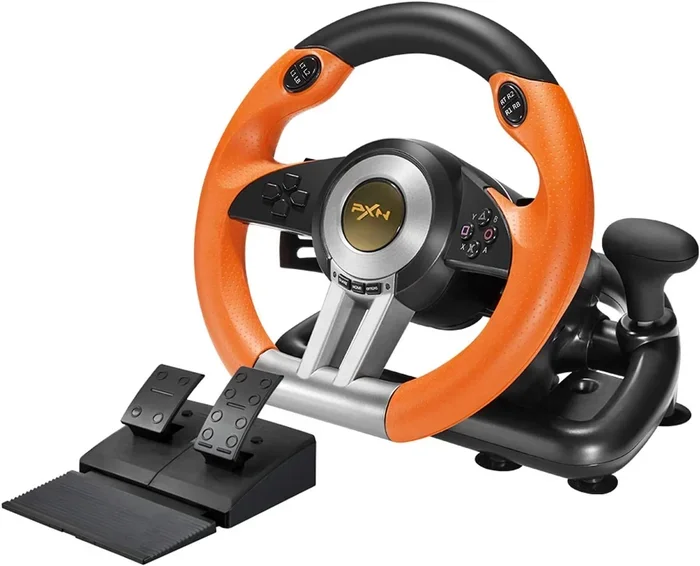
- Steering Wheel: A wheel gives the most natural feel. You can rotate it through a full range, and force feedback sends vibrations that mimic real road feedback. This is the gold standard for car racing game steering.
If you are serious about improving, consider upgrading to a wheel. Even an affordable entry-level wheel will transform your control and consistency.
Advanced Steering Techniques for Competitive Races
Once you have the basics down, you can start using advanced techniques to shave seconds off your lap time. These skills separate casual players from competitive racers. They all rely on precise car racing game steering inputs.
Drifting and Counter-Steering
Drifting is the art of intentionally oversteering so the rear end slides while you maintain control. It looks cool, but it also lets you carry more speed through tight corners. The key to drifting is counter-steering.
Here is how it works. You enter a turn and quickly turn the wheel in the opposite direction of the slide. This is called counter-steer or opposite lock. As the rear swings out, you hold the opposite lock and modulate the throttle. The car slides through the corner at a controlled angle.
Then you smoothly unwind the steering as the car straightens. The timing is critical. Too early and you spin out. Too late and you lose speed. Practice this on a wet or ice track where grip is lower. That makes it easier to feel how counter-steering keeps the car balanced.
Trail Braking and Weight Transfer
Trail braking is a technique where you keep light pressure on the brake pedal as you turn into a corner. This shifts the car’s weight forward, loading the front tires and giving them more grip. The result is a sharper turn-in and a tighter racing line.
To use trail braking, brake hard on the straight to slow down quickly. Then, as you begin to turn, slowly release the brake pedal. The car will pitch forward, and the front tires will bite harder. You can turn in earlier and with less steering input.
This technique requires precise car racing game steering coordination. You must manage brake pressure and wheel angle at the same time. Start by practicing on a single tight corner. Once you feel the car rotate better, you can apply trail braking to entire sequences of corners.
Throttle Steering for Rear-Wheel Drive Cars
Throttle steering uses the gas pedal to influence the car’s direction, especially in rear-wheel drive vehicles. By applying more or less throttle mid-corner, you can adjust the weight over the rear axle and control the slide.
If the car understeers (pushes wide), you can lift off the throttle slightly to shift weight forward and tighten the front end. If the car oversteers (the rear steps out), you can apply a bit more throttle to stabilize the rear. This balance of steering and throttle is what makes rear-wheel drive cars so engaging.
Mastering throttle steering takes hours of practice, but it gives you an edge on tracks with long sweepers. You will find yourself carrying exit speeds that other players cannot match.
Tuning Your Car Racing Game Steering Settings
Default steering settings in most games are designed for the broadest audience. They are a starting point, not the final answer. To truly master car racing game steering, you need to tune the settings to match your device and driving style.
Steering Linearity and Force Feedback
Steering linearity determines how the wheel’s rotation maps to the car’s turn angle. A linear setting means a 50% turn of the wheel produces exactly 50% of the maximum steering angle. This feels predictable and easy to control.
Force feedback sends vibrations through the wheel to simulate road texture, bumps, and tire slip. Strong force feedback can help you feel when the tires are losing grip, giving you an early warning of oversteer or understeer.
In the settings menu, look for steering linearity, force feedback strength, and damping. Set linearity to around 70-80% for a natural feel. Adjust force feedback until you feel the road without the wheel fighting your hands. Too much force feedback can cause hand fatigue and mask small inputs.
Adjusting for Different Vehicles
Every car in a racing game handles differently. A lightweight open-wheel car turns quickly and responds to small inputs. A heavy muscle car needs more steering lock and slower inputs to change direction.
Before each race, check the car’s steering settings if the game offers per-vehicle tuning. Some games let you adjust steering lock, differential, and front/rear grip balance. A higher steering lock helps heavy cars turn sharper. A softer differential improves traction out of corners.
Take a few practice laps in each car and feel how the car racing game steering response changes. You will learn to anticipate what each vehicle needs, and you will adapt faster on race day.
Common Mistakes That Ruin Your Steering
Even experienced players make steering errors that cost them time and races. Recognizing these mistakes is the first step toward fixing them. Here are the most common problems I see in car racing game steering.
Over-Correction and Jerky Movements
Over-correction happens when you turn the wheel too much in response to the car drifting. Instead of making a smooth correction, you crank the wheel, which sends the car swinging the other way. This creates a jerky, unstable line and wastes energy.
The fix is to make smaller inputs. If the car starts to slide, gently apply counter-steer and ease off the throttle. Do not stab the wheel. Think of your inputs like steering a boat through a narrow channel. Small, deliberate movements keep you on course.
Ignoring Track Conditions and Surface Changes
Tracks are not always uniform. You will encounter bumps, curbs, wet patches, and changes in grip. Ignoring these surface changes leads to sudden loss of control. Your car racing game steering must adapt to the road beneath you.
When you approach a bump, ease off the throttle slightly to let the suspension absorb the impact. On a wet patch, reduce your steering inputs because the tires have less grip. On a curb, be prepared for a jolt that can unsettle the car. By reading the track ahead, you can anticipate these changes and keep the car stable.
Death Gripping the Wheel
Many players grip the steering wheel or joystick too tightly. This creates tension in your hands and arms, which leads to stiff, imprecise inputs. A death grip also makes it harder to make the tiny adjustments needed for smooth cornering.
Hold the input device firmly enough to maintain control, but keep your hands relaxed. Your fingers should be able to move freely. If your hands cramp or feel numb after a race, you are gripping too hard. Relaxation improves feel and precision.
Putting It All Together: Practice Drills and Final Tips
Theory is useless without practice. The best way to improve your car racing game steering is to do targeted drills that build muscle memory and refine your feel for the car.
Daily Steering Exercises
Spend 10-15 minutes before each race session on a practice track. Try these drills:
- Figure-Eight Runs: Set up two cones or markers and drive a figure-eight pattern. Focus on smooth transitions from left to right. Keep your inputs gentle and consistent. This drill teaches you to balance the car during direction changes.
- Slow-Speed Slalalom: Drive through a series of cones at very low speed. Make each turn as smooth as possible. This forces you to use fine steering control and builds a feel for the car’s response.
- Braking Point Practice: Pick a specific braking point before a corner. Practice braking at that exact spot and turning in smoothly. Repeat until you hit the braking point consistently. This trains your timing and reduces late braking mistakes.
Expert Insight: The Mental Game of Steering
Expert Insight: Top racers often talk about looking ahead, not at the car in front of them. Your hands will follow your eyes. If you stare at the curb, you will steer toward it. Look where you want to go, and your car racing game steering will naturally follow.
Also, stay relaxed. Tension travels from your mind to your hands. Take deep breaths during a race. If you make a mistake, do not tense up. Stay calm, reset your line, and focus on the next corner. A relaxed driver makes smoother inputs than a tense one.
Community Resources and Further Learning
The racing community is full of helpful resources. Watch replays of professional players to see how they handle steering inputs. Many streamers explain their techniques in real time. You can also join forums and Discord servers dedicated to your favorite racing game.
Share your setups and ask for feedback on your steering technique. Other players will spot habits you might not notice. Learning from others accelerates your progress and keeps you motivated.
Final Thoughts on Car Racing Game Steering
Improving your car racing game steering is a journey, not a destination. Every race is a chance to practice smooth inputs, try new techniques, and refine your settings. The tips in this guide give you a clear path forward. Start with the fundamentals, add advanced techniques one at a time, and always keep your settings dialed in.
Remember, the best steering in the world means nothing without consistency. Focus on smooth, deliberate inputs. Stay relaxed, read the track, and trust your practice. Your lap times will drop, your race positions will rise, and you will finally feel like you are truly in control of the car.
Now get out there, hit the track, and put these tips into action. Your next podium finish is closer than you think.
Frequently Asked Questions
What is the best steering input method for racing games?
A steering wheel provides the most natural and precise car racing game steering. However, a well-tuned gamepad or even a keyboard can work if you adjust sensitivity and dead zones. The best method is the one you can practice with consistently.
How do I stop my car from oversteering in corners?
Reduce your steering input speed and avoid jerky movements. Ease off the throttle gently and apply light counter-steer. Trail braking can also shift weight forward and help the front tires grip, reducing oversteer.
Should I increase or decrease steering sensitivity for better control?
Start with lower sensitivity to make the car less twitchy. Gradually increase it until the car feels responsive without being overly sensitive. The ideal setting depends on your device and the specific car you are driving.
Can steering techniques improve my lap times in arcade racing games?
Yes. Even arcade racers benefit from smooth steering inputs, trail braking, and proper throttle control. These techniques reduce unnecessary tire scrub and help you carry more speed through corners.
How often should I practice steering drills?
Practice steering drills for 10-15 minutes before every race session. Consistency is key. Daily practice builds muscle memory faster than occasional long sessions.
What is the role of force feedback in car racing game steering?
Force feedback provides tactile cues about tire grip, road surface, and weight transfer. It helps you feel when the tires are losing traction, allowing you to make steering adjustments before a slide becomes a spin.