Does a 2011 Toyota Camry Have a Timing Belt or Chain
The 2011 Toyota Camry uses different timing systems depending on the engine. The 2.4L 4-cylinder model runs on a timing belt, while the 3.5L V6 uses a timing chain. Knowing which one your Camry has matters for maintenance schedules and long-term engine health.
When it comes to keeping your 2011 Toyota Camry running smoothly, few things matter as much as the timing system. The question does a 2011 Camry have a timing belt or chain is one that many owners ask, and the answer depends on which engine you have. The 2011 Camry came in two main configurations: the 2.4L four-cylinder and the 3.5L V6. Each uses a different timing component, and understanding the difference can save you thousands in repairs.
Timing systems are the unsung heroes of your engine. They keep the camshaft and crankshaft working in perfect sync. Without proper timing, your engine would misfire, lose power, or even suffer catastrophic damage. Whether you drive the base four-cylinder model or the sporty V6, knowing what type of timing system your Camry uses is the first step toward smart car ownership.
In this guide, we break down everything you need to know. We cover the differences between a timing belt and a timing chain, what each one means for your wallet, and how to keep your engine running strong for years to come.
Key Takeaways
- The 2011 Camry 2.4L uses a timing belt: This engine requires periodic belt replacement to prevent costly engine damage.
- The 2011 Camry 3.5L V6 uses a timing chain: Chains are generally more durable and last longer than belts.
- Timing belt replacement costs between $500 and $1,000: The cost includes the belt, tensioner, and water pump.
- Timing chains can last over 100,000 miles: But they are not immune to wear and stretching over time.
- Regular maintenance is essential: Ignoring timing system upkeep can lead to serious engine failure.
- Check your owner’s manual: It confirms your specific engine type and recommended service intervals.
- Listen for warning signs: Rattling noises or rough idling can signal timing system problems.
📑 Table of Contents
- Does a 2011 Toyota Camry Use a Timing Belt or Chain?
- Timing Belt vs. Timing Chain: What Is the Difference?
- Why Engine Timing Matters for Your Camry
- Timing Belt Replacement: What to Expect for the 2.4L Camry
- Timing Chain Maintenance: Keeping the 3.5L V6 Running Strong
- Common Mistakes Camry Owners Make with Timing Maintenance
- Expert Tips for Extending the Life of Your Camry’s Timing System
- How Does the Timing System Affect Fuel Economy and Performance?
- Frequently Asked Questions
- Conclusion
Does a 2011 Toyota Camry Use a Timing Belt or Chain?
The answer to does a 2011 Toyota Camry have a timing belt or chain comes down to the engine you own. Toyota designed the 2011 Camry with two distinct powertrain options, and each one uses a different timing mechanism.
The 2.4L Four-Cylinder Engine: Timing Belt
The base 2011 Camry with the 2.4L engine uses a timing belt. This engine, known internally as the 2AZ-FE, has been a workhorse in the Camry lineup for years. The timing belt connects the crankshaft to the camshaft and ensures that the engine valves open and close at the right time during each cylinder’s firing cycle.
Timing belts are made of reinforced rubber with teeth on the inside. They are quieter than chains and cost less to replace. However, they do wear out over time. Toyota recommends replacing the timing belt on the 2.4L engine at around 60,000 to 90,000 miles. Skipping this service can result in a broken belt, which causes the pistons to hit the valves and bend them.
The 3.5L V6 Engine: Timing Chain
The 2011 Camry V6, powered by the 2GR-FE engine, uses a timing chain instead of a belt. Timing chains are made of metal links and are designed to last much longer than rubber belts. The chain wraps around the crankshaft and camshaft sprockets, keeping them synchronized.
One major advantage of a timing chain is durability. A timing chain can last over 100,000 miles without needing replacement. That said, chains are not invincible. Over time, the chain can stretch, and the tensioner can wear out. When that happens, you may notice a rattling noise from the front of the engine, especially when you first start it.
Toyota designed the V6 timing chain system to be robust and long-lasting. Still, staying on top of regular maintenance helps prevent unexpected issues down the road.
Timing Belt vs. Timing Chain: What Is the Difference?
Understanding the difference between a timing belt and a timing chain helps you make better decisions about your Camry’s maintenance. Both components serve the same core purpose, but they work very differently.
What Is a Timing Belt?
A timing belt is a toothed rubber belt that sits on the outside of the engine. It connects the crankshaft to the camshaft and controls the timing of the engine valves. The belt is enclosed in a protective cover, which keeps it clean and shielded from debris.
Timing belts are common in many four-cylinder engines. They are relatively inexpensive and operate quietly. The downside is that they wear out over time. Rubber degrades, teeth can strip, and the belt can snap without warning. That is why manufacturers recommend replacing the belt at specific intervals.
What Is a Timing Chain?
A timing chain is a metal chain that performs the same synchronization role as a belt. It is heavier and more durable. Timing chains are typically located inside the engine, lubricated by engine oil.
Because they are metal, timing chains last much longer. Many chains can go the full life of the engine without needing replacement. However, they are not maintenance-free. Oil changes play a big role in keeping the chain and its components healthy. Dirty or low oil can accelerate wear on the chain and tensioner.
Comparison Table
| Feature | Timing Belt | Timing Chain |
|---|---|---|
| Material | Reinforced rubber with teeth | Metal links |
| Location | Outside the engine | Inside the engine |
| Lifespan | 60,000 to 90,000 miles | 100,000+ miles |
| Replacement Cost | $500 to $1,000 | $1,000 to $2,500 |
| Noise Level | Quiet | Can become noisy when worn |
| Maintenance | Scheduled replacement | Oil changes and inspection |
| Common In | 4-cylinder engines | V6 and higher-performance engines |
For the 2011 Camry owner, this comparison is especially relevant. If you have the four-cylinder, your main concern is staying on schedule with belt replacements. If you have the V6, your focus should be on regular oil changes and listening for any unusual sounds.
Why Engine Timing Matters for Your Camry
Engine timing is critical. When the timing is off by even a few degrees, your engine will not run properly. The valves open and close at the wrong time, which affects performance, fuel economy, and emissions.
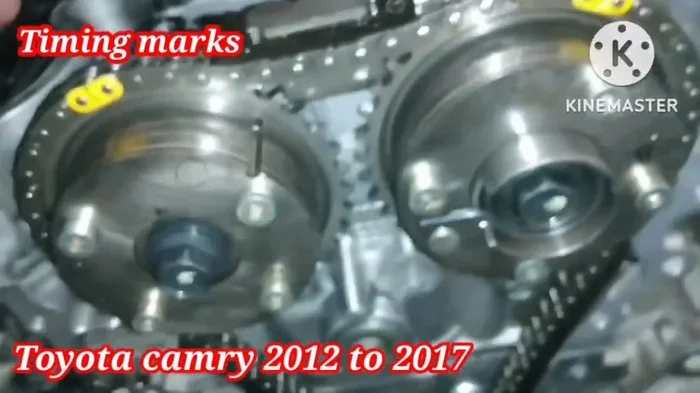
The timing system controls the camshaft timing and the crankshaft timing. The crankshaft spins with the pistons, while the camshaft controls the intake and exhaust valves. Both must work in perfect harmony for the engine to produce power efficiently.
When timing is correct, your Camry runs smoothly, gets good fuel economy, and produces the right amount of power. When timing is off, you may notice rough idling, poor acceleration, or a check engine light. In the worst case, a broken timing belt can cause the pistons and valves to collide, resulting in a bent valve or even a cracked engine head.
Regular engine maintenance goes a long way in keeping your timing system in good shape. Using the right engine oil and changing it on schedule helps protect the timing chain and all the internal components that depend on proper lubrication.
Timing Belt Replacement: What to Expect for the 2.4L Camry
If your 2011 Camry has the 2.4L four-cylinder engine, you will need to replace the timing belt at some point. Here is what you should know about the process and cost.
When to Replace the Timing Belt
Toyota recommends replacing the timing belt on the 2AZ-FE engine between 60,000 and 90,000 miles. The exact interval depends on your driving conditions and habits. If you drive in stop-and-go traffic or extreme temperatures, the belt may wear faster.
Some signs that your timing belt is wearing out include:
- A ticking or clicking noise from the front of the engine
- Difficulty starting the car
- Rough idling or misfires
- Visible cracks or fraying on the belt (during inspection)
What Is Included in the Replacement?
A full timing belt replacement typically includes the belt itself, the tensioner, and the idler pulleys. Many mechanics also recommend replacing the water pump at the same time, since it is driven by the timing belt on the 2AZ-FE engine. Replacing both parts together saves labor costs in the long run.
The total cost for a timing belt replacement on a 2011 Camry usually falls between $500 and $1,000, depending on your location and the shop you choose. This is a worthwhile investment compared to the cost of engine damage from a broken belt.
Can You Do It Yourself?
Timing belt replacement is a complex job that requires removing several engine components. It is not a beginner-level DIY project. If you have experience working on engines and the right tools, you can save on labor costs. However, for most owners, hiring a qualified mechanic is the safest choice.
Timing Chain Maintenance: Keeping the 3.5L V6 Running Strong
If your 2011 Camry has the 3.5L V6 engine, you benefit from the durability of a timing chain. But that does not mean you can ignore it entirely.
How Long Does a Timing Chain Last?
A well-maintained timing chain can last well over 100,000 miles. Some V6 Camry owners have gone 150,000 miles or more without needing a chain replacement. The key factor is regular oil changes with quality oil.
Engine oil lubricates the chain, the tensioner, and the sprockets. Over time, oil breaks down and loses its protective properties. Dirty or low oil can cause the chain to stretch prematurely. This is why staying on top of your oil change schedule is so important for V6 Camry owners.
Signs of a Worn Timing Chain
Watch for these warning signs that your timing chain may be wearing out:
- A rattling or clattering noise when you start the engine
- Illuminated check engine light
- Rough engine performance or misfires
- Difficulty starting the vehicle
If you notice any of these symptoms, get your Camry inspected right away. A stretched or failing chain can cause serious engine damage if left unaddressed.
Timing Chain Replacement Cost
Replacing a timing chain on the 2011 Camry V6 is more expensive than a belt replacement on the four-cylinder. The cost typically ranges from $1,000 to $2,500. The higher cost reflects the complexity of the job and the metal parts involved.
However, because chains last so much longer, many V6 Camry owners never need a replacement during the time they own the vehicle. Regular oil changes are the best way to keep costs down and the chain healthy.
Common Mistakes Camry Owners Make with Timing Maintenance
Even the best car owners can make mistakes when it comes to timing system maintenance. Here are some common errors to avoid.
Ignoring the Recommended Replacement Interval
The biggest mistake four-cylinder Camry owners make is forgetting to replace the timing belt on schedule. The belt does not give you much warning before it fails. By the time you notice symptoms, the damage may already be done.
Set a reminder in your phone or calendar when you hit the 50,000-mile mark. Staying ahead of the replacement interval gives you peace of mind and protects your engine.
Skipping Oil Changes
V6 Camry owners sometimes neglect oil changes, thinking the timing chain will just keep running. Dirty oil accelerates wear on the chain, tensioner, and sprockets. Over time, this can lead to chain stretch and engine noise.
Stick to the recommended oil change interval, which is typically every 5,000 to 7,500 miles depending on your driving conditions and the type of oil you use.
Using Aftermarket Parts Without Research
Aftermarket timing belts and chains are available at lower prices. While some are perfectly fine, others may not meet OEM quality standards. Using a low-quality belt or chain can lead to premature failure and expensive engine repairs.
Stick with OEM parts or trusted aftermarket brands recommended by your mechanic. The extra cost is worth the reliability.
Not Listening to Your Car
Your Camry will tell you when something is wrong. Unusual noises, rough running, or warning lights are all signals that something needs attention. Ignoring these signs can turn a simple repair into a major engine job.
Pay attention to your vehicle. If something sounds or feels different, get it checked out promptly.
Expert Tips for Extending the Life of Your Camry’s Timing System
Want to get the most miles out of your 2011 Camry’s timing system? Follow these expert tips.
- Keep up with oil changes: Fresh oil keeps the timing chain and all internal components properly lubricated. This is the single most important thing you can do for engine longevity.
- Use quality oil: Use the oil weight recommended in your owner’s manual. For the 2011 Camry, this is typically 5W-30 or 0W-20 synthetic oil.
- Replace the timing belt on schedule: Do not wait for the belt to show signs of wear. Replace it at the recommended interval to avoid a catastrophic failure.
- Inspect the belt during other services: When your mechanic has the engine cover off for other work, ask them to visually inspect the timing belt for cracks or wear.
- Address rattling noises immediately: A rattling sound from the front of the engine could signal a loose or stretched timing chain. Early detection prevents costly repairs.
- Keep the engine cool: Overheating can damage the timing belt and other engine components. Make sure your cooling system is in good working order.
- Follow the maintenance schedule: Your owner’s manual has a detailed maintenance schedule. Following it keeps your Camry running at its best.
These simple habits add up over time. They help protect your engine and keep your Camry reliable for hundreds of thousands of miles.
How Does the Timing System Affect Fuel Economy and Performance?
You might wonder how the timing system affects your daily driving experience. The answer is more significant than you might think.
A properly timed engine runs at peak efficiency. The valves open and close at exactly the right moment, allowing the perfect air-fuel mixture into each cylinder and exhausting the spent gases at the right time. When the timing is correct, your Camry delivers smooth power, good fuel economy, and low emissions.
On the other hand, a misaligned timing system hurts performance. If the belt or chain has stretched or skipped a tooth, the engine may run rough, hesitate under acceleration, or get worse gas mileage. Some owners notice that their Camry does not feel as responsive as it used to, and a timing issue could be the culprit.
Interestingly, the timing system also plays a role in how your Camry handles different driving modes. For example, when you use sport mode, the engine timing may adjust slightly to provide more power. A healthy timing system ensures that these adjustments work properly.
Keeping your timing belt or chain in top shape is one of the simplest ways to maintain your Camry’s performance and fuel efficiency over the long haul.
Frequently Asked Questions
Can a 2011 Toyota Camry timing belt break while driving?
Yes, a timing belt can break while driving, especially if it has exceeded its recommended replacement interval. When a timing belt breaks on an interference engine like the 2AZ-FE, the pistons and valves can collide, causing serious engine damage. This is why staying on top of the replacement schedule is so important.
How do I know if my 2011 Camry has a timing belt or chain?
Check your owner’s manual or look at the engine code. The 2.4L four-cylinder (2AZ-FE) uses a timing belt, while the 3.5L V6 (2GR-FE) uses a timing chain. You can also ask your mechanic to confirm during your next service visit.
Is it worth replacing the timing belt on a high-mileage 2011 Camry?
Yes, replacing the timing belt is almost always worth it. The cost of a belt replacement is far less than the cost of engine replacement after a broken belt. If your Camry has high mileage and the belt has never been replaced, make it a priority.
Can I replace just the timing belt without the water pump?
Technically yes, but it is not recommended. On the 2AZ-FE engine, the water pump is driven by the timing belt. Removing the belt to replace the water pump later would require doing the same labor again. Replacing both at the same time saves money and prevents future downtime.
How much does it cost to replace the timing chain on a 2011 Camry V6?
The cost typically ranges from $1,000 to $2,500 depending on the extent of the repair and your location. The price includes the chain, tensioner, sprockets, and labor. Getting quotes from multiple shops can help you find a fair price.
Does regular oil change really help the timing chain last longer?
Absolutely. The timing chain, tensioner, and sprockets inside the V6 engine rely on clean engine oil for lubrication. Dirty or degraded oil causes increased friction and accelerated wear. Staying current with oil changes is the best way to extend the life of your timing chain.
Conclusion
So, does a 2011 Toyota Camry have a timing belt or chain? The answer depends on your engine. The 2.4L four-cylinder uses a timing belt that needs regular replacement, while the 3.5L V6 uses a timing chain built for long-term durability. Both systems are critical to your engine’s health, and ignoring either one can lead to expensive repairs.
Whether you own the base model or the V6, staying on top of maintenance is the key to a long-lasting Camry. Replace the timing belt on schedule, keep your oil fresh, and listen for any unusual sounds from the engine. These simple steps protect your investment and keep your 2011 Toyota Camry running strong for years to come.
Take the time to understand your vehicle’s timing system today. It is one of the best things you can do as a Camry owner to avoid unexpected breakdowns and keep your car performing at its best on every drive.