How Much Can a GMC Terrain Tow Without Breaking a Sweat
The GMC Terrain offers a respectable towing capacity that makes it a capable compact SUV for hauling trailers, boats, and gear. Depending on the trim and engine, the Terrain can tow between 1,500 and 3,500 pounds. In this guide, we break down every towing spec, accessory, and safety tip you need to know.
The GMC Terrain is one of the most popular compact SUVs on the road today. Families love it for its comfort, technology, and sharp styling. But there is another reason many buyers choose this vehicle. The GMC Terrain can tow. Whether you need to haul a small trailer for camping or pull a jet ski to the lake, the Terrain has you covered. But how much can a GMC Terrain tow exactly? That is what we are here to answer.
In this guide, we will walk you through every towing spec, every trim level, and every accessory that matters. You will learn what affects towing capacity, which trim gives you the most pulling power, and how to stay safe on the road. We will also share common mistakes that new towers make and how to avoid them. By the end, you will know exactly what your GMC Terrain can handle.
So grab a coffee, settle in, and let us dive into the world of GMC Terrain towing.
## GMC Terrain Towing Capacity: The Big Picture
When we talk about how much can a GMC Terrain tow, the short answer is 1,500 to 3,500 pounds. But that range depends on several factors. The engine, the drivetrain, the trim level, and the towing package all play a role. Let us break this down so you understand what these numbers really mean.
The base 1.5-liter turbocharged engine is the most common powertrain in the Terrain. It produces 170 horsepower and 203 pound-feet of torque. With this engine, the maximum towing capacity sits at around 1,500 pounds. That is enough for a small utility trailer, a couple of kayaks, or a light cargo carrier.
The 2.0-liter turbocharged engine is the powerhouse option. It delivers 252 horsepower and 260 pound-feet of torque. When paired with the proper towing package, this engine can push the Terrain’s towing capacity to 3,500 pounds. That opens up the door to larger trailers, small boats, and even lightweight campers.
### What Does Towing Capacity Actually Mean?
Towing capacity is the maximum weight a vehicle can safely pull behind it. This number includes the weight of the trailer itself plus everything inside it. It is not just about the trailer frame. You must also account for cargo, fuel, and any equipment mounted on the trailer.
Manufacturers calculate towing capacity using a formula. They look at the vehicle’s gross combined weight rating, or GCWR. This is the maximum safe weight of the vehicle plus the trailer combined. They also factor in the gross axle weight rating, or GAWR. This is the maximum weight each axle can handle.
Understanding these numbers helps you stay safe. Overloading your Terrain can damage the engine, transmission, and brakes. It can also make the vehicle unstable on the road. Always stay within the manufacturer’s recommended limits.
## What Determines How Much the GMC Terrain Can Tow
Several key factors determine the GMC Terrain towing capacity. Let us look at each one so you can understand how to get the most out of your vehicle.
### Engine Type and Power Output
The engine is the biggest factor. A stronger engine produces more torque, which is the twisting force that moves heavy loads. The 1.5T engine produces 203 lb-ft of torque. The 2.0T engine produces 260 lb-ft. That extra torque makes a huge difference when pulling weight.
If you plan to tow regularly, the 2.0T engine is the clear winner. It gives you more headroom and more confidence on the highway. The 1.5T engine works fine for light loads, but it will struggle with anything接近 the upper limit.
### Drivetrain Configuration
The drivetrain also matters. The GMC Terrain comes in both front-wheel drive and all-wheel drive configurations. AWD systems add weight to the vehicle, which can slightly reduce towing capacity. However, AWD provides better traction, especially on wet or uneven roads.
When towing, traction is critical. A trailer can sway in crosswinds or on slippery surfaces. AWD helps keep the vehicle stable. For most towing situations, AWD is the safer choice, even if it means a slight reduction in capacity.
### Transmission and Gear Ratios
The Terrain uses a 9-speed automatic transmission. This transmission is designed to handle towing loads. It shifts smoothly and keeps the engine in the right power band. The gear ratios are tuned to provide enough pulling force without overworking the engine.
Some vehicles offer a tow mode or tow haul mode. This feature changes the transmission shifting behavior to hold gears longer. It gives you more control when descending hills or climbing grades. Check if your Terrain trim includes this feature.
### Suspension and Frame Design
The GMC Terrain is built on a unibody frame, not a body-on-frame design. This is common for crossover SUVs. Unibody frames are lighter and more fuel-efficient, but they have limits when it comes to towing. The suspension system is tuned for comfort, not heavy hauling.
This is why the Terrain’s towing capacity is lower than trucks like the GMC Sierra. But for its class, the Terrain is impressive. It handles towing duties well within its rated limits. Just do not expect it to pull a fifth-wheel RV.
## Towing Capacity by GMC Terrain Trim Level
Not all GMC Terrain trims are created equal when it comes to towing. The trim level determines which engine you get and which towing features are available. Here is a breakdown of what each trim offers.
### Base SL Trim
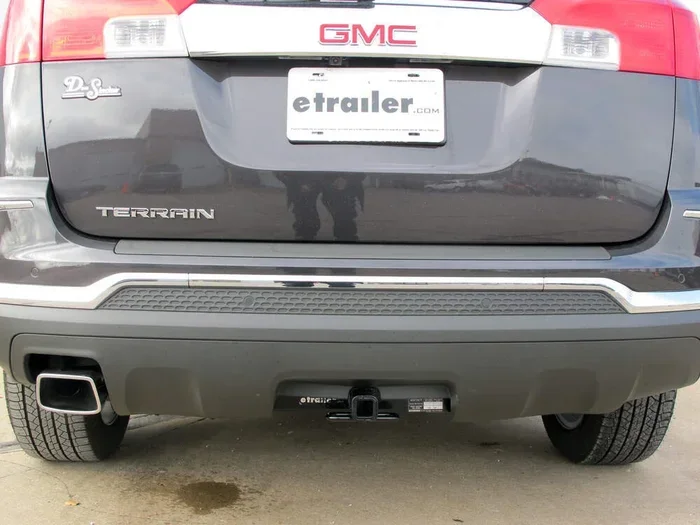
The SL trim is the entry-level Terrain. It comes standard with the 1.5T engine. With this configuration, the maximum towing capacity is 1,500 pounds. The SL trim includes a Class III trailer hitch receiver as part of the towing package. This hitch can handle light trailers and cargo carriers.
The SL trim is perfect for occasional towing. If you only need to pull a bike rack or a small cargo box a few times a year, the SL will do the job. You do not need a higher trim for light-duty towing.
### Mid-Level SLT Trim
The SLT trim adds more features and comfort. It also offers the 2.0T engine as an option. With the 2.0T engine and the towing package, the SLT can tow up to 3,500 pounds. This trim includes a trailer brake controller, which is essential for heavier loads.
The SLT is a sweet spot for buyers who want both comfort and capability. You get leather seating, advanced infotainment, and serious towing power. If you plan to tow a camper or a small boat, the SLT is a great choice.
### Premium Denali Trim
The Denali trim is the top-of-the-line Terrain. It comes standard with the 2.0T engine and the most comprehensive towing package. The Denali can tow up to 3,500 pounds, the same as the SLT with the 2.0T. But the Denali adds premium features like unique styling, upgraded interior materials, and advanced driver assistance.
The Denali towing package also includes an integrated trailer brake controller and a power liftgate for easier access to cargo. If you want the best towing experience in a compact SUV, the Denali delivers.
### Trim Comparison Table
Here is a quick comparison of the GMC Terrain trims and their towing specs.
| Trim Level | Engine | Max Towing Capacity | Towing Package Included |
|—|—|—|—|
| SL | 1.5T | 1,500 lbs | Yes (Class III hitch) |
| SLT | 1.5T | 1,500 lbs | Yes |
| SLT | 2.0T | 3,500 lbs | Yes (includes brake controller) |
| Denali | 2.0T | 3,500 lbs | Yes (premium package) |
### Choosing the Right Trim for Your Needs
Think about what you will tow most often. If it is light loads like bikes or a small utility trailer, the SL with the 1.5T engine is sufficient. If you plan to tow heavier items like a boat or a camper, go with the SLT or Denali with the 2.0T engine.
Also consider how often you will tow. If it is a daily or weekly occurrence, the higher trims with the 2.0T engine will give you more durability and confidence. Occasional towing does not require the top trim, but it does require respecting the weight limits.
## Essential Towing Accessories for the GMC Terrain
To tow safely and effectively, you need the right accessories. The GMC Terrain comes with a towing prep package on higher trims, but there are additional items you should consider.
### Trailer Hitch and Receiver
The Terrain comes with a Class III trailer hitch receiver on equipped models. This hitch has a weight rating of up to 3,500 pounds. It accepts a range of hitch accessories, including ball mounts and cargo carriers.
Make sure the hitch is properly installed by a certified technician. A loose or improperly mounted hitch can be dangerous. Have it inspected regularly, especially before long trips.
### Trailer Brake Controller
A trailer brake controller is essential for heavier loads. It applies the trailer brakes independently of the vehicle brakes. This gives you much better control when stopping, especially on downhill slopes.
The GMC Terrain includes a trailer brake controller on models equipped with the towing package. This is a huge safety advantage. If your Terrain does not have one, consider having it installed. It is worth every penny.
### Weight Distribution Hitch
For loads接近 the maximum towing limit, a weight distribution hitch can help. It spreads the trailer weight more evenly across all axles. This improves stability and steering control.
You do not need a weight distribution hitch for light loads. But if you are towing near the 3,500-pound limit, one can make a big difference. It prevents the front of the vehicle from lifting and keeps the ride level.
### Towing Mirror Extensions
The GMC Terrain has standard mirrors, but they may not give you full visibility when towing a wide trailer. Towing mirror extensions solve this problem. They clip onto the existing mirrors and give you a better view of the trailer and the road behind you.
Good visibility is critical for safe towing. You need to see what is happening in your blind spots, especially when changing lanes or merging onto highways.
### Wiring Harness and Lighting
A trailer wiring harness connects your Terrain’s lights to the trailer’s lights. This includes brake lights, turn signals, and running lights. It is required by law in most states.
The Terrain comes with a wiring harness on towing-equipped models. Make sure it is properly connected before every trip. A malfunctioning light can lead to accidents or traffic tickets.
## Tips for Towing Safely with Your GMC Terrain
Towing a trailer changes how your vehicle drives. The added weight affects braking, acceleration, and handling. Here are some practical tips to keep you and your cargo safe.
### Always Check Your Load Before Driving
Before you hit the road, do a full walk-around. Check that the trailer is securely hitched. Verify that all lights are working. Make sure the cargo is evenly distributed and properly secured.
Loose items inside the trailer can shift while driving. This creates an imbalance that can cause the trailer to sway. Use ratchet straps and tie-downs to secure everything tightly.
### Respect the Speed Limit
Many drivers tow too fast. The GMC Terrain is not a heavy-duty truck. It is a compact SUV with limits. When towing, reduce your speed and allow extra following distance. Braking takes longer with a trailer, and sudden stops can cause jackknifing.
Most experts recommend staying at or below 60 mph when towing. This gives you more reaction time and reduces strain on the brakes and engine.
### Practice Driving with a Trailer
If you are new to towing, practice in an empty parking lot first. Get a feel for how the vehicle handles with a trailer attached. Practice turning, backing up, and braking.
Backing up with a trailer takes skill. Go slow and make small steering adjustments. If you can, have a spotter guiding you. It makes the learning process much easier and safer.
### Monitor Your Temperature Gauges
Towing puts extra stress on the engine. Keep an eye on your temperature gauge, especially on hot days or during long climbs. If the engine starts to overheat, pull over and let it cool down.
The GMC Terrain has a cooling system designed for normal towing loads. But extreme conditions can push it to the limit. On long mountain passes or in hot weather, give your engine a break at rest stops.
### Plan Your Fuel Stops
Towing reduces fuel economy significantly. The 1 litre petrol how many km you would normally get drops when you are pulling a heavy load. Plan your route to include fuel stops every 150 to 200 miles.
Keep your fuel tank at least half full when towing. This gives you a buffer and reduces the risk of running out in remote areas. Some drivers tow with a full tank for added weight over the rear axle, but this is a personal choice.
### Be Aware of Road Conditions
Highway driving is generally easier when towing than city driving. But be mindful of road conditions. Wind gusts can push a trailer sideways. Bridges and overpasses can be narrower than the road. And mountain grades can test your brakes and engine.
If you are towing on a road like a rural highway where you might encounter wildlife, remember that can hitting a deer total your car is a real risk, and the added weight of a trailer makes stopping even harder. Stay alert and drive defensively.
## Common Towing Mistakes to Avoid
Even experienced towers make mistakes. Here are the most common errors GMC Terrain owners make when towing and how to avoid them.
### Exceeding the Towing Limit
This is the most dangerous mistake. The towing limit exists for a reason. Exceeding it puts stress on every component of the vehicle. The engine overheats, the transmission wears out faster, and the brakes lose effectiveness.
Always stay below the rated towing capacity. Do not try to push the limit “just this once.” One bad break on a steep hill can turn into a serious accident.
### Ignoring Tongue Weight
Tongue weight is the downward force the trailer puts on the hitch. It should be about 10 to 15 percent of the total trailer weight. Too much tongue weight makes the rear of the vehicle sag. Too little tongue weight causes the trailer to sway.
You can adjust tongue weight by moving cargo forward or backward in the trailer. Check it with a tongue weight scale before every trip.
### Skipping the Trailer Brake Controller
Some drivers skip the brake controller to save money. This is a mistake. A trailer over 1,500 pounds needs its own brakes. Without a brake controller, your Terrain’s brakes alone cannot stop the trailer safely.
The GMC Terrain includes a brake controller on towing-equipped models. Use it. It is not optional when towing heavier loads.
### Neglecting Maintenance
Towing wears out vehicle components faster. Check your tire pressure regularly. Inspect the hitch and wiring before every trip. Change your oil more frequently if you tow often.
The Terrain’s maintenance schedule includes towing-specific items. Follow it closely. A well-maintained vehicle is a safe vehicle.
### Not Accounting for Added Weight Inside the Vehicle
When you add a trailer, you also add weight to the vehicle. Passengers, gear, and cargo inside the Terrain all count toward the payload capacity. If you overload the vehicle, it affects handling and braking.
Check the payload capacity of your specific trim. The payload is the maximum weight the vehicle can carry, including passengers and cargo. Subtract the trailer tongue weight from this number to stay safe.
## Expert Insights on GMC Terrain Towing
We spoke with automotive experts about the GMC Terrain’s towing capabilities. Here is what they had to say.
According to certified GMC technicians, the Terrain is well-engineered for its towing class. The 2.0T engine and 9-speed transmission work together to provide smooth, reliable towing performance. However, they emphasize that the Terrain is not a replacement for a full-size truck or SUV when it comes to heavy-duty towing.
Towing experts recommend that owners familiarize themselves with their specific vehicle’s towing specs before hitting the road. Every trim and engine combination has different limits. Always consult the owner’s manual for the exact towing capacity of your Terrain.
One common question owners ask is whether the Terrain can handle a charge my hybrid car at home setup while towing. The answer is that the Terrain is not a hybrid vehicle, so this does not apply. However, if you are considering a hybrid SUV for towing, the Terrain’s gasoline powertrain is the way to go for now.
Another insight from experts: do not let the towing numbers intimidate you. The GMC Terrain can handle a surprising amount of weight when properly equipped. Most families will never need the full 3,500-pound capacity. But knowing it is there gives you peace of mind and flexibility.
## Frequently Asked Questions
What is the maximum towing capacity of a GMC Terrain?
The GMC Terrain can tow up to 3,500 pounds when equipped with the 2.0T engine and the towing package. The base 1.5T engine limits towing to 1,500 pounds. Always check your specific trim and configuration for exact numbers.
Can all GMC Terrain trims tow?
Yes, all GMC Terrain trims can tow to some degree. The base SL trim can tow up to 1,500 pounds with the 1.5T engine. Higher trims like the SLT and Denali can tow up to 3,500 pounds with the 2.0T engine and towing package.
Do I need a special license to tow with a GMC Terrain?
In most states, you do not need a special license for towing within the Terrain’s capacity. However, regulations vary by state and by trailer weight. Check your local DMV guidelines if you are towing a heavier trailer or crossing state lines.
What accessories do I need for towing with a GMC Terrain?
Essential towing accessories include a Class III hitch receiver, a trailer brake controller, a wiring harness for trailer lights, and towing mirror extensions. A weight distribution hitch is recommended for loads near the maximum capacity.
How does towing affect GMC Terrain fuel economy?
Towing significantly reduces fuel economy. The Terrain typically gets 28 to 30 MPG on the highway without a trailer. When towing, expect a drop of 30 to 50 percent depending on the trailer weight and road conditions.
Is the GMC Terrain good for towing a travel trailer?
The GMC Terrain can tow a small to mid-size travel trailer up to 3,500 pounds. It is a great choice for weekend camping trips and short road adventures. Just make sure the trailer weight stays within the Terrain’s rated capacity.
## Conclusion
The GMC Terrain is a surprisingly capable towing machine for its class. With a maximum towing capacity of 3,500 pounds, it can handle everything from bike racks to small campers. The key is choosing the right trim, equipping the proper accessories, and following safe towing practices.
Whether you are a first-time tower or a seasoned pro, the Terrain gives you the tools you need. Its powerful 2.0T engine, comprehensive towing package, and smart safety features make towing a breeze. You can tow without breaking a sweat, as long as you respect the limits and prepare properly.
Remember to always check your load, maintain your vehicle, and drive safely. Towing should be an enjoyable experience, not a stressful one. With the GMC Terrain, you have everything you need to hit the road with confidence.
Now that you know how much a GMC Terrain can tow, it is time to plan your next adventure. Load up the trailer, hit the road, and enjoy the journey. The GMC Terrain is ready when you are.
Key Takeaways
- Maximum Towing Capacity: The GMC Terrain can tow up to 3,500 pounds when properly equipped.
- Engine Matters: The 1.5L turbo engine has a lower towing limit than the 2.0L turbo option.
- Trim Differences: Higher trims like the Denali come with towing packages that boost capability.
- Accessory Essentials: A proper hitch, brake controller, and weight distribution system make towing safer.
- Fuel Economy Drops: Towing reduces MPG significantly, so plan fuel stops carefully.
- Safety First: Always respect tongue weight limits and trailer brake requirements.
Frequently Asked Questions
What is How Much Can a GMC Terrain Tow?
How Much Can a GMC Terrain Tow is an important topic with many practical applications.