Why Wont My Car Start With the Key And Nothing Happens
When your car won’t start with the key and nothing happens, it’s usually caused by a dead battery, a bad ignition switch, or a faulty starter motor. This guide walks you through every possible reason and gives you clear, step-by-step fixes you can try right now. Understanding the root cause saves you time, money, and a lot of frustration.
There’s nothing more annoying than turning your key and hearing nothing. No cranking. No clicking. Just silence. If your car won’t start with the key and nothing happens, you’re not alone. Millions of drivers face this exact problem every year. The good news is that most causes are simple and affordable to fix.
This guide breaks down every possible reason your engine refuses to turn over. We’ll cover everything from a dead car battery to a faulty ignition switch. By the end, you’ll know exactly what’s wrong and how to fix it yourself or when to call a mechanic. Let’s get into it.
Key Takeaways
- Dead Battery: The most common reason your car won’t start with the key and nothing happens. A simple jump-start or battery replacement often fixes it.
- Ignition Switch Failure: A worn-out ignition switch can prevent electrical signals from reaching the starter and fuel system.
- Starter Motor Issues: If the starter motor is bad, you’ll hear silence or a single click when you turn the key.
- Corroded Battery Terminals: Dirty or corroded connections block power flow and are an easy fix most people overlook.
- Steering Wheel Lock: A locked steering column can physically prevent the key from turning, which is an easy solution.
- Transponder Key Problems: Modern cars have anti-theft systems that won’t recognize a damaged or unprogrammed key.
📑 Table of Contents
- Understanding Why Your Car Won’t Start With the Key
- Dead Battery: The #1 Culprit
- Corroded or Loose Battery Terminals
- Faulty Ignition Switch
- Starter Motor and Solenoid Problems
- Steering Wheel Lock and Key Issues
- Transponder Key and Immobilizer Problems
- Ignition Relay, Fuse, and Wiring Problems
- Comparison Table: Common No-Start Causes
- Prevention Tips to Avoid Future No-Start Problems
- When to Call a Professional Mechanic
- Conclusion
Understanding Why Your Car Won’t Start With the Key
When you turn the key and nothing happens, the problem usually lies somewhere in the starting system. This system includes the battery, ignition switch, starter motor, solenoid, and wiring. If any one of these parts fails, your car won’t start. Understanding how these parts work together helps you narrow down the cause quickly.
The starting process is simple. You turn the key. The ignition switch sends power from the battery to the starter motor. The starter motor spins the engine. The engine takes over and runs on its own. When something breaks in this chain, you get a no-crank no-start situation. That’s what we’re fixing here.
Common Reasons the Key Turns but Nothing Happens
Sometimes the key turns freely but the engine stays dead. Other times, the key won’t turn at all. Each scenario points to a different problem. Here are the most common reasons your car won’t start with the key and nothing happens:
- Dead or weak car battery
- Corroded or loose battery terminals
- Faulty ignition switch
- Bad starter motor
- Broken ignition cylinder
- Steering wheel lock engagement
- Failed starter solenoid
- Neutral safety switch failure
- Transponder key not recognized
- Ignition relay or fuse blown
Each of these issues has its own set of symptoms and fixes. Let’s go through them one by one so you can diagnose your problem with confidence.
Dead Battery: The #1 Culprit
A dead battery is the number one reason your car won’t start with the key and nothing happens. The battery provides the electrical power needed to crank the engine. When it’s dead or too weak, nothing works. No lights. No dashboard. No cranking.
Signs Your Battery Is Dead
How do you know the battery is the problem? Look for these clear signs:
- The dashboard lights don’t come on when you turn the key.
- The headlights are dim or don’t turn on at all.
- You hear a single click but no cranking sound.
- The battery is more than three to five years old.
- You left lights on overnight or the battery drained from cold weather.
If you suspect a dead battery, try a jump-start first. Connect jumper cables to another vehicle or a portable jump starter. Let it charge for a few minutes, then try turning the key again. If the car starts, your battery just needed a boost. If it dies again quickly, the battery may need replacement.
How to Test Your Battery
You can test your battery with a multimeter. Set it to DC voltage and touch the probes to the battery terminals. A healthy battery reads 12.6 volts or higher. If it reads below 12.0 volts, the battery is weak and likely needs charging or replacing. A reading below 11.5 volts usually means the battery is dead.
Corroded or Loose Battery Terminals
Even if your battery is fully charged, corroded battery terminals can block the electrical connection. Corrosion looks like a white, blue, or greenish powdery buildup on the battery posts. This buildup acts like an insulator and prevents power from flowing to the starter.
How to Fix Corroded Terminals
Fixing corroded terminals is easy and takes just a few minutes:
- Turn off the ignition and remove the key.
- Disconnect the negative cable first, then the positive cable.
- Use a wire brush or a battery terminal cleaner to scrub away the corrosion.
- Reconnect the positive cable first, then the negative cable.
- Try starting the car again.
If the terminals are badly damaged or the cables are frayed, replace them. New battery cables cost under $30 and are a simple DIY job. Always wear gloves and eye protection when working around batteries because the acid inside can be harmful.
Faulty Ignition Switch
The ignition switch is the part your key turns inside the lock cylinder. It sends electrical signals to the starter, fuel pump, and ignition system. When the ignition switch wears out or fails, those signals never reach their destination. The result? Your car won’t start with the key and nothing happens.
Symptoms of a Bad Ignition Switch
Watch for these warning signs that point to an ignition switch problem:
- The key turns but the dashboard doesn’t light up.
- The car starts sometimes but not every time.
- The key feels stiff or jammed in the ignition.
- The engine stalls shortly after starting.
- You notice the switch feels loose or wobbly when you turn the key.
Ignition switches fail over time from regular wear and tear. The internal contacts corrode or wear down. In older vehicles, the switch is a simple mechanical part you can replace. In newer cars, the switch may be integrated into the ignition lock assembly, which costs more to replace. A mechanic can test the switch with a multimeter to confirm the diagnosis.
Starter Motor and Solenoid Problems
The starter motor is the electric motor that cranks your engine. It gets its signal from the starter solenoid, which acts as a relay. Together, they turn the engine over so it can run on its own. When either part fails, you get a no crank no start condition.
How to Tell if the Starter Is Bad
Here’s how you can tell if your starter motor or solenoid is the problem:
- You hear a single loud click when you turn the key, but the engine doesn’t crank.
- You hear a rapid clicking sound, which means the starter is trying but not engaging.
- There’s complete silence when you turn the key, even with a good battery.
- The starter makes a grinding noise, which could mean the gears are worn out.
A bad starter motor usually needs to be replaced. Starter motors cost between $200 and $400 for parts and labor. If you’re handy, you can replace it yourself, but it’s located in a tight spot under the engine in most vehicles. The solenoid is often a separate part on some models, which makes the repair cheaper.
Steering Wheel Lock and Key Issues
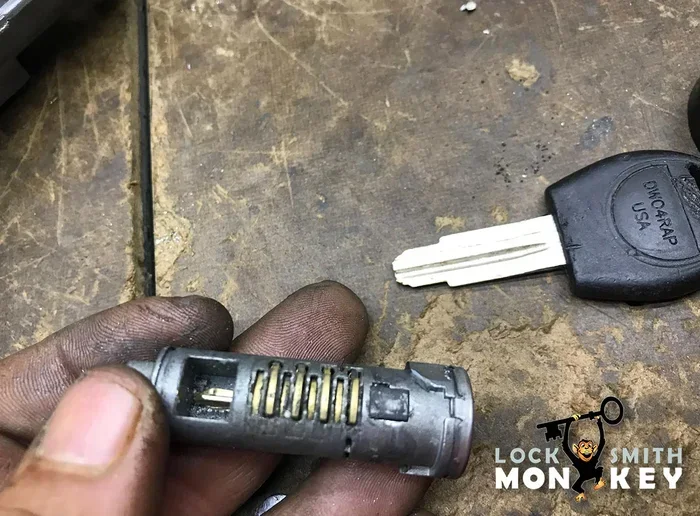
Sometimes the simplest explanation is the right one. Many cars have a steering wheel lock that engages when you remove the key. This is a theft deterrent feature. When the lock is engaged, the steering wheel gets stuck and the key won’t turn in the ignition. This can make it seem like a serious electrical problem when it’s actually just a mechanical lock.
How to Unlock the Steering Wheel
Follow these steps to release a locked steering wheel:
- Gently wiggle the steering wheel left and right while pulling it.
- While holding the wheel, try turning the key gently.
- Don’t force the key. If it’s stuck, you could break it inside the cylinder.
- Once the wheel releases, the key should turn smoothly.
If the key itself is the problem, it might be worn down or bent over time. Keys wear out from hundreds of uses in the ignition cylinder. A locksmith can cut a new key from the original code or from the vehicle identification number. Always keep a spare key in a safe place at home.
Transponder Key and Immobilizer Problems
Modern cars have an immobilizer system that prevents theft. The system uses a transponder chip inside the key. When you turn the key, the car reads the chip’s code. If the code doesn’t match, the car won’t start. This is why some drivers experience your car won’t start with the key and nothing happens even when the battery is fine.
Common Transponder Key Issues
- The key’s chip is damaged or cracked.
- The battery in the key fob is dead (for push-button start systems).
- The immobilizer module has a fault.
- The key was replaced and not properly programmed.
If you have a spare key, try it. If the spare works, the problem is with the original key’s transponder chip. You’ll need a new key programmed by a dealer or locksmith. The cost ranges from $50 to $200 depending on the vehicle make and model. For push-button start cars, try holding the key fob directly against the start button. Some models have a backup reader built into the button.
Ignition Relay, Fuse, and Wiring Problems
Electrical systems rely on relays and fuses to control power flow. If the ignition relay fails or a blown fuse interrupts the circuit, power never reaches the starter or ignition system. This causes the exact same symptom as a dead battery: your car won’t start with the key and nothing happens.
How to Check Relays and Fuses
Follow these steps to inspect your electrical components:
- Open the fuse box and look for the owner’s manual diagram.
- Find the ignition relay and the starter relay.
- Remove each relay and inspect it for a blown internal fuse.
- Swap the relay with a similar one to test it.
- Check fuses visually or with a multimeter for continuity.
Wiring problems are less common but can happen. Corroded connectors, frayed wires, or a loose ground cable can all cause a no-start condition. If you’ve checked the battery, starter, and ignition switch and everything looks fine, have a mechanic inspect the wiring harness. Electrical gremlins can be tricky to track down.
Comparison Table: Common No-Start Causes
| Cause | Symptom | DIY Fix? | Cost to Fix |
|---|---|---|---|
| Dead Battery | No lights, no sound | Yes (jump-start) | $0 – $150 |
| Corroded Terminals | Clicking, dim lights | Yes (clean terminals) | $0 – $30 |
| Bad Ignition Switch | No dash lights, key turns | No (mechanic needed) | $100 – $400 |
| Bad Starter Motor | Click or grind, no crank | Possible (advanced) | $200 – $500 |
| Steering Wheel Lock | Key won’t turn | Yes (wiggle wheel) | $0 |
| Transponder Key Issue | Dash light flashes | No (programming needed) | $50 – $200 |
| Blown Fuse/Relay | Partial electrical failure | Yes (replace fuse) | $5 – $20 |
Prevention Tips to Avoid Future No-Start Problems
The best way to deal with your car won’t start with the key and nothing happens is to prevent it from happening in the first place. Here are some simple habits that keep your starting system healthy:
- Replace your battery every 3-5 years. Don’t wait for it to die completely. A proactive replacement saves you from being stranded.
- Clean battery terminals twice a year. A quick scrub with a wire brush prevents corrosion buildup.
- Turn off all accessories before shutting off the engine. Lights, radio, and AC put extra strain on the battery when you restart.
- Keep a spare key at home. If your primary key gets damaged or lost, you won’t be stuck.
- Listen for unusual sounds. A grinding or clicking noise when you start the car is a warning sign. Address it early.
- Have your electrical system checked annually. A mechanic can spot weak relays, frayed wires, and failing switches before they leave you stranded.
When to Call a Professional Mechanic
Some no-start problems are simple enough to handle on your own. But there are times when you should call in a professional. If you’ve tried a jump-start, cleaned the terminals, and checked the fuses, and the car still won’t start, it’s time for expert help. Complex electrical issues, fuel system problems, and internal engine failures need professional diagnosis.
A mechanic has specialized tools like a starter draw tester, oscilloscope, and diagnostic scanner that can pinpoint problems quickly. Trying to diagnose a complex issue without the right tools can lead to wasted money and unnecessary part replacements. Trust your instincts. If the problem feels beyond your skill level, call a professional.
Warning Signs You Need Immediate Help
- The car smells like burning plastic or electrical insulation.
- You see smoke or steam under the hood.
- The car starts but dies immediately.
- You hear a loud metallic grinding every time you turn the key.
- The dashboard warning lights flash erratically.
These symptoms could indicate serious damage that gets worse with every failed start attempt. Stop trying to start the car and have it towed to a repair shop if you notice any of these signs.
Conclusion
Dealing with a car that won’t start with the key and nothing happens is stressful, but most causes are straightforward and fixable. The most common culprits are a dead battery, corroded terminals, a faulty ignition switch, or a bad starter motor. By working through the checklist in this guide, you can often diagnose and fix the problem yourself. Remember to check the simple things first — the battery, the terminals, the steering lock — before diving into complex repairs.
Regular maintenance keeps your starting system reliable for years. Clean your terminals, replace your battery on schedule, and keep a spare key handy. These small habits prevent the frustration of a no-start situation. And when the problem is beyond your expertise, don’t hesitate to call a trusted mechanic. Your safety and peace of mind are worth it.
Now you know exactly what to do when your car won’t start with the key and nothing happens. Grab your tools or call for help, and get back on the road with confidence.
Frequently Asked Questions
Why does my car won’t start with the key and nothing happens?
The most common reason is a dead or weak battery. Other likely causes include corroded battery terminals, a faulty ignition switch, or a bad starter motor. Start by checking the battery voltage and cleaning the terminals before moving on to more complex diagnostics.
Can a dead key fob battery cause a car not to start?
Yes, especially in vehicles with push-button start or smart key systems. A dead fob battery means the car’s immobilizer can’t recognize the key. Try holding the fob directly against the start button or replace the fob battery with a CR2032 coin cell.
How do I know if it’s the starter or the battery?
If you turn the key and hear a single click but no cranking, the starter is likely the issue. If there’s no sound at all and the dashboard is dark, the battery is probably dead. Test the battery voltage first — if it’s below 12.0 volts, the battery is your culprit.
Is it safe to keep trying to start my car when nothing happens?
It’s okay to try a few times, but repeated attempts can drain the battery further and overheat the starter motor. Wait at least 30 seconds between attempts. If the car doesn’t start after three tries, stop and check the battery or call for roadside assistance.
How much does it cost to fix a car that won’t start?
The cost depends on the cause. A jump-start costs nothing. Battery replacement runs $100-$250. Starter motor replacement costs $200-$500. Ignition switch repair ranges from $100-$400. Always get a diagnostic estimate before authorizing repairs.
What should I do if the key gets stuck in the ignition?
Don’t force it. Gently wiggle the steering wheel left and right while trying to turn the key. The steering lock may be engaged. If the key is physically stuck, try spraying a small amount of electrical contact cleaner into the ignition cylinder and gently working the key back and forth.
=== CONCLUSION ===
When your car won’t start with the key and nothing happens, the cause is usually simpler than you think. A dead battery, corroded terminals, or a locked steering wheel account for the majority of no-start situations. Work through the checklist step by step, and you’ll likely find the fix yourself. Keep this guide saved for the next time you’re standing in your driveway with a silent engine. You’ve got this.