How Much HP Can You Get Out of a Toyota 22R Engine
The Toyota 22R engine is a legendary inline-4 cylinder powerplant that can deliver surprisingly impressive gains with the right upgrades. Stock 22R horsepower sits around 96 to 105 HP, but a well-built 22R engine build can push past 200 HP or more. Whether you are running a basic performance upgrade setup or a full race build, the 22R platform offers real potential for engine tuning enthusiasts.
The Toyota 22R engine has earned a strong reputation among off-road enthusiasts and weekend wrench-turners alike. This 2.4 liter inline-4 engine powered some of the most iconic trucks ever built, including the Hilux, the Pickup, and the 4Runner. If you own a vehicle with this engine, you might wonder how much horsepower you can actually pull out of it.
The answer is more exciting than you might think. A bone-stock 22R delivers around 96 to 105 horsepower, which is perfectly fine for daily driving. But with the right performance upgrades and a solid build plan, you can push that number well past 200 HP. Some builders have even hit the 250 HP mark with serious forced induction setups.
In this guide, we will walk through everything you need to know about extracting horsepower from a Toyota 22R. We will cover stock numbers, upgrade paths, build levels, and the mistakes that can derail your project. Whether you are planning a mild street build or a full race engine, this article has you covered.
Key Takeaways
- Stock 22R HP: A factory Toyota 22R produces about 96 to 105 horsepower, depending on the year and model.
- Moderate Builds Hit 150-200 HP: With a camshaft upgrade, better intake, and exhaust work, you can realistically double stock output.
- Serious Builds Exceed 250 HP: Forced induction, forged internals, and full cylinder head work push the 22R into high-performance territory.
- The 22R-E Version Matters: The fuel-injected 22R-E offers better tuning flexibility than the older carbureted models.
- Head Work Is Key: A proper valve job and porting deliver the biggest gains per dollar spent on a 22R build.
- Avoid Common Mistakes: Overlooking bottom-end strength and running too much boost without proper internals are the top errors builders make.
- Realistic Goals Win: Set your build targets based on budget and intended use for the best results.
📑 Table of Contents
Understanding the Toyota 22R Engine
What Makes the 22R Special
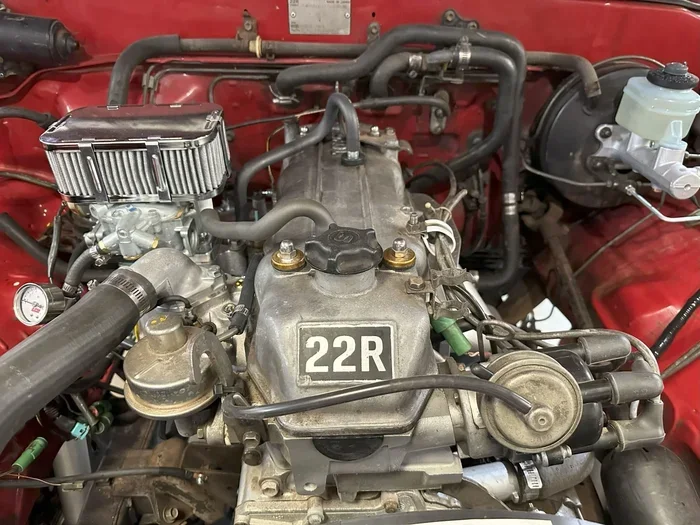
The Toyota 22R belongs to the R-series engine family, which Toyota produced from the late 1970s through the mid-1990s. This naturally aspirated inline-4 cylinder engine was known for its durability and simplicity. Unlike many engines of its era, the 22R used a cast iron block with an aluminum cylinder head. This combination gave it excellent heat dissipation and long-term reliability.
Toyota designed the 22R with a focus on low-end torque and longevity. It was never meant to be a high-revving race engine out of the box. But that does not mean it cannot be transformed into one. The robust bottom end of the 22R can handle a surprising amount of abuse, which makes it a popular choice for engine swaps and performance builds.
The 22R came in two main variants: the carbureted 22R and the fuel-injected 22R-E. The 22R-E uses electronic fuel injection, which makes tuning easier and more precise. If you are serious about horsepower gains, the 22R-E is the better starting point because of its compatibility with modern engine management systems.
Stock HP Numbers for the 22R
To understand how far you can take a 22R, you first need to know where it starts. Here are the typical stock horsepower figures for different 22R variants:
- 22R (carbureted): 96 to 105 HP at 4,800 RPM
- 22R-E (fuel injected): 100 to 105 HP at 4,800 RPM
- Torque output: 130 to 142 lb-ft across the board
These numbers are modest by today’s standards. But the 22R’s true strength lies in its ability to accept upgrades without breaking the bank. The engine’s simple design means fewer parts to worry about, and the massive aftermarket support makes finding performance parts easy.
Stock vs Modified: Setting Your HP Baseline
Before you start buying parts, it helps to understand what limits a stock 22R. The factory configuration prioritizes reliability and emissions compliance over raw power. Several factors keep the stock horsepower output modest:
- A restrictive factory exhaust manifold limits airflow
- The carburetor or basic fuel injection system runs rich for emissions
- The stock camshaft is tuned for economy, not performance
- The compression ratio sits at a conservative 8.0 to 8.8:1
- The intake manifold design prioritizes low-end torque over high-end flow
Each of these factory choices represents a bottleneck. By addressing them one at a time, you can unlock significant gains. The table below shows a realistic comparison of what each stage of modification can achieve:
| Build Level | Estimated HP | Key Upgrades | Cost Range (USD) |
|---|---|---|---|
| Stock | 96 – 105 | None | $0 |
| Stage 1 – Mild | 115 – 130 | Intake, exhaust, basic tune | $500 – $1,200 |
| Stage 2 – Moderate | 140 – 170 | Cam swap, head work, headers | $1,500 – $3,000 |
| Stage 3 – Hot | 180 – 220 | Full head porting, bigger turbo, forged internals | $3,500 – $7,000 |
| Stage 4 – Race | 250+ | Full race build, forced induction, custom tuning | $8,000+ |
As you can see, even a mild Stage 1 build gives you a noticeable improvement in engine performance. The real magic happens when you move into Stage 2 and beyond. Each level adds power in a predictable way, as long as you match the upgrades properly.
Top Performance Upgrades for the 22R
Now let us dive into the specific parts and modifications that make the biggest difference. These upgrades form the foundation of any serious 22R performance build.
Camshaft and Valve Train Upgrades
The camshaft is the heart of any engine tuning project. The stock 22R cam is designed for smooth operation and fuel economy, not power. Swapping in a performance camshaft changes the valve timing and lift, which directly impacts horsepower and torque.
A good performance cam can add 10 to 20 HP on its own. But the real benefit comes from how it transforms the engine’s power curve. You will notice stronger mid-range pull and better top-end performance. Popular cam options for the 22R include grinds from manufacturers like Isky and Crower.
Do not forget about the valve train components when you swap the cam. Upgraded valve springs and retainers prevent valve float at higher RPMs. This is especially important if you plan to run the engine above 5,500 RPM.
Cylinder Head Work
The cylinder head is where airflow magic happens. A professional port and polish job smooths the intake and exhaust runners, allowing air to flow more freely. Combined with a three-angle valve job, this upgrade can deliver 15 to 25 HP gains.
Some builders go further with head decking and oversize valves. This improves the compression ratio and increases the valve area, which boosts both airflow and combustion efficiency. If you are serious about extracting maximum 22R horsepower, head work should be at the top of your list.
Intake and Exhaust System Improvements
Airflow is a two-way street. You need to feed the engine efficiently and let the exhaust escape freely. A performance intake manifold replaces the restrictive factory piece and improves throttle response.
On the exhaust side, a full long-tube header setup makes the biggest difference. A quality header reduces back pressure and helps the engine breathe better at all RPMs. Pair it with a high-flow catalytic converter and a free-flowing muffler for the best results.
Quick Tip: Do not underestimate the value of a proper exhaust manifold upgrade. Many stock manifolds have sharp bends and small runners that choke airflow. A quality aftermarket exhaust system can add 5 to 10 HP by itself.
Forced Induction: Turbo and Supercharger Kits
If you want serious horsepower gains, forced induction is the way to go. A turbo kit for the 22R can push output past 200 HP with proper supporting modifications. Some builders have achieved over 300 HP with large turbos and extensive internal upgrades.
The 22R responds well to boost because of its strong block design. However, you cannot just bolt on a turbo and call it a day. You will need upgraded pistons, rod bolts, and a reinforced crankshaft to handle the increased cylinder pressures.
A supercharger kit is another option, though less common for the 22R platform. Superchargers provide instant throttle response, which some drivers prefer over turbo lag. Both options can deliver excellent performance gains when paired with proper tuning.
Engine Internals: The Foundation of High HP
If you are targeting 200 HP or more, you need to look at the engine internals. The stock 22R internals can handle up to about 150 HP comfortably. Beyond that, you risk damaging the engine.
Key upgrades include:
- Forged pistons: Handle higher compression and boost pressures
- Connecting rod bolts: Prevent rod failure under high load
- Balanced rotating assembly: Reduces vibration at high RPMs
- Upgraded head gasket: Prevents blowouts with increased cylinder pressure
- Oil pump upgrade: Ensures proper lubrication under hard use
Investing in quality engine internals early in your build saves money and headaches down the road. A failed rod or cracked piston can ruin an otherwise great build.
How Much HP Can You Really Get From a 22R?
This is the question everyone wants answered. The honest answer depends on your budget, your goals, and how much work you are willing to do. Let us break it down by build level.
Mild Street Build: 120-140 HP
A mild build is perfect for daily drivers who want a little extra punch without breaking the bank. This level includes a performance intake, upgraded exhaust, and a basic engine tune. You can achieve these gains for under $1,200 in most cases.
This build keeps the factory bottom end intact, which means reliability stays high. It is the perfect starting point for someone who wants to dip their toes into 22R performance upgrades.
Moderate Performance Build: 150-200 HP
The moderate build is where things get really fun. This level includes a performance camshaft, full cylinder head work, long-tube headers, and an upgraded intake manifold. You may also need a standalone engine management system to dial in the fuel and ignition timing properly.
At this level, the 22R becomes a genuinely capable engine. It pulls hard through the mid-range and feels lively on the highway. Many builders stop here because it offers an excellent balance of power, reliability, and cost.
High-Performance Build: 200-280 HP
The high-performance build requires a forced induction system and upgraded engine internals. A turbo kit with a boost controller, combined with forged pistons and a balanced rotating assembly, can push the 22R past 250 HP.
This level of power demands attention to detail. You need proper tuning to avoid detonation, a strong cooling system to manage heat, and a reliable fuel system to keep the engine fed. The rewards are worth it, though. A 22R making 250 HP is a seriously impressive platform.
Full Race Build: 300+ HP
At the extreme end, some builders push the 22R beyond 300 HP. These builds use large turbos, aggressive cam profiles, and fully forged rotating assemblies. The cylinder head may be replaced with an aftermarket performance unit or extensively CNC-ported.
This level is for dedicated racing applications. The engine requires constant monitoring and frequent maintenance. It is not a daily driver setup. But for those who want the absolute maximum from the 22R platform, 300+ HP is within reach.
Common Mistakes to Avoid When Building a 22R
Even the best plans can go wrong if you skip important steps. Here are the most common mistakes builders make when increasing 22R horsepower:
- Skipping the tune: Any modification that changes airflow or fuel delivery requires a proper ECU tune. Running a modified engine on a stock tune leads to poor performance and potential damage.
- Ignoring cooling: More power means more heat. An upgraded radiator and water pump are essential for high-output builds.
- Underbuilt bottom end: Putting a large turbo on stock internals is a recipe for disaster. Always match your internal strength to your power goals.
- Cheap parts: Cutting corners on critical components like head gaskets, pistons, and bearings will cost you more in the long run.
- Neglecting fuel quality: Higher compression and boost require higher-octane fuel. Running low-octane fuel causes knocking and reduces engine life.
- Forgetting about the drivetrain: Your transmission and driveshaft need to handle the extra power. Upgrading the clutch or torque converter is often overlooked.
Avoiding these mistakes keeps your build reliable and ensures your horsepower gains last for years.
Expert Insights for Maximizing 22R Power
Experienced builders and engine tuners share a few pieces of wisdom that can save you time and money:
Start with a solid foundation. Before adding power, make sure your engine is in good mechanical health. Address any oil leaks, compression issues, or timing problems first. A healthy stock engine is the best starting point for a build.
Invest in tuning early. A quality dyno tune is one of the best returns on investment you can make. It ensures your engine runs at peak efficiency and protects your internals from lean conditions or detonation.
Think about the big picture. Every upgrade affects other components. A bigger cam changes idle quality. A turbo changes thermal loads. A higher compression ratio changes fuel requirements. Always consider how each change interacts with the rest of the engine.
Use quality parts from trusted sources. The 22R aftermarket is large, but quality varies. Stick with reputable manufacturers and read reviews before buying. A $200 part that fails can cost you thousands in engine damage.
Document everything. Keep records of your build, including part numbers, torque specs, and tuning data. This makes future troubleshooting much easier and helps you track exactly what contributes to your power gains.
Key Takeaways
- Stock 22R HP: A factory Toyota 22R produces about 96 to 105 horsepower, depending on the year and model.
- Moderate Builds Hit 150-200 HP: With a camshaft upgrade, better intake, and exhaust work, you can realistically double stock output.
- Serious Builds Exceed 250 HP: Forced induction, forged internals, and full cylinder head work push the 22R into high-performance territory.
- The 22R-E Version Matters: The fuel-injected 22R-E offers better tuning flexibility than the older carbureted models.
- Head Work Is Key: A proper valve job and porting deliver the biggest gains per dollar spent on a 22R build.
- Avoid Common Mistakes: Overlooking bottom-end strength and running too much boost without proper internals are the top errors builders make.
- Realistic Goals Win: Set your build targets based on budget and intended use for the best results.
Conclusion
The Toyota 22R engine is a remarkably capable platform that punches well above its stock horsepower rating. From a mild 120 HP street build to a full race engine making 300 HP, the 22R offers something for every builder and budget. The key is to plan your build carefully, match your upgrades to your goals, and never skip the tuning step.
Whether you are restoring a classic Hilux or building a trail-ready 4Runner, understanding the 22R’s HP potential helps you make smart decisions about where to invest your time and money. Start with the basics, build on a solid foundation, and enjoy the process of watching your Toyota 22R engine come to life.
The journey of building a high-output 22R is as rewarding as the result. You will learn more about your engine than you ever thought possible, and you will end up with a truck that is truly yours. So grab your wrenches, set your goals, and get building. The 22R is waiting to surprise you.
Frequently Asked Questions
How much HP does a stock Toyota 22R produce?
A stock Toyota 22R produces between 96 and 105 horsepower, depending on the model year and whether it uses a carburetor or fuel injection. The 22R-E fuel-injected version typically sits at the higher end of that range.
Can you turbo a Toyota 22R engine?
Yes, the 22R can be turbocharged, but you need to upgrade the internals for anything above about 150 HP. Forged pistons, upgraded rod bolts, and a stronger head gasket are essential for a reliable turbo build.
What is the cheapest way to add HP to a 22R?
The most affordable upgrades are a performance intake, a quality exhaust header, and a basic engine tune. Together, these can add 10 to 20 HP for under $500.
How much does a full 22R build cost?
A moderate build with cam, head work, headers, and intake typically costs between $1,500 and $3,000. A full turbo build with forged internals can run $5,000 to $10,000 or more depending on parts quality.
Is the 22R better than the 22RE for performance?
The 22R-E (fuel injected) is generally better for performance builds because it is easier to tune with aftermarket engine management systems. The carbureted 22R works fine for mild builds but becomes harder to tune as you add more power.
What is the maximum HP a 22R can handle reliably?
With a fully built bottom end and proper tuning, a 22R can reliably handle 250 to 300 HP. Beyond that, you enter territory where the block and factory design start to limit further gains without extensive modification.