How Much Oil a Hyundai Elantra Takes for Best Performance
Knowing how much oil a Hyundai Elantra takes is essential for keeping your engine healthy and running strong. Most Hyundai Elantra models require between 3.5 and 4.5 quarts of oil, depending on the engine type and model year. Using the right oil type and staying on top of oil change intervals will protect your engine and boost fuel economy.
If you own a Hyundai Elantra or are thinking about buying one, you need to know one basic but vital fact. How much oil a Hyundai Elantra takes directly affects your engine’s health, performance, and lifespan. Getting this wrong can lead to serious problems down the road. Too little oil and your engine runs dry. Too much and you risk foaming, leaks, and costly repairs. In this guide, we walk you through everything you need to know about oil capacity, oil type, and maintenance schedules for every Elantra model. By the end, you will feel confident about keeping your car properly maintained.
Oil is the lifeblood of any engine. It reduces friction, cools moving parts, and prevents harmful buildup inside the engine block. For the Hyundai Elantra, using the correct engine oil capacity and the right oil viscosity makes a noticeable difference. Whether you drive the base 2.0L model or the turbocharged 1.6L variant, this guide has you covered. We will also touch on oil change costs, how to read your dipstick, and common mistakes to avoid. Let us dive in and make sure your Elantra stays in top shape for years to come.
Key Takeaways
- Oil Capacity Varies by Model: The 2.0L engine typically needs about 3.9 quarts, while the 1.6L turbo may require closer to 4.5 quarts.
- Use the Right Oil Type: Most Hyundai Elantras perform best with 5W-30 synthetic or conventional oil, but always check your owner’s manual.
- Oil Changes Matter: Sticking to a regular oil change schedule prevents engine wear and keeps your warranty valid.
- Check Your Oil Regularly: A simple dipstick check once a month can catch low oil levels before they cause damage.
- Don’t Overfill: Adding too much oil can cause foaming, leaks, and even engine damage over time.
- Hybrid Models Have Specific Needs: The Elantra Hybrid uses a separate oil system for the engine and electric motor components.
- Budget-Friendly Maintenance: Changing your oil at home can save you money compared to dealership service visits.
📑 Table of Contents
- Understanding Oil Capacity for the Hyundai Elantra
- Choosing the Right Oil Type for Your Elantra
- How to Check and Add Oil to Your Hyundai Elantra
- Oil Change Intervals and Maintenance Schedule
- Common Oil-Related Mistakes and How to Avoid Them
- Protecting Your Hyundai Elantra Investment
- Final Thoughts on Hyundai Elantra Oil Capacity
Understanding Oil Capacity for the Hyundai Elantra
The amount of oil your Elantra needs depends on the engine size and model year. Automakers design each engine with a specific volume in mind. Sticking to that number ensures proper lubrication without overfilling. Here is a breakdown of what to expect across different Elantra generations.
Oil Capacity by Engine Type
The most common Hyundai Elantra engines fall into two categories. The standard 2.0-liter naturally aspirated engine and the 1.6-liter turbocharged engine found in the Elantra N and some newer trims. Each has a different oil requirement.
- 2.0L Engine (Base Models): Requires approximately 3.5 to 3.9 quarts of oil. This is the most common engine found in Elantras from 2011 to 2024.
- 1.6L Turbo Engine (Elantra N and Turbo Trims): Requires approximately 4.2 to 4.5 quarts of oil. The turbocharged engine runs hotter and needs more oil for proper cooling and lubrication.
- 1.6L MPI Engine (Older Models): Found in models from 2007 to 2010, this engine typically takes about 3.5 quarts.
- 1.8L Engine (Some 2011-2014 Models): Requires around 3.7 to 4.0 quarts of oil.
Always double-check your owner’s manual or the oil cap under the hood for the exact number. The oil capacity chart printed on the oil fill cap is your quickest reference. If you are unsure, a quick search using your specific model year and trim level will give you the precise figure.
Why Exact Oil Capacity Matters
You might wonder why the exact amount matters so much. The answer is simple. Engines are engineered with tight tolerances. The oil system is designed to circulate a specific volume of oil at a specific pressure. Too little oil means inadequate lubrication. This leads to increased friction, overheating, and accelerated wear on critical components like bearings and camshafts.
On the other hand, overfilling your engine is just as dangerous. Excess oil gets churned by the crankshaft and creates foam. Foamy oil loses its lubricating properties. It can also cause oil pressure spikes, push past seals, and lead to oil leaks. In worst cases, hydrolocking can occur if enough oil enters the combustion chamber. Keeping your oil level within the manufacturer’s recommended range is non-negotiable for engine longevity.
Choosing the Right Oil Type for Your Elantra
Not all engine oils are created equal. The oil type you choose for your Hyundai Elantra plays a huge role in how well your engine performs and how long it lasts. Let us break down your options so you can make the best choice.
Synthetic vs. Conventional Oil
Most modern Hyundai Elantras recommend full synthetic oil. Synthetic oil offers superior protection at both high and low temperatures. It resists breakdown better than conventional oil and lasts longer between changes. If you live in an area with extreme temperatures, synthetic oil is especially important.
Conventional oil is a more budget-friendly option. It works fine for older Elantra models with simpler engine designs. However, it breaks down faster and requires more frequent changes. If you drive your Elantra mainly for short trips around town, conventional oil may still get the job done.
Recommended Oil Viscosity
Viscosity refers to how thick or thin your oil is at different temperatures. The most common recommendation for the Hyundai Elantra is 5W-30. The “5W” means the oil flows well at cold temperatures, which is crucial for cold starts. The “30” indicates the oil’s thickness at operating temperature.
Some newer Elantra models may recommend 0W-20 or 5W-20 oil for improved fuel economy. Always refer to your owner’s manual or the oil fill cap for the correct viscosity. Using the wrong viscosity can affect engine performance and may even void your Hyundai warranty if it leads to engine damage.
| Elantra Model/Engine | Recommended Oil Viscosity | Oil Type |
|---|---|---|
| 2.0L Base (2011-2024) | 5W-30 | Full Synthetic or Conventional |
| 1.6L Turbo / Elantra N | 5W-30 | Full Synthetic (Preferred) |
| 1.6L MPI (2007-2010) | 5W-30 | Conventional or Synthetic Blend |
| 1.8L (2011-2014) | 5W-30 | Full Synthetic Recommended |
| Elantra Hybrid | 0W-20 | Full Synthetic |
How to Check and Add Oil to Your Hyundai Elantra
Checking your oil level is one of the simplest things you can do as a car owner. It takes less than five minutes and can save you from expensive repairs. Here is a step-by-step guide to checking and adding oil the right way.
Step-by-Step Oil Check Process
- Park on a Level Surface: Make sure your car is parked on flat ground. This ensures an accurate reading on the dipstick.
- Turn Off the Engine: Wait at least 5 to 10 minutes after turning off the engine. This gives the oil time to drain back into the oil pan.
- Locate the Dipstick: Open the hood and find the dipstick handle. It usually has a bright colored ring for easy identification.
- Pull and Wipe: Pull the dipstick out and wipe it clean with a rag or paper towel.
- Reinsert and Pull Again: Push the dipstick all the way back in, then pull it out again to read the level.
- Check the Marks: Look at the markings on the dipstick. The oil level should fall between the minimum and maximum marks. If it is below the minimum mark, you need to add oil.
How to Add Oil Safely
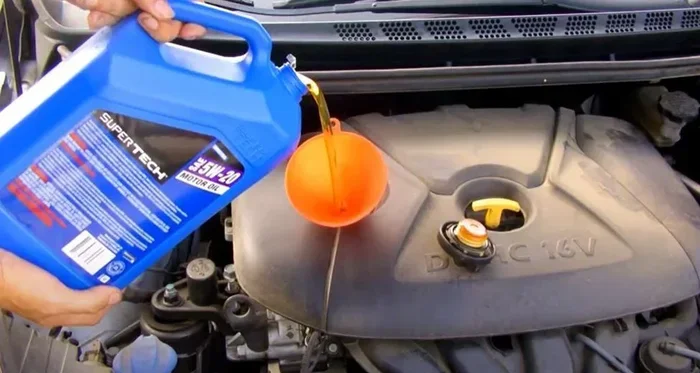
If your oil level is low, adding oil is straightforward. First, locate the oil fill cap on top of the engine. It usually has an oil can symbol on it. Remove the cap and pour in small amounts of the recommended oil. After each addition, wait a minute for the oil to settle, then check the dipstick again. This prevents overfilling. Stop adding oil once the level reaches the full mark on the dipstick.
Quick tip: Always use the same brand and type of oil you already have in your engine. Mixing different oil types can sometimes cause compatibility issues. If you are switching oil types entirely, consider doing a full oil change rather than just topping off.
Oil Change Intervals and Maintenance Schedule
Staying on top of your oil change schedule is one of the most important things you can do for your Hyundai Elantra. Fresh oil keeps your engine clean, cool, and properly lubricated. Ignoring oil changes leads to sludge buildup, reduced performance, and eventually engine failure.
Recommended Oil Change Intervals
Hyundai generally recommends oil changes every 7,500 to 10,000 miles for newer models using synthetic oil. Older models or those using conventional oil may need changes every 5,000 to 7,500 miles. Driving conditions also play a role. If you frequently drive in stop-and-go traffic, extreme heat, or dusty conditions, you should shorten your oil change intervals.
- Normal Driving Conditions: Every 7,500 to 10,000 miles or once a year.
- Severe Driving Conditions: Every 5,000 to 7,500 miles or twice a year.
- Older Models (Pre-2015): Every 5,000 to 7,500 miles regardless of driving conditions.
Your owner’s manual will have the most accurate schedule for your specific model year. Many newer Elantras also come with an oil life monitoring system. This system tracks your driving habits and alerts you when an oil change is due. However, it is still a good practice to check your oil manually at least once a month.
What Happens During an Oil Change
A standard oil change involves draining the old oil from the engine, replacing the oil filter, and refilling with fresh oil of the correct type and amount. The oil filter catches contaminants and debris, preventing them from circulating through your engine. Over time, the filter becomes saturated and needs replacement along with the oil. Skipping the filter replacement can contaminate your fresh oil almost immediately.
Many owners ask about oil change cost for a Hyundai Elantra. At a dealership, you can expect to pay between $70 and $130 depending on the oil type and model year. Doing it yourself with a quality oil filter and a jug of synthetic oil can cost as little as $30 to $50. Either way, regular oil changes are one of the cheapest forms of car insurance you can get.
Common Oil-Related Mistakes and How to Avoid Them
Even the best car owners sometimes make mistakes when it comes to oil maintenance. Being aware of these common errors can save you time, money, and headaches.
Overfilling the Oil
This is one of the most common mistakes. People think “more is better” when it comes to oil. That is not true. Overfilling causes the crankshaft to whip the excess oil into a froth. Foamy oil cannot lubricate properly. It also increases pressure inside the engine, which can push past gaskets and seals. If you accidentally overfill, drain the excess oil or take your car to a mechanic to have it removed safely.
Using the Wrong Oil Viscosity
Some drivers switch to a different viscosity oil because it is cheaper or because a friend recommended it. This can be a costly mistake. Each engine is designed for a specific viscosity range. Using the wrong oil can reduce fuel efficiency, increase engine wear, and in some cases trigger warning lights on your dashboard. Always stick to what Hyundai recommends for your specific Elantra model.
Ignoring Oil Change Alerts
Modern cars have oil life monitoring systems that track driving patterns and alert you when an oil change is needed. Some drivers ignore these alerts or reset them without actually changing the oil. This defeats the purpose of the system. If your Elantra tells you it is time for an oil change, do not delay it. Fresh oil is cheap insurance against engine damage.
Not Checking Oil Between Changes
Even with regular oil changes, engines can burn small amounts of oil between services. This is normal, especially in older vehicles or high-mileage cars. Make it a habit to check your oil level at least once a month. Catching a low oil level early prevents the engine from running dry, which can cause catastrophic damage in a matter of minutes.
Protecting Your Hyundai Elantra Investment
Your Hyundai Elantra is more than just a car. It is a daily driver, a commuter, and often a family vehicle. Protecting your investment means staying on top of routine maintenance, and oil care is at the top of that list. Beyond oil changes, there are other steps you can take to keep your Elantra running smoothly for the long haul.
Regular maintenance goes hand in hand with proper oil care. Replacing your oil filter on schedule, checking your coolant levels, and inspecting your belts and hoses all contribute to engine health. A well-maintained Elantra can easily surpass 200,000 miles with proper care. The key is consistency and attention to detail.
If you ever notice signs of an oil leak, such as dark spots under your car or a burning oil smell while driving, address it immediately. Small leaks can quickly become major repairs if ignored. Similarly, if your oil pressure warning light comes on, pull over safely and turn off the engine. Continuing to drive with low oil pressure can destroy your engine within minutes.
Taking care of your car also means being aware of how different factors affect your vehicle. For instance, if you ever encounter an unexpected road hazard, understanding how your car responds matters. Knowing what happens when your car hits a deer can help you stay calm and make the right decisions in an emergency. Similarly, if you drive a hybrid version, understanding how the powertrain works, including when a hybrid switches from electric to gas, helps you get the most out of your vehicle.
Another way to maximize your Elantra’s efficiency is to understand how fuel economy works in relation to engine maintenance. Proper oil levels and clean oil directly impact how efficiently your engine burns fuel. If you want to learn more about fuel economy, check out how far 1 liter of petrol can take a car on a full tank with a well-maintained engine.
Final Thoughts on Hyundai Elantra Oil Capacity
We have covered a lot of ground in this guide. From understanding your specific oil capacity to choosing the right oil type and staying on top of your maintenance schedule, you now have the knowledge to keep your Hyundai Elantra running at its best. The key takeaway is simple. Treat your engine oil with respect, and your engine will reward you with years of reliable service.
Remember, checking your oil regularly, using the correct oil viscosity, and following the recommended oil change interval are the three pillars of good engine care. These small habits add up to big savings over the life of your vehicle. Whether you handle oil changes yourself or visit a mechanic, the most important thing is that you do it consistently.
Your Hyundai Elantra is a well-engineered, reliable car. Give it the care it deserves, and it will take care of you mile after mile. Start today by checking your oil level and making sure you are on track with your next oil change. Your engine will thank you for it.
Frequently Asked Questions
How much oil does a Hyundai Elantra 2023 take?
The 2023 Hyundai Elantra with the standard 2.0L engine takes approximately 3.9 quarts of oil. The Elantra N with the 1.6L turbo engine requires about 4.5 quarts. Always verify with your owner’s manual for the exact figure.
Can I use 5W-20 oil in my Hyundai Elantra instead of 5W-30?
Some newer Elantra models do recommend 5W-20 oil for improved fuel economy. However, you should always check your owner’s manual or the oil fill cap before switching viscosities. Using the wrong viscosity can affect engine performance.
How often should I change the oil in my Hyundai Elantra?
For most Hyundai Elantra models, oil changes are recommended every 7,500 to 10,000 miles when using synthetic oil. If you use conventional oil or drive in severe conditions, you may need to change it every 5,000 to 7,500 miles.
What happens if I put too much oil in my Hyundai Elantra?
Overfilling your engine causes the oil to foam when the crankshaft spins. Foamy oil loses its lubricating ability and can lead to increased engine wear. It may also cause oil leaks, pressure problems, and in severe cases, engine damage.
Does the Hyundai Elantra Hybrid need a different type of oil?
Yes, the Elantra Hybrid typically uses 0W-20 full synthetic oil. The hybrid powertrain has specific lubrication requirements that differ from the conventional Elantra models. Always check the owner’s manual for the hybrid-specific oil recommendation.
How can I tell if my Hyundai Elantra is low on oil?
The most common signs of low oil include the oil pressure warning light on your dashboard, unusual engine noises like ticking or knocking, decreased fuel efficiency, and dark or burnt-smelling exhaust. Check your dipstick regularly to catch low oil levels early.
=== CONCLUSION ===
Understanding how much oil a Hyundai Elantra takes is one of the simplest yet most impactful things you can do as a car owner. Whether your Elantra has the standard 2.0L engine or the turbocharged 1.6L variant, using the right amount of the right oil keeps your engine running smoothly and efficiently. Stick to the recommended oil change intervals, check your oil level regularly, and never ignore warning signs. With proper oil care, your Hyundai Elantra will deliver reliable performance for hundreds of thousands of miles. Start your oil maintenance routine today and give your engine the protection it deserves.