Is Driving a Forklift Easier Than a Car Here Is the Answer
Driving a forklift is very different from driving a car. While both involve moving a vehicle, the controls, steering, and safety rules are completely different. Driving a forklift requires specialized training, awareness of load stability, and a unique understanding of rear-wheel steering. Many people assume it is simpler because the speeds are lower, but that is far from the truth.
Have you ever wondered whether driving a forklift is easier than driving a car? It is a question that comes up often, especially for people new to warehouse work or material handling. On the surface, both vehicles get you from point A to point B. But underneath, the experience is worlds apart. The steering, the controls, the safety concerns, and even the mindset required are completely different.
Some folks assume that because a forklift moves slowly, it must be simple. That assumption can be dangerous. Operating a counterbalance forklift or any type of powered industrial truck demands respect, training, and sharp awareness. Whether you are considering a career change, starting a new job in a warehouse, or just curious about heavy equipment, understanding the differences is essential.
This article breaks down every major aspect of both vehicles. We will cover steering, controls, safety, load handling, and the learning curve. By the end, you will have a clear and honest answer to the question at hand. Let us dive in.
Key Takeaways
- Steering is reversed: Forklifts use rear-wheel steering, which makes turning very different from driving a car.
- Training is mandatory: You cannot legally operate a forklift without proper certification and forklift training.
- Safety risks are unique: Forklift operation involves load stability, pedestrian safety, and tipping hazards that cars do not have.
- Controls are simpler but different: Forklifts have fewer pedals but require precise hydraulic and mast control.
- Neither is truly easier: Each vehicle demands its own set of skills, and difficulty depends on your experience and environment.
- Load handling adds complexity: Managing a raised load changes the center of gravity and requires constant attention.
- Certification matters: Proper forklift certification ensures workplace safety and legal compliance.
📑 Table of Contents
What Makes Driving a Forklift Different From a Car
At first glance, a forklift and a car share some basic similarities. Both have seats, steering wheels, and brakes. Both move forward and backward. But the similarities end there. Driving a forklift is a fundamentally different experience from getting behind the wheel of a sedan or SUV. The design purpose, the physics involved, and the operating environment all shape how each vehicle behaves.
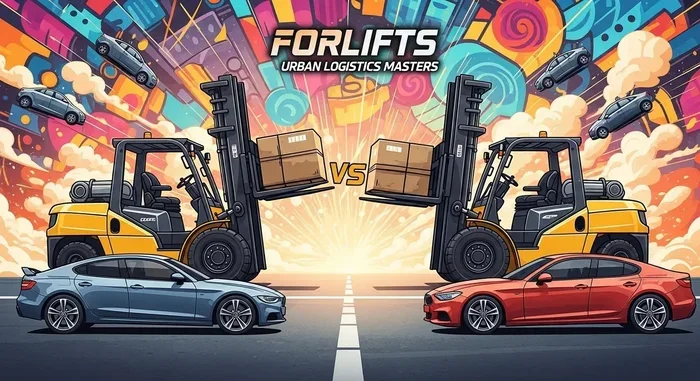
A car is built for transportation on public roads. It handles turns, hills, and varying speeds with a high degree of stability. A forklift, on the other hand, is built for lifting and moving heavy loads in tight spaces. The forklift vs car comparison is not really fair because they serve entirely different purposes. But understanding those differences is the first step toward answering our main question.
The Physics of Forklift Operation
Here is something most people do not think about. A forklift lifts its load at the front, which raises the center of gravity. This makes the vehicle inherently less stable than a car. When a car turns a corner, the weight stays low and balanced. When a forklift turns with a raised load, the entire machine is at risk of tipping over. This single fact changes everything about how forklift operation works.
Operators must always keep the load low while moving. This means constantly raising and lowering the mast, which adds a layer of complexity that car drivers never face. The hydraulic system that controls the lift requires smooth, deliberate inputs. Jerky movements can cause the load to shift, spill, or even fall. Precision is not optional in forklift driving. It is a requirement.
The Role of the Warehouse Environment
Cars drive on open roads with clear lane markings and traffic signals. Forklifts operate in warehouses, construction sites, and loading docks. These environments are cramped, noisy, and full of obstacles. Pedestrians walk between aisles. Racks line both sides. The floor may be uneven or wet. All of these factors make driving a forklift more challenging than simply pressing a gas pedal and turning a wheel.
Warehouse floors also have specific rules. Speed limits are low. Visibility can be blocked by the load itself. The operator must rely on mirrors, cameras, and spotters in many cases. This is a very different experience from driving a car on an open highway where visibility is usually clear in all directions.
Steering and Control: Forklift vs Car
This is where the biggest differences emerge. The way a forklift steers is nothing like the way a car steers. Understanding this difference is critical to answering whether driving a forklift is easier or harder than driving a car.
Rear-Wheel Steering Explained
Cars use front-wheel steering. When you turn the wheel, the front wheels pivot, and the back wheels follow. It feels natural and intuitive. A forklift works in reverse. The rear wheels do the turning. This means the back end of the forklift swings wide when you make a turn.
For new operators, this feels completely counterintuitive. It takes practice to judge the swing radius and understand where the rear end will go. In tight warehouse aisles, this can be a serious challenge. One wrong move and you can clip a rack, damage a wall, or worse. This is why forklift training emphasizes steering drills from day one.
Pedal and Control Layout
A car typically has three pedals: gas, brake, and clutch. A forklift usually has only two: gas and brake. Some models also have an inching pedal, which acts like a clutch to disengage the hydraulic system. The layout is simpler, but that does not mean it is easier.
The hydraulic levers or joystick that control the mast and tilt require a completely different skill set. Car drivers never have to manage a raised platform that can lift several tons. The coordination needed in forklift driving involves hands, feet, and eyes working together simultaneously. It is a multi-tasking challenge that takes time to master.
Speed and Power Delivery
Forklifts move slowly compared to cars. The top speed of most warehouse forklifts is around 5 to 8 miles per hour. This slow pace might make the vehicle seem easy to control. But slow speed does not mean low risk. The heavy load, the lifting mechanism, and the confined space all contribute to a unique set of challenges.
Power delivery in a forklift is also different. Most forklifts use automatic or semi-automatic transmissions. The acceleration can feel abrupt, especially when lifting a heavy load. Smooth throttle control is essential to maintain stability. This is a skill that even experienced car drivers need to develop when transitioning to powered industrial truck operation.
Safety Considerations and Training Requirements
Safety is the biggest reason driving a forklift is not simply a matter of hopping in and going. Both vehicles carry risks, but the nature of those risks is very different. Cars face road hazards, other drivers, and weather conditions. Forklifts face tipping hazards, load instability, and pedestrian collisions.
Forklift Certification and Legal Requirements
You cannot legally drive a forklift on the job without proper certification. In the United States, OSHA requires all forklift operators to complete a training program that includes both classroom instruction and hands-on practice. This is not optional. It is the law.
The certification process covers topics like load capacity, stability triangles, pre-operation inspections, and safe driving practices. It typically takes one to two days to complete. Once certified, operators must be re-evaluated every three years. This regulatory framework exists because forklift safety is serious business. Injuries and fatalities involving forklifts happen every year, and proper training is the best prevention.
Common Safety Hazards in Forklift Operation
Forklift operation comes with hazards that car drivers never encounter. Here are some of the most common risks:
- Tip-over accidents: When a forklift tips, the overhead guard is the only thing protecting the operator. Proper training teaches drivers how to stay in the seat and not jump off during a tip.
- Load falls: An improperly secured or unbalanced load can fall off the forks, causing serious injury or property damage.
- Pedestrian strikes: Forklifts are loud and often have limited visibility. Pedestrians in the same area are at high risk of being struck.
- Dock drops: Loading docks present a unique hazard where a forklift can drive off the edge if the driver is not careful.
- Floor hazards: Wet floors, loose debris, and uneven surfaces can all cause a forklift to lose traction or tip unexpectedly.
Car Safety Is Different but Not Less Important
Cars have their own set of safety challenges. Collisions, distracted driving, and road conditions all create risks. But the safety systems in modern cars, like airbags, anti-lock brakes, and stability control, have made driving a car relatively safe for most people. These systems do not exist in forklifts in the same way.
Forklift operators rely more on their training, awareness, and adherence to safety protocols. There is less technology to fall back on. This makes the learning curve steeper and the responsibility heavier for anyone operating a forklift in a workplace setting.
Load Handling and Practical Challenges
One of the most significant differences between a forklift and a car is the load. A car carries passengers or cargo inside a stable cabin. A forklift carries heavy loads on two prongs that are raised high above the ground. This changes everything about the driving experience.
Understanding the Stability Triangle
Every forklift operator learns about the stability triangle during training. This concept explains how the weight of the forklift and its load must stay within a triangular area to prevent tipping. When the load is raised, the triangle shrinks, leaving less margin for error.
Car drivers never have to think about a stability triangle. They just drive and trust the vehicle to stay upright. Forklift operators must constantly calculate weight, balance, and height to ensure safe operation. This mental workload is a big reason why driving a forklift feels more demanding than driving a car.
Practical Tips for Load Handling
Here are some practical tips that experienced operators follow every single day:
- Always inspect the load before lifting. Check for damage, weight, and balance. Never lift a load that exceeds the forklift’s rated capacity.
- Keep the load low during travel. The mast should be tilted back and the forks should be no more than 6 inches off the ground.
- Slow down before turning. Speed combined with a raised load is the number one cause of tip-over accidents.
- Use the horn at intersections. Pedestrians and other operators may not see you, especially if the load blocks your view.
- Never raise or lower the load while moving. This destabilizes the forklift and increases the risk of a load fall.
The Learning Curve: How Long Does It Take?
Learning to drive a car usually takes several hours of practice over a few weeks. Most people can handle basic car driving within a month of starting lessons. Learning to drive a forklift takes less time in terms of hours, but the skills are more specialized.
A basic forklift training program can be completed in one to two days. However, becoming a confident and safe operator takes weeks of on-the-job practice. The learning curve for forklift operation is shorter at the start but requires ongoing reinforcement. Experienced car drivers often underestimate the adjustment needed when switching to a forklift.
Which One Is Actually Easier to Learn
Now we get to the heart of the question. Is driving a forklift easier than driving a car? The honest answer depends on what you already know and what environment you are working in.
For Someone With No Vehicle Experience
If you have never driven anything before, a car might actually be easier to learn first. The controls are more intuitive, the steering feels natural, and the environment is more forgiving. Learning to drive a forklift without any prior vehicle experience adds a steep learning curve because of the unique steering and load handling requirements.
For Someone With Car Driving Experience
Experienced car drivers may assume that forklift operation will be a breeze. It is not. The rear-wheel steering alone can trip up even the most seasoned drivers. The added responsibility of managing a load, following safety protocols, and navigating tight spaces makes driving a forklift a distinct skill that must be learned from scratch.
For Someone in a Warehouse or Industrial Setting
If your job requires you to operate a forklift, the learning process is more focused. You will receive targeted training for the specific type of forklift you will be using. The environment is controlled, and you will have time to practice under supervision. In this context, driving a forklift becomes manageable and even routine over time.
Comparing the Two Side by Side
Let us look at a direct comparison to make the answer clearer:
| Factor | Car | Forklift |
|---|---|---|
| Steering type | Front-wheel steering | Rear-wheel steering |
| Speed | Up to 70+ mph | 5 to 8 mph |
| Load handling | Passengers or trunk cargo | Heavy loads on forks at height |
| Training required | Driver’s license | OSHA forklift certification |
| Stability risks | Low center of gravity | High center of gravity when loaded |
| Environment | Open roads, highways | Warehouses, docks, construction sites |
| Visibility | Good all-around visibility | Limited by load position |
| Learning curve | Moderate | Moderate to steep |
As you can see from the comparison, each vehicle has its own set of challenges. Neither is objectively easier. The answer depends on your background, your environment, and the type of vehicle you are comparing it to.
Expert Insights and Final Verdict
What Industry Professionals Say
Experienced warehouse managers and forklift trainers consistently say the same thing: driving a forklift is not easier than driving a car. It is different. The skills required are specialized, and the consequences of mistakes can be severe. Many professionals recommend that new operators approach forklift operation with humility and a willingness to learn.
Trainers also emphasize that the biggest mistake people make is underestimating the forklift. Because it moves slowly and looks simple, some operators let their guard down. This is when accidents happen. The most skilled forklift operators are the ones who treat every shift with the same level of attention and respect, regardless of how many years of experience they have.
Quick Tips for New Forklift Operators
- Practice steering in an empty area before working in active aisles.
- Always do a pre-operation inspection before starting the engine.
- Ask questions if you are unsure about load capacity or forklift features.
- Keep your hands and feet inside the cab at all times while the machine is running.
- Never bypass safety devices like the seatbelt or the horn.
Common Mistakes to Avoid
Even experienced operators can fall into bad habits. Here are the most common mistakes in forklift operation:
- Raising the load while turning: This dramatically increases the risk of a tip-over.
- Driving with the mast tilted forward: The load should always be tilted back toward the mast for stability.
- Ignoring pedestrian right-of-way: Forklifts must yield to pedestrians at all times.
- Skipping pre-shift inspections: These checks catch problems before they become accidents.
- Rushing in tight spaces: Speed is the enemy of forklift stability. Slow and steady wins every time.
The Final Verdict
So, is driving a forklift easier than a car? The answer is no, not in the traditional sense. A forklift demands a unique set of skills, specialized training, and a constant awareness of load stability and surroundings. The controls are different, the steering is counterintuitive, and the safety stakes are high. That said, with proper forklift certification and hands-on practice, most people can become competent operators within a few weeks.
Driving a car is a skill most people develop over years. It becomes second nature through daily use. Driving a forklift is a more specialized skill that requires focused training and ongoing attention. Neither vehicle is inherently easier than the other. They simply require different abilities and mindsets.
If you are considering learning to operate a forklift, the best advice is simple: take the training seriously, practice consistently, and never stop learning. The more you understand about forklift operation and warehouse equipment, the safer and more confident you will become. Respect the machine, follow the rules, and you will be well on your way to becoming a skilled and responsible operator.
Frequently Asked Questions
Do you need a special license to drive a forklift?
Yes, you need forklift certification to operate a forklift legally in a workplace. A standard driver’s license is not enough. OSHA requires all forklift operators to complete a formal training program that includes both classroom and hands-on components. This certification must be renewed every three years.
Can you drive a forklift with a regular driver’s license?
A regular driver’s license allows you to drive cars on public roads. It does not qualify you to operate a forklift in a workplace. You must complete a dedicated forklift training program and receive certification from an authorized trainer before you can legally drive a forklift on the job.
Why is a forklift harder to steer than a car?
A forklift uses rear-wheel steering, which means the back end swings wide during turns. This is the opposite of how a car steers with its front wheels. The difference feels counterintuitive to most new operators and requires significant practice to master. Additionally, a raised load changes the forklift’s center of gravity, making steering even more challenging.
Is it dangerous to drive a forklift without training?
Yes, driving a forklift without proper training is extremely dangerous. Untrained operators are at a much higher risk of causing tip-over accidents, load drops, and pedestrian injuries. OSHA strictly prohibits untrained forklift operation, and employers can face heavy fines for allowing it.
How long does forklift training take?
A basic forklift training program typically takes one to two days to complete. This includes classroom instruction on safety rules, equipment knowledge, and hands-on practice under supervision. However, becoming a truly confident and skilled operator takes several weeks of on-the-job experience.
Can you switch between different types of forklifts after getting certified?
Not automatically. Different types of forklifts, such as reach trucks, order pickers, and counterbalance forklifts, have different operating characteristics. You need specific training for each type of forklift you plan to operate. Your employer may provide additional training if you need to switch between models.
Conclusion
The question of whether driving a forklift is easier than a car does not have a simple yes or no answer. Both vehicles require skill, attention, and respect. Cars are designed for open-road travel with intuitive controls and advanced safety features. Forklifts are designed for heavy material handling in tight spaces, where stability and precision matter above all else.
Driving a forklift demands specialized training, certification, and a unique set of skills that go far beyond what car driving requires. The rear-wheel steering, the load handling, the hydraulic controls, and the safety protocols all add layers of complexity that make forklift operation a serious responsibility. Whether you are new to the world of material handling or an experienced car driver exploring warehouse work, approach every forklift with the respect it deserves.
Invest in proper training, practice safe habits every day, and never assume that experience with one vehicle translates to the other. The more you learn about forklift safety and forklift operation, the better prepared you will be. Stay safe, stay trained, and keep improving. That is the real answer to the question that started it all.