Is It Illegal to Drive With Your Liftgate Open and Fines
Driving with your liftgate open can lead to serious legal consequences depending on where you live and what you are hauling. Many states treat an open rear gate as a vehicle equipment violation that comes with real fines and penalties. Beyond the legal risks, an open liftgate creates massive safety hazards for you and everyone on the road. This guide breaks down the laws, potential costs, and safe alternatives so you can stay compliant and protected.
Have you ever been driving down the highway and spotted a truck or van barreling down the road with its rear gate wide open? Maybe you have even done it yourself. It happens more often than you might think. But here is the thing many people do not stop to consider: is it illegal to drive with your liftgate open? The answer is not as simple as a yes or no. Laws vary from state to state, and the penalties can be steeper than most drivers expect. Beyond the legal side, there are real safety risks that make this practice dangerous for everyone on the road.
Whether you haul cargo for a living or occasionally move furniture in your pickup truck, understanding the rules around open liftgate driving matters. You could face a hefty fine, lose points on your license, or worse, cause a serious accident. This guide covers everything you need to know about liftgate open driving laws, potential penalties, and how to transport your load the right way. Let us break it all down so you can stay safe, legal, and stress-free on the road.
The topic of driving with an open rear gate touches on transport regulations, road safety rules, and cargo securement requirements. It is not just a minor traffic annoyance. Law enforcement agencies take this issue seriously, and for good reason. Every year, incidents involving unsecured or open loads lead to crashes, injuries, and millions of dollars in damage. Understanding the rules helps you avoid becoming a statistic.
Key Takeaways
- It can be illegal: Driving with your liftgate open violates traffic and cargo securement laws in many states.
- Fines vary widely: Penalties range from $50 to over $500 depending on your location and circumstances.
- Safety is a major concern: An open liftgate causes cargo spillage, reduced visibility, and serious crash risks.
- Federal rules apply too: DOT cargo securement regulations affect commercial vehicles carrying open loads.
- State laws differ: Some states have strict open-gate bans while others allow limited exceptions.
- There are legal alternatives: Using tarps, netting, and proper restraints keeps you compliant and safe.
📑 Table of Contents
- Understanding What a Liftgate Is and Why It Matters
- Is It Illegal to Drive With Your Liftgate Open?
- Fines and Penalties You Could Face
- Safety Dangers of Driving With an Open Liftgate
- State-by-State Breakdown of Liftgate Laws
- How to Transport Cargo Legally and Safely
- Common Mistakes Drivers Make With Open Liftgates
- Expert Insights on Liftgate Safety and Compliance
- Key Takeaways
- Conclusion
Understanding What a Liftgate Is and Why It Matters
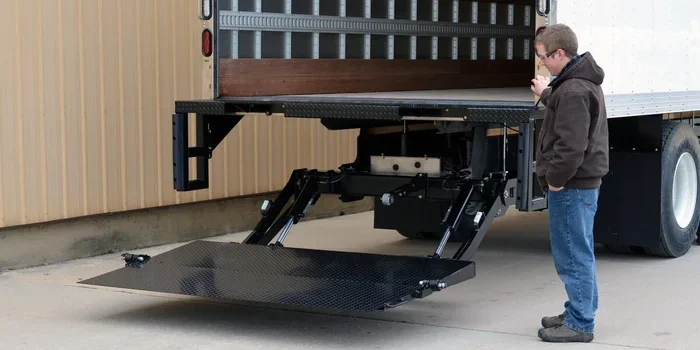
A liftgate is the rear door or gate on a truck, van, or SUV that opens upward to allow easy loading and unloading of cargo. You will find liftgates on commercial vehicles, cargo vans, and some pickup trucks. The term is often used interchangeably with “tailgate,” though technically a tailgate is the hinged rear door on a pickup truck bed. For the purpose of this article, we are talking about any rear gate that opens upward or downward to expose the cargo area.
What Exactly Is a Liftgate?
A liftgate is a vertical or angled gate attached to the rear of a vehicle. It hinges at the bottom and lifts up to create an opening. Some vehicles have a power liftgate that uses a motor, while others are manual. The purpose is simple: make it easy to load heavy items into the cargo area without lifting them over a tall wall. These gates are common on delivery trucks, cargo vans, and SUVs designed for hauling.
When the liftgate is closed, it keeps cargo secure and contained. When it is open, the cargo area is exposed. This is where the legal and safety questions come into play. An open liftgate means your cargo is not fully enclosed, which can lead to items falling out, shifting during transport, or creating wind resistance that affects vehicle handling.
Why People Leave Their Liftgate Open
There are several reasons drivers leave their liftgate open while driving. Some people think it helps with ventilation when hauling items that need airflow. Others simply forget to close it after loading. Some drivers believe it is fine as long as the load looks secure. In certain cases, drivers leave the gate open because they think it makes driving easier or more convenient.
Whatever the reason, the practice is more common than most people realize. Construction crews, landscapers, moving companies, and everyday drivers all fall into this habit. But convenience should never come at the cost of safety or legality. Understanding the rules is the first step toward making better choices on the road.
Is It Illegal to Drive With Your Liftgate Open?
The short answer is: it depends on where you are and what you are hauling. In many states, driving with an open liftgate is a violation of traffic or cargo securement laws. However, the specifics vary widely. Some states have clear laws against it, while others leave the enforcement up to officer discretion. Understanding the legal landscape is essential for any driver who regularly transports cargo.
Federal Regulations on Open Liftgates
At the federal level, the Department of Transportation (DOT) has established cargo securement rules under the Federal Motor Carrier Safety Regulations (FMCSR). These rules apply to commercial vehicles and require that all cargo be properly secured so that it does not leak, spill, drop, or blow from the vehicle. An open liftgate that allows cargo to escape clearly violates these regulations.
The FMCSR Section 393.100 through 393.136 outline the specific requirements for cargo restraint systems. These rules apply to vehicles with a gross vehicle weight rating over 10,000 pounds. Commercial drivers who haul open loads with an unsecured or open rear gate can face citations and fines from federal and state enforcement agencies. The rules are designed to prevent cargo spillage that creates hazards for other motorists.
When It Becomes a Legal Issue
Driving with your liftgate open crosses into legal territory when it violates a specific state or local traffic law. Most states have some form of vehicle equipment violation statute that addresses open or unsecured loads. In many cases, the law states that all cargo must be fully enclosed or securely fastened so that nothing can fall, leak, or blow from the vehicle.
Even in states without a specific liftgate law, you can still be cited under broader statutes. For example, if items fall from your open liftgate and cause an accident, you could face charges for unsecured load violations or even reckless driving. The legal consequences escalate quickly when an open gate leads to property damage, injuries, or fatalities.
Fines and Penalties You Could Face
The financial consequences of driving with an open liftgate can add up fast. Fines vary based on the state, the nature of the violation, and whether the open gate caused any damage or injury. Let us look at what you might be facing if you get caught.
Typical Fine Amounts
In most states, a citation for an open or unsecured load carries a fine between $50 and $500. However, the amount can be much higher in certain situations. Some states classify this as a moving violation, which means it goes on your driving record. Accumulating points on your license can lead to increased insurance premiums, license suspension, or even mandatory traffic school.
For commercial drivers, the stakes are even higher. A DOT violation for unsecured cargo can result in fines up to $1,000 or more per occurrence. Commercial carriers may also face out-of-service orders, meaning the vehicle is taken off the road until the violation is corrected. Repeat offenders risk losing their commercial driver’s license (CDL) or facing company-level penalties.
Additional Consequences Beyond the Fine
Beyond the immediate fine, driving with an open liftgate can lead to several other consequences. If your open load causes an accident, you could face civil liability for damages and injuries. Insurance companies may deny or reduce claims if they determine you were violating safety regulations at the time of the crash.
You might also face a vehicle equipment violation that requires you to appear in court. In some jurisdictions, repeated violations can result in your vehicle being impounded. For commercial operations, a pattern of violations can trigger audits from the Federal Motor Carrier Safety Administration (FMCSA), leading to operational shutdowns and hefty penalties.
Safety Dangers of Driving With an Open Liftgate
The legal risks are serious enough on their own, but the safety dangers of driving with an open liftgate are just as concerning. This is not just about getting a ticket. It is about protecting yourself, your passengers, and everyone else sharing the road.
Risk of Cargo Spillage and Debris
When your liftgate is open, your cargo is exposed to wind, road vibration, and sudden stops. Loose items can fly out of the vehicle at highway speeds. Even small objects become dangerous projectiles when they are traveling at 55 miles per hour or more. Cargo spillage on roadways creates hazards for the vehicles behind you, increasing the risk of rear-end collisions and swerving accidents.
Construction debris, furniture parts, yard waste, and loose materials are common culprits in open-load accidents. These items can strike other vehicles, damage property, or cause drivers to swerve into oncoming traffic. The debris itself becomes a road hazard that other drivers may not see in time to avoid.
Danger to Other Drivers
An open liftgate affects more than just your vehicle. Other drivers on the road are not expecting to see a wide-open rear end on a moving vehicle. The open gate can block their view of your brake lights and turn signals. It also creates a visual distraction that can confuse drivers trying to navigate around your vehicle.
In worst-case scenarios, an open liftgate can cause multi-vehicle collisions. If cargo spills onto the road, following drivers may not have time to react. The highway safety regulations in place exist precisely to prevent these kinds of cascading accidents. Every driver has a responsibility to ensure their vehicle does not create unnecessary hazards for others.
Visibility and Handling Problems
An open liftgate can significantly reduce your visibility, especially when you are reversing or changing lanes. The open gate blocks your rearview camera, mirrors, and rear window. This makes it harder to see what is behind and beside you, increasing the risk of low-speed collisions in parking lots, driveways, and city streets.
Handling is another concern. An open liftgate changes the aerodynamics of your vehicle. Wind resistance increases, which can affect fuel economy and vehicle stability. At higher speeds, the open gate can create turbulence that makes the vehicle harder to control. For lighter vehicles like SUVs and vans, the effect can be noticeable and potentially dangerous.
State-by-State Breakdown of Liftgate Laws
Because traffic laws are primarily governed at the state level, the rules around open liftgates vary considerably across the country. Some states have explicit laws, while others rely on broader vehicle equipment and cargo securement statutes. Understanding your state’s specific rules is critical for staying compliant.
States With Strict Open-Gate Laws
Several states have clear and strict regulations against driving with an open rear gate. California, for instance, has specific vehicle codes that require all loads to be securely fastened and covered where necessary. New York, New Jersey, and Florida also enforce cargo securement laws that effectively prohibit open liftgate driving on highways.
In these states, law enforcement officers can pull you over specifically for an open liftgate if they observe it during a traffic stop. The fines can be substantial, and the violation may be classified as a moving violation that adds points to your license. Commercial carriers operating in these states must be especially careful to comply with state traffic laws regarding open loads.
States With More Lenient Rules
Some states do not have explicit laws that specifically address open liftgates. However, even in these states, broader statutes about unsecured loads still apply. For example, Texas has general cargo securement requirements that would apply to an open liftgate situation. Similarly, many rural and western states have broad vehicle equipment laws that give officers discretion to cite drivers with open loads.
It is important not to assume that a lack of a specific liftgate law means it is okay to drive with your gate open. The broader traffic and safety laws in every state cover situations where loads are not properly secured. The safest approach is always to close your liftgate before driving, regardless of what state you are in.
How to Transport Cargo Legally and Safely
The good news is that transporting cargo safely and legally is not complicated. With the right equipment and a little planning, you can keep your load secure and avoid fines and safety hazards. Here are the best practices every driver should follow.
Best Practices for Securing Your Load
Start by making sure your liftgate is fully closed and latched before you begin driving. This is the simplest and most effective way to comply with cargo restraint requirements. If you need to access your cargo during a trip, pull over to a safe location, close the gate, and secure any new items before continuing.
Use proper tie-downs, straps, and netting to keep cargo in place. The general rule is that every piece of cargo should have at least two tie-downs. For heavier loads, use ratchet straps or chains rated for the weight. If you are hauling loose materials like gravel, sand, or mulch, use a tarp or tonneau cover to contain the load. This prevents spillage and keeps you compliant with freight transport rules.
When You Can Legally Drive With the Gate Open
There are very few situations where driving with an open liftgate is legally acceptable. In some cases, short-distance transport on private property or within a closed industrial complex may not be subject to public road traffic laws. However, once you are on a public highway or road, the rules apply.
Some commercial vehicles are designed with specific open-load configurations that meet safety standards. For example, dump trucks and certain flatbed trailers have open rear ends but are built with specific load securing systems that prevent spillage. If you are using a standard vehicle with a liftgate, the safest and most legal approach is to always keep it closed while driving.
Common Mistakes Drivers Make With Open Liftgates
Even well-meaning drivers make mistakes when it comes to open liftgates. Being aware of these common errors can help you avoid trouble and stay safe on the road.
One of the most common mistakes is assuming that because you are driving slowly, the open gate is not a problem. Speed does not eliminate the risk of cargo falling out or the gate causing handling issues. Another mistake is failing to check the latch. Sometimes a liftgate appears closed but is not fully latched, leaving a gap that allows items to escape.
Some drivers also overlook the importance of regular vehicle maintenance. Worn liftgate hinges, broken latches, and damaged seals can all contribute to an open or partially open gate during driving. Regular inspection of your vehicle’s rear gate and cargo area helps prevent these issues before they become legal or safety problems.
Expert Insights on Liftgate Safety and Compliance
Traffic safety experts consistently emphasize that an open liftgate is one of the most preventable causes of cargo-related accidents. According to the National Highway Traffic Safety Administration (NHTSA), unsecured loads contribute to thousands of crashes each year. The agency recommends that all drivers perform a pre-trip inspection that includes checking that all doors, gates, and hatches are properly closed and secured.
Commercial fleet managers also stress the importance of driver training on cargo securement. Many accidents involving open liftgates occur because drivers were not properly trained on loading and securing procedures. Investing in regular training and clear policies around load securement can dramatically reduce violations and accidents for any fleet operation.
Key Takeaways
- Driving with an open liftgate can be illegal: Most states have laws against unsecured or open loads on public roads.
- Fines range from $50 to over $1,000: The penalty depends on your state, the type of vehicle, and whether damage or injury occurred.
- Safety risks are severe: Open liftgates cause cargo spillage, reduced visibility, and handling problems that endanger everyone on the road.
- Federal DOT regulations apply to commercial vehicles: The FMCSR requires all cargo to be properly secured and enclosed where necessary.
- State laws vary: Some states have strict open-gate bans while others rely on broader unsecured load statutes.
- Always close your liftgate before driving: This is the simplest way to stay legal and safe on every trip.
Conclusion
The question of whether is it illegal to drive with your liftgate open does not have a one-size-fits-all answer, but the safest and smartest approach is always the same: close the gate. The risks are real, the fines are significant, and the potential for harm to yourself and others is simply not worth it. Whether you are a commercial driver or someone moving household items in your truck, taking a few extra seconds to secure your load can save you from legal trouble, financial loss, and serious accidents.
Understanding liftgate open driving laws and cargo securement regulations empowers you to make informed decisions every time you hit the road. Stay aware of your state’s specific rules, invest in proper restraint equipment, and make it a habit to check your load before every trip. The road is shared by everyone, and doing your part to keep it safe is not just the law, it is the right thing to do.
Next time you load up your vehicle, take that extra moment. Close the liftgate, secure the cargo, and drive with confidence. Your wallet, your license, and your fellow drivers will thank you for it.
Frequently Asked Questions
Can I get pulled over for driving with my liftgate open?
Yes, in most states you can be pulled over if an officer observes your liftgate open and cargo exposed or unsecured. Many states classify this as a vehicle equipment violation or an unsecured load violation. If the open gate creates a visible hazard, such as items hanging out or falling from the vehicle, the stop is almost guaranteed.
What is the fine for driving with an open liftgate?
Fines typically range from $50 to $500 for a first-time violation, but they can be higher for commercial vehicles or repeat offenses. Some states impose additional fees and court costs that can push the total well above the base fine. If the open load caused an accident, the financial consequences can be far greater, including liability for damages and injuries.
Are there any exceptions where driving with an open liftgate is allowed?
Very few exceptions exist. Short-distance transport on private property is generally not subject to public road laws. Some commercial vehicles with specialized open-load designs may meet specific safety standards that allow open rear ends. However, for standard passenger vehicles and vans, there is no legal justification for driving with an open liftgate on public roads.
Does an open liftgate affect my vehicle insurance?
Yes, it can. If you are involved in an accident while driving with an open liftgate, your insurance company may deny or reduce your claim. They can determine that you were violating safety regulations and acting negligently. This could leave you financially responsible for all damages and medical costs that would otherwise be covered.
What are the cargo securement requirements for commercial vehicles?
The DOT requires that all cargo on commercial vehicles be properly secured with straps, chains, or other restraint systems rated for the weight of the load. The FMCSR mandates that cargo must not leak, spill, drop, or blow from the vehicle. Open liftgates that allow cargo to escape clearly violate these federal regulations and can result in serious penalties for commercial drivers and carriers.
How can I prevent my liftgate from opening while driving?
Always perform a visual and physical check of the liftgate latch before driving. Make it part of your pre-trip routine. If your liftgate latch is worn or damaged, replace it immediately. Consider installing a secondary safety lock or latch for added security. Regular vehicle maintenance of the hinge, hydraulic system, and locking mechanism will help prevent accidental openings during transport.