What Do Car Detailers Use to Clean Leather Seats Today
Professional car detailers rely on specialized leather cleaners, conditioners, and protectants to keep leather seats looking factory fresh. They follow a careful multi-step process that starts with vacuuming, uses gentle cleaning solutions, and finishes with deep conditioning. Whether you own a luxury SUV or a daily driver, knowing what the pros use can transform your leather interior.
Have you ever sat in a luxury car and wondered how those leather seats look so perfect? They feel smooth. They smell great. They don’t have a single crack or stain. The secret is not luck. It is the right car detailing products and a solid cleaning routine.
So, what do car detailers use to clean leather seats? The answer might surprise you. It is not one magic product. It is a combination of specialized leather cleaners, gentle tools, and a step-by-step process that professionals have perfected over years. In this guide, we will break down exactly what the pros use, why they use it, and how you can get the same results at home.
Whether you are new to car interior detailing or you have been cleaning your seats for years, this article will give you fresh insights. You will learn about the best products, common mistakes to avoid, and simple tips that make a huge difference. Let us dive in.
Key Takeaways
- pH-balanced leather cleaners: Detailers prefer pH-neutral products that won’t strip or damage leather fibers.
- Microfiber cloths and soft brushes: These tools prevent scratches and ensure even cleaning across the seat surface.
- Leather conditioner is essential: Cleaning without conditioning leaves leather dry, cracked, and vulnerable over time.
- Avoid household cleaners: Dish soap, bleach, and all-purpose cleaners can ruin leather seats permanently.
- Regular maintenance matters: Detailers recommend cleaning leather seats every 2-4 weeks for best results.
- Steam cleaning is a pro favorite: It deep cleans without harsh chemicals and removes bacteria effectively.
- Protectant sprays add a shield: They repel water, stains, and UV damage between deep cleaning sessions.
📑 Table of Contents
Why Professional Detailers Choose Specific Products for Leather
Leather seats are not like fabric. They need special care. Using the wrong product can dry them out, cause cracking, or fade the color. That is why professional detailers are very picky about what they put on leather.
The Science Behind Leather Care
Leather is a natural material. It comes from animal hide and has pores. Over time, those pores can get clogged with dirt, oils, and grime. If you do not clean them properly, the leather loses its flexibility. It starts to look dull and feel stiff.
Professional detailers understand this. They choose pH-balanced leather cleaners that match the natural acidity of leather. Most quality cleaners have a pH level between 5 and 7. This keeps the leather safe while lifting away dirt and stains.
Here is what makes pro products different from regular cleaners:
- Gentle surfactants: These lift dirt without stripping natural oils.
- Moisturizing agents: They keep leather soft during the cleaning process.
- No harsh chemicals: Pro products avoid alcohol, ammonia, and bleach.
- UV protection: Many detailer-grade products include sun protection.
- Color-safe formulas: They are tested on different leather colors and types.
Leather Types and Why They Matter
Not all leather is the same. Detailers know this well. The type of leather in your car affects which products and methods work best.
Full-grain leather is the highest quality. It comes from the top layer of the hide. It is durable, soft, and naturally beautiful. Detailers use mild cleaners on full-grain leather because it is more sensitive.
Top-grain leather is the most common type in cars. It has a thin coating that makes it more resistant to stains. Detailers can use slightly stronger cleaners on this type.
Bonded leather is the lowest quality. It is made from leather scraps bonded together with polyurethane. Detailers treat it very carefully because it can peel or crack easily.
Suede leather is completely different. It has a soft, fuzzy texture. Detailers use special suede brushes and erasers, not liquid cleaners. Using the wrong method on suede can cause permanent damage.
The Step-by-Step Process Detailers Follow
Professional detailers do not just spray something and wipe it off. They follow a detailed process that ensures every inch of the leather seat is clean and protected. Here is exactly what they do.
Step 1: Vacuum and Remove Loose Dirt
Before any cleaner touches the leather, detailers vacuum the seats thoroughly. They use a car vacuum cleaner with a brush attachment to remove dust, crumbs, and loose debris from the seams and crevices.
This step is crucial. If you skip it, dirt particles get pushed into the leather during cleaning. That can cause micro-scratches and make the seats look worse instead of better.
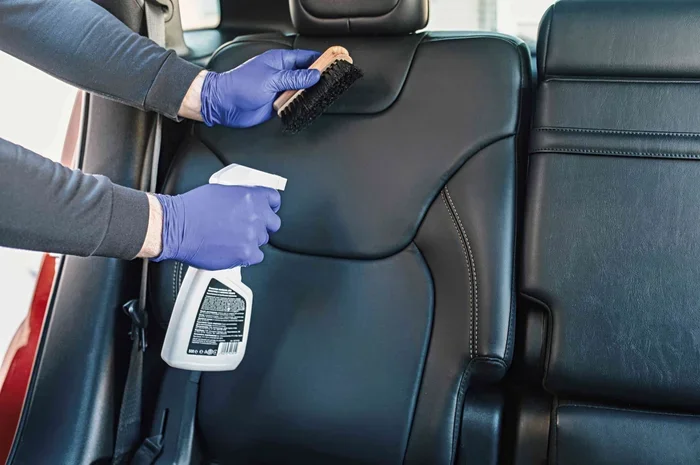
Detailers also use detailing brushes with soft bristles to loosen dirt from tight areas. The seats, center console, and door panels all get attention at this stage.
Step 2: Apply Leather Cleaner
Next comes the cleaning solution. Detailers spray a leather seat cleaner onto a microfiber cloth, not directly onto the seat. This gives them more control and prevents oversaturation.
They work in small sections. A four-by-four-inch area at a time. They gently wipe in circular motions. This lifts dirt and stains without scratching the surface.
For tough stains like ink, grease, or dye transfer, detailers may use a leather stain remover specifically designed for that type of mark. They test any product on a hidden area first.
Step 3: Wipe and Dry
After cleaning a section, detailers wipe it off with a clean, damp microfiber cloth. They remove all residue. Then they dry the area with a separate dry cloth.
Leaving cleaner on leather can cause buildup over time. That is why the wipe-down step is so important. Detailers never rush this part.
Step 4: Condition the Leather
This is the step most people skip at home. But professional detailers know that cleaning without conditioning is like washing your face without moisturizing. The leather needs hydration.
Detailers apply a leather conditioner using a soft applicator pad. They work it into the leather in slow, circular motions. The conditioner soaks into the pores and replenishes natural oils.
Good conditioners contain ingredients like lanolin, beeswax, or natural oils. They keep the leather supple and prevent cracking. After conditioning, detailers let the seats rest for 15 to 30 minutes to absorb fully.
Step 5: Apply a Protectant
The final step is applying a leather protectant or sealant. This creates a barrier on the surface. It repels water, blocks UV rays, and prevents future stains.
Detailers often use a leather seat protectant spray for this step. It dries quickly and leaves a smooth, slightly glossy finish. Some protectants also add a pleasant scent to the interior.
Best Products Professional Detailers Recommend
Not all leather cleaning products are created equal. Detailers have their go-to brands, and they trust them because they deliver consistent results. Here are some of the most popular products in the professional detailing world.
Top Leather Cleaners Used by Pros
When detailers search for a leather seat cleaner, they look for a few key qualities. It must be pH-neutral. It must not leave a sticky residue. And it must work on both light and dark leather.
Some of the most trusted detailing products for leather include:
- Chemical Guys Leather Cleaner: A fan favorite among detailers. It cleans gently and leaves leather soft.
- Meguiar’s Ultimate Leather Cleaner: Known for its deep cleaning power without harsh chemicals.
- Adam’s Leather Cleaner: A premium option that detailers trust for luxury vehicles.
- Koch Chemie Leather Cleaner: Popular in European detailing circles for its gentle formula.
- CarPro PERL: A versatile product that works well for light leather cleaning tasks.
Best Leather Conditioners for Long-Lasting Protection
After cleaning, the right conditioner makes all the difference. Here are products that professional detailers reach for again and again:
- Leatherique Rejuvenator Oil: A cult favorite. It penetrates deep and restores dried-out leather.
- 303 Aerospace Protectant: Technically a protectant, but it conditions and shields leather beautifully.
- Koch Chemie Leather Care Cream: A rich conditioner that provides long-lasting moisture.
- Mother’s PowerSport Leather Cleaner and Conditioner: A two-in-one product that saves time.
- Gyeon Q2 Preserve: A ceramic-based leather protectant that lasts for months.
Comparison Table: Popular Leather Cleaning Products
| Product | Type | Best For | Price Range |
|---|---|---|---|
| Chemical Guys Leather Cleaner | Cleaner | Everyday cleaning | $$ |
| Leatherique Rejuvenator Oil | Conditioner | Dry, cracked leather | $$$ |
| Meguiar’s Ultimate Leather Cleaner | Cleaner | Deep cleaning | $$ |
| 303 Aerospace Protectant | Protectant | UV and water protection | $$ |
| Adam’s Leather Cleaner | Cleaner | Luxury vehicles | $$$ |
| Gyeon Q2 Preserve | Protectant | Long-lasting shield | $$$ |
Note: Prices are approximate and may vary by retailer. Always check compatibility with your specific leather type.
Common Mistakes People Make When Cleaning Leather Seats
Even with the best intentions, many people make mistakes that harm their leather seats. Professional detailers see these errors all the time. Here are the most common ones and how to avoid them.
Using Household Cleaners
This is the number one mistake. People grab dish soap, all-purpose cleaner, or even window spray and use it on leather. These products are too harsh. They strip the natural oils from leather and cause it to dry out and crack.
Always use a cleaner specifically designed for automotive leather. These products are formulated to be gentle while still removing dirt and grime effectively.
Skipping the Conditioner
Some people clean their leather seats and call it done. But cleaning alone does not nourish the leather. Without conditioner, the seats will gradually lose their softness and start to look old.
Think of it this way. You wash your hair but do not use conditioner. It gets tangled and dry. Leather works the same way. Cleaning and conditioning go hand in hand.
Using Too Much Product
More product does not mean better results. In fact, using too much cleaner or conditioner can leave a sticky residue that attracts more dirt. Detailers use just enough to cover the surface lightly.
A little goes a long way with leather care products. Start with a small amount and add more only if needed.
Ignoring the Seams and Creases
Dirt builds up in the seams and creases of leather seats. If you only clean the flat surfaces, the hidden areas will still collect grime. Over time, this can lead to discoloration and odor.
Use a soft-bristle brush to work cleaner into the seams. Then wipe thoroughly with a damp cloth. This ensures every part of the seat gets proper attention.
Cleaning in Direct Sunlight
Detailers never clean leather seats in direct sunlight. The heat causes the cleaner and conditioner to dry too quickly on the surface. This leaves a hazy residue that is hard to remove.
Always clean your leather seats in a shaded area or indoors. A garage or covered parking spot is ideal.
How Often Should You Clean Your Leather Seats
The frequency of cleaning depends on how you use your car. A daily commuter needs more frequent cleaning than a weekend cruiser. But here are some general guidelines that professional detailers follow.
Light use: If you drive a few times a week and keep the car covered, clean your leather seats once every 6 to 8 weeks.
Regular use: For daily drivers, aim to clean leather seats every 2 to 4 weeks. This prevents buildup and keeps the seats looking fresh.
Heavy use or pets: If you have pets, children, or use your car daily for work, clean the seats every 1 to 2 weeks. Consider using a leather seat cover for extra protection.
Detailers also recommend doing a quick wipe-down with a damp microfiber cloth after any spills. The faster you address a stain, the easier it is to remove.
Quick Tips from the Pros
Professional detailers have years of experience. Here are some of their best tips that you can use right away.
- Test any new product on a hidden area of your seat before applying it everywhere.
- Use distilled water when dampening your cloth. Tap water can leave mineral spots on leather.
- Keep a dedicated set of microfiber cloths just for leather cleaning. Do not reuse them for other surfaces.
- Apply conditioner in thin layers and let it absorb fully before buffing.
- Use a leather dye or restorer if your seats have faded from sun exposure.
- Invest in a steam cleaner for deep cleaning without chemicals. Detailers use them regularly.
- Store leather care products properly. Keep them in a cool, dry place to maintain their effectiveness.
These simple habits make a big difference over time. Your leather seats will stay looking great for years, even decades.
Conclusion
Now you know exactly what car detailers use to clean leather seats. It is not about one magic product. It is about using the right leather cleaning products in the right order. Vacuum first. Clean with a pH-balanced solution. Condition deeply. Protect with a quality sealant.
The process is simple, but the results are incredible. Your leather seats can look and feel like they did when you first drove the car off the lot. It just takes a little knowledge and consistent effort.
Start with the basics. Grab a quality leather cleaner, a microfiber cloth, and a good conditioner. Follow the steps outlined in this guide. You will be amazed at the difference. Your car interior deserves the same care that professional detailers give it. And now you have everything you need to deliver that level of quality at home.
Take action today. Your leather seats will thank you tomorrow.
Frequently Asked Questions
Can I use baby wipes to clean leather seats?
It is not recommended. Baby wipes contain chemicals and moisture that can dry out leather over time. They may clean surface dirt, but they do not condition or protect the leather. Stick to products designed specifically for automotive leather care.
What is the best homemade cleaner for leather seats?
A simple mix of mild soap and distilled water works in a pinch. Use a few drops of gentle castile soap in a cup of distilled water. Dampen a microfiber cloth with the solution and wipe gently. Always dry the seats afterward and apply conditioner to replace lost moisture.
Do car detailers use steam cleaners on leather seats?
Yes, many professional detailers use steam cleaners for leather. Steam sanitizes the surface and loosens dirt without harsh chemicals. However, detailers use steam carefully. They keep the nozzle at a safe distance and do not oversaturate the leather, which can cause water damage.
How can I protect my leather seats from sun damage?
Use a leather protectant with UV filters after every cleaning session. Parking in shaded areas or using a windshield sunshade also helps significantly. UV rays are the number one cause of leather fading and drying, so protection is key.
Is leather conditioner the same as leather protectant?
No, they serve different purposes. A conditioner nourishes the leather and keeps it soft and flexible. A protectant creates a barrier on the surface to repel water, stains, and UV rays. Detailers use both for complete leather care.
Can I use a household vacuum on my leather seats?
Yes, any standard vacuum works for removing loose dirt from leather seats. Detailers prefer vacuums with brush attachments and narrow nozzles for reaching seams and crevices. Just avoid using a vacuum with a hard plastic nozzle that could scratch the leather surface.