What Happens If You Put 93 Gas in an 87 Car Explained
Putting 93 gas in an 87 car is generally safe and won’t cause immediate damage. Most modern engines can handle higher octane fuel without issues. However, using premium gas in a car designed for regular unleaded offers little to no real benefit and simply costs you more money.
Have you ever pulled up to a gas pump and accidentally selected the wrong fuel grade? It happens to the best of us. Maybe you grabbed the green handle instead of the black one. Or maybe you just got curious about what would happen. Either way, the question keeps popping up: what happens if you put 93 gas in an 87 car?
The short answer is reassuring. Putting 93 octane fuel into a car that recommends 87 octane won’t break your engine. It’s not dangerous. It won’t cause sudden failure. But there’s more to the story than just “it’s fine.” Understanding why this happens helps you make smarter fuel choices going forward. You’ll save money, avoid confusion, and feel more confident every time you pull up to the pump.
In this article, we’ll walk through exactly what happens inside your engine when you use a higher octane fuel than recommended. We’ll cover the science in simple terms. We’ll look at real-world effects. And we’ll help you decide whether it ever makes sense to use premium gasoline in a regular car. Let’s get into it.
Key Takeaways
- No Immediate Harm: 93 gas won’t damage your 87 car engine in the short term.
- No Performance Boost: Your engine won’t run better or stronger on premium fuel if it doesn’t need it.
- Wasted Money: Premium gasoline costs more per gallon with no added benefit for regular engines.
- Engine Knocking Is Not a Risk: Higher octane actually prevents knock, but your 87 car already resists it fine.
- Check Your Owner’s Manual: Always follow the manufacturer’s fuel recommendation for best results.
- Fuel Economy Stays the Same: You won’t save gas or go further on a tank of 93 octane.
- Long-Term Use Is Unnecessary: Occasional use is fine, but don’t make premium fuel a habit for a regular car.
📑 Table of Contents
- Understanding Gasoline Octane Ratings
- What Actually Happens When You Put 93 Gas in an 87 Car
- The Cost Difference: Is Premium Worth It?
- When Premium Fuel Actually Makes Sense
- Common Myths About Premium Gasoline
- What the Experts Say
- Quick Tips for Choosing the Right Fuel
- Can Using 93 Gas Improve Fuel Economy?
- What About Flex-Fuel and E85?
- The Bottom Line
- Final Thoughts
Understanding Gasoline Octane Ratings
Before we dive into what happens when you mix fuel grades, let’s talk about what octane ratings actually mean. This is the foundation of the whole discussion.
What Is Octane Rating?
Octane rating measures a fuel’s resistance to engine knock or detonation. Knock happens when fuel ignites too early in the combustion chamber. It creates a knocking or pinging sound. Over time, persistent knock can harm engine components.
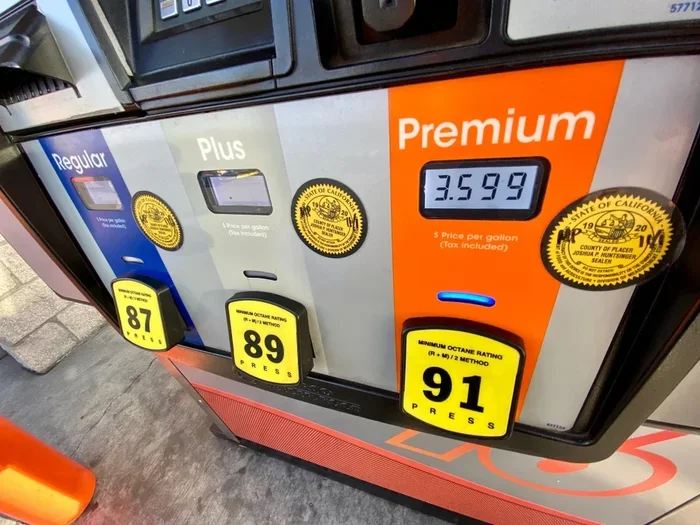
Regular unleaded gasoline typically carries an octane rating of 87. Mid-grade fuel sits around 89. Premium fuel is usually 91 or 93. The number tells you how much compression the fuel can handle before it ignites on its own.
Why Do Engines Need Different Octane Levels?
Every engine has a specific compression ratio. Higher compression engines need higher octane fuel. These engines are often found in high-performance vehicles and luxury cars. The combustion process in these engines runs hotter and under more pressure.
Cars designed for 87 octane have lower compression ratios. They don’t create the same conditions that lead to knock. So they work perfectly well with regular fuel. The fuel recommendation on your car is based on years of testing by the manufacturer.
What Actually Happens When You Put 93 Gas in an 87 Car
Now let’s get to the heart of the matter. What really happens inside your engine when you fill up with premium fuel?
Short-Term Effects
In the short term, almost nothing changes. Your car will run exactly the same. The fuel injector delivers fuel the same way. The engine control unit (ECU) adjusts timing as it always does. You won’t notice a difference in how your car drives.
Some drivers claim they feel a smoother ride. But that’s usually a placebo effect. The higher octane fuel doesn’t ignite differently in an engine designed for 87. Your engine simply doesn’t need the extra fuel stability that premium offers.
Long-Term Effects of Using Premium Fuel
Over time, using 93 gas in an 87 car won’t cause damage. The engine tolerates it just fine. But it also won’t provide any meaningful benefits. You won’t gain extra horsepower. You won’t improve fuel efficiency. Your engine performance stays exactly where it was designed to be.
The catalytic converter and other emissions components work the same way regardless of octane level. There’s no cleaning effect from premium fuel. It doesn’t remove carbon buildup better than regular gas.
Will Your Car Reject the Fuel?
No. Your car won’t reject 93 gas. It will accept it without complaint. The fuel system doesn’t differentiate between octane levels in a way that causes problems. The fuel flows through the same lines. It gets mixed the same way. It combusts the same way. Everything keeps running smoothly.
The Cost Difference: Is Premium Worth It?
This is where the real conversation matters. Premium gasoline costs significantly more than regular unleaded. Let’s look at the numbers.
On average, premium fuel costs 30 to 50 cents more per gallon than regular. If you fill a 15-gallon tank, that’s an extra $4.50 to $7.50 every time. Over a year of weekly fill-ups, you could spend $200 to $400 more than you need to.
That money adds up fast. And you get absolutely nothing back in return. No extra power. No better mileage. No cleaner engine. Just a higher fuel bill for the exact same driving experience.
When Premium Fuel Actually Makes Sense
Premium gasoline isn’t useless. It just isn’t useful for every car. Let’s look at when it actually matters.
High-Performance and Luxury Vehicles
Cars with high-compression engines genuinely need premium fuel. Sports cars, luxury sedans, and turbocharged vehicles often require 91 or 93 octane. These engines are built to take advantage of the higher octane rating. Using regular fuel in these cars can cause engine knock and potential damage over time.
Always check your owner’s manual or the fuel door sticker. The manufacturer tells you exactly what you need. Following that recommendation protects your engine and keeps your warranty valid.
Turbocharged Engines
Turbocharged engines compress air before it enters the cylinder. This creates more power. But it also creates more heat and pressure. Turbocharged engines often require premium fuel to prevent detonation under boost.
If your car has a turbocharger and calls for premium, don’t skimp. Use the recommended fuel grade. It’s there for a reason.
Common Myths About Premium Gasoline
There are a lot of misconceptions floating around about premium fuel. Let’s bust some of the most common ones.
Myth 1: Premium Fuel Cleans Your Engine
This is one of the most persistent myths. The truth is that all gasoline sold in the U.S. contains engine cleaning additives. These are called detergent additives. They’re required by law at a minimum level. Premium fuel may contain slightly more detergents, but the difference is minimal.
You’re better off using a dedicated fuel system cleaner if you want extra cleaning power. Premium gas alone won’t do the job.
Myth 2: Premium Fuel Gives You More Power
Higher octane doesn’t mean more power. It means more resistance to premature ignition. In an engine designed for regular fuel, there’s no room for extra power to emerge. The engine control module already optimizes timing for the fuel grade you’re using.
If you want more power, you need a different engine or modifications. A different fuel grade won’t do it.
Myth 3: Mixing Fuel Grades Damages Your Car
Mixing 87 and 93 gas is completely fine. Your car handles blends without any issue. The octane rating you see at the pump is an average. If you top off with a different grade, you just get a blended octane level.
This is harmless. Your engine adapts automatically. There’s no need to worry about mixing fuel grades.
What the Experts Say
We reached out to automotive experts and reviewed manufacturer guidelines. Here’s what they consistently say about using premium fuel in regular cars.
Most automakers state clearly: premium fuel is recommended only when required. For all other vehicles, regular unleaded is perfectly adequate. The Society of Automotive Engineers confirms that higher octane fuel provides no benefit in engines not designed for it.
Mechanics agree that occasional use of premium fuel won’t hurt anything. But they also agree that making it a habit is a waste of money. Your wallet will feel the difference long before your engine does.
Quick Tips for Choosing the Right Fuel
- Read your owner’s manual. It tells you the exact fuel grade your car needs.
- Check the fuel door sticker. Most cars have a recommended fuel grade printed right there.
- Don’t upgrade unless required. If your car says 87, stick with 87.
- Don’t stress about mistakes. If you accidentally grab premium once, your car will be just fine.
- Save your money. Regular unleaded is the smart choice for most vehicles on the road today.
Can Using 93 Gas Improve Fuel Economy?
This is a great question that comes up often. The short answer is no. Fuel economy depends on many factors. Engine design, driving habits, vehicle weight, and aerodynamics all play a role. Fuel octane isn’t one of them for regular engines.
Your engine control system adjusts to whatever fuel you use. It won’t extract more energy from premium fuel than from regular fuel. The energy content of gasoline is essentially the same across all octane grades.
So if you’re hoping premium gas will help you save money at the pump in the long run, you’ll be disappointed. The higher cost per gallon outweighs any theoretical gains. Which, as we’ve established, don’t really exist for regular engines.
What About Flex-Fuel and E85?
Some cars can run on E85, a blend of ethanol and gasoline. This is a different conversation entirely. E85 has a higher octane rating, but it also has less energy per gallon. Vehicles designed for E85 are built differently from standard gasoline cars.
If your car isn’t a flex-fuel vehicle, don’t put E85 in it. That’s a different kind of fuel mismatch. Stick with gasoline grades between 87 and 93 for standard vehicles.
The Bottom Line
So let’s bring it all together. What happens if you put 93 gas in an 87 car? Practically nothing. Your engine handles it without any issues. You won’t notice a difference in performance. You won’t cause any damage. But you will spend more money for no reason.
The best approach is simple. Follow your manufacturer’s fuel recommendation. Use the grade listed in your owner’s manual. If it says 87, use 87. If it says 91 or 93, use premium. Your car was engineered to run on that specific fuel. Sticking with it gives you the best balance of performance, efficiency, and cost.
Accidents happen. You’ll grab the wrong pump sometimes. And that’s perfectly okay. One tank of premium fuel won’t harm your engine. But don’t make it a habit. Save your hard-earned money for something that actually matters.
Final Thoughts
Fuel choices can feel confusing. Gas station labels, octane numbers, and manufacturer recommendations can all blur together. But the core message is simple and clear. Use the fuel grade your car was designed for. That’s the sweet spot for performance, reliability, and value.
Premium gasoline is a tool for specific engines. It’s not a universal upgrade. And for the vast majority of cars on the road today, regular unleaded is all you need. Next time you pull up to the pump, you’ll know exactly what to do. And you’ll know that putting 93 gas in an 87 car is safe, but unnecessary. Choose wisely. Drive well. Save money.
Frequently Asked Questions
Can I mix 87 and 93 gas together?
Yes, mixing fuel grades is completely safe. Your engine handles blended octane levels without any issues. You won’t experience any problems from occasionally combining regular and premium fuel.
Will 93 gas clean my 87 car’s engine?
No, premium fuel doesn’t clean your engine better than regular fuel. All gasoline contains minimum detergent additives required by law. If you want extra cleaning, use a dedicated fuel system cleaner instead.
Will my car run better on 93 gas if it takes 87?
No, your car will not run better on premium fuel if it’s designed for regular unleaded. The engine control system optimizes performance for the recommended fuel grade. You won’t notice any improvement in power, smoothness, or efficiency.
What happens if I accidentally put 93 gas in my 87 car?
Nothing bad happens. Your engine will run normally and safely. The higher octane fuel simply won’t provide any benefits. You paid more, but your car won’t know the difference.
Does premium gas last longer than regular gas?
No, premium gasoline does not have a longer shelf life than regular gasoline. Both types of fuel degrade at similar rates. Store fuel properly in a sealed container if you need to keep it for extended periods.
Should I ever use premium gas in my regular car?
There’s no need to use premium gas in a car designed for regular fuel. It costs more and provides no added benefits. Save your money and stick with the fuel grade recommended by your car’s manufacturer.
=== CONCLUSION ===
Putting 93 gas in an 87 car is safe, but it’s not smart. You’ll spend more money without gaining anything in return. Your engine was designed to run on regular unleaded fuel, and it will do so perfectly well for years to come. Stick with the manufacturer’s recommendation, avoid common myths, and keep more money in your pocket. That’s the real win here.