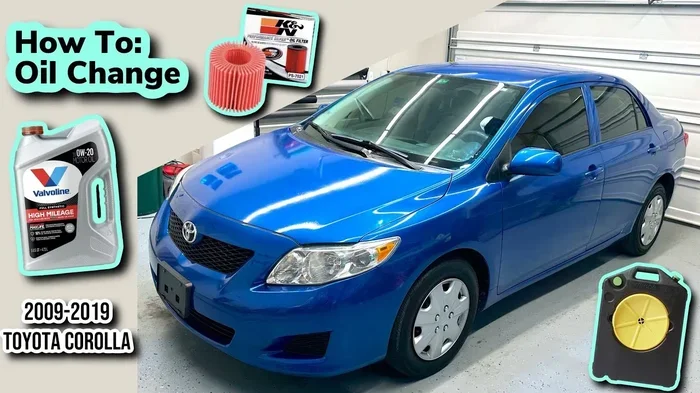
Can I Use 5W-30 Oil in a Toyota Corolla – Expert Guide
The question “Can I Use 5W-30 Oil in a Toyota Corolla” comes up often among Corolla owners looking for extra engine protection. Toyota generally recommends thinner oils like 0W-20 or 5W-20 for most Corolla models. Using 5W-30 may work in older models but can reduce fuel economy and strain newer engines designed for lighter oil. Always check your owner manual before switching oil weights.
Owning a Toyota Corolla means you have a reliable, fuel-efficient car that does not ask for much. But when it comes to maintenance, small decisions like choosing the right engine oil can make a big difference. Many Corolla owners walk into an auto parts store and see shelves full of different oil weights. One question that pops up again and again is whether Can I Use 5W-30 Oil in a Toyota Corolla. It seems like a simple question, but the answer depends on several factors. Your model year, engine type, driving habits, and even your local climate all play a role. In this guide, we will walk through everything you need to know. By the end, you will feel confident choosing the right oil for your Corolla and keeping your engine in great shape for years to come.
Engine oil is the lifeblood of your vehicle. It reduces friction between metal parts, cools the engine, prevents corrosion, and keeps harmful particles suspended until the oil filter catches them. Using the wrong weight of oil can throw off this delicate balance. Thicker oil may sound like more protection, but it can actually reduce efficiency and cause starting problems in cold weather. Thinner oil flows faster but may not provide enough protection for engines that need a heavier weight. This is why manufacturers spend so much time testing and specifying exact oil weights for each model. When you understand what the numbers mean and why Toyota chose a specific weight for the Corolla, the decision becomes much easier.
Key Takeaways
- Toyota recommends 0W-20 or 5W-20: Most modern Corolla engines are built for thinner oil weights that flow quickly and improve fuel efficiency.
- 5W-30 may work in older models: Some older Corolla generations can handle 5W-30, especially in high-mileage or hotter climates.
- Wrong oil weight can cause problems: Using oil that is too thick may lead to poor circulation, reduced fuel economy, and long-term engine wear.
- Synthetic oil offers better protection: Full synthetic oils maintain their viscosity longer and provide superior engine protection compared to conventional options.
- Check your owner manual first: The manufacturer’s recommendation is always the safest starting point for choosing the right oil.
- Oil change intervals matter: Sticking to the recommended change schedule keeps your engine healthy regardless of the oil weight you choose.
📑 Table of Contents
- What Is 5W-30 Oil and How Does It Work?
- What Oil Does Toyota Recommend for the Corolla?
- Can You Use 5W-30 in a Toyota Corolla?
- What Happens If You Use the Wrong Oil Weight?
- Tips for Choosing the Right Oil for Your Corolla
- When to Change Your Toyota Corolla Oil
- Common Mistakes to Avoid When Choosing Oil for Your Corolla
- Expert Insights on Oil Selection for Toyota Corollas
- Key Takeaways
What Is 5W-30 Oil and How Does It Work?
Understanding Oil Viscosity Ratings
Every engine oil you see on the shelf has a viscosity rating printed on the bottle. The rating tells you how thick or thin the oil is at different temperatures. The “W” stands for winter, and the number before it measures the oil’s flow at cold temperatures. A lower number means the oil flows more easily when it is cold. The number after the “W” measures the oil’s thickness at operating temperature. A higher number means the oil stays thicker when the engine is hot.
So what does 5W-30 actually mean? The “5W” tells us this oil flows relatively well in cold weather, similar to other 5-weight winter oils. The “30” tells us it maintains a moderate thickness at normal operating temperature. Compare this to 0W-20, which flows even better in the cold and stays thinner when hot. The difference between these two oils might seem small, but your engine feels it. Thinner oil reaches engine parts faster after startup, which is when most wear occurs. Thicker oil takes longer to circulate, especially in cold conditions.
What the Numbers Mean for Your Engine
Viscosity ratings are not just random numbers. Engineers design engines with very specific clearances between moving parts. These clearances determine how much oil can flow through at any given time. If the oil is too thick, it cannot reach all the places it needs to go quickly enough. If it is too thin, it may break down under heat and pressure and fail to protect metal surfaces. Toyota engineers tested their Corolla engines extensively to find the sweet spot. For most modern Corollas, that sweet spot is a lighter oil weight that maximizes fuel efficiency while still providing solid protection.
When someone asks Can I Use 5W-30 Oil in a Toyota Corolla, they are really asking whether a slightly heavier oil will offer better protection. The truth is that heavier oil does not automatically mean better protection. In fact, using the wrong weight can create more problems than it solves. The oil needs to flow fast enough to coat all the internal surfaces, but it also needs to maintain its film strength under heat. This is a balancing act that Toyota has already figured out for each Corolla generation.
What Oil Does Toyota Recommend for the Corolla?
Checking Your Owner Manual
The first place to look when choosing engine oil is your owner manual. Every Toyota Corolla comes with a manual that specifies the exact oil weight and specification the manufacturer recommends. This is not a suggestion. It is the result of extensive testing and engineering. The manual will tell you whether your Corolla needs 0W-20, 5W-20, or in some older cases, 5W-30. It will also specify whether the oil needs to meet certain certification standards, like API SP or ILSAC GF-6.
If you have lost your owner manual, you can usually find the oil specifications on the oil fill cap under the hood. Pop it open and look for any markings or text printed on the cap. Many Toyota vehicles list the recommended oil weight right there. You can also check the Toyota website or contact a local dealer with your vehicle identification number. They can pull up the exact specifications for your specific Corolla model and year.
Recommended Oil by Model Year
Toyota has used different oil weights across Corolla generations. Here is a general breakdown of what to expect:
- 2014 and newer Corollas: Most models from 2014 onward use 0W-20 or 5W-20 oil. These newer engines feature advanced variable valve timing systems that work best with lighter oil.
- 2008 to 2013 Corollas: Many models in this range also use 0W-20 or 5W-20, though some older 1.8-liter engines may accept 5W-30.
- 2007 and older Corollas: Older Corollas with the 1.8-liter or 2.4-liter engines sometimes came factory-filled with 5W-30. If your Corolla falls into this category, 5W-30 may be acceptable.
The key takeaway is that newer models are designed for thinner oils. If you own a recent Corolla and are considering switching to 5W-30, it is worth reconsidering. The engine is optimized for lighter oil, and deviating from that specification can cause issues over time.
Can You Use 5W-30 in a Toyota Corolla?
When 5W-30 Might Work
There are situations where using 5W-30 in a Toyota Corolla is not a disaster. If you own an older model with a higher mileage engine, a slightly heavier oil might provide better protection for worn components. Over time, engine seals and piston rings can wear down, creating slightly larger clearances. In these cases, a thicker oil can help fill those gaps and maintain proper oil pressure. Some owners in very hot climates also prefer a heavier oil because it is less likely to thin out excessively at high temperatures.
However, this does not mean you should switch to 5W-30 just because you can. If your Corolla is designed for 0W-20 or 5W-20, sticking with that weight is almost always the better choice. The manufacturer designed the engine around that specific oil weight. Using a different weight changes how the oil behaves inside the engine, and not always for the better.
Potential Risks of Using 5W-30
Using 5W-30 in a Corolla that needs 0W-20 or 5W-20 comes with several risks. The most immediate concern is reduced fuel economy. Heavier oil creates more drag inside the engine, which means the engine has to work harder to turn the crankshaft. Over time, this extra work adds up at the gas pump. You may notice your fuel efficiency dropping by a few miles per gallon, which might not sound like much, but it adds up over thousands of miles.
Another concern is oil flow. Thicker oil takes longer to reach critical engine components after startup. During the first few seconds after you turn the key, your engine is running with little to no oil protection. This is when wear happens. If the oil is too thick, it delays the time it takes for the engine to get fully lubricated. Over thousands of start cycles, this delay can contribute to increased wear on bearings, camshafts, and other precision components.
There is also the question of oil pressure. Toyota engines are calibrated for specific oil weights. When you use a heavier oil than recommended, oil pressure readings may be higher than normal. This might sound good, but it can actually strain the oil pump and other internal components. The engine was not designed to push that weight of oil through its passages, and over time, the extra strain can lead to premature wear on the oil pump and related systems.
What Happens If You Use the Wrong Oil Weight?
Effects on Engine Performance
If you have already put 5W-30 in your Corolla and are worried, take a deep breath. One oil change with the wrong weight is unlikely to cause catastrophic damage. However, repeated use of the wrong oil weight can lead to noticeable problems. You might experience rougher idling, reduced power, or a slight decrease in fuel economy. Some owners report hearing slightly louder engine noise when using a heavier oil than recommended. This happens because the thicker oil does not flow as smoothly through the tight passages designed for lighter oil.
If you notice any of these symptoms, the best step is to switch back to the recommended oil weight at your next oil change. Most of the negative effects are reversible once the correct oil is back in the engine. The engine will re-learn its normal operating characteristics within a few hundred miles of driving on the right oil.
Long-Term Damage Risks
Continuously using the wrong oil weight is where real problems can develop. Over months and years, the cumulative effects of poor oil flow, reduced fuel efficiency, and increased engine strain can shorten the life of your engine. Sludge can build up faster when oil does not circulate properly. The oil filter may also become clogged more quickly if the thicker oil carries more debris that it cannot suspend effectively.
If you are unsure about which oil to use, it is always better to stick with the manufacturer’s recommendation. Toyota has tested their engines with specific oil weights for millions of miles of real-world driving. Their recommendation is backed by data and engineering expertise. When in doubt, consult a trusted mechanic or refer to the owner manual. You can also look at similar guidance from articles like Can I Use 5W30 Instead Of 5W20 to understand how different viscosity oils compare across vehicle types.
Tips for Choosing the Right Oil for Your Corolla
Synthetic vs Conventional Oil
Beyond oil weight, you also need to decide between synthetic and conventional oil. Synthetic oil is engineered in a lab to provide consistent performance across a wide range of temperatures. It resists breakdown better than conventional oil and lasts longer between changes. Conventional oil is refined from crude oil and is less expensive, but it does not perform as consistently under extreme conditions.
For most modern Toyota Corollas, full synthetic oil is the best choice. It provides superior protection, flows better in cold weather, and maintains its viscosity longer than conventional oil. The upfront cost is higher, but the extended drain intervals and better engine protection often make it worth the investment. If you drive in extreme heat or cold, synthetic oil is even more important. It is designed to handle temperature swings without breaking down or thinning out excessively.
If budget is a concern, a synthetic blend can be a good middle ground. It offers many of the benefits of full synthetic at a lower price point. However, always make sure the blend meets the viscosity and specification requirements listed in your owner manual. Mixing different oil types or weights can cause unpredictable behavior inside your engine.
Climate Considerations
Your local climate plays a big role in oil selection. If you live in a very cold area where temperatures regularly drop below freezing, you want an oil that flows easily in the cold. This is where the “W” rating becomes critical. A 0W-20 oil will flow much better at -20°F than a 5W-30 oil. Faster flow means faster lubrication of engine components during startup, which is the most vulnerable time for any engine.
On the other hand, if you live in a hot climate with sustained high temperatures, you might worry about oil thinning too much. In this case, the recommended oil weight for your Corolla is still the best choice. Toyota engineers account for the operating conditions the vehicle will face. If your Corolla is rated for 0W-20, that oil is formulated to maintain proper viscosity even in hot weather. Adding a heavier oil to compensate for heat is not the right solution and can cause the problems discussed earlier.
Some owners in extreme climates consider switching to a different oil weight than what the manual recommends. This is generally not a good idea. Instead, consider more frequent oil changes or using a high-quality synthetic oil that is specifically formulated for your climate. The right oil for your conditions is the one Toyota specified for your engine, not a heavier oil you think might offer extra protection.
When to Change Your Toyota Corolla Oil
Oil Change Intervals
Changing your oil on schedule is just as important as using the right oil weight. Toyota recommends oil change intervals based on driving conditions. For most modern Corollas, the standard interval is every 10,000 miles or 12 months, whichever comes first. However, if you drive in severe conditions, you may need to change your oil more frequently. Severe conditions include frequent short trips, towing, driving in extreme heat or cold, and stop-and-go traffic.
If you use synthetic oil, you may be able to extend the interval slightly. Synthetic oil resists thermal breakdown better than conventional oil, so it lasts longer under normal driving conditions. However, it is always better to err on the side of changing your oil more often rather than less. Fresh oil provides better protection, and the cost of an oil change is far less than the cost of engine repairs caused by degraded oil.
Signs Your Oil Needs Changing
Even if you track your mileage, it is important to watch for signs that your oil needs changing. Dark, dirty oil on the dipstick is an obvious indicator. If the oil smells burnt or has a gritty texture, it is past its prime. You might also notice a drop in oil pressure on your dashboard gauge, or your engine might sound louder than usual. Some modern Corollas have oil life monitoring systems that track driving conditions and alert you when it is time for a change. Pay attention to these warnings and do not ignore them.
Regular oil changes are one of the cheapest and most effective ways to protect your engine. Skipping oil changes or going too long between changes allows contaminants to build up and the oil to break down. This leads to increased friction, higher operating temperatures, and accelerated wear on engine components. Over time, this can result in costly repairs that could have been easily prevented with timely oil changes.
Understanding your Corolla’s oil needs also connects to broader maintenance decisions. For example, knowing which fuel grade to use is equally important. If you have ever wondered Can I Put 88 Gas In My Car, the same principle applies: always follow the manufacturer’s recommendations for optimal performance and protection.
Common Mistakes to Avoid When Choosing Oil for Your Corolla
Even well-meaning Corolla owners make mistakes when it comes to oil selection. One of the most common errors is assuming that a higher viscosity oil provides better protection. This is not true for engines designed for lighter oil. Another mistake is mixing different oil brands or types without checking compatibility. While it is generally safe to switch brands, mixing different viscosities can alter the oil’s properties in unpredictable ways.
Some owners also ignore the oil filter when changing oil. A cheap or incorrect oil filter can restrict oil flow and allow contaminants to bypass the filtration system. Always use an oil filter that meets Toyota specifications and replace it every time you change your oil. The oil filter works hand in hand with the oil to keep your engine clean and protected.
Finally, do not rely solely on internet forums or advice from friends when choosing your oil weight. Every engine is different, and what works for one Corolla model may not work for another. The owner manual is your best resource. When you have questions, consult a Toyota dealer or a qualified mechanic who knows your specific model and engine.
Expert Insights on Oil Selection for Toyota Corollas
Automotive engineers and Toyota specialists consistently emphasize one point: follow the manufacturer’s oil recommendation. Toyota has spent decades refining their engine designs, and the oil specifications they provide are the result of rigorous testing. Deviating from those specifications, even with good intentions, can introduce unnecessary risks.
That said, there are some situations where a slight deviation might be acceptable. High-mileage engines with over 150,000 miles sometimes benefit from a slightly heavier oil to compensate for increased internal clearances. However, even in these cases, it is best to consult a professional before making the switch. A mechanic can assess the condition of your engine and recommend the best oil weight based on its current state.
If you are considering switching from the recommended oil weight to 5W-30, it is worth asking yourself why you are considering the change. Are you experiencing oil consumption issues? Is your engine making unusual noises? These symptoms might indicate a deeper problem that no amount of thicker oil can fix. Addressing the root cause is always better than treating the symptoms with a different oil weight.
The bottom line is that Can I Use 5W-30 Oil in a Toyota Corolla is a question with a nuanced answer. For most modern Corollas, the answer is no. For some older models, it might be acceptable under specific circumstances. The safest and most effective approach is always to follow Toyota’s recommendations and consult a professional if you are unsure.
Key Takeaways
- Toyota Corollas are designed for specific oil weights: Most modern models require 0W-20 or 5W-20 oil for optimal performance and protection.
- Using 5W-30 in a modern Corolla can reduce fuel economy: Heavier oil creates more internal drag and takes longer to circulate after startup.
- Older Corolla models may accept 5W-30: Some pre-2008 models with higher mileage engines can tolerate a slightly heavier oil weight.
- Synthetic oil is the best choice for most Corollas: It provides superior protection, better flow characteristics, and longer service life.
- Climate matters but should not override manufacturer specs: Toyota engineers already accounted for your climate when they specified the oil weight.
- Regular oil changes are essential: Even the best oil degrades over time. Stick to the recommended change intervals for long engine life.
- When in doubt, consult a professional: A trusted mechanic can assess your specific engine and provide personalized oil recommendations.
Frequently Asked Questions
Will using 5W-30 oil void my Toyota Corolla warranty?
Using an oil weight that is not recommended by Toyota could potentially affect your warranty coverage if it leads to engine damage. Toyota specifies oil weights for a reason, and deviating from those specifications may be used as grounds for denying a warranty claim related to engine wear. Always stick with the manufacturer’s recommendation to keep your warranty intact.
Can I switch from 0W-20 to 5W-30 if I live in a hot climate?
No, switching to a heavier oil is not the right solution for hot climates. Toyota engineers already accounted for high-temperature operation when they specified 0W-20 for your Corolla. Instead of changing the oil weight, consider using a high-quality full synthetic oil that is designed to maintain its viscosity in hot conditions. You can also shorten your oil change interval for extra peace of mind.
How can I tell what oil weight my Toyota Corolla needs?
Check your owner manual first. It will list the exact oil weight and specification required for your engine. You can also look at the oil fill cap under the hood, which often has the recommended oil weight printed on it. If you cannot find either resource, contact a Toyota dealer with your vehicle identification number and they can look up the specifications for your specific model.
What is the difference between 5W-20 and 5W-30 oil?
The difference is in the hot-temperature viscosity. Both oils flow similarly in cold weather because they share the same “5W” rating. However, at operating temperature, 5W-30 is significantly thicker than 5W-20. Thicker oil provides a stronger film between metal surfaces but flows more slowly and creates more drag. Toyota Corollas are engineered to work best with the lighter 5W-20 weight for optimal fuel economy and engine protection.
Is it okay to use 5W-30 in a high-mileage Toyota Corolla?
For high-mileage engines with over 150,000 miles, a slightly heavier oil might help compensate for increased internal clearances. However, this should only be done after consulting a mechanic who can assess your engine’s condition. In many cases, a high-mileage synthetic oil in the recommended weight is a better solution than switching to a heavier viscosity.
How often should I change my Toyota Corolla’s oil if I use the recommended weight?
Toyota recommends oil changes every 10,000 miles or 12 months for most modern Corollas, whichever comes first. If you drive in severe conditions such as extreme heat, cold, stop-and-go traffic, or frequent short trips, you may need to change your oil more frequently. Using synthetic oil can also help extend the interval slightly, but always follow the guidelines in your owner manual.
=== CONCLUSION ===
The question of Can I Use 5W-30 Oil in a Toyota Corolla does not have a one-size-fits-all answer, but for most owners, the answer is clear. Stick with the oil weight Toyota recommends for your specific model and engine. Modern Corollas are engineered to run best on lighter oils like 0W-20 or 5W-20, which provide excellent protection while maximizing fuel efficiency. Using 5W-30 in a modern Corolla can lead to reduced performance, lower fuel economy, and potential long-term engine wear.
For older Corolla models or high-mileage engines, 5W-30 might be an acceptable option in certain situations. But even then, it is best to consult a professional before making the switch. The right oil, changed on schedule, is one of the simplest and most cost-effective ways to protect your engine and keep your Corolla running reliably for years to come. Take the time to read your owner manual, choose the right oil, and change it regularly. Your engine will thank you every time you turn the key.