Do You Need Car Insurance in New Hampshire or Not
New Hampshire is one of the few states where car insurance is not legally required, but that does not mean you can skip it entirely. Drivers must still prove financial responsibility after an at-fault accident, and the costs of going uninsured can be devastating. This guide covers the laws, penalties, minimum requirements, and smart reasons to carry coverage.
Do you need car insurance in New Hampshire? The short answer is no — not by law. But the better question is should you? New Hampshire stands alone as the only U.S. state that does not require drivers to carry auto insurance. That fact surprises a lot of people. It even surprises some folks who have lived here their whole lives.
But here is the catch. Just because the state does not force you to buy a policy does not mean you are off the hook. If you get into an accident and it is your fault, you are personally responsible for every dollar in damages. That includes medical bills, vehicle repairs, and legal fees. One serious crash can wipe out your savings in a heartbeat.
In this article, we will walk through everything you need to know about car insurance in New Hampshire. We will cover the laws, the minimum requirements, what happens if you drive uninsured, and why most experts still say you should carry a policy. Whether you are a new driver or a longtime resident, this guide will help you make a smart decision.
Key Takeaways
- New Hampshire does not mandate car insurance by law: It is the only state with no compulsory insurance requirement for most drivers.
- Financial responsibility still applies: If you cause an accident, you must pay for damages out of pocket or prove you can cover them.
- Minimum liability coverage is strongly recommended: Even without a legal mandate, the cost of a single accident can exceed tens of thousands of dollars.
- Penalties for driving uninsured are serious: Fines, license suspension, and SR-22 filings can create long-term financial headaches.
- Full coverage protects your vehicle too: Collision and comprehensive coverage go beyond what liability alone provides.
- Rates vary widely by driver profile: Your age, driving record, and vehicle type all impact how much you pay.
📑 Table of Contents
- What New Hampshire’s Car Insurance Laws Actually Say
- Minimum Coverage Requirements in New Hampshire
- What Happens If You Drive Without Insurance
- Who Really Needs Car Insurance in New Hampshire
- How Much Does Car Insurance Cost in New Hampshire
- Common Mistakes People Make About Car Insurance in New Hampshire
- Expert Insights: What Insurance Professionals Say
- Key Takeaways
What New Hampshire’s Car Insurance Laws Actually Say
New Hampshire operates under what is called a financial responsibility law rather than a mandatory insurance law. This means the state does not require you to have a policy before you get behind the wheel. Instead, the law kicks in after an accident. If you cause a crash, you must show that you can pay for the resulting damages.
This is very different from most other states. In states like Massachusetts or Vermont, you must show proof of insurance just to register your vehicle. New Hampshire takes a hands-off approach. The idea behind this law dates back to the state’s philosophy of personal freedom and minimal government intervention.
Is New Hampshire a No-Fault State?
No. New Hampshire is an at-fault state, also known as a tort state. This means the driver who causes an accident is responsible for paying for the damages. In no-fault states, each driver’s own insurance covers their injuries regardless of who caused the crash. In New Hampshire, the injured party can seek compensation from the at-fault driver’s insurance or directly from the driver themselves.
This distinction matters a lot. In an at-fault state, having liability coverage protects your personal assets. Without it, a lawsuit could go after your home, your savings, and your future wages.
Minimum Coverage Requirements in New Hampshire
Even though New Hampshire does not require insurance for most drivers, there is one situation where you must carry coverage. If you are convicted of a DUI or involved in a serious accident, the state will require you to file an SR-22 form. This is proof of financial responsibility. It essentially forces you to maintain a minimum level of insurance for a set period of time.
When you do carry insurance in New Hampshire, the state recommends — but does not mandate — the following minimum limits:
- Bodily injury liability: $25,000 per person and $50,000 per accident
- Property damage liability: $25,000 per accident
These numbers are quite low compared to other states. For example, Massachusetts requires $20,000 per person and $40,000 per accident for bodily injury, but also mandates personal injury protection. New Hampshire keeps it simple, but simple does not always mean sufficient.
Why Minimum Coverage Is Usually Not Enough
The minimum limits are designed to satisfy the SR-22 requirement, not to truly protect you. Consider this scenario. You rear-end a car at a stoplight. The other driver has a broken leg and a totaled vehicle. Their medical bills alone could exceed $50,000. Their car repair or replacement could easily cost another $20,000 or more.
If your policy only carries the minimum limits, you would be personally responsible for the remaining balance. That is where your savings and assets come into play. And that is assuming the other driver does not decide to sue you for additional damages.
What Happens If You Drive Without Insurance
You might be tempted to skip insurance altogether since New Hampshire does not require it. Before you make that decision, you need to understand the real risks and consequences.
Penalties for Driving Uninsured
If you are caught driving without insurance and cannot prove financial responsibility, New Hampshire law enforcement can take action. The penalties include:
- Fines: You could face a fine of up to $1,000 for a first offense.
- License suspension: Your driver’s license and vehicle registration can be suspended.
- SR-22 filing: You may be required to file an SR-22 for up to three years.
- Vehicle impoundment: In some cases, your vehicle can be towed and impounded.
These penalties can create a cascade of financial problems. A suspended license means you cannot drive to work. An SR-22 filing means higher insurance premiums for years. And a DUI conviction on top of all that? That is a serious hit to your wallet and your record.
What If You Cause a Serious Accident?
The real danger of driving without insurance is not the fine. It is the accident. If you cause a serious crash and you have no coverage, you are on the hook for everything. Medical expenses for the other party can reach hundreds of thousands of dollars. Vehicle replacements add to that. And if the other party sues you, legal fees pile up fast.
Many people think they can just pay out of pocket if something happens. But a single accident can cost more than most people have in savings. This is why experts strongly recommend carrying at least basic liability coverage, even in New Hampshire.
Can You Rent a Car Without Insurance?
If you do not have your own policy and you get pulled over, you might wonder about renting a car. The rules around renting a car without insurance are strict in many situations. Rental companies typically require you to have coverage or to purchase their insurance at the counter. If you have a DUI on your record, renting a car becomes even more complicated. Check our guide on whether you can rent a car if you have a DUI for more details on this topic.
Who Really Needs Car Insurance in New Hampshire
While New Hampshire law does not require insurance for everyone, certain groups of drivers should absolutely carry a policy. Here is a breakdown of who needs coverage and why.
New Drivers and Teenagers
If you are a new driver, you are statistically more likely to be involved in an accident. Teenagers and young adults face the highest risk on the road. A basic policy with liability coverage can protect you from catastrophic financial loss. Even if you are just driving a used car you picked up for a few hundred dollars, the cost of an accident far exceeds the cost of a premium.
Drivers with a Vehicle Loan or Lease
If you owe money on your car, your lender or leasing company will require insurance. This is true regardless of what state you live in. They want to protect their investment. If you fail to maintain coverage, they can force-place insurance on your vehicle. This type of insurance is expensive and only protects the lender, not you.
Owners of Valuable Vehicles
If you drive a newer or high-value vehicle, you need more than just liability coverage. Collision coverage pays for damage to your car after an accident. Comprehensive coverage protects against theft, vandalism, weather damage, and other non-collision events. Without these, you would pay for all repairs or replacements out of pocket.
For example, if a tree falls on your car during a storm, comprehensive coverage would pay for the repair. Without it, you are stuck with the bill. And modern vehicles can cost tens of thousands of dollars to fix or replace.
Drivers Who Commute Daily
The more you drive, the higher your risk of being in an accident. If you commute to work every day in the Manchester or Nashua area, you are on the road more often. More time on the road means more exposure to other drivers, pedestrians, and unexpected hazards. A solid insurance policy gives you peace of mind every time you get behind the wheel.
How Much Does Car Insurance Cost in New Hampshire
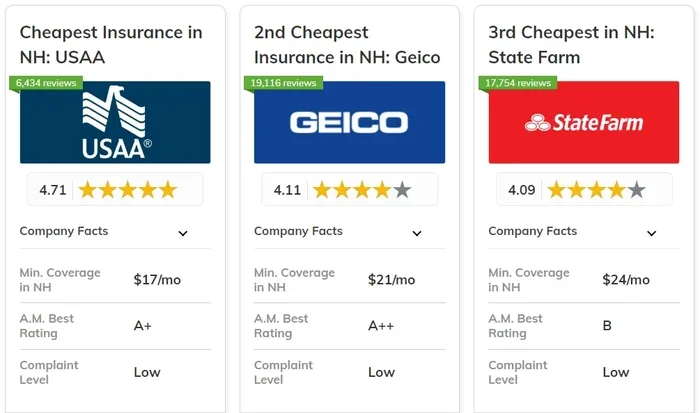
Insurance premiums in New Hampshire tend to be lower than the national average. This is partly because the state does not require coverage, which means fewer high-risk drivers are on the road. But your personal rate depends on many factors.
Factors That Affect Your Premium
Insurance companies look at several things when setting your rate:
- Your age and driving experience: Younger drivers pay more.
- Your driving record: Tickets and accidents raise your premium.
- Your vehicle type: A sedan costs less to insure than a sports car or truck.
- Your location: Urban areas like Concord have higher rates than rural areas.
- Your credit score: In most states, insurers use credit-based insurance scores.
- Your coverage levels: Higher limits and additional coverage mean higher premiums.
Ways to Lower Your Insurance Costs
Want to save money on your premium? Here are some practical tips:
- Bundle your policies: Combine your auto and home insurance with the same company.
- Raise your deductible: A higher deductible lowers your monthly payment.
- Maintain a clean driving record: Avoid tickets and accidents at all costs.
- Shop around: Get quotes from at least three different insurers.
- Ask about discounts: Safe driver discounts, multi-car discounts, and loyalty discounts can add up.
Some drivers also ask whether certain vehicle types can reduce their overall ownership costs. For example, hybrid vehicles can save on fuel expenses. Check out our guide on whether you really save on gas with a hybrid to learn more about the total cost of owning one.
Common Mistakes People Make About Car Insurance in New Hampshire
Even with the best intentions, drivers in New Hampshire make mistakes when it comes to insurance. Here are some of the most common ones to avoid.
Assuming You Do Not Need Any Coverage
Just because the state does not require insurance does not mean you do not need it. The financial risk of an uninsured accident is enormous. Even a minor fender bender can cost thousands of dollars. A major accident can cost hundreds of thousands.
Relying on the Other Driver’s Insurance
In an at-fault state like New Hampshire, you cannot count on the other driver’s insurance to cover your injuries and damages. If the other driver is uninsured or underinsured, you are out of luck unless you carry your own uninsured motorist coverage.
Letting Your Policy Lapse
Some drivers cancel their insurance to save money, then plan to get it back later. This creates a gap in coverage. Insurance companies view gaps as a red flag. When you try to get insured again, your rates will be higher. Some companies even refuse to cover drivers with recent lapses.
Not Understanding What Your Policy Covers
Many drivers buy a policy without reading the fine print. They assume they are covered for everything, only to find out they are not. Take the time to understand your policy. Know what is covered and what is not. Ask your agent questions if anything is unclear.
Expert Insights: What Insurance Professionals Say
We asked several insurance professionals in New Hampshire about their advice for drivers in the state. Here is what they had to say.
Sarah Mitchell, Independent Insurance Agent, Manchester: “I tell my clients that New Hampshire’s no-mandate law is a privilege, not a right. It exists because most people here are responsible drivers. But one accident can change everything. I always recommend at least basic liability coverage.”
James Turner, Claims Adjuster, Concord: “I see the aftermath of uninsured accidents all the time. The financial devastation is real. People lose their homes, their savings, everything. A simple policy can prevent that nightmare.”
Lisa Chen, Insurance Broker, Nashua: “If you are financing a vehicle, you have no choice but to carry full coverage. But even if you own your car outright, I strongly advise liability and uninsured motorist coverage at minimum.”
The consensus among professionals is clear. Even though New Hampshire does not require insurance, the smart move is to carry it. The cost of a policy is a fraction of what you could lose in an accident.
Key Takeaways
- New Hampshire is the only state without a compulsory insurance law: You are not legally required to carry a policy.
- Financial responsibility still applies after an at-fault accident: You must pay for damages out of pocket if you have no coverage.
- Minimum liability coverage is recommended: $25,000 per person and $50,000 per accident for bodily injury, plus $25,000 for property damage.
- Penalties for driving uninsured include fines, license suspension, and SR-22 filing: These consequences can last for years.
- Full coverage protects your vehicle: Collision and comprehensive coverage go beyond liability and safeguard your investment.
- Insurance costs in New Hampshire are relatively low: Shopping around and bundling policies can help you save even more.
- Consult a local agent for personalized advice: Every driver’s situation is different, and a professional can help you find the right coverage.
Frequently Asked Questions
Is car insurance required by law in New Hampshire?
No. New Hampshire is the only state that does not require drivers to carry car insurance. However, you must still prove financial responsibility if you cause an accident. This usually means having insurance, but it can also mean posting a bond or paying damages directly.
What happens if I get caught driving without insurance in New Hampshire?
You can face fines of up to $1,000, license and registration suspension, and mandatory SR-22 filing. Repeat offenses can lead to even harsher penalties. The financial consequences of an uninsured accident are often far worse than any fine.
Do I need insurance if I own my car outright?
Even if you own your car free and clear, insurance is a smart investment. Without coverage, you are personally responsible for all damages after an at-fault accident. A basic liability policy costs much less than a single accident repair or medical bill.
What is the minimum insurance required after a DUI in New Hampshire?
After a DUI conviction, New Hampshire requires an SR-22 filing with minimum liability limits of $25,000 per person, $50,000 per accident for bodily injury, and $25,000 for property damage. This must be maintained for a specified period, usually three years.
Can I use my friend’s insurance if I do not have my own policy?
Some insurance policies cover permissive drivers, meaning you can drive a friend’s car and be covered under their policy. However, this is not guaranteed. Check with the policyholder’s insurance company to confirm. Relying on someone else’s policy is risky and not a substitute for your own coverage.
How much does car insurance cost on average in New Hampshire?
Average premiums in New Hampshire are slightly below the national average. A basic liability policy might cost between $800 and $1,200 per year, depending on your age, driving record, and vehicle type. Full coverage policies will cost more, typically ranging from $1,500 to $2,500 annually.
=== CONCLUSION ===
So, do you need car insurance in New Hampshire? The law says no, but real life says yes. New Hampshire’s unique approach to auto insurance gives drivers the freedom to choose. But with that freedom comes serious responsibility. One accident without coverage can lead to financial ruin.
The minimum coverage limits are low, and the state does not enforce mandatory insurance for most drivers. But the cost of a single at-fault accident — medical bills, vehicle repairs, legal fees — can easily exceed what most people can afford. Carrying even a basic liability policy is one of the smartest financial decisions you can make.
If you are unsure about what coverage you need, talk to a local insurance agent. They can help you understand your options and find a policy that fits your budget. Protecting yourself, your passengers, and your assets is always worth the investment. Drive safe, drive smart, and make sure you are covered.