Does Toyota Corolla Use a Lot of Fuel for Daily Driving
The Toyota Corolla is one of the most fuel-efficient sedans on the road today. Most models deliver between 30 and 40 MPG, making it a great choice for daily commuters. Fuel consumption depends on the trim, engine type, and driving habits. Whether you drive a hybrid or a gas-only model, the Corolla keeps costs low at the pump.
The Toyota Corolla has been a best-selling sedan for decades. People buy it because it is reliable, affordable, and efficient. But one question keeps coming up: does Toyota Corolla use a lot of fuel for daily driving? The short answer is no. The Corolla is known for impressive fuel economy that keeps owners spending less at the pump. In this article, we will break down everything you need to know about Toyota Corolla fuel consumption, from MPG ratings to real-world driving costs.
When you think about buying a car, fuel costs matter a lot. A vehicle that guzzles gas will drain your wallet fast. The Corolla was designed to avoid that problem. Toyota engineers focused on making a sedan that sips fuel instead of gulping it. Whether you commute to work or run errands around town, the Corolla handles daily driving with ease. Let us dive into the details and see why this car remains a top pick for budget-conscious buyers.
Key Takeaways
- Excellent Fuel Economy: The Toyota Corolla delivers 30 to 40 MPG depending on the trim and engine.
- Hybrid Option Available: The Corolla Hybrid offers even better fuel savings for daily drivers.
- Affordable to Own: Low fuel costs make the Corolla one of the cheapest sedans to run long-term.
- Driving Habits Matter: Aggressive driving and idling can reduce your MPG significantly.
- Regular Maintenance Helps: Keeping up with service improves fuel efficiency over time.
📑 Table of Contents
- Understanding Toyota Corolla Fuel Economy
- Toyota Corolla Gas Mileage by Trim Level
- Daily Driving with a Toyota Corolla
- The Hybrid Advantage for Fuel Savings
- Comparing the Corolla to Competitors
- Common Mistakes That Increase Fuel Use
- Expert Insights on Toyota Corolla Fuel Use
- Is the Toyota Corolla Right for Your Daily Driving?
Understanding Toyota Corolla Fuel Economy
Fuel economy is measured in miles per gallon, or MPG. The higher the MPG, the less fuel your car uses. The Toyota Corolla consistently ranks well in fuel economy comparisons. Most base models deliver around 31 MPG in the city and 40 MPG on the highway. That is excellent for a compact sedan. The Corolla SE and other trims may vary slightly, but the numbers stay competitive across the lineup.
Toyota offers both gas-only and hybrid versions of the Corolla. The hybrid model stands out with even better numbers. It combines a gasoline engine with an electric motor to maximize efficiency. This means you can drive more miles on less fuel. For people who drive a lot each day, that adds up to real savings over time. The Corolla Hybrid is a smart choice if you want to minimize your carbon footprint and your fuel bill.
What Affects Fuel Consumption?
Several factors influence how much fuel your Corolla uses. Your driving style is a big one. Aggressive acceleration and hard braking waste gas. Smooth, steady driving helps you get the best MPG. Road conditions also play a role. Stop-and-go traffic in the city uses more fuel than cruising on open highways. Weather matters too. Cold mornings can reduce fuel efficiency until the engine warms up.
Vehicle maintenance is another key factor. Dirty air filters, old spark plugs, and low tire pressure all hurt fuel economy. Staying on top of regular service keeps your engine running smoothly. Toyota Corolla fuel consumption stays low when you take care of the basics. A well-maintained Corolla will reward you with excellent efficiency for years.
Toyota Corolla Gas Mileage by Trim Level
Not all Corollas are exactly the same when it comes to fuel use. Different trims come with different engines and features. Here is a look at how the main trims compare in terms of fuel economy.
The base L and LE trims use a standard 2.0-liter four-cylinder engine. They offer a balanced mix of power and efficiency. The SE trim has a slightly sportier tune but still delivers solid MPG. The XSE and XLE trims add more comfort and features without hurting fuel economy much. And then there is the Hybrid, which leads the pack in efficiency.
Each trim serves a different type of driver. The base models work great for simple commuting. The SE adds a bit of sportiness for those who enjoy a more engaging drive. The Hybrid is perfect for anyone who wants maximum fuel savings. No matter which trim you choose, the Corolla keeps fuel costs low compared to many competitors.
Daily Driving with a Toyota Corolla
For most people, daily driving means a mix of city streets and highway commutes. The Corolla handles both very well. In city driving, you might see MPG in the low 30s. On the highway, numbers climb closer to 40 MPG. This makes the Corolla a fantastic daily driver that does not punish you at the gas station.
Let us talk about real-world costs. If you drive about 12,000 miles per year and gas costs around $3.50 per gallon, a Corolla getting 35 MPG will cost you roughly $1,200 per year in fuel. That is very affordable for a sedan. Compare that to trucks or SUVs that might use twice as much fuel, and the savings become obvious.
Daily driving costs add up over time, and the Corolla keeps them low. You will spend less on fuel each month, which frees up money for other things. Over five years of ownership, the fuel savings alone can be thousands of dollars. That is money you can put toward maintenance, insurance, or simply saving for the future.
Tips to Maximize Fuel Efficiency
Want to get even better fuel economy from your Corolla? A few simple habits can make a big difference. First, keep your tires properly inflated. Underinflated tires create drag and force the engine to work harder. Check your tire pressure at least once a month.
Second, avoid excessive idling. If you are parked for more than a minute, turn off the engine. Idling burns fuel without moving you anywhere. Third, use cruise control on the highway. Maintaining a steady speed helps the engine run efficiently. Finally, remove unnecessary weight from your trunk. Extra cargo makes the engine work harder and uses more gas.
Also, consider your fuel type. The Corolla runs well on regular unleaded gasoline. You do not need premium fuel to get good performance. Using the right fuel type saves money without sacrificing engine health. Stick with what the manufacturer recommends and you will be just fine.
The Hybrid Advantage for Fuel Savings
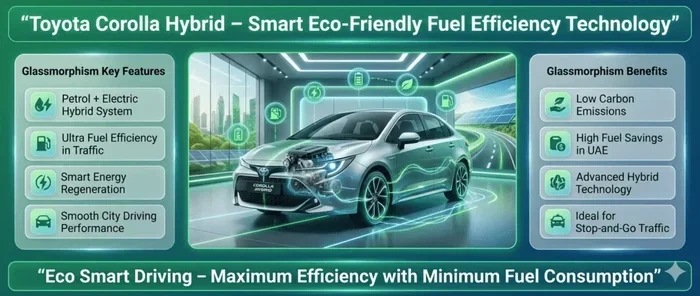
The Toyota Corolla Hybrid takes fuel efficiency to the next level. It uses a combination of a gasoline engine and an electric motor. This setup allows the car to switch between power sources seamlessly. In city driving, the electric motor handles much of the work, which saves fuel. On the highway, the gas engine takes over more of the load.
One common question is whether you can put regular gas in a hybrid. The answer is yes. The Corolla Hybrid runs on regular unleaded gasoline, just like the gas-only versions. You do not need any special fuel. This makes the hybrid even more convenient and affordable to own.
The Corolla Hybrid delivers around 50 MPG combined in many driving conditions. That is outstanding for a sedan. If you drive 12,000 miles per year, you could spend less than $850 annually on fuel. Over the life of the car, those savings really add up. Many owners report that the hybrid pays for its premium through fuel savings alone.
Another advantage of the hybrid system is regenerative braking. When you slow down, the system captures energy and stores it in the battery. This energy is then used to assist the gas engine. It is a clever way to squeeze every bit of efficiency out of each gallon. The result is a car that feels responsive and efficient at the same time.
Some drivers worry about whether a hybrid can run without gas. The answer is no. The Corolla Hybrid still needs gasoline to operate. However, it uses much less gas than a conventional car because the electric motor handles a large portion of the work. Think of it as a smart system that maximizes every drop of fuel.
Comparing the Corolla to Competitors
How does the Corolla stack up against other popular sedans? Let us look at a few competitors to put things in perspective.
The Honda Civic is a close rival in the compact sedan segment. Both cars offer similar fuel economy and reliability. The Civic might edge ahead in some trims, but the Corolla holds its own. The Mazda 3 offers a sportier driving feel but tends to use slightly more fuel. The Hyundai Elantra is another competitor with competitive MPG numbers.
When you compare fuel costs across these models, the Corolla often comes out on top. Its combination of efficiency, reliability, and low maintenance costs makes it a strong value proposition. You are not just buying a fuel-efficient car. You are buying a car that will keep running well for years without draining your wallet.
One thing that sets the Corolla apart is its proven track record. Toyota has built a reputation for durability and efficiency. Millions of Corollas have been sold worldwide, and owners consistently report good fuel economy and low ownership costs. That kind of real-world validation is hard to beat.
Common Mistakes That Increase Fuel Use
Even the most efficient car will waste fuel if you make certain mistakes. One of the biggest culprits is aggressive driving. Flooring the accelerator and braking hard burns through gas quickly. Smooth, gentle driving is the key to maximizing your MPG.
Another mistake is ignoring maintenance. Skipping oil changes, using the wrong oil weight, or neglecting tire rotations all hurt fuel economy. The Corolla SE and other trims perform best when they receive regular care. Stick to the maintenance schedule in your owner’s manual.
Carrying roof racks or cargo boxes when you do not need them is another fuel-waster. These accessories create aerodynamic drag that forces the engine to work harder. Remove them when they are not in use. Small changes like this can improve your fuel economy by several MPG over time.
Some drivers also make the mistake of warming up the car for too long in the morning. Modern cars like the Corolla do not need extended warm-up periods. Driving gently for the first few minutes is the best way to warm up the engine and get the best fuel economy from the start.
Expert Insights on Toyota Corolla Fuel Use
Automotive experts consistently praise the Corolla for its fuel efficiency. According to the EPA, the Corolla ranks among the top compact sedans for fuel economy. Independent tests by automotive publications have confirmed these ratings in real-world conditions. The numbers are not just theoretical. Real Corolla owners report similar results on their daily commutes.
Fuel economy expert reviews often highlight the Corolla’s balance of performance and efficiency. The 2.0-liter engine provides adequate power for daily driving without being thirsty. The hybrid system adds another layer of efficiency that many drivers appreciate. Whether you choose the gas or hybrid version, you are getting a well-engineered car that respects your fuel budget.
Mechanics also point to the Corolla’s simplicity as a fuel-saving advantage. Fewer complex systems mean fewer things that can drain fuel unnecessarily. The straightforward design of the Corolla engine and drivetrain contributes to its excellent real-world fuel economy. It is a car that does what it needs to do without wasting energy.
Many owners also notice that their Corolla runs better with a new serpentine belt and fresh spark plugs. These small maintenance items keep the engine operating at peak efficiency. Regular service is one of the easiest ways to ensure your Corolla continues to deliver excellent fuel economy for the long haul.
Is the Toyota Corolla Right for Your Daily Driving?
If you are looking for a daily driver that is affordable, reliable, and efficient, the Corolla is hard to beat. It does not use a lot of fuel, which means lower monthly costs and more money in your pocket. The range of trims means you can find a Corolla that fits your budget and your needs.
For commuters, the Corolla Hybrid is especially compelling. The fuel savings are significant, and the driving experience is smooth and quiet. For those who prefer a traditional gas engine, the base Corolla still delivers outstanding MPG that keeps costs low. Either way, you are making a smart financial choice.
The Corolla also holds its value well. When it comes time to sell or trade in, you will get a fair price thanks to the car’s reputation for reliability and efficiency. Low fuel costs plus strong resale value make the Corolla a wise investment for daily drivers.
Think about your driving habits and needs. Do you commute long distances on the highway? The Corolla’s highway MPG will serve you well. Do you mostly drive in the city with lots of stops? The hybrid version shines in stop-and-go traffic. No matter your situation, there is a Corolla trim that fits your fuel efficiency goals.
In the end, the Toyota Corolla proves that you do not need to spend a fortune to own a fuel-efficient car. It delivers where it counts: at the pump and over the long haul. The Toyota Corolla is one of the best choices for anyone who wants a reliable, affordable, and efficient daily driver. Whether you pick the gas or hybrid version, you are getting a car that will keep your fuel costs low and your trips enjoyable for many years to come.
Frequently Asked Questions
Does the Toyota Corolla use a lot of fuel for daily commuting?
No, the Corolla is one of the most fuel-efficient sedans available. Most models deliver 30 to 40 MPG, which means low daily commuting costs. The hybrid version goes even further with around 50 MPG combined.
What is the average fuel cost for a Toyota Corolla per year?
Assuming 12,000 miles per year and regular gas at $3.50 per gallon, a Corolla getting 35 MPG will cost about $1,200 per year in fuel. That is very affordable compared to larger vehicles.
Can sport mode affect Toyota Corolla fuel economy?
Yes, using sport mode can reduce fuel economy. Sport mode changes the throttle response and transmission shifting to prioritize performance over efficiency. For best fuel savings, use normal driving mode during your daily commute.
Does the Toyota Corolla Hybrid need premium gasoline?
No, the Corolla Hybrid runs on regular unleaded gasoline. You do not need premium fuel. Using the recommended regular gas saves money and keeps the hybrid system running efficiently.
How can I improve my Toyota Corolla’s fuel economy?
Simple habits make a big difference. Keep tires properly inflated, avoid aggressive driving, remove excess cargo, and stay current with maintenance. These steps can improve your MPG by several miles per gallon over time.
Is the Toyota Corolla cheaper to fuel than a hybrid SUV?
Generally yes, the Corolla uses less fuel than most SUVs. While hybrid SUVs also save fuel, the Corolla’s smaller size and lighter weight give it an edge in efficiency. For pure fuel cost savings, the Corolla is hard to beat in its class.
=== CONCLUSION ===
The Toyota Corolla remains one of the smartest choices for daily drivers who care about fuel economy. With MPG ratings that rival or beat many competitors, the Corolla keeps your fuel costs low month after month. Whether you choose the gas or hybrid version, you are getting a car that was engineered to sip fuel, not waste it.
Remember that your driving habits and maintenance routine play a big role in fuel efficiency. Smooth driving, regular service, and smart fuel choices all add up to real savings. The Corolla gives you the tools to save fuel. You just need to use them consistently.
If you are in the market for a reliable, efficient daily driver, the Toyota Corolla should be at the top of your list. It delivers where it counts, and it does so without breaking the bank at the pump. Make the smart choice and let the Corolla handle your daily driving with ease and efficiency.