How Far Can You Drive an Overheating Car Without Damage
So how far can you drive an overheating car? The honest answer is: not very far, and every minute matters. Most experts agree you should only push an overheating engine about 1 to 2 miles at most before pulling over safely. Driving farther risks permanent engine damage, blown head gaskets, and costly repairs that could easily reach thousands of dollars. This guide breaks down exactly what happens when your engine overheats, the safe distance you can cover, and the steps to take right away to protect your vehicle.
Key Takeaways
- Drive only 1 to 2 miles: Most mechanics agree that pushing an overheating car beyond this distance can cause serious engine damage.
- Watch for warning signs early: A rising temperature gauge, steam from the hood, or strange smells all signal trouble.
- Turn off the AC and crank the heat: This simple trick can help reduce engine heat in an emergency.
- Never ignore the temperature warning light: It exists for a reason, and ignoring it leads to expensive repairs.
- Coolant leaks are a top cause: Catching a leak early can prevent your car from overheating in the first place.
- Call for help if needed: Towing is always cheaper than replacing a seized engine.
📑 Table of Contents
- What Happens When Your Car Overheats
- How Far Can You Drive an Overheating Car
- Warning Signs Your Car Is Overheating
- Common Causes of Engine Overheating
- What to Do When Your Car Starts Overheating
- Preventing Engine Overheating in the Future
- How Much Does Overheating Damage Cost?
- Key Takeaways
- Conclusion
What Happens When Your Car Overheats
Your car engine runs hot. Like, really hot. We are talking temperatures that can reach 200 degrees Fahrenheit or more under normal conditions. The cooling system handles this heat so your engine does not melt, warp, or seize up. But when something goes wrong, that heat builds up fast.
So what actually happens inside your engine when it overheats? The metal parts expand. The oil breaks down. And the tight tolerances that keep everything running smoothly start to fall apart. Pistons can weld themselves to cylinder walls. Gaskets blow out. And in the worst cases, the engine block itself cracks.
Here is the scary part: this damage can happen in just a few minutes. We are not talking about hours of driving. We are talking about the time it takes to drive through one intersection. That is how fast an overheating engine can go from bad to catastrophic.
The cooling system in your car is a finely tuned machine. It relies on coolant, a radiator, a water pump, a thermostat, and a series of hoses and fans. When any one of these parts fails, the whole system suffers. And once the temperature climbs past the safe zone, the clock starts ticking.
Understanding this helps you see why the question “how far can you drive an overheating car” matters so much. The answer is shorter than you might think. Let us get into the specifics.
The Science Behind Engine Heat
Your engine generates enormous heat during combustion. The coolant absorbs that heat and carries it to the radiator, where air flow cools it down. The thermostat regulates this process by opening and closing to maintain the right temperature.
When the coolant level drops, the water pump fails, or the thermostat sticks, heat has nowhere to go. It stays trapped in the engine block. And just like a pot of water on a stove with the lid on, pressure builds until something gives.
How Temperature Affects Engine Components
Different engine parts have different heat tolerances. The aluminum in engine blocks expands faster than cast iron. Rubber hoses and gaskets dry out and crack under extreme heat. And the oil, which lubricates everything, loses its viscosity and stops protecting metal surfaces from grinding against each other.
At around 220 degrees Fahrenheit, you are already in the danger zone. At 230, you risk a blown head gasket. At 240 and above, you are looking at potential engine failure. The numbers climb fast, and so does the cost of the repair.
How Far Can You Drive an Overheating Car
This is the question everyone wants answered. And the truth is, there is no single magic number. The distance you can safely drive depends on several factors. But one thing is certain: you should not go far.
In most cases, you have about 1 to 2 miles before the risk of serious damage becomes very real. Some drivers report getting 3 or 4 miles in mild conditions, but that is pushing it. And every additional minute you stay on the road, the chances of permanent damage go up significantly.
The key variables include how hot your engine is, what caused the overheat, ambient temperature, traffic conditions, and whether you are climbing hills. Driving uphill in summer traffic with a failed radiator fan? That is a recipe for disaster in a very short distance.
Safe Distance vs. Risk Level
Let us break this down into a simple framework. If your temperature gauge is just slightly above normal, you might get 2 to 3 miles safely. If it is in the red zone, you have seconds, not minutes. Pull over immediately and turn off the engine.
Here is a quick way to think about it: treat an overheating engine like a kitchen fire. You would not keep cooking while the flames spread. You would act fast. The same logic applies here.
What “Safe” Really Means
When we say “safe,” we mean safe enough to reach the nearest exit or pull into a parking lot. It does not mean safe enough to drive home from 10 miles away. Do not test your luck. The cost of a tow truck is nothing compared to the cost of a new engine.
If you find yourself in this situation, keep your speed low. Avoid hard acceleration. And get to a safe stop as quickly as you reasonably can. Your engine will thank you for it.
Warning Signs Your Car Is Overheating
One of the biggest mistakes drivers make is ignoring the early warning signs. By the time the temperature gauge hits the red, you are already behind. Catching the problem early gives you more time to react safely.
Here are the most common overheating car warning signs to watch for:
- Temperature gauge climbing into the red zone: This is the most obvious sign. Your dashboard has a gauge for a reason. Use it.
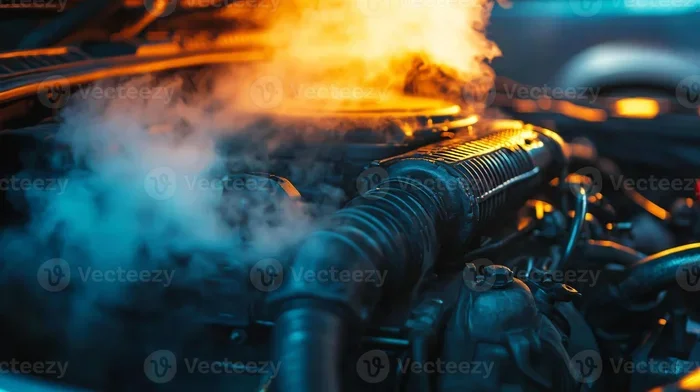
- Steam or smoke coming from under the hood: If you see steam, pull over immediately. This usually means coolant has hit a hot engine part and is boiling off.
- Sweet smell from the engine bay: Coolant often has a sweet, syrupy smell. If you notice it, you may have a leak.
- Strange engine noises: Knocking, ticking, or pinging sounds can indicate that the engine is running too hot.
- Loss of engine power: An overheating engine may feel sluggish or unresponsive.
- Coolant warning light on the dashboard: This light specifically alerts you to low coolant levels or high temperatures.
Why Early Detection Matters
Catching these signs early can mean the difference between a simple fix and a complete engine replacement. A small coolant leak, if addressed quickly, might cost you $100 to repair. Ignored, it leads to overheating, which leads to a blown head gasket, which can cost $1,500 or more.
The takeaway is simple: pay attention to your car. It talks to you. You just need to listen.
Common Causes of Engine Overheating
Understanding why your car overheats helps you prevent it from happening again. Let us look at the most common culprits behind engine overheating.
Low Coolant Levels
This is the number one cause of overheating. Coolant is the lifeblood of your cooling system. Without enough of it, heat cannot be properly transferred away from the engine. A slow leak in a hose, the radiator, or the water pump can drain your coolant over time without you noticing.
Check your coolant reservoir regularly. If the level is consistently low, you have a leak somewhere. Find it and fix it before it turns into a bigger problem.
Thermostat Failure
The thermostat controls the flow of coolant through the engine. When it gets stuck closed, coolant cannot reach the radiator to cool down. This is a common issue, especially in older vehicles, and it can cause rapid overheating even on a short drive.
Water Pump Failure
The water pump circulates coolant through the engine block and radiator. When it fails, the coolant stops moving. Heat builds up. And within minutes, your engine can overheat.
Radiator Problems
A clogged or damaged radiator cannot dissipate heat effectively. Debris, corrosion, and internal buildup can all restrict airflow or coolant flow through the radiator. This is especially common in older vehicles or those driven in dusty conditions.
Broken Cooling Fan
The cooling fan pulls air through the radiator when you are idling or driving slowly. If the fan motor or fan clutch fails, you can overheat even at a stoplight. This is a common cause of overheating in stop-and-go traffic during summer months.
Head Gasket Failure
A blown head gasket can cause overheating, and overheating can cause a blown head gasket. It is a vicious cycle. Coolant can leak into the cylinders or oil passages, leading to overheating, white smoke from the exhaust, and milky oil.
What to Do When Your Car Starts Overheating
You are driving, the temperature gauge starts climbing, and you realize your car is overheating. What do you do right now? Every second counts. Here is your action plan.
Step-by-Step Response Plan
- Turn off the air conditioning immediately: The AC puts extra load on the engine. Turning it off reduces heat generation instantly.
- Crank the heater to full blast: Yes, this sounds counterintuitive. But the heater core acts as a secondary radiator. It pulls heat away from the engine. It might make you hot, but it can save your engine.
- Find a safe place to pull over: Do not brake suddenly. Signal and move to the right shoulder or a parking lot. Turn on your hazard lights.
- Turn off the engine: Let the engine idle for a minute before shutting it off completely. This allows the water pump and fan to keep circulating coolant for a short time.
- Do not open the radiator cap right away: The system is under pressure. Opening it while hot can cause scalding coolant to spray out and burn you. Wait at least 15 to 20 minutes.
- Call for roadside assistance or a tow truck: Do not try to drive any farther. Have the car towed to a trusted mechanic.
Quick Tips for Emergency Situations
Keep a bottle of coolant or water in your trunk. If you are stranded and the engine has cooled down, you can add a small amount of fluid to get to the nearest mechanic. But this is a temporary fix, not a solution.
Also, never pour cold water directly onto a hot engine block. The sudden temperature change can crack the engine block or warp the cylinder head. Let it cool naturally.
When to Call for Help vs. When You Can Keep Going
If the temperature gauge is just slightly above normal and you are close to a service center, you might be able to drive slowly. But if the gauge is in the red or you see steam, call for a tow. No trip is worth a destroyed engine.
Preventing Engine Overheating in the Future
The best way to deal with an overheating engine is to never let it happen in the first place. Regular maintenance and simple habits can keep your cooling system working properly for years.
Regular Maintenance Checklist
- Check coolant levels monthly: A quick glance at the reservoir can catch a slow leak before it becomes a big problem.
- Flush and replace coolant on schedule: Old coolant loses its effectiveness. Follow your vehicle manufacturer’s recommendations for coolant replacement.
- Inspect hoses and belts regularly: Look for cracks, swelling, or soft spots in hoses. Check belt tension and condition.
- Test the thermostat periodically: A simple test can tell you if the thermostat is opening and closing properly.
- Keep the radiator clean: Hose out debris from the front of the radiator. Bugs, dirt, and leaves can block airflow and reduce cooling efficiency.
- Monitor your temperature gauge during drives: Make it a habit to glance at the gauge. If it starts climbing, take action immediately.
Seasonal Tips for Summer Driving
Summer heat puts extra stress on your cooling system. Before the hot months arrive, have your mechanic check the coolant condition, fan operation, and hose integrity. Consider a coolant flush if it has been a while. And never underestimate the power of parking in the shade.
Choosing the Right Coolant for Your Vehicle
Not all coolants are created equal. Different vehicles require different types of coolant. Check your owner manual to find the right specification. Using the wrong coolant can lead to corrosion and cooling system failure over time.
How Much Does Overheating Damage Cost?
The cost of overheating damage varies wildly depending on how long you drove and how hot the engine got. A minor overheat might only require a thermostat replacement at around $200 to $300. But if you pushed it too far, the costs can skyrocket.
A blown head gasket repair typically runs between $1,000 and $2,000. A cracked engine block? That could mean a full engine replacement costing $3,000 to $5,000 or more. And in some cases, the damage is so severe that the car is not worth fixing.
The bottom line is clear: a tow truck costs $50 to $150 in most areas. That is a tiny fraction of what an engine replacement costs. When your car overheats, do not try to tough it out. Get it to a mechanic safely.
Key Takeaways
- Drive only 1 to 2 miles: Most mechanics agree that pushing an overheating car beyond this distance can cause serious engine damage.
- Watch for warning signs early: A rising temperature gauge, steam from the hood, or strange smells all signal trouble.
- Turn off the AC and crank the heat: This simple trick can help reduce engine heat in an emergency.
- Never ignore the temperature warning light: It exists for a reason, and ignoring it leads to expensive repairs.
- Coolant leaks are a top cause: Catching a leak early can prevent your car from overheating in the first place.
- Call for help if needed: Towing is always cheaper than replacing a seized engine.
Conclusion
The answer to how far can you drive an overheating car is simple: not very far. The safe distance is about 1 to 2 miles at most, and even that depends on how severe the overheat is. Every minute you keep driving on an overheating engine increases the risk of permanent damage that can cost thousands of dollars to fix.
Your car gives you plenty of warning signs. A rising temperature gauge, steam from the hood, or a sweet smell from the engine bay all tell you something is wrong. The key is to act fast. Turn off the AC, crank the heat, pull over safely, and call for a tow if needed.
Prevention is always better than repair. Regular maintenance, checking your coolant levels, and paying attention to your temperature gauge can save you from the nightmare of an overheating engine. Your car is a big investment. Treat it well, and it will take care of you on the road for years to come.
So the next time you see that temperature gauge creep up, remember: you have a short window to act. Use it wisely. Your wallet and your engine will thank you.
Frequently Asked Questions
Can I drive 5 miles with an overheating car?
No, driving 5 miles with an overheating engine is not recommended. Even 1 to 2 miles can risk serious damage. If your engine is overheating, pull over as soon as it is safe to do so and call for a tow. The longer you drive, the higher the chance of a blown head gasket or cracked engine block.
What happens if you drive an overheating car for too long?
Driving an overheating car for too long can cause the engine block to crack, the head gasket to blow, or the pistons to seize. These are all expensive and sometimes catastrophic failures. In many cases, the engine may need to be replaced entirely rather than repaired.
How do I know if my overheating car is still safe to drive?
If the temperature gauge is only slightly above normal and there is no steam or strange noises, you might be able to drive a very short distance to the nearest exit. But if the gauge is in the red zone or you see steam, stop immediately and do not continue driving.
Can low coolant cause overheating?
Yes, low coolant is one of the most common causes of engine overheating. Without enough coolant, the engine cannot properly transfer heat away from the combustion chambers. Check your coolant level regularly and top it off as needed, but also look for leaks if it keeps running low.
How long does it take for an overheating engine to cool down?
It typically takes 15 to 30 minutes for an overheating engine to cool down enough to be safe to handle. Do not attempt to open the radiator cap until the engine has cooled significantly. Use this time to call for roadside assistance or a tow truck.
Is it worth repairing an overheated engine?
It depends on the extent of the damage. A simple thermostat or water pump replacement is worth it. But if the engine block is cracked or the head gasket is blown, the repair cost can exceed the value of the vehicle. A mechanic can assess the damage and give you an honest estimate.