How Much Is Car Insurance in Florida for New Drivers
Car insurance in Florida for new drivers typically costs between $2,000 and $4,500 per year, depending on factors like age, driving record, and coverage type. Florida is a no-fault state that requires Personal Injury Protection (PIP) and Property Damage Liability coverage. Shopping around, bundling policies, and taking advantage of discounts can significantly lower your Florida car insurance rates.
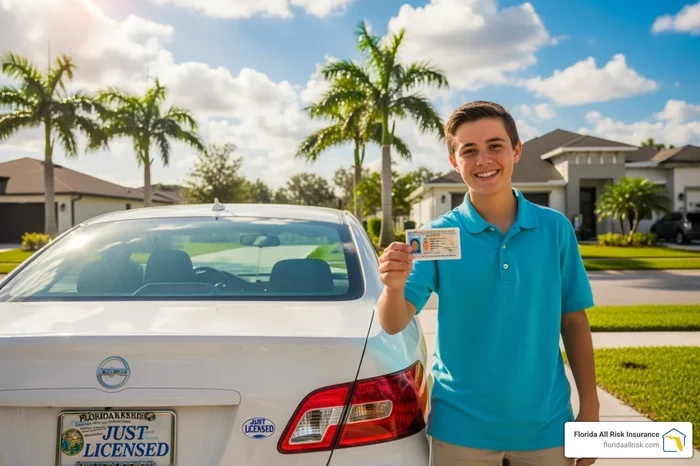
If you just got your license or are planning to drive in the Sunshine State, one question is probably burning in your mind: how much is car insurance in Florida for a new driver? The answer is not as simple as a single number, but here is the quick truth: new drivers in Florida can expect to pay between $2,000 and $4,500 per year. That is a lot of money, especially when you are just starting out. But do not worry. This guide breaks everything down so you understand exactly what you are paying for and how to save.
Florida has unique insurance laws that set it apart from most other states. It is a no-fault state, which means your own insurance covers your injuries after an accident, regardless of who caused it. The state also requires specific types of coverage that you must carry at all times. Understanding these requirements is the first step toward finding affordable auto insurance Florida that fits your budget and keeps you legal on the road.
In this article, we will walk you through everything you need to know. From the minimum coverage requirements to the factors that drive up your premium, we have you covered. Whether you are a teenager getting your first license or an adult moving to Florida for the first time, this guide will help you make smart decisions about your car insurance policy.
Key Takeaways
- Average Cost: New drivers in Florida pay between $165 and $375 per month for car insurance.
- No-Fault State: Florida requires PIP and Property Damage Liability coverage by law.
- Age Matters: Younger drivers (16-24) face the highest premiums due to risk factors.
- Discounts Help: Bundling, good student discounts, and defensive driving courses can cut costs.
- Compare Quotes: Getting multiple quotes from different insurers ensures you find the best rate.
- Full vs. Minimum Coverage: Full coverage costs more but offers better financial protection.
- Location Impact: Where you live in Florida affects your premium significantly.
📑 Table of Contents
- Understanding Florida Car Insurance Basics
- How Much Does Car Insurance Cost for New Drivers in Florida?
- Types of Car Insurance Coverage in Florida
- How to Save Money on Car Insurance in Florida
- Common Mistakes New Drivers Make with Car Insurance
- Frequently Asked Questions About Florida Car Insurance
- Final Thoughts
Understanding Florida Car Insurance Basics
Before we dive into costs, let us talk about what car insurance actually means in Florida. Every driver in the state must carry a minimum level of coverage. These requirements exist to protect other drivers and yourself in case of an accident. Florida law is clear about what you need, and failing to meet these requirements can result in fines, license suspension, and other penalties.
No-Fault Insurance System in Florida
Florida operates under a no-fault insurance system. This means that after a car accident, each driver’s own insurance company pays for their medical expenses, up to the policy limit. You do not need to prove who was at fault to get medical coverage. However, this system also means that PIP insurance (Personal Injury Protection) is mandatory.
PIP coverage pays for your medical bills, lost wages, and related expenses after an accident. In Florida, you must carry at least $10,000 in PIP coverage. This is different from states that use a traditional at-fault system, where the responsible driver’s insurance pays for everything.
Minimum Coverage Requirements
Florida requires every driver to carry two types of minimum coverage:
- Property Damage Liability (PDL): At least $10,000 per accident. This covers damage you cause to someone else’s property, like their car or a fence.
- Personal Injury Protection (PIP): At least $10,000 per person. This covers your own medical expenses after an accident.
These are the legal minimums. However, carrying only the minimum coverage leaves you exposed to significant financial risk. If you cause a serious accident, $10,000 might not even cover a fraction of the damages. That is why many experts recommend carrying full coverage car insurance in Florida, especially for new drivers who may lack the savings to handle large out-of-pocket costs.
How Much Does Car Insurance Cost for New Drivers in Florida?
The cost of auto insurance for new drivers in Florida varies widely. On average, new drivers pay between $165 and $375 per month. Annual costs typically range from $2,000 to $4,500. But these numbers are just averages. Your actual premium depends on several key factors that we will explore below.
Factors That Affect Your Insurance Premium
Insurance companies use a complex set of factors to determine your rate. Understanding these factors helps you see why your neighbor might pay a different amount than you for the same type of coverage.
Age is the biggest factor. Younger drivers, especially those under 25, pay the highest premiums. Insurance companies see young drivers as high-risk because they lack experience on the road. A 16-year-old driver might pay double what a 30-year-old driver pays for the same policy. As you gain driving experience and age, your rates will gradually decrease.
Your driving record matters a lot too. If you have speeding tickets, accidents, or DUI violations on your record, your premium will be higher. Clean driving records qualify drivers for the best rates. Even one at-fault accident can increase your Florida car insurance rates by 20% to 40%.
Where you live in Florida also plays a role. Dense urban areas like Miami, Orlando, and Tampa have higher accident rates and more vehicle theft, which drives up premiums. Rural areas and smaller towns generally offer lower rates.
The type of car you drive is another factor. Sports cars and luxury vehicles cost more to insure because they are expensive to repair and more likely to be stolen. A reliable sedan or compact SUV will typically have lower insurance costs. And if you are wondering about fuel costs, you might also check if you can use 88 gas in your car to save money on fuel.
Average Annual Premiums by Age Group
Here is a general breakdown of what new drivers in Florida can expect to pay based on age:
- Ages 16-19: $4,000 to $6,000 per year
- Ages 20-24: $2,500 to $4,000 per year
- Ages 25-34: $1,800 to $3,000 per year
- Ages 35-44: $1,500 to $2,500 per year
- Ages 45 and older: $1,200 to $2,000 per year
These ranges are estimates based on statewide averages. Your individual rate may fall above or below these numbers depending on your specific circumstances.
Types of Car Insurance Coverage in Florida
Florida offers several types of car insurance coverage. Understanding the differences helps you choose the right policy for your needs and budget. Let us break down the most common types.
Liability Coverage
Liability coverage pays for damages you cause to other people or their property in an accident. Florida requires Property Damage Liability coverage, but Bodily Injury Liability is not mandatory. However, adding Bodily Injury Liability to your policy is a smart move. It protects your personal assets if you are sued after causing a serious accident.
Most experts recommend at least $25,000 to $50,000 per person and $50,000 to $100,000 per accident in Bodily Injury Liability coverage. This may sound like a lot, but lawsuits after car accidents can easily exceed these amounts.
Collision and Comprehensive Coverage
Collision coverage pays for damage to your own car after an accident, regardless of fault. Comprehensive coverage pays for non-accident damage, like theft, vandalism, flooding, or hail. Together, these two coverage types make up what people commonly call full coverage insurance.
Full coverage is especially important for new drivers who do not have a large emergency fund. If your car is totaled or stolen, comprehensive and collision coverage ensure you are not left paying for a replacement vehicle out of pocket.
Uninsured/Underinsured Motorist Coverage
Unfortunately, not everyone on Florida roads carries insurance. Uninsured/Underinsured Motorist (UM/UIM) coverage protects you when the other driver does not have enough insurance to cover your damages. This type of coverage is highly recommended in Florida, where approximately 20% of drivers are uninsured.
How to Save Money on Car Insurance in Florida
Paying high insurance premiums does not have to be a permanent reality. There are many proven strategies to lower your car insurance rates Florida as a new driver. Let us look at the most effective ways to save.
Shop Around and Compare Quotes
The single best way to find cheap car insurance in Florida is to compare quotes from multiple companies. Each insurer uses its own formula to calculate rates, so the same driver can receive very different quotes from different companies. Shopping around takes only a few minutes online and can save you hundreds of dollars per year.
Do not just look at the monthly premium either. Check the deductible, coverage limits, and any exclusions in the policy. The cheapest policy is not always the best value if it leaves you underinsured.
Take Advantage of Discounts
Most insurance companies offer discounts that can significantly reduce your premium. Common discounts for new drivers include:
- Good Student Discount: Maintain a B average or higher and save 10% to 25% on your premium.
- Defensive Driving Course: Completing an approved course can lower your rates and remove points from your driving record.
- Bundling Discount: Combine your car insurance with homeowners or renters insurance to save 10% to 20%.
- Safe Driver Discount: Maintain a clean driving record for several years to qualify for lower rates.
- Low Mileage Discount: Drive fewer than 7,500 miles per year and earn a discount.
Choose a Higher Deductible
Your deductible is the amount you pay out of pocket before your insurance kicks in. Choosing a higher deductible, such as $1,000 instead of $500, lowers your monthly premium. Just make sure you can afford the deductible if you ever need to file a claim.
Maintain Good Credit
In Florida, insurance companies are allowed to use your credit score as a factor in determining your premium. Drivers with good credit typically pay less for car insurance. Building and maintaining good credit is one of the smartest long-term financial moves you can make, and it directly impacts your auto insurance rates.
Consider Usage-Based Insurance
Many insurers now offer usage-based or pay-per-mile insurance programs. These programs track your driving habits through a mobile app or device installed in your car. If you drive safely and keep your mileage low, you can earn significant discounts. This option works especially well for new drivers who do not drive long distances daily.
Common Mistakes New Drivers Make with Car Insurance
Avoiding common mistakes can save you money and headaches. Here are the pitfalls new drivers should watch out for:
Buying Only Minimum Coverage
It is tempting to buy only the legal minimum to save money. But minimum coverage leaves you financially vulnerable. If you cause an accident that results in $30,000 in medical bills and your PIP limit is $10,000, you are responsible for the remaining $20,000. Full coverage insurance costs more upfront but protects you from devastating out-of-pocket expenses.
Not Updating Your Policy
Your life changes, and your insurance policy should change too. If you move to a new address, buy a new car, or add a teen driver to your policy, you need to update your coverage. Failing to update your policy can result in gaps in coverage or paying for coverage you no longer need.
Forgetting to Ask About Discounts
Many new drivers simply accept the first quote they receive without asking about available discounts. Always ask your insurer about every discount they offer. You might be surprised at how much you can save with a few small adjustments.
Letting Your Lapse in Coverage
If you let your insurance lapse, even for a short period, it can have serious consequences. Insurance companies report lapses to the state, and Florida may require you to file an SR-22 form, which is an expensive proof of financial responsibility. Keep your coverage continuous to avoid this headache.
Frequently Asked Questions About Florida Car Insurance
What is the cheapest car insurance for new drivers in Florida?
The cheapest car insurance for new drivers in Florida varies by individual, but companies like GEICO, Progressive, and State Farm often offer competitive rates for beginners. On average, basic minimum coverage can cost around $1,500 to $2,000 per year. However, remember that the cheapest policy may not provide enough protection. Always compare coverage levels, not just prices, to find the best value for your needs.
Do I need full coverage car insurance in Florida?
Florida law does not require full coverage, but lenders typically require it if you have a car loan or lease. Full coverage includes collision and comprehensive insurance, which protect your vehicle. If your car is paid off, full coverage is optional, but it is highly recommended to protect yourself from financial loss. Without it, you would pay for all repairs or replacement costs out of pocket.
How much does car insurance go up after an accident in Florida?
An at-fault accident in Florida can increase your premium by 20% to 50%, depending on the severity and your insurer. Some companies offer accident forgiveness programs that prevent rate increases after your first accident. The increase typically lasts for three to five years before your rates return to normal. Maintaining a clean driving record after an accident helps your rates recover faster.
Can I stay on my parents’ car insurance in Florida?
Yes, you can stay on your parents’ car insurance as a new driver in Florida, especially if you live at the same address and drive a vehicle listed on their policy. Many insurers allow young drivers to remain on a parent’s policy until age 25 or until they move out. This is often the most affordable option for teenage and young adult drivers. Be sure to inform your insurer about all drivers in the household to avoid coverage issues.
What is SR-22 insurance in Florida?
SR-22 insurance is not a type of insurance but a certificate your insurer files with the state to prove you carry the required minimum coverage. You may need SR-22 filing in Florida if you were convicted of a DUI, drove without insurance, or caused a serious accident. SR-22 requirements typically last for three years, and the filing fee plus increased premiums can add significant costs to your Florida car insurance bill.
How can I lower my car insurance as a new driver in Florida?
The best ways to lower your insurance as a new driver include shopping around for quotes, taking a defensive driving course, maintaining good grades if you are a student, bundling your policies, and choosing a higher deductible. Avoiding traffic violations and maintaining a clean driving record also helps over time. Some insurers offer discounts for completing driver education courses, so ask your agent about all available options.
Final Thoughts
Car insurance in Florida for new drivers does not have to break the bank. By understanding the state’s requirements, comparing quotes, and taking advantage of every discount available, you can find a policy that fits your budget and keeps you protected on the road. Remember, the cheapest option is not always the best option. Focus on finding the right balance of coverage and cost.
Florida’s unique no-fault insurance system and high population of uninsured drivers make comprehensive coverage especially valuable. Invest the time to understand your policy, ask questions, and review your coverage annually. Your future self will thank you if you ever need to file a claim.
Start today by getting quotes from at least three different insurers. Compare not just the price but the coverage limits, deductibles, and customer service ratings. Making an informed decision now saves you money, stress, and headaches down the road. Drive safe, stay insured, and enjoy the freedom that comes with being a confident driver in the Sunshine State.