How Much Weight Can I Safely Put in My Pickup Truck
Knowing how much weight you can put in your pickup truck keeps you safe and legal. Every truck has a payload rating that tells you the maximum cargo weight it can carry. This guide breaks down payload capacity, GVWR, and practical tips so you never overload your truck.
Have you ever stood at the back of your truck, staring at a pile of stuff, and wondered if it was too much? Maybe you are loading up for a move, hauling supplies for a project, or just trying to fit everything in one trip. Either way, the question “how much weight can I put in my pickup truck” comes up a lot.
The answer is not as simple as one number. Every truck is different. A small compact pickup handles weight very differently from a heavy-duty rig. And your truck’s weight limit depends on several factors that many drivers overlook. In this guide, we will walk through everything you need to know. You will learn what payload capacity means, how to find your truck’s limit, and the risks of going over it.
By the end, you will feel confident about loading your truck the right way. No guesswork. No stress. Just clear, practical advice that keeps you safe on the road.
Key Takeaways
- Payload capacity is the key number: It tells you how much weight your truck can safely carry in the cab and bed.
- Check your owner’s manual: The exact weight limit is listed on the door jamb sticker or in the manual.
- Overloading damages your truck: It strains the suspension, brakes, and frame, leading to costly repairs.
- Weight matters more than volume: A light load of bulky items can still be under your limit.
- Use a scale when in doubt: Weighing your truck at a truck stop gives you real numbers to work with.
📑 Table of Contents
What Does Payload Capacity Mean?
Payload capacity is the total weight your truck can safely carry. This includes everything inside the cab and the truck bed. It covers passengers, cargo, tools, and any accessories you have added. Many people confuse payload with towing capacity, but they are very different numbers.
Payload is the weight your truck carries on its own wheels. Towing capacity is the weight your truck can pull behind it with a trailer. Both matter, but they are not the same. When people ask how much weight can I put in my pickup truck, they almost always mean payload.
Here are the key terms you should understand:
- Payload: The total weight of passengers and cargo inside the truck.
- Curb weight: The weight of the truck itself, with no passengers or cargo.
- Gross Vehicle Weight Rating (GVWR): The maximum total weight of the truck plus everything in it.
- Payload rating: GVWR minus curb weight. This is your actual carrying limit.
Think of it this way. If your truck’s GVWR is 7,000 pounds and its curb weight is 5,200 pounds, your payload capacity is 1,800 pounds. That is the number you need to watch. It covers you, your passengers, and everything in the bed.
How to Find Your Truck’s Weight Limit
Finding your truck’s weight limit is easier than most people think. You do not need to be a mechanic. A few quick steps will give you the exact number.
Check the Door Jamb Sticker
Open your driver’s door and look for a sticker on the door frame. This sticker is called the Federal Certification Label. It lists your truck’s GVWR, curb weight, and payload capacity. This is the most reliable source for your specific vehicle.
Read the Owner’s Manual
Your owner’s manual has a section on specifications. Look for “payload capacity” or “carrying capacity.” The manual gives you the exact number for your trim level and engine option.
Look Up Your Truck Online
You can also search for your truck’s specs online. Use the year, make, model, and trim level. Manufacturer websites often list payload and towing numbers for each configuration.
Use a Truck Scale
If you want real-world numbers, visit a truck scale at a truck stop or scale house. Weigh your truck empty first. Then load it up and weigh it again. The difference is your actual payload. This method is the most accurate because it accounts for any modifications you have made.
Weight Limits by Truck Size
Not all trucks are created equal. The weight your truck can carry depends heavily on its size and class. Let us break this down by the common truck categories.
Half-Ton Trucks
Half-ton trucks are the most popular pickups on the road. Models like the Ford F-150, Chevrolet Silverado 1500, and Toyota Tundra fall into this category. The name “half-ton” is a bit misleading. These trucks can actually carry much more than 1,000 pounds.
Most half-ton trucks have a payload capacity between 1,500 and 2,300 pounds. The exact number depends on the engine, cab size, bed length, and trim level. A basic work truck with a smaller engine usually has a lower payload than a heavy-duty model with a bigger engine.
Three-Quarter-Ton Trucks
Three-quarter-ton trucks, like the Ford F-250 and Chevrolet Silverado 2500, are built for heavier loads. These trucks typically handle 3,000 to 4,500 pounds of payload. They come with stronger frames, heavier-duty suspensions, and larger brakes.
These are great trucks for contractors and anyone who regularly hauls heavy equipment. If you are asking how much weight can I put in my pickup truck and you drive a three-quarter-ton, you have a solid margin for heavier loads.
One-Ton Trucks
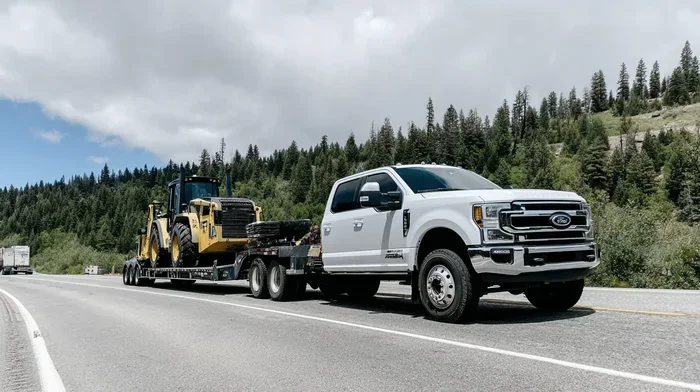
One-ton trucks like the Ford F-350 and Ram 3500 are the heavy-duty champions. Their payload capacity often exceeds 4,000 pounds. Some configurations can carry over 6,000 pounds in the bed and cab combined.
These trucks are built for serious work. They handle large equipment, trailers, and bulk cargo with ease. But even one-ton trucks have limits. You still need to check your specific model’s payload rating before loading up.
| Truck Class | Typical Payload Range | Common Models |
|---|---|---|
| Half-Ton | 1,500 – 2,300 lbs | F-150, Silverado 1500, Tundra |
| Three-Quarter-Ton | 3,000 – 4,500 lbs | F-250, Silverado 2500, Ram 2500 |
| One-Ton | 4,000 – 6,000+ lbs | F-350, Silverado 3500, Ram 3500 |
Why Overloading Your Truck Is Dangerous
It is tempting to load up your truck and just go. But overloading creates real risks. Understanding these dangers can save you money, trips, and even lives.
Strained Suspension and Frame
Your truck’s suspension is designed to handle a specific weight. When you exceed it, the springs compress too much. The shocks wear out faster. Over time, the frame can bend or crack. Suspension repairs are expensive, and they affect how your truck drives and handles.
Longer Braking Distances
A heavier truck takes longer to stop. Your brakes are sized for your truck’s rated payload. When you overload, the brakes overheat and lose effectiveness. This is especially dangerous on highways or in wet conditions. Stopping distance can increase significantly.
Tire Damage and Blowouts
Every tire has a maximum load rating. When you carry more weight than the tires can handle, they overheat. This increases the risk of blowouts. A tire failure at highway speed is extremely dangerous and can cause a serious accident.
Legal and Financial Consequences
Overloading your truck can also get you pulled over. Police officers can weigh your truck and issue citations for exceeding weight limits. Fines vary by state but can be costly. In some cases, your insurance company may deny a claim if they find the truck was overloaded at the time of an accident.
Reduced Fuel Efficiency
Extra weight makes your engine work harder. You will burn more fuel and spend more money at the pump. Over time, the cost of hauling too much adds up quickly.
Common Mistakes People Make When Loading Their Truck
Even well-meaning truck owners make mistakes when loading cargo. Here are the most common ones to avoid.
Guessing the Weight
Many drivers estimate the weight of their cargo. A bag of fertilizer might feel light, but ten bags add up fast. Never guess. Use a scale or check the weight on the packaging. If you are hauling multiple items, weigh each one and add them up.
Ignoring Passenger Weight
Payload includes people. If you have four adults in the cab, that is roughly 800 pounds right there. Add your cargo, and you might be closer to your limit than you think. Always account for every person in the truck.
Concentrating Weight on One Axle
Where you place your cargo matters. If you pile everything behind the rear axle, you put too much weight on the back wheels. This affects steering and braking. Distribute weight evenly across the truck for the best balance and safety.
Forgetting About Accessories
Aftermarket add-ons add weight. A winch, extra tool box, bed liner, or upgraded wheels all count toward your payload. Make sure you factor in the weight of every accessory when calculating your total load.
Not Checking the Axle Weight Limit
Your truck has axle weight limits in addition to the total payload limit. If too much weight sits on one axle, you can damage the axle or tires. Check your door jamb sticker for front and rear axle weight ratings.
Tips for Safely Loading Your Pickup Truck
Loading your truck the right way is simple once you know the basics. Follow these tips to stay safe and within your weight limits.
Weigh Your Truck Before and After Loading
The best way to know your actual payload is to weigh the truck. Visit a truck scale and weigh it empty. Then load everything up and weigh it again. Subtract the empty weight from the loaded weight. This gives you your real payload number.
Use a Payload Calculator
Many truck manufacturers offer online payload calculators. You enter your truck’s specs and add up the weight of passengers and cargo. The calculator tells you if you are within limits. These tools are free and very helpful.
Secure Your Load Properly
A properly secured load does not shift while driving. Use ratchet straps, bungee cords, or cargo nets. Loose items can slide around and shift the weight distribution. They can also become projectiles if they fly out of the bed.
Distribute Weight Evenly
Place heavier items over the axle and lighter items toward the front of the bed. This keeps the truck balanced. A well-distributed load handles better, brakes more effectively, and wears tires more evenly.
Check Your Tire Pressure
Proper tire pressure is critical when carrying heavy loads. Underinflated tires can overheat and fail. Check your tire pressure before every trip, especially when you are hauling a full load. The recommended pressure is listed on the door jamb sticker.
Consider a Weight Distribution Hitch for Towing
If you are towing a trailer, the tongue weight adds to your truck’s payload. A weight distribution hitch helps spread the load evenly across all axles. This improves stability and keeps you within safe limits.
Expert Insights on Truck Weight Limits
We spoke with automotive experts about the most common weight-related mistakes. Here is what they had to say.
Always trust the numbers on the door jamb sticker. “Many drivers rely on what they read online or heard from friends,” says a certified mechanic with over 20 years of experience. “But every truck configuration is different. The door jamb sticker is the law for your specific vehicle. Follow it.”
Think about tongue weight when towing. “Tongue weight is the downward force the trailer puts on the hitch,” explains a towing safety expert. “It counts toward your payload. A common rule is that tongue weight should be 10 to 15 percent of the total trailer weight.”
Do not confuse bed length with capacity. “A longer bed does not mean a higher payload,” warns a truck specialist. “Payload depends on the frame, suspension, and engine. A short-bed truck can sometimes carry more than a long-bed model if it has a stronger setup.”
Key Takeaways
- Payload capacity is the key number: It tells you how much weight your truck can safely carry in the cab and bed.
- Check your door jamb sticker: The exact weight limit is listed on the Federal Certification Label on the driver’s door.
- Overloading damages your truck: It strains the suspension, brakes, tires, and frame, leading to expensive repairs and safety risks.
- Weight matters more than volume: A light load of bulky items can still be well under your truck’s weight limit.
- Use a scale when in doubt: Weighing your truck at a truck stop gives you real numbers instead of guesses.
- Distribute weight evenly: Place heavy items over the axle and secure everything to prevent shifting.
- Know the difference between payload and towing: Payload is what your truck carries. Towing is what your truck pulls.
Conclusion
So, how much weight can I put in my pickup truck? The honest answer is it depends on your specific truck. Every model has a payload rating that accounts for its size, engine, and setup. The best thing you can do is find your truck’s exact number and stick to it.
Use the door jamb sticker, read the owner’s manual, or visit a truck scale. Once you know your limit, plan your loads carefully. Weigh your cargo, account for passengers, and distribute weight evenly. These simple steps go a long way toward keeping you safe and protecting your truck.
Overloading might seem like a shortcut, but the risks far outweigh any time you save. Damaged suspension, blown tires, and legal trouble are not worth it. Take the extra few minutes to load correctly. Your truck, your wallet, and your safety will thank you.
Next time you head out with a full load, you will know exactly what your truck can handle. No more guessing. Just confidence on the road.
Frequently Asked Questions
What happens if I put too much weight in my pickup truck?
Overloading your truck strains the suspension, brakes, and tires. It can cause blowouts, longer stopping distances, and loss of control. You may also face fines for violating weight limits, and your insurance might not cover damage from an overloaded vehicle.
Where can I find my truck’s payload capacity?
Look at the door jamb sticker on the driver’s side door. It lists the Gross Vehicle Weight Rating (GVWR) and curb weight. Subtract curb weight from GVWR to get your payload capacity. Your owner’s manual also has this information.
Does the length of the truck bed affect payload capacity?
No, bed length does not determine payload. Payload depends on the frame, suspension, engine, and axle ratings. A short-bed truck can have the same or even higher payload than a long-bed model, depending on the configuration.
Can I exceed my payload capacity if I drive slowly?
No. Driving slowly does not make overloading safe. The structural limits of your truck remain the same regardless of speed. Overloading at any speed increases the risk of accidents and vehicle damage.
How do I weigh my truck to check the actual payload?
Drive your truck onto a truck scale at a truck stop or scale house. Record the weight. Then unload everything and weigh it again. The difference is your actual payload. This method is the most accurate way to know your real carrying weight.
Does tongue weight count toward my truck’s payload?
Yes. Tongue weight is the downward force a trailer puts on the hitch. It is part of your truck’s total payload. Keep tongue weight between 10 and 15 percent of the trailer’s total weight for safe towing and balanced handling.