Where Is My Cruise Control Button Located on the Car
Finding your cruise control button does not have to be confusing. The cruise control button is usually on the steering wheel, steering column stalk, or center console, depending on your car model. This guide walks you through every common location so you can set your speed and enjoy a relaxed drive. We also cover adaptive cruise control, button functions, and brand-specific layouts to help you get started fast.
Have you ever slid behind the wheel of a car and immediately searched for the cruise control button? You know the feeling. You are about to hit a long stretch of highway, and you want to ease off the gas pedal for a while. But where is it? The truth is, the cruise control button location changes from car to car. It might sit on your steering wheel, hide behind a stalk on the left side, or even live on your center console. This guide will show you exactly where to look, no matter what kind of vehicle you drive.
Understanding your dashboard controls makes driving safer and more enjoyable. When you know where every button is, you spend less time hunting and more time focusing on the road. We will walk through every common spot, break down how each system works, and share practical tips that make your next long road trip feel effortless. Let us dive right in.
Key Takeaways
- Steering Wheel Is the Most Common Spot: Most modern cars place the cruise control buttons right on the steering wheel spokes for easy access.
- Older Cars Use a Steering Column Stalk: Classic vehicles often have a cruise control lever near the turn signal stalk on the left side of the column.
- Button Functions Are Universal: The set, resume, cancel, and on/off buttons work the same way across nearly all car brands.
- Adaptive Cruise Control Is a Step Up: This advanced system adjusts your speed automatically based on the car ahead of you.
- Brand Layouts Differ Slightly: Toyota, Honda, Ford, and Chevrolet each have unique button placements, so knowing your specific model helps.
- Safety Always Comes First: Always remember that the brake pedal overrides cruise control instantly for your protection.
📑 Table of Contents
- Understanding Cruise Control and Why It Matters
- Common Places Where the Cruise Control Button Is Located
- Cruise Control Button Layout by Car Brand
- Types of Cruise Control Systems You Will Find
- Quick Tips for Finding and Using Your Cruise Control Button
- Common Mistakes People Make with Cruise Control
- Expert Insights on Cruise Control Button Placement
- Conclusion
Understanding Cruise Control and Why It Matters
Cruise control is a simple yet powerful feature. It lets you set a constant speed without keeping your foot on the gas pedal. This is especially helpful during highway driving when you want to maintain a steady pace for miles at a time. The system uses a throttle control mechanism connected to your vehicle’s engine to hold the speed you choose.
There are several reasons why cruise control matters. First, it reduces driver fatigue on long drives. Your right foot gets a break, and you can focus more on steering and scanning the road. Second, it helps with fuel efficiency. Maintaining a steady speed uses less gas than constantly speeding up and slowing down. Third, it promotes safer speed habits. Once you set a speed limit, the car holds it for you, which keeps you from accidentally going over the limit.
Modern vehicles have evolved far beyond the basic speed limiter concept. Today, many cars come with adaptive cruise control, which uses sensors and radar to adjust your speed based on the vehicle ahead. This is a game-changer for driver assistance technology. Even if you drive an older model, understanding your cruise control system is a valuable skill that every driver should have.
Common Places Where the Cruise Control Button Is Located
The cruise control button can live in one of three main spots on most vehicles. Let us explore each location in detail so you can find yours quickly.
On the Steering Wheel
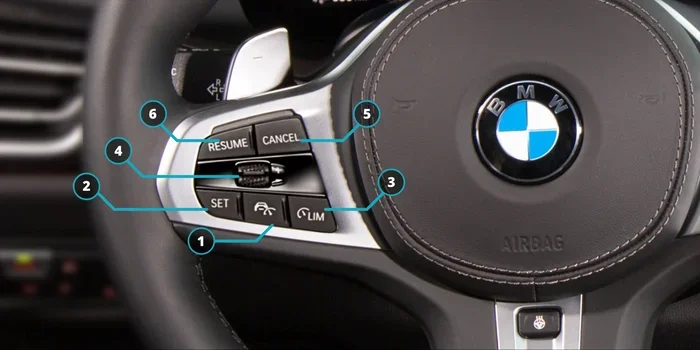
This is the most common spot in modern cars. The buttons sit on the back of the steering wheel or along the spokes. You will typically find a small cluster of buttons that includes set, resume, cancel, and on/off. Some vehicles also have a toggle switch for adjusting your speed up or down in small increments.
To use cruise control from the steering wheel, you simply press the on button to activate the system. Then, accelerate to your desired speed and press the set button. The car will hold that speed automatically. If you need to slow down, tap the resume button or use the toggle switch to adjust. Pressing the cancel button or tapping the brake pedal will turn the system off.
Many drivers love this placement because it keeps their hands close to the controls at all times. You do not have to take your hands off the wheel for long. It is a clean, intuitive design that works well for daily commuting and highway driving alike.
On the Steering Column Stalk
Older vehicles and some current models use a cruise control stalk mounted on the steering column. This is the same area where your turn signal lever lives. The stalk usually has a pull lever or a set of buttons built into its body.
With a stalk-style system, you pull the lever toward you or push it in a specific direction to set the speed. To resume cruise control after braking, you push the lever in the opposite direction. The on/off function is often controlled by a separate switch on the stalk itself or a button nearby on the dashboard.
This layout was very popular in the 1990s and early 2000s. Many truck drivers and fans of classic cars still prefer it because it is easy to reach with your left hand. The downside is that it requires a slightly larger hand movement compared to steering wheel buttons.
On the Center Console or Dashboard
Some vehicles place the cruise control buttons on the center console or the instrument panel near the car console area. This is less common but still worth knowing about. You will usually find a small cluster of buttons or a rotary dial in this spot.
In some luxury or older models, the dashboard controls include a dedicated cruise control panel with multiple switches. You might see buttons for set, accel, decel, resume, and cancel arranged in a row or a circular pattern. This placement works well because it is visible and easy to reach when your hands are resting on the center armrest.
If you have trouble finding your cruise control buttons on the steering wheel or stalk, glance at the center console area. You might be surprised to find them there.
Cruise Control Button Layout by Car Brand
Different car manufacturers place their cruise control button in slightly different spots. Here is a quick comparison of how popular brands handle it.
| Car Brand | Typical Location | Button Style |
|---|---|---|
| Toyota | Steering wheel spokes | Buttons on left and right spokes |
| Honda | Steering wheel left spoke | Compact button cluster |
| Ford | Steering wheel or column stalk | Toggle switches or buttons |
| Chevrolet | Steering wheel spokes | Buttons with cruise icon |
| BMW | Steering wheel spokes | Touch-sensitive controls |
| Older Models (Pre-2000) | Steering column stalk | Pull lever or flip switch |
As you can see, the steering wheel is the dominant location across all brands. If you are driving a newer vehicle, there is a very strong chance your buttons are on the wheel. For older models, check the steering column stalk first.
Toyota and Honda Cruise Controls
Toyota and Honda both favor the steering wheel button layout. In most Toyota models, you will find the cruise control buttons on the left side of the steering wheel. The set, resume, cancel, and on/off buttons are arranged in a row or a small cluster. Honda follows a similar pattern, often placing the controls on the left spoke with a clean, minimal design.
Both brands also offer adaptive cruise control on higher trim levels. This system adds a distance button that lets you set the following gap between your car and the one ahead. The vehicle settings menu on the infotainment screen also lets you customize how aggressively the system adjusts your speed.
Ford and Chevrolet Cruise Controls
Ford uses a mix of steering wheel buttons and column stalk controls depending on the model. Newer Ford vehicles like the F-150 and Mustang feature steering wheel-mounted buttons. Older models and some trucks use a stalk-mounted system. Chevrolet follows the modern trend with steering wheel buttons, though some older models still use the column stalk design.
Both brands have integrated their cruise control systems with their infotainment screens. You can view your set speed, adjust the pedal adjustment sensitivity, and even activate remote cruise control features through the touchscreen in some models.
Types of Cruise Control Systems You Will Find
Not all cruise control systems are the same. Understanding the different types helps you use your cruise control button more effectively and safely.
Traditional Cruise Control
This is the classic system that has been around for decades. You press the on button, accelerate to your desired speed, and press set. The car holds that speed until you tap the brake pedal or press cancel. Traditional cruise control works great on open highways and flat roads. It is simple, reliable, and easy to use.
The key buttons you need to know are the set button (locks in your speed), the resume button (returns to your set speed after canceling), the cancel button (turns off the system), and the on/off button (activates or deactivates the entire system). These four buttons appear in nearly every vehicle with cruise control.
Adaptive Cruise Control
Adaptive cruise control takes the traditional system a step further. It uses radar, cameras, or sensors to detect vehicles ahead and automatically adjusts your speed to maintain a safe following distance. You can usually set both your speed and the gap you want to keep from the car in front of you.
This system is a major part of modern driver assistance technology. It is especially useful in heavy traffic or during long highway driving stretches. When the car ahead slows down, your car slows down too. When the road clears, your car accelerates back to your set speed. It is like having a smart co-pilot.
Remote Cruise Control
Some newer vehicles offer remote cruise control, which lets you control the system from the car console or even through a smartphone app. This is still relatively new technology, but it is becoming more common in luxury and electric vehicles. You can set your cruise control speed before you even start driving, adjust it while parked, or activate it from a distance.
The remote cruise control feature often includes a toggle switch on the center stack or a digital interface on your phone. It is a convenient option for drivers who want maximum control over their vehicle settings without touching the steering wheel.
Quick Tips for Finding and Using Your Cruise Control Button
Here are some practical tips to help you locate and use your cruise control system with confidence:
- Check your owner’s manual first. Every car is different, and the manual will show you the exact button layout for your specific model.
- Look for the cruise icon. Most cruise control buttons have a small speedometer icon with an arrow pointing up. This is a universal symbol you will recognize quickly.
- Start on a familiar road. Practice using cruise control on a quiet highway or open road before trying it in heavy traffic.
- Use the brake pedal to cancel. Tapping the brake pedal instantly turns off cruise control. This is a safety feature you should always rely on.
- Adjust your seat position. Sometimes the buttons are hard to reach if your seat is too far back or too low. Adjust for comfortable access.
- Learn the toggle switch. The up and down toggle switches let you adjust speed in small increments without pressing set again.
- Turn it off in heavy traffic. Cruise control is designed for steady-speed driving. Turn it off when traffic is stop-and-go.
Common Mistakes People Make with Cruise Control
Even experienced drivers make mistakes with their cruise control system. Here are the most common ones to avoid.
Forgetting to cancel before braking. This sounds obvious, but many drivers forget that the brake pedal override is built into the system. When you hit the brakes, cruise control cancels automatically. However, if you forget this, you might be confused when the car does not maintain your set speed.
Using cruise control in bad weather. Rain, ice, and snow make cruise control dangerous. The system does not read road conditions. If you hydroplane or lose traction, the car may continue accelerating instead of slowing down. Always turn off cruise control when the road is wet or icy.
Not adjusting the following distance. If your car has adaptive cruise control, make sure you set an appropriate following distance. A gap that is too short can lead to rear-end collisions. Most systems let you adjust the gap using a dedicated button on the steering wheel or console.
Leaving the system on when not needed. Some drivers forget to turn cruise control off after they exit the highway. This can cause confusion and unexpected acceleration if you accidentally hit the resume button in a busy area. Make it a habit to press cancel or off when you leave the highway.
Ignoring the throttle control limits. Cruise control is not designed for steep hills. On long inclines, the system may struggle to maintain your set speed. On downhills, it might not slow you down enough. Use your judgment and be ready to take manual control when the road gets steep.
Expert Insights on Cruise Control Button Placement
Automotive designers put a lot of thought into where they place the cruise control button. The goal is always the same: make it easy to reach without taking your eyes off the road. Engineers study driver behavior and hand positions to find the perfect spot for these controls.
According to automotive design experts, the steering wheel is the ideal location because it keeps the driver’s hands in a natural position. The throttle control buttons are placed where your thumbs naturally rest. This means you can adjust your speed with a quick tap without looking down or moving your hands significantly.
Experts also emphasize the importance of consistency. While different brands use different layouts, the core buttons (set, resume, cancel, on/off) remain the same across nearly all vehicles. Once you learn the layout in one car, you can transfer that knowledge to almost any other vehicle you drive.
One thing experts strongly recommend is familiarizing yourself with your specific car’s cruise control system before a long trip. Spend a few minutes in a parked car pressing each button and understanding what it does. This simple step can save you from confusion and frustration when you are already on the road.
The evolution of dashboard controls has been remarkable. From the simple stalk-mounted levers of the past to the touch-sensitive controls and digital interfaces of today, the cruise control button has come a long way. Modern systems are more intuitive, more responsive, and safer than ever before.
Conclusion
Knowing where your cruise control button is located is one of the simplest yet most valuable skills you can develop as a driver. Whether your buttons sit on the steering wheel, the steering column stalk, or the center console, understanding how to use them makes every drive more comfortable and efficient. We have covered the most common locations, explored different car brand layouts, and shared practical tips to help you get the most out of your system.
Take a moment to locate your cruise controls the next time you get behind the wheel. Familiarize yourself with the set button, the resume button, and the cancel button. Practice on a quiet road until you feel confident. Once you do, you will wonder how you ever drove without it. Safe travels and enjoy the ride.
Frequently Asked Questions
Where is the cruise control button on a steering wheel?
On most modern cars, the cruise control buttons sit on the back of the steering wheel or along the spokes. Look for a small cluster of buttons that includes set, resume, cancel, and on/off. They usually have a small speedometer icon next to them.
Can I use cruise control in the rain?
No, you should avoid using cruise control on wet roads. The system does not detect slippery conditions, and if you lose traction, it may continue accelerating instead of slowing down. Always turn it off when driving in rain, snow, or ice.
What does the resume button do on cruise control?
The resume button returns your car to the previously set speed after you have canceled cruise control. This is useful when you temporarily slow down for traffic or a curve and then want to return to your original speed.
How do I find cruise control on an older car?
On older vehicles, check the steering column stalk where the turn signal lever is located. Many pre-2000 cars use a pull-lever or flip-switch design for cruise control. If it is not there, look at the center console or dashboard area.
What is the difference between cruise control and adaptive cruise control?
Traditional cruise control holds a fixed speed you set. Adaptive cruise control uses sensors and radar to automatically adjust your speed based on the vehicle ahead of you. It maintains a safe following distance without you needing to adjust manually.
Does pressing the brake pedal turn off cruise control?
Yes, pressing the brake pedal instantly cancels cruise control in virtually all vehicles. This is a built-in safety feature that ensures you can always take manual control when needed, such as when slowing down for traffic or a stop sign.