Why Is My Electric Forklift Not Moving?
Why Is My Electric Forklift Not Moving? This common problem can stem from a dead battery, faulty controller, worn drive motor, or hydraulic issues. Understanding the root cause helps you fix it fast and avoid costly downtime. This guide walks you through every likely reason, practical fix, and prevention tip so operators and technicians can get back to work safely.
There is nothing more frustrating than turning the key, pressing the throttle, and hearing nothing happen. If your electric forklift is not moving, you are not alone. This is one of the most common complaints operators and warehouse managers face every single day.
The good news is that most causes are simple to diagnose and fix. Whether it is a dead forklift battery, a bad contactor, or a worn-out drive motor, the answer is usually closer than you think. In this article, we will walk through every possible reason your lift has stopped rolling and give you clear steps to get it back on the floor.
We will also cover electric forklift troubleshooting tips that save time and money. You do not need to be a master mechanic to understand what is going wrong. Just a little knowledge and the right approach can make all the difference.
Key Takeaways
- Battery problems are the #1 reason an electric forklift will not move — always check charge and connections first.
- A faulty controller or contactor relay can cut power to the drive motor entirely.
- Worn or damaged drive motors and wheels cause movement failure even when power is present.
- Hydraulic system faults can lock the carriage and prevent the forklift from rolling.
- Regular preventive maintenance dramatically reduces the chance of unexpected forklift downtime.
- Safety lockout features like emergency stops and seat switches can mimic movement failure.
- Knowing when to call a professional saves time and prevents dangerous DIY repairs.
📑 Table of Contents
- Understanding How Your Electric Forklift Moves
- Dead or Weak Battery
- Faulty Controller or Contactors
- Drive Motor and Wheel Issues
- Hydraulic System Interference
- Safety Devices and Operator Error
- Preventive Maintenance to Avoid Movement Failures
- When to Call a Professional
- Common Mistakes That Cause Forklift Movement Problems
- Cost of Ignoring Movement Problems
- Final Thoughts
Understanding How Your Electric Forklift Moves
Before we dig into the reasons, it helps to understand the basic system. An electric forklift runs on a simple but reliable setup. A battery powers a controller, which sends energy to a drive motor. The drive motor turns the wheels. When any part of this chain fails, the forklift stops moving.
Think of it like a bicycle. The battery is your legs, the controller is the chain, the drive motor is the wheel, and the wheels are the tires. If one part breaks, the whole system stops. That is exactly how forklift electrical systems work too.
The Core Components
Here are the main parts involved in making your forklift move:
- Battery: Stores and delivers electrical power.
- Controller: Acts as the brain. It regulates power flow.
- Contactor relay: Switches the high-current circuit on and off.
- Drive motor: Converts electrical energy into motion.
- Wheels and axles: Transfer motor power to the ground.
- Throttle pedal: Tells the controller how much power you want.
When your electric forklift will not start or move, one or more of these parts is likely at fault. Now let us look at each one in detail.
Dead or Weak Battery
The most common reason for forklift not moving is a dead battery. It sounds obvious, but you would be surprised how often this is the real problem. Batteries lose charge over time, especially if the forklift sits unused for a while or if charging habits are poor.
Signs of a Dead Battery
- The dashboard lights are dim or do not come on at all.
- You hear a click when you turn the key but nothing else happens.
- The forklift starts but dies within seconds.
- The battery gauge shows zero or very low charge.
How to Check Your Battery
Start with the basics. Use a multimeter to test the voltage. A fully charged 36-volt or 48-volt battery should read close to its rated voltage. If it reads significantly lower, the battery needs charging or replacement.
Also check the battery terminals. Corrosion on the terminals can block current flow. Clean them with a wire brush and a baking soda solution. Make sure the connections are tight. A loose cable can cause the same symptoms as a dead battery.
Quick Tip: Always charge your forklift battery after every shift. Do not let it run all the way down. This extends battery life and prevents unexpected downtime.
Faulty Controller or Contactors
The controller is the brain of your electric forklift. It takes the signal from the throttle pedal and sends the right amount of power to the drive motor. If the controller fails, your forklift will not move at all — no matter how much charge the battery has.
What Causes Controller Failure?
Several things can damage a forklift controller:
- Moisture or water damage: Warehouses can be wet. Water inside the controller causes short circuits.
- Overheating: Continuous heavy use without breaks can burn out internal components.
- Worn wiring: Frayed or damaged wires send wrong signals.
- Power surges: Sudden voltage spikes from the battery can fry the circuit board.
Contactor Relay Problems
The contactor relay is a switch that sends power from the battery to the controller and motor. When the contactor fails, power cannot reach the motor. This is a very common cause of electric forklift not moving issues.
You can test a contactor by listening for a click when you press the throttle. No click means the contactor is not engaging. In many cases, the contactor simply needs cleaning or replacement. It is a relatively inexpensive fix compared to replacing a whole controller.
Drive Motor and Wheel Issues
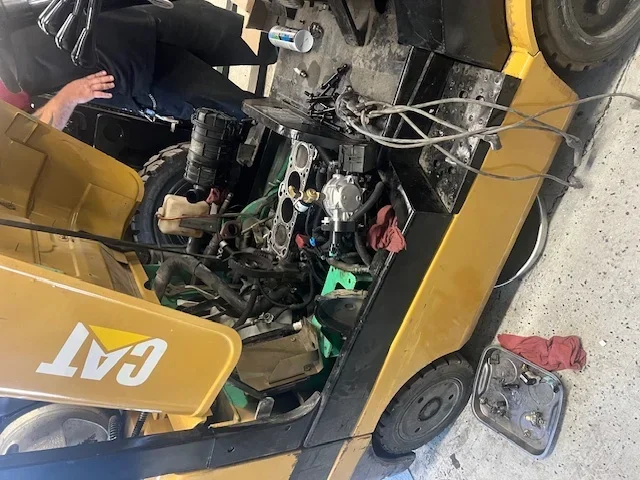
If the battery is good and the controller is working, the next suspect is the drive motor. This is the part that actually turns the wheels. When it fails, you get power but no movement.
Symptoms of a Bad Drive Motor
- The forklift hums or buzzes but does not roll.
- You smell a burning odor when you try to move.
- The forklift moves very slowly even when the throttle is fully pressed.
- One wheel spins while the other does not.
Wheel and Axle Problems
Sometimes the motor is fine but the wheels are the problem. A seized wheel bearing can lock a wheel in place. Debris stuck in the wheel can prevent it from turning. Check all wheels by spinning them by hand. They should rotate freely without grinding or resistance.
Quick Tip: Inspect your forklift wheels at the start of every shift. Worn tires reduce traction and can cause movement problems on smooth floors.
Hydraulic System Interference
Here is something many people do not expect. A hydraulic system problem can make your forklift seem like it will not move. When the hydraulic cylinder is stuck or the carriage is jammed, the forklift may refuse to roll. This happens because the system is in a locked state for safety.
Common Hydraulic Faults
- Low hydraulic fluid: Not enough fluid means the system cannot release properly.
- Faulting hydraulic pump: A broken pump puts the system into a fail-safe mode.
- Stuck lift cylinder: The carriage gets locked in one position.
- Clogged filter: Restricts fluid flow and triggers safety locks.
To check for hydraulic issues, try lifting and lowering the forks manually. If the lever feels stiff or does not move at all, the hydraulic system is likely the culprit. Fixing the hydraulic problem often restores movement immediately.
Safety Devices and Operator Error
Modern electric forklifts have many safety features built in. These features are designed to protect the operator, but they can also cause the forklift to stop moving unexpectedly. Before you panic about a major mechanical failure, check these simple things first.
Emergency Stop Button
This sounds too simple to mention, but you would be shocked how often the emergency stop is the reason the forklift will not move. The E-stop cuts power to the motor completely. Make sure it is fully released by twisting it back out after pressing it.
Seat Switch and Parking Brake
Most forklifts have a seat switch that disables movement when no one is sitting in the seat. If the switch is broken or misaligned, the forklift thinks it is empty and will not move. Similarly, a engaged parking brake can prevent the forklift from rolling forward.
Throttle Pedal Issues
A stuck or unresponsive throttle pedal can also mimic a movement failure. Inspect the pedal for physical damage or obstructions. Sometimes debris gets stuck under the pedal and prevents it from sending a signal to the controller.
Quick Tip: Always do a quick pre-operation check before starting your shift. Press the E-stop, test the seat switch, and try the throttle. This simple habit catches many problems early.
Preventive Maintenance to Avoid Movement Failures
The best way to deal with electric forklift not moving problems is to prevent them from happening in the first place. A solid preventive maintenance schedule keeps your forklift running smoothly and extends its lifespan significantly.
Daily Checks Every Operator Should Do
- Check the battery charge level and top off distilled water if needed.
- Inspect all cables and connections for corrosion or looseness.
- Test the emergency stop, seat switch, and horn.
- Spin each wheel to ensure free rotation.
- Check hydraulic fluid level and look for leaks.
- Listen for unusual sounds when the forklift is in motion.
Weekly and Monthly Maintenance Tasks
Beyond daily checks, schedule deeper inspections on a regular basis:
- Weekly: Clean battery terminals, inspect brake pads, and test the controller response.
- Monthly: Check the drive motor brushes, inspect all wiring harnesses, and verify tire tread depth.
- Quarterly: Have a professional technician perform a full diagnostic check on the electrical system.
Following a consistent forklift maintenance schedule is the single most effective way to avoid unexpected downtime. It costs much less to maintain a forklift than to repair or replace one after a major failure.
When to Call a Professional
Not every problem should be fixed by the operator. Some issues require the skills of a trained technician. Knowing when to call for help saves time, money, and keeps everyone safe.
Call a professional if you notice any of the following:
- The forklift smells like burning plastic or ozone.
- You see sparks coming from the controller or motor area.
- The forklift moves only in one direction but not the other.
- The battery keeps dying even after a full charge.
- Error codes are displayed on the dashboard panel.
Expert Insight: Many modern forklifts have onboard diagnostic systems that display error codes. Write down the code and share it with your technician. This speeds up the repair process significantly.
Trying to fix complex electrical problems without proper training can be dangerous. High-voltage forklift systems can deliver serious shocks. Always prioritize safety over DIY repairs when the issue goes beyond simple checks.
Common Mistakes That Cause Forklift Movement Problems
Even experienced operators can make mistakes that lead to movement failures. Here are the most common ones to watch out for:
1. Ignoring Warning Signs
Many operators notice small issues — a slight delay in response, a faint buzzing sound — and ignore them. These small signs often point to bigger problems developing underneath. Addressing minor issues early prevents major breakdowns later.
2. Skipping Pre-Operation Checks
Rushing into a shift without checking the forklift is a recipe for problems. Pre-operation inspections take only five minutes but can save hours of downtime.
3. Using the Wrong Charger
Not all battery chargers are compatible with every forklift model. Using the wrong charger can undercharge or overcharge the battery, leading to premature failure and movement problems.
4. Overloading the Forklift
Every forklift has a rated capacity. Exceeding that capacity puts extra strain on the motor and electrical system. Over time, this leads to overheating and component failure.
Cost of Ignoring Movement Problems
Ignoring a forklift that will not move is expensive. Downtime in a warehouse costs money every single minute. A forklift sitting idle means orders delayed, productivity lost, and in some cases, safety hazards created.
On average, a major forklift breakdown can cost a business between $500 and $2,000 per day in lost productivity. Add repair costs on top of that, and the numbers add up fast. This is exactly why preventive maintenance and quick troubleshooting are so important.
Estimated Repair Costs by Cause
While costs vary by model and region, here is a general idea of what you might expect:
- Battery replacement: $1,500 to $4,000 depending on voltage and type.
- Controller repair or replacement: $800 to $2,500.
- Drive motor replacement: $600 to $2,000.
- Contactor relay replacement: $150 to $400.
- Hydraulic system repair: $300 to $1,500.
Compare these costs to the price of regular maintenance, which typically runs a few hundred dollars per month. The choice is clear.
Final Thoughts
So, why is my electric forklift not moving? The answer usually comes down to one of a handful of common causes. A weak or dead battery is the number one suspect. After that, controller and contactor issues top the list. Drive motor failure, hydraulic problems, and safety device malfunctions round out the most frequent reasons.
The key is to stay calm and work through the possibilities systematically. Start with the simplest checks — battery, connections, emergency stop — and work your way up to more complex components. Most movement problems are easy to fix once you know where to look.
Remember that regular forklift maintenance is your best defense against unexpected breakdowns. A well-maintained forklift runs better, lasts longer, and keeps your warehouse operations running smoothly. Take care of your equipment, and it will take care of your workflow.
Next time your forklift refuses to move, you will know exactly what to check and what to do. You will save time, save money, and keep your team safe. That is a win for everyone.
Frequently Asked Questions
Why does my electric forklift make a humming sound but not move?
A humming sound usually means the controller is sending power but the drive motor cannot engage. This could be caused by a worn motor brush, a failed contactor, or a seized wheel bearing. Check the wheels first, then inspect the contactor and motor brushes.
How do I know if my forklift battery needs replacement?
If your battery will not hold a charge, shows a low voltage reading even after a full charge, or is more than five years old, it likely needs replacement. You can also check for swelling or leaking, which are clear signs of a failing battery.
Can a low hydraulic fluid level stop my forklift from moving?
Yes, many modern forklifts have safety interlocks that prevent movement if the hydraulic system is not functioning properly. Low fluid, a stuck cylinder, or a faulty pump can all trigger this safety lock.
How often should I perform pre-operation checks on my forklift?
Every single shift. A quick five-minute inspection before starting the forklift can catch most problems early. Check the battery, tires, brakes, hydraulic fluid, and safety devices every time.
Is it safe to repair a forklift controller myself?
Unless you are a trained technician with experience in high-voltage electrical systems, it is best to leave controller repairs to a professional. Forklift controllers handle significant electrical current, and improper handling can cause serious injury or further damage.
What is the average lifespan of an electric forklift battery?
A well-maintained forklift battery typically lasts between four and six years. However, poor charging habits, deep discharging, and lack of maintenance can shorten that lifespan significantly.
=== CONCLUSION ===
Dealing with an electric forklift not moving is stressful, but it does not have to be overwhelming. The most common causes are batteries, controllers, contactors, drive motors, and safety features — all of which are diagnosable and fixable with the right approach. Start with the simple checks, work your way through the system, and do not hesitate to call a professional when needed.
Above all, stick to a regular preventive maintenance schedule. It is the single best investment you can make for your forklift and your operation. A little care today prevents big problems tomorrow. Keep your forklift maintained, your operators trained, and your warehouse running at full speed.