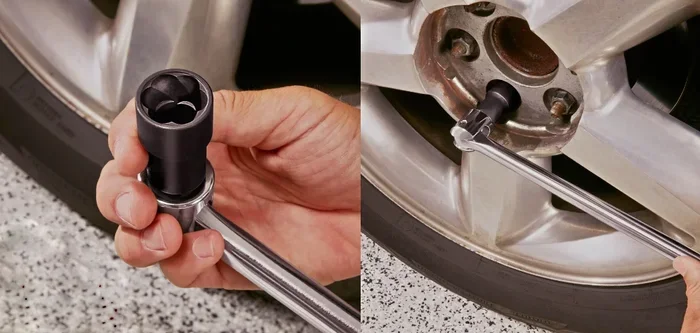
Why Wont My Lug Nuts Come Off And How To Remove Them
Why won’t my lug nuts come off is a question every car owner asks at some point. Rust, over-torquing, and cross-threading are the top reasons your wheel lug nuts seize up and refuse to budge. This guide gives you the right tools, proven step-by-step methods, and practical tips to remove even the most stubborn seized lug nut without damaging your car jack or wheel bearing. You’ll also learn how to prevent the problem from happening again with simple anti-seize compound and proper torque specs.
There is nothing more frustrating than getting your car jack out, cracking a socket wrench on a wheel lug, and realizing the nut is not going anywhere. You push. You pull. You maybe even kick the wrench (don’t tell anyone). And the rusted lug nut just sits there like it welded itself to the stud.
This happens to every car owner at some point. Whether you are dealing with a seized lug nut from years of road grime and moisture or a stripped lug nut left behind by a previous owner who cranked things way too tight, the result is the same: you need those nuts off and you need them off now.
The good news is that why won’t my lug nuts come off is a problem with clear answers and real solutions. This guide covers the exact reasons lug nuts seize up, the best tools for the job, a full step-by-step removal process, and tips to prevent it from happening again. You will walk away knowing exactly what to do the next time a corroded lug nut decides to fight back.
Key Takeaways
- Rust and corrosion are the number one reason lug nuts seize up over time, especially in wet or coastal climates
- Using the right tools like a breaker bar or impact wrench makes removing stuck nuts far easier and safer
- Penetrating oil needs time to work—apply it, wait at least 15 minutes, and reapply if needed
- Never force a stuck nut or you risk stripping the thread, cracking the wheel lug, or damaging the wheel bearing
- Anti-seize compound applied during installation prevents future lug nut problems dramatically
- Know when to call a professional if basic methods fail and you risk causing more damage
- Proper torque specs matter—over-torquing is one of the leading causes of seized lug nuts
📑 Table of Contents
- Why Won’t My Lug Nuts Come Off: The Real Reasons
- Tools You Need to Remove Stuck Lug Nuts
- Step-by-Step Guide to Removing Stuck Lug Nuts
- Quick Tips and Common Mistakes
- Lug Nut Removal Tools Comparison
- When to Call a Professional
- How to Prevent Lug Nuts From Seizing in the Future
- Key Takeaways
- Conclusion
Why Won’t My Lug Nuts Come Off: The Real Reasons
Understanding why won’t my lug nuts come off starts with knowing what causes them to seize in the first place. Most of the time, it is not one single thing. It is a combination of factors that build up over months or years of driving.
Here are the three most common culprits behind stuck and seized lug nuts:
Rust and Corrosion Build-Up
Rust is the silent killer of wheel lug nuts. When moisture sits on metal surfaces for long periods, it creates iron oxide, which is basically a rust bond between the nut and the stud. This is especially common in coastal areas where salt air accelerates rust removal challenges, or in cars that sit unused for weeks at a time.
A corroded lug nut can look perfectly fine on the outside but be completely fused to the stud underneath. The rust creates a microscopic bond that regular hand torque simply cannot break. This is also why you might notice one rusted lug nut on a single wheel while the others turn freely.
Over-Torquing During Installation
Over-torquing is one of the leading causes of a seized lug nut. When a torque wrench is not used during installation, many people simply tighten until they feel resistance and then keep going. This compresses the metal threads and creates excessive friction between the nut and the stud.
Over time, this friction leads to galling, which is when the metal surfaces actually weld together at a microscopic level. The lug nut torque specifications for your vehicle exist for a reason, and ignoring them can create a real problem when you need to remove the nut later. Always follow your vehicle’s torque specs to avoid this issue.
Cross-Threading and Damaged Threads
Cross-threaded lug nuts happen when the nut is not aligned properly before tightening. Instead of threading smoothly onto the stud, the nut catches at an angle and damages the threads on both the nut and the stud. Once threads are damaged, the nut binds up and becomes extremely difficult to remove.
A cross-threaded lug nut can also cause the wheel lug stud to weaken over time. In worst-case scenarios, a damaged stud can snap off entirely, leaving you with a much bigger problem than a stuck nut. This is why proper alignment before tightening is so important.
Tools You Need to Remove Stuck Lug Nuts
Having the right tools makes all the difference when dealing with a seized lug nut. Using the wrong tool can strip the nut, damage the wheel, or even injure you. Here is what you need in your toolkit.
Essential Tools for the Job
- Lug nut wrench — The basic tool that comes with most vehicles. It works for lightly seized nuts but may not be enough for really stuck ones.
- Socket wrench — A longer handle gives you more leverage than a standard lug wrench. This is often enough for moderately stuck nuts.
- Breaker bar — A breaker bar is a long, non-ratcheting handle that gives you serious leverage. This is often the tool that finally breaks a seized lug nut free.
- Penetrating oil — Products like WD-40 or PB Blaster work by seeping into the threads and breaking down rust and corrosion. This is essential for rust removal on stuck nuts.
- Car jack and jack stands — Always lift the vehicle safely. Never rely on a car jack alone when working under the vehicle.
- Anti-seize compound — Not a removal tool, but critical for preventing future problems after you get the nut off.
Specialty Tools for Severely Seized Nuts
When basic tools fail, you may need specialty equipment to deal with a truly stubborn seized lug nut:
- Impact wrench — An electric or pneumatic impact wrench delivers sudden rotational force that can break loose even the most rusted lug nut. This is the go-to tool for professional mechanics.
- Lug nut remover kit — These kits contain left-handed drill bits and extraction tools designed specifically for removing stripped or damaged lug nuts.
- Impact driver — A manual impact driver lets you hit the nut with sharp blows while turning, which breaks the rust bond without damaging the threads.
- Heat gun — Applying heat to a corroded lug nut expands the metal and can break the rust bond. Use with caution near tires and brake components.
Step-by-Step Guide to Removing Stuck Lug Nuts
Follow these steps carefully to remove a seized lug nut without damaging your wheel lug or wheel bearing. Patience is the most important tool here.
- Secure the vehicle — Park on a flat surface, engage the parking brake, and place wheel chocks behind the tires. Lift the vehicle with a car jack and support it with jack stands. Never work under a vehicle supported only by a jack.
- Apply penetrating oil — Spray penetrating oil directly onto the stuck wheel lug nut. Make sure the oil gets into the thread where the nut meets the stud. Let it sit for at least 15 minutes. For severely rusted lug nuts, apply a second coat and wait another 15 minutes.
- Try the lug nut wrench — Put the wrench on the nut and try to turn it counterclockwise. Do not force it. If it does not move, move to the next step.
- Use a breaker bar — Attach a breaker bar to the socket and apply steady, firm pressure. The extra leverage often breaks the rust bond. Rock the bar gently back and forth rather than pulling in one direction.
- Try an impact wrench or impact driver — If the breaker bar is not enough, switch to an impact wrench or manual impact driver. The percussive force breaks up rust and corrosion quickly.
- Apply heat if needed — For extremely stuck nuts, use a heat gun on the nut for 30 to 60 seconds. The metal expansion can break the rust bond. Let it cool slightly before trying again.
- Use a lug nut remover kit — If the nut is stripped or damaged, a lug nut remover kit with left-handed drill bits can extract it. Drill slowly and carefully into the center of the nut.
- Clean and protect — Once the nut is off, clean the stud and wheel lug threads with a wire brush. Apply anti-seize compound to the threads before installing the new or cleaned nut. Tighten to your vehicle’s torque specs.
Quick Tips and Common Mistakes
Quick Tips for Success
- Always use penetrating oil and give it time to work. Rushing this step is the most common mistake people make.
- Use a breaker bar before an impact tool. The breaker bar gives you control and often breaks the bond without extreme force.
- Rock the nut gently rather than pulling hard in one direction. This helps break the rust bond gradually.
- Keep your tools clean — a dirty socket wrench or lug nut wrench can slip and damage the nut.
- Work in a well-ventilated area when using penetrating oil or heat tools.
- Replace damaged studs if you notice any bending or stripping. A damaged stud can cause the same problem again on the next tire change.
Common Mistakes to Avoid
- Forcing the nut with excessive force — This can strip the threads, crack the wheel lug, or damage the wheel bearing. Patience saves money.
- Skipping penetrating oil — Many people jump straight to heavy tools without giving the oil time to work. This often makes the problem worse.
- Using the wrong size socket — A mismatched socket rounds off the nut edges and makes removal much harder.
- Ignoring cross-threading — If a nut goes on crooked, do not force it. Remove it, realign, and start over.
- Over-torquing the new nut — Once the stuck nut is off, do not over-tighten the replacement. Follow the torque specs for your vehicle.
- Working on an unsafe surface — Never change a lug nut on a slope, soft ground, or without jack stands. Safety always comes first.
Lug Nut Removal Tools Comparison
Choosing the right tool depends on how badly the wheel lug nut is stuck. Here is a comparison of the most common removal options:
| Tool | Best For | Difficulty Level | Cost Range |
|---|---|---|---|
| Lug Nut Wrench | Lightly seized or routine removal | Easy | Low (usually included with vehicle) |
| Socket Wrench | Moderately stuck nuts | Easy to Medium | Low to Medium |
| Breaker Bar | Moderately seized lug nuts | Medium | Medium |
| Penetrating Oil | Rusted or corroded lug nuts | Easy | Low |
| Impact Wrench | Heavily rusted or seized nuts | Easy (with tool) | Medium to High |
| Lug Nut Remover Kit | Stripped or damaged nuts | Medium to Hard | Medium |
| Impact Driver | Moderately stuck nuts with rust | Easy | Low to Medium |
| Heat Gun | Extremely rusted or galling nuts | Medium | Medium |
The best approach is usually a combination. Start with penetrating oil and a breaker bar. If that does not work, move up to an impact wrench or impact driver. For stripped lug nuts or damaged threads, a lug nut remover kit is your best bet.
When to Call a Professional
There are times when why won’t my lug nuts come off signals a deeper problem that needs professional attention. If you have tried all the methods above and the nut still will not budge, it is time to call a mechanic. Continuing to force the issue can damage the wheel lug, the wheel bearing, or even the brake rotor.
Also call a professional if:
- The wheel lug stud is stripped or broken and you cannot get a grip on the nut.
- You notice the wheel bearing making unusual noises, which could indicate internal damage from a seized nut.
- The nut is stripped and a lug nut remover kit has failed to extract it.
- You are not comfortable working under the vehicle or do not have the right tools.
- The vehicle is on a newer model with torque-to-yield lug nuts that require special handling.
A professional mechanic has access to hydraulic impact wrenches, specialized extraction tools, and the experience to handle difficult seized lug nut situations safely. It is always better to pay for a service call than to risk damaging expensive components like the wheel bearing or brake assembly.
How to Prevent Lug Nuts From Seizing in the Future
The best way to deal with stuck lug nuts is to prevent them from happening in the first place. Here are simple steps that make a huge difference:
- Apply anti-seize compound to the threads every time you install a wheel lug nut. This creates a barrier against moisture and corrosion.
- Follow torque specs — Use a torque wrench and tighten to your vehicle manufacturer’s specifications. Over-torquing is just as bad as under-torquing.
- Re-torque after 50 to 100 miles — This is a standard practice after any tire change and ensures the nuts are seated properly.
- Keep your vehicle dry — Park in a garage when possible. If you live near the coast, rinse your wheels regularly to reduce salt exposure.
- Inspect lug nuts regularly — Look for signs of rust, corrosion, or damage during routine tire checks. Early detection prevents a corroded lug nut from becoming a seized one.
Key Takeaways
- Rust and corrosion are the number one reason lug nuts seize up over time, especially in wet or coastal climates
- Over-torquing without a torque wrench causes galling and welding of the nut to the stud
- Cross-threading damages threads and creates binding that makes removal extremely difficult
- Penetrating oil and a breaker bar are the first line of defense against stuck lug nuts
- Impact wrenches and lug nut remover kits handle the most severe cases of seized nuts
- Anti-seize compound applied during installation prevents future problems dramatically
- Proper torque specs and regular inspection keep your wheel lug nuts in good condition for years
Conclusion
Why won’t my lug nuts come off is a problem with clear answers. Rust, over-torquing, and cross-threading are the main culprits behind seized and stuck wheel lug nuts. The good news is that with the right tools and a patient approach, you can remove even the most stubborn seized lug nut without damaging your vehicle.
Start with penetrating oil and give it time to work. Use a breaker bar for leverage, and escalate to an impact wrench or lug nut remover if needed. Always follow proper torque specs and apply anti-seize compound during reinstallation to prevent the problem from coming back.
Remember that safety comes first. If a corroded lug nut will not budge after your best efforts, do not hesitate to call a professional. A qualified mechanic has the tools and expertise to handle even the toughest stripped lug nut situations safely. The next time you face a stubborn rusted lug nut, you will know exactly what to do.
Frequently Asked Questions
Can I use a regular wrench instead of a breaker bar for stuck lug nuts?
A regular wrench works for lightly seized nuts, but a breaker bar provides much more leverage for stubborn seized lug nuts. The extra length lets you apply more force without straining your wrist or risking tool damage.
How long should I let penetrating oil sit on a stuck lug nut?
Let penetrating oil sit for at least 15 minutes before trying to remove the nut. For heavily rusted lug nuts, apply a second coat and wait another 15 minutes. The longer the oil has to work, the easier the removal becomes.
What causes a lug nut to become cross-threaded?
A cross-threaded lug nut happens when the nut is not aligned properly with the stud before tightening. This damages the threads on both the nut and the stud, creating binding that makes future removal very difficult. Always start the nut by hand and ensure it threads smoothly before using tools.
Is it safe to use heat on a stuck lug nut?
Yes, using a heat gun is generally safe as long as you keep the heat away from tires, brake lines, and other flammable components. Heat expands the metal and breaks the rust bond, making it easier to remove a corroded lug nut. Let the area cool slightly before attempting removal.
How do I know if my lug nut stud is damaged?
Signs of a damaged wheel lug stud include visible bending, stripped threads, or a nut that spins freely without tightening. If you notice any of these issues, do not force the nut on. Replace the damaged stud to avoid a seized lug nut problem in the future.
What is the best anti-seize compound for lug nuts?
Look for a high-quality anti-seize compound that is rated for high temperatures and metal-to-metal contact. Copper-based and nickel-based compounds work well for wheel lug applications. Apply a thin layer to the stud threads before installing the nut to prevent future corrosion and seizing.