Car Alignment and Balancing Everything You Should Know
Car alignment and balancing are two essential maintenance tasks that keep your vehicle driving straight, smooth, and safe. When your wheels are properly aligned and balanced, you get better fuel economy, longer tire life, and a more comfortable ride. This guide covers everything from warning signs and costs to expert tips you can use right away.
Every driver wants a smooth, safe ride. But many people overlook two services that make a huge difference: car alignment and balancing. These maintenance tasks keep your tires wearing evenly, your steering steady, and your fuel economy in check. Without them, your car can pull to one side, vibrate at high speeds, or wear out tires way too fast.
In this guide, we will walk you through everything you need to know about car alignment and balancing. You will learn what each service does, how to spot warning signs, what to expect at the shop, and how to save money in the long run. Whether you are a new car owner or a seasoned driver, this guide has something useful for you.
Key Takeaways
- Alignment vs. Balancing: They are not the same service. Alignment fixes wheel angles, while balancing fixes weight distribution.
- Early Detection Matters: Catching signs of misalignment or imbalance early saves you from costly tire replacements.
- Cost Range: A full alignment and balancing service typically costs between $100 and $250 at most shops.
- Driving Habits Count: Potholes, curbs, and rough roads can knock your alignment out of spec faster than you think.
- Check Every 6 Months: Regular alignment and balancing checks keep your vehicle performing at its best.
- DIY Is Limited: Some checks you can do at home, but proper alignment requires professional equipment.
- Tire Longevity: Proper alignment and balancing can extend tire life by thousands of miles.
📑 Table of Contents
- What Is Car Alignment and Balancing?
- Signs Your Car Needs Alignment and Balancing
- The Difference Between Alignment and Balancing
- How Alignment and Balancing Work
- How Much Does Alignment and Balancing Cost?
- Tips to Keep Your Alignment and Balancing in Check
- Common Mistakes to Avoid
- Expert Insights on Alignment and Balancing
- Key Takeaways
- Conclusion
What Is Car Alignment and Balancing?
Let us start with the basics. Many people use the terms alignment and balancing interchangeably. But they are two different services. Each one addresses a specific problem with your wheels and tires.
Understanding Wheel Alignment
Car alignment refers to adjusting the angles of your wheels. These angles determine how your tires contact the road. There are three main alignment angles: toe, camber, and caster.
- Toe alignment: This measures whether your tires point inward or outward when viewed from above.
- Camber angle: This measures the tilt of the tire when viewed from the front of the car.
- Caster angle: This measures the steering axis tilt when viewed from the side.
When these angles are off, your car may pull to one side. Your steering wheel might sit crooked even when you are driving straight. Over time, poor alignment causes uneven tire wear and reduces your vehicle’s handling.
Understanding Tire Balancing
Tire balancing is all about weight distribution. Even a small weight difference around your wheel can cause vibrations. During a balancing service, a technician mounts each wheel on a balancing machine. The machine spins the wheel and identifies where weight needs to be added.
Small metal clips called balancing weights are attached to the rim. These weights offset any heavy or light spots. The result is a perfectly smooth rotation at any speed.
Why Both Services Matter
Alignment and balancing work together to keep your ride comfortable and your tires lasting longer. If you only do one and skip the other, you will still have problems. Think of it this way: alignment is about direction, and balancing is about smoothness. Your car needs both.
Signs Your Car Needs Alignment and Balancing
You do not need to be a mechanic to notice when something is wrong. Your car gives you clear signals. Learning to recognize these alignment symptoms early can save you a lot of money and trouble.
Warning Signs of Misalignment
Here are the most common signs that your front-end alignment or rear-wheel alignment is off:
- Vehicle pulling to one side: If your car drifts left or right on a straight road, your alignment is likely off.
- Crooked steering wheel: When driving straight, your steering wheel should sit centered. If it is tilted, that is a red flag.
- Uneven tire wear: Check your tires. If one edge wears faster than the other, alignment is probably the cause.
- Squealing tires: Tires that squeal on flat roads may not be sitting at the correct angle.
- Loose or vague steering: If your steering feels sluggish or wanders, your suspension system may need attention.
Warning Signs of Imbalance
Unbalanced wheels show up in a different way. Watch for these signs:
- Steering wheel vibration: A shaking or vibrating steering wheel, especially at highway speeds, often means your tires are out of balance.
- Seat or floor vibration: You might feel the vibration through the seat or the floorboard instead of the steering wheel.
- Wobbling at high speeds: If your car feels unstable above 50 or 60 mph, imbalance could be the issue.
- Premature tire wear: Imbalanced wheels cause certain spots on the tire to wear down faster.
When to Get a Checkup
Do not wait for these signs to become severe. Most experts recommend getting a wheel alignment check every 6,000 miles or twice a year. If you hit a pothole, curb, or speed bump too hard, get your alignment service done sooner. A quick alignment check takes only about 30 minutes and can prevent bigger problems down the road.
The Difference Between Alignment and Balancing
It is easy to confuse these two services. But understanding the difference helps you make smarter decisions at the auto shop.
What Alignment Fixes
Car alignment adjusts the geometry of your suspension. It changes the angles at which your tires meet the road. This service does not involve your tires directly. Instead, it works on the suspension components like control arms, tie rods, and struts.
Alignment corrects issues like:
- Vehicle pulling to one side
- Off-center steering wheel
- Uneven tire wear patterns
- Poor handling or stability
What Balancing Fixes
Tire balancing addresses weight distribution around the wheel and tire assembly. It does not change any angles. Instead, it adds small weights to the rim to ensure the tire spins smoothly.
Balancing corrects issues like:
- Vibrations in the steering wheel
- Shaking in the seat or floor
- Wobbling at highway speeds
- Cupping or scalloped tire wear
Can You Have One Without the Other?
Technically, yes. But most shops recommend doing both at the same time. When you get new tires installed, balancing is essential. When your car has been through a rough road or a minor accident, alignment is the priority. Many alignment and balancing packages include both services for a bundled price.
How Alignment and Balancing Work
Wondering what actually happens when you take your car in for these services? Let us walk through each process step by step.
The Alignment Process
Here is what a typical alignment service looks like:
- Vehicle inspection: The technician checks your tires, suspension, and steering components for wear and damage.
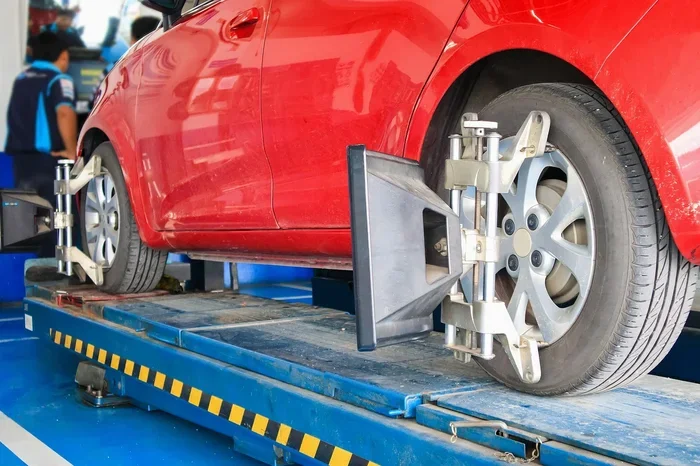
- Mounting sensors: Small clamps with sensors are attached to each wheel. These connect to a computer.
- Driving on the lift: The car is placed on an alignment rack. The computer reads the current angles of each wheel.
- Adjusting angles: The technician adjusts the toe, camber, and caster to match the manufacturer’s specifications.
- Test drive: A short test drive confirms the alignment feels right.
Modern shops use advanced 3D alignment machines that provide precise readings in minutes. This technology makes the process faster and more accurate than older methods.
The Balancing Process
Here is what happens during a tire balancing service:
- Removing the wheel: Each wheel is taken off the car.
- Mounting on the machine: The wheel and tire are mounted on a balancing machine.
- Spinning the wheel: The machine spins the wheel at high speed and measures weight distribution.
- Adding weights: The machine tells the technician where to place balancing weights on the rim.
- Reinstalling the wheel: The balanced wheel is put back on the car.
The entire process takes about 15 to 20 minutes per wheel. It is quick, precise, and makes a noticeable difference in how your car drives.
Do You Need Both at the Same Time?
Not always, but it is a good idea. If your tires are new, balancing is a must. If your car has been through a rough winter or a fender bender, alignment should be your first priority. Many drivers choose to do both during a single visit to save time and money.
How Much Does Alignment and Balancing Cost?
Cost is always a factor when it comes to car maintenance. The good news is that both services are relatively affordable. Let us break down what you can expect.
Typical Alignment Costs
The average wheel alignment cost ranges from $75 to $200. Here is a quick breakdown:
- Front-end alignment: $50 to $100. This adjusts only the front two wheels.
- Four-wheel alignment: $100 to $200. This adjusts all four wheels and is recommended for most vehicles.
- Extended or complex alignments: $150 to $300. This applies to vehicles with special suspension setups or after accident repairs.
Typical Balancing Costs
Tire balancing usually costs between $15 and $75 per tire. For a full set of four wheels, expect to pay between $60 and $200. Many shops offer free balancing if you purchased your tires from them.
Combined Cost
When you combine both services, the total typically falls between $100 and $250. Some shops offer package deals that bring the cost down. It is always worth asking about bundled pricing before you book.
Factors That Affect the Price
Several things can influence how much you pay:
- Type of vehicle: Luxury and performance cars may cost more due to complex suspension systems.
- Location: Prices vary by region and shop.
- Condition of suspension: Worn parts may need replacement before alignment can be done.
- Shop reputation: Dealerships often charge more than independent shops.
Is It Worth the Investment?
Absolutely. Skipping alignment and balancing leads to premature tire wear, poor fuel economy, and unsafe driving conditions. A simple service that costs $150 can save you hundreds of dollars in tire replacements over time. Think of it as an investment in your vehicle’s health.
Tips to Keep Your Alignment and Balancing in Check
Prevention is always better than cure. Here are some practical tips to help you maintain proper car alignment and balancing and avoid costly repairs.
Check Your Tire Pressure Regularly
Underinflated or overinflated tires can affect your alignment and cause uneven wear. Make it a habit to check your tire pressure at least once a month. Keep your tires at the pressure recommended by your vehicle manufacturer. You can find this information on the driver’s side door jamb or in your owner’s manual.
Avoid Potholes and Curbs
We know this is easier said than done, especially during winter. But hitting potholes and curbs is one of the fastest ways to knock your alignment out of spec. When you see a pothole ahead, slow down and steer around it if it is safe to do so.
Rotate Your Tires on Schedule
Tire rotation helps distribute wear evenly across all four tires. Most manufacturers recommend rotating tires every 5,000 to 8,000 miles. During rotation, your mechanic can also spot early signs of alignment or balancing issues.
Watch for Early Warning Signs
Do not ignore the small things. If your steering wheel feels slightly off or your car drifts a little to one side, get it checked. Catching a minor alignment issue early is much cheaper than fixing a major one later.
Get Professional Service
While you can check tire pressure and visual wear at home, proper alignment and balancing require professional equipment. A certified technician with the right tools can spot issues you would never notice on your own. Look for shops with certified technicians and modern alignment machines.
Keep Records
Maintain a log of your alignment and balancing services. Note the date, mileage, and shop name. This helps you track when services are due and gives you proof of maintenance if you ever sell your vehicle.
Drive Smoothly
Aggressive driving, sudden braking, and hard cornering all put extra stress on your suspension and tires. Smooth driving habits not only improve safety but also help your alignment and balancing last longer.
Common Mistakes to Avoid
Even the best car owners make mistakes when it comes to alignment and balancing. Here are a few to watch out for.
Ignoring the Signs
Many drivers wait until the problem becomes severe before getting help. By that point, the tires may already be damaged beyond repair. If you notice any alignment symptoms, take your car in right away.
Skipping Balancing After New Tires
Some people get new tires and skip the balancing step. This is a mistake. New tires almost always need balancing to ensure smooth rotation. Without it, you may experience vibrations and premature wear.
Choosing the Cheapest Option
While saving money is smart, the cheapest shop may not use quality equipment or trained technicians. Always check reviews and ask about the equipment they use. A reputable alignment shop will be transparent about their process.
Not Checking All Four Wheels
A front-end-only alignment is not always enough. Many modern vehicles benefit from a four-wheel alignment. Ask your technician which type your car needs based on its make and model.
Forgetting About Suspension Components
Alignment and balancing assume your suspension is in good shape. If parts like shocks, struts, or tie rods are worn, they need to be replaced first. Otherwise, the alignment will not hold.
Expert Insights on Alignment and Balancing
We spoke with certified auto technicians to get their top recommendations for maintaining car alignment and balancing. Here is what the experts had to say.
Regular checks save money. Most technicians agree that a simple alignment check every 6,000 miles can prevent expensive repairs. It is a small investment that pays off big.
Do not ignore vibrations. Many drivers dismiss steering wheel vibrations as normal. In reality, vibrations are almost always a sign of imbalance or alignment issues that need immediate attention.
Alignment after accidents is a must. Even a minor fender bender can knock your wheels out of alignment. Always get a checkup after any collision, no matter how small.
Quality tires need quality maintenance. Premium tires are an investment. Proper alignment and balancing help you get the most mileage out of them.
Key Takeaways
- Alignment fixes angles, balancing fixes weight: These are two distinct services that work together for a smooth ride.
- Watch for pulling, vibration, and uneven wear: These are the most common signs your car needs service.
- Cost is reasonable: Expect to pay $100 to $250 for combined alignment and balancing.
- Prevention beats repair: Regular checks and good driving habits extend the life of your tires and suspension.
- Professional equipment matters: DIY checks can help, but proper alignment and balancing require specialized tools.
- Do both after new tires: New tires should always be balanced, and alignment should be verified.
- Stay on a schedule: Check your alignment every 6,000 miles or twice a year.
Conclusion
Car alignment and balancing are not glamorous topics, but they are essential for every driver. These two services keep your vehicle driving straight, your tires wearing evenly, and your ride smooth and safe. Ignoring them leads to costly repairs, poor fuel economy, and an uncomfortable driving experience.
The good news is that both services are affordable and quick. A wheel alignment check and tire balancing take less than a couple of hours at most shops. And the peace of mind you get from knowing your car is running right is well worth it.
Make it a habit to watch for warning signs. Check your tire pressure regularly. Avoid potholes when you can. And most importantly, do not skip your scheduled maintenance. Your car will thank you with better performance, safer handling, and tires that last thousands of miles longer.
Take charge of your vehicle’s health today. Book an alignment service and balancing check at your trusted local shop. Your wallet, your tires, and your passengers will all benefit from the ride.
Frequently Asked Questions
How often should I get my car alignment and balancing checked?
Most experts recommend getting your alignment checked every 6,000 miles or twice a year. Balancing is typically done when you install new tires or notice vibrations. If you frequently drive on rough roads, you may need both services more often.
Can I drive with bad alignment and unbalanced tires?
You can drive short distances, but it is not safe or advisable. Misaligned wheels reduce your vehicle’s handling and braking performance. Unbalanced tires cause vibrations that can be distracting and dangerous at higher speeds. Get your car serviced as soon as possible.
Does car alignment and balancing affect fuel economy?
Yes, it does. When your wheels are properly aligned and balanced, your tires roll more efficiently. This reduces rolling resistance and helps your engine use less fuel. Over time, the savings can add up to noticeable improvements at the pump.
How long does an alignment and balancing service take?
A combined alignment and balancing service typically takes between one and two hours. A front-end alignment alone may take 30 to 45 minutes. Balancing all four wheels usually takes about an hour. The exact time depends on your vehicle and the shop’s workload.
What causes misalignment and imbalance?
Common causes include hitting potholes, curbs, speed bumps too hard, minor accidents, and normal wear and tear on suspension components. Over time, rubber bushings and other parts wear down, which allows your wheels to shift out of proper position.
Is alignment and balancing covered under warranty?
It depends on your vehicle’s warranty and maintenance plan. Many newer cars include alignment checks as part of scheduled maintenance. Tire warranties often cover balancing when you purchase new tires. Always check with your dealership or tire shop for specific coverage details.