Car Depreciation Rate As Per Companies Act Explained
The car depreciation rate as per Companies Act follows specific rules laid out in Schedule II of the Companies Act, 2013. These guidelines dictate how businesses calculate and report the reduction in value of their motor vehicles over time. Understanding these rates helps companies maintain accurate books, comply with legal requirements, and make smarter financial decisions about their vehicle assets.
If you own a car for your business, you have probably heard about depreciation. But what exactly does that mean? And how does the car depreciation rate as per companies act actually work? These are questions every business owner and accountant should have clear answers for.
The Companies Act, 2013 lays down specific rules for how companies must handle depreciation on their assets. Cars, vans, and other motor vehicles fall under these rules. Whether you run a small business or manage a fleet of vehicles, understanding these guidelines is essential. It affects your financial statements, your tax filings, and your overall business strategy.
In this article, we will break down everything you need to know. We will cover the rates, the methods, the useful life of vehicles, and common mistakes to avoid. By the end, you will have a clear picture of how to handle car depreciation correctly.
Key Takeaways
- Schedule II of the Companies Act, 2013 sets the standard depreciation rates for cars and other motor vehicles used in business.
- The Written Down Value (WDV) method is the prescribed approach for calculating car depreciation under the Act.
- Cars typically depreciate at 15% per year under the WDV method as per the Companies Act guidelines.
- Useful life of motor vehicles is defined in the Act, influencing how long depreciation applies to a given asset.
- Accurate depreciation reporting ensures compliance, avoids penalties, and reflects true financial health.
- Block of Assets concept groups similar assets together for simplified depreciation calculation.
- Consulting a chartered accountant is always recommended for complex asset depreciation scenarios.
📑 Table of Contents
- What Is Depreciation and Why Does It Matter?
- Depreciation Rates for Cars Under Schedule II
- Useful Life of Motor Vehicles Under the Act
- How to Calculate Car Depreciation Step by Step
- Block of Assets and Asset Classification
- Common Mistakes to Avoid
- Expert Tips for Managing Car Depreciation
- Car Depreciation and Its Impact on Financial Statements
- How Depreciation Differs for Tax Purposes
- Conclusion
What Is Depreciation and Why Does It Matter?
Understanding the Basics of Depreciation
Depreciation is the gradual reduction in the value of an asset over time. When you buy a car for your business, it does not stay brand new forever. It loses value every year due to wear and tear, age, and usage. This loss in value needs to be recorded in your financial books.
The car depreciation rate as per companies act gives you a standard way to calculate this loss. Without a fixed method, every company might calculate things differently. That would make comparing financial statements nearly impossible. The Act solves this problem by setting clear, uniform rules.
Depreciation is not just a technical accounting term. It has real-world implications. It affects how much profit your business reports. It influences your tax obligations. And it helps you understand when it makes sense to replace an old vehicle with a new one.
Why Depreciation Matters for Business Vehicles
Cars are not cheap. A business vehicle can cost anywhere from a few lakhs to several crores. When you spread the cost of that vehicle over its useful life through depreciation, you get a more accurate picture of your expenses each year.
Here is why this matters:
- Accurate profit reporting – Depreciation ensures your profit figures reflect the true cost of doing business.
- Tax compliance – The right depreciation calculations help you claim the correct deductions.
- Asset valuation – Your balance sheet shows the current book value of your vehicles.
- Decision making – Knowing how much a vehicle has depreciated helps you decide when to sell or replace it.
The car depreciation rate as per companies act provides a framework for all of this. It removes guesswork and brings consistency across the board.
Depreciation Rates for Cars Under Schedule II
The Role of Schedule II in the Companies Act
Schedule II of the Companies Act, 2013 is where you will find the official depreciation rates. This schedule lists different categories of assets and the rates at which they should depreciate. Motor vehicles, including cars, have their own specific rate defined here.
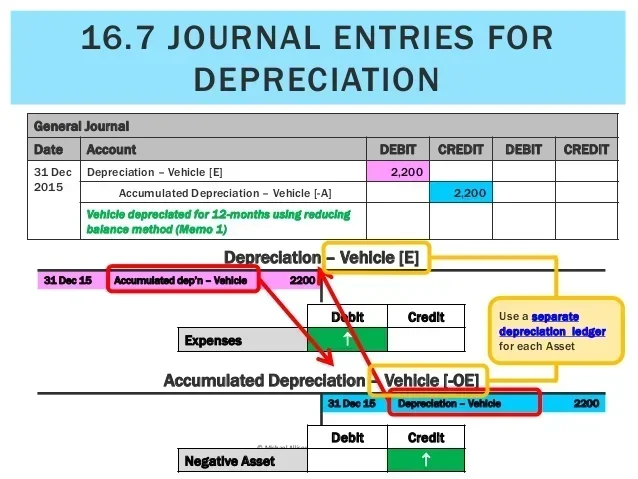
The Act uses the Written Down Value (WDV) method for calculating depreciation. This is different from the straight-line method. With the WDV method, you apply the depreciation rate to the reducing balance of the asset each year. This means the amount of depreciation decreases over time, even though the rate stays the same.
For cars and other motor vehicles, the prescribed depreciation rate as per companies act is 15% per annum on the written down value. Let us look at what this means in practice.
Rate Breakdown for Motor Vehicles
Under Schedule II, motor vehicles used for business purposes are classified under a specific block of assets. The depreciation rate for this block is 15%. Here is how it works:
- Year 1: You buy a car for Rs. 10,00,000. Depreciation is 15% of Rs. 10,00,000 = Rs. 1,50,000. The written down value becomes Rs. 8,50,000.
- Year 2: Depreciation is 15% of Rs. 8,50,000 = Rs. 1,27,500. The written down value becomes Rs. 7,22,500.
- Year 3: Depreciation is 15% of Rs. 7,22,500 = Rs. 1,08,375. The written down value becomes Rs. 6,14,125.
As you can see, the actual depreciation amount goes down each year. This is the nature of the WDV method. The car depreciation rate as per companies act stays at 15%, but the base value keeps reducing.
Special Cases and Additional Rates
In some cases, additional depreciation may apply. For instance, if a company purchases a new car in the financial year, a proportional depreciation for the remaining months is calculated. The Act provides rules for partial-year depreciation as well.
Also, if a vehicle is used partly for business and partly for personal purposes, the depreciation should reflect only the business portion. This requires careful allocation and record keeping.
Useful Life of Motor Vehicles Under the Act
What Is Useful Life?
Useful life is the period over which an asset is expected to be used by the company. After the useful life ends, the asset may still work, but its value on the books becomes negligible. The Companies Act, 2013 defines useful life for different categories of assets.
For motor vehicles, the useful life is generally considered to be around 5 to 10 years, depending on the type of vehicle and its usage. However, the Act focuses more on the depreciation rate than a fixed useful life timeline. The WDV method means the asset value never fully reaches zero.
How Useful Life Affects Depreciation
The useful life of a vehicle influences several decisions for a business:
- Replacement planning – Knowing the useful life helps you plan when to buy a new vehicle.
- Resale value estimation – The book value at the end of useful life gives you an idea of what the vehicle might be worth in the second-hand market.
- Insurance and maintenance – Older vehicles with low book value may need different maintenance strategies.
It is important to note that useful life can vary based on the type of car. A luxury sedan used for executive travel may have a different useful life compared to a delivery van used for daily logistics. However, the car depreciation rate as per companies act remains consistent at 15% for the WDV method.
How to Calculate Car Depreciation Step by Step
The WDV Formula Explained
Calculating car depreciation under the Companies Act is straightforward once you understand the formula. The Written Down Value method uses a simple calculation each year.
The formula is:
Depreciation = Written Down Value at the Beginning of the Year x Depreciation Rate
And then:
New Written Down Value = Previous WDV – Depreciation for the Year
That is it. The rate is 15% for motor vehicles. You apply it to whatever the written down value is at the start of each financial year. This continues until the vehicle is sold, scrapped, or fully depreciated.
A Practical Example
Let us walk through a complete example to make this crystal clear.
Imagine you buy a car for your delivery business on April 1, 2024. The cost of the car is Rs. 12,00,000. Here is how the depreciation would look over five years:
- Year 1 (2024-25): WDV = Rs. 12,00,000. Depreciation = 15% = Rs. 1,80,000. New WDV = Rs. 10,20,000.
- Year 2 (2025-26): WDV = Rs. 10,20,000. Depreciation = 15% = Rs. 1,53,000. New WDV = Rs. 8,67,000.
- Year 3 (2026-27): WDV = Rs. 8,67,000. Depreciation = 15% = Rs. 1,30,050. New WDV = Rs. 7,36,950.
- Year 4 (2027-28): WDV = Rs. 7,36,950. Depreciation = 15% = Rs. 1,10,543. New WDV = Rs. 6,26,407.
- Year 5 (2028-29): WDV = Rs. 6,26,407. Depreciation = 15% = Rs. 93,961. New WDV = Rs. 5,32,446.
After five years, the book value of the car is still over Rs. 5 lakhs. This shows how the WDV method preserves some value on the books even as the vehicle ages. The car depreciation rate as per companies act ensures a steady, predictable reduction in value.
Partial Year Depreciation
If you buy a car mid-year, you need to calculate depreciation for only the remaining months. For example, if you purchase a vehicle in September, you would calculate depreciation for four months (September to March). Simply multiply the annual depreciation by 4/12.
This is a common scenario that many businesses overlook. Getting it wrong can lead to inaccurate financial statements. Always calculate partial-year depreciation carefully.
Block of Assets and Asset Classification
What Is a Block of Assets?
The Companies Act groups similar assets into blocks for depreciation purposes. A block of assets is a collection of assets that share the same depreciation rate and are used for similar business purposes. Motor vehicles form one such block.
This approach simplifies accounting. Instead of tracking depreciation for each individual car separately, you can manage an entire block together. The written down value of the block carries forward from year to year.
Classifying Cars Correctly
Not all vehicles are the same. The Act requires proper classification of assets. Here are some common categories:
- Passenger cars – Used for executive or employee transport.
- Cargo vans and trucks – Used for goods transportation.
- Specialty vehicles – Ambulances, mobile offices, or vehicles with custom fittings.
Most standard cars fall under the general motor vehicle category with a 15% depreciation rate. However, specialized vehicles might fall under different categories with different rates. Always verify the correct classification for accurate reporting.
Proper asset classification also helps during audits. If a tax officer or auditor reviews your books, clear classification makes the process smoother and avoids unnecessary disputes.
Common Mistakes to Avoid
Mistake 1: Using the Wrong Depreciation Method
The Companies Act specifically prescribes the WDV method for calculating depreciation on cars. Some businesses mistakenly use the straight-line method instead. This leads to incorrect financial reporting and potential compliance issues. Always stick to the method outlined in Schedule II.
Mistake 2: Forgetting Partial Year Depreciation
If you purchase or dispose of a vehicle mid-year, you must adjust the depreciation accordingly. Forgetting to do so inflates or deflates your expenses. This small oversight can create a ripple effect across your financial statements.
Mistake 3: Ignoring the Block of Assets Concept
Treating each car as a separate asset category adds unnecessary complexity. Group vehicles into the appropriate block and calculate depreciation at the block level. This is both compliant and efficient.
Mistake 4: Not Updating Records When Selling a Vehicle
When you sell a car, you must remove it from the block of assets and record the actual sale proceeds. The difference between the written down value and the sale price may result in a profit or loss. Failing to record this correctly distorts your financial results.
Expert Tips for Managing Car Depreciation
Managing car depreciation does not have to be complicated. Here are some expert tips that can save you time and headaches:
- Keep purchase invoices handy. You need the original cost of the vehicle to calculate depreciation accurately.
- Maintain a depreciation schedule. Create a simple spreadsheet or use accounting software to track depreciation year by year.
- Review records quarterly. Do not wait until the end of the financial year. Regular reviews help you catch errors early.
- Stay updated on rule changes. The Companies Act may be amended from time to time. Always check for the latest guidelines.
- Consult a professional. If you manage a large fleet, a chartered accountant can help optimize your depreciation strategy.
These tips may seem simple, but they make a huge difference. Consistent and accurate depreciation recording is the backbone of reliable financial reporting.
Car Depreciation and Its Impact on Financial Statements
The car depreciation rate as per companies act directly impacts three key financial statements: the income statement, the balance sheet, and the cash flow statement.
On the income statement, depreciation is recorded as an expense. This reduces your reported profit for the year. On the balance sheet, the car appears at its written down value, which decreases each year. On the cash flow statement, depreciation is added back as a non-cash expense in operating activities.
Understanding these impacts helps you see the full picture of how vehicle costs affect your business. It is not just about the upfront purchase price. The ongoing depreciation shapes your financial story year after year.
How Depreciation Differs for Tax Purposes
It is important to note that the car depreciation rate as per companies act may differ from the depreciation rate allowed for tax purposes under the Income Tax Act. The Companies Act follows Schedule II rules, while the Income Tax Act has its own set of depreciation rules under Section 32.
Businesses often need to maintain two sets of depreciation calculations – one for statutory compliance under the Companies Act and another for tax filing purposes. This dual tracking can be complex but is essential for full compliance.
Always work with your accountant to ensure both sets of records are accurate and aligned. Discrepancies between statutory and tax depreciation can trigger notices from regulatory authorities.
Conclusion
The car depreciation rate as per companies act is a fundamental concept that every business owner and accountant must understand. The Act provides clear, standardized rules through Schedule II and the Written Down Value method. A 15% depreciation rate on motor vehicles ensures consistent and fair reporting across all companies.
By following these guidelines, you maintain compliance, keep accurate financial records, and make informed decisions about your vehicle assets. Avoid common mistakes, use the right methods, and seek professional advice when needed. Your financial statements will thank you for it.
Take the time to implement these practices in your business today. Proper depreciation management is not just about following rules. It is about building a foundation of financial accuracy and transparency that benefits your business in the long run.
Frequently Asked Questions
What is the car depreciation rate as per Companies Act?
The car depreciation rate as per companies act is 15% per annum on the Written Down Value (WDV) of the vehicle. This rate is prescribed under Schedule II of the Companies Act, 2013 for motor vehicles used in business.
Which depreciation method is used for cars under the Companies Act?
The Companies Act prescribes the Written Down Value (WDV) method for calculating depreciation on cars. This method applies the depreciation rate to the reducing balance of the asset each year, resulting in a decreasing depreciation amount over time.
Can I use a different depreciation rate for my company car?
No, you must follow the rates specified in Schedule II of the Companies Act, 2013. The Act sets the standard depreciation rate for motor vehicles at 15%. Using a different rate without proper justification can lead to non-compliance and audit issues.
Does the car depreciation rate differ for electric vehicles?
Electric vehicles may attract additional or different depreciation benefits under certain provisions. However, the base car depreciation rate as per companies act for WDV remains at 15%. Any additional rates would depend on specific government notifications and amendments.
What happens to the written down value when a car is sold?
When a car is sold, you remove it from the block of assets and record the sale proceeds. The difference between the written down value and the sale price is treated as a profit or loss on disposal. Proper documentation of this transaction is essential for compliance.
Do I need to calculate depreciation if I use my personal car for business?
Yes, if you use a personal car for business purposes, you should calculate and record depreciation for the business-use portion. This ensures your financial statements accurately reflect the cost of using the vehicle for business operations.