How Bugattis Quad-Turbocharged Powerplant Works Explained
Bugatti’s quad-turbocharged powerplant is a marvel of modern engineering that combines a massive W16 engine with four turbochargers to produce over 1,000 horsepower. This system uses forced induction to cram air into the combustion chambers, creating incredible power from a relatively compact engine design. Understanding how this powerplant works helps car enthusiasts appreciate the genius behind Bugatti’s legendary performance.
Key Takeaways
- Four turbochargers work together: The quad-turbo setup ensures smooth and consistent power delivery across the entire RPM range.
- The W16 engine layout is unique: Two VR8 banks merged into one compact powerhouse that fits in a standard engine bay.
- Intercoolers keep the system cool: They reduce intake air temperature, which boosts power and protects the engine.
- Variable valve timing optimizes performance: This technology adjusts valve opening timing for better efficiency and response.
- Exhaust gases drive the turbines: The system recycles waste energy to compress more air into the engine.
- Fuel efficiency is surprisingly good: Despite the massive power output, the quad-turbo design improves overall engine efficiency.
📑 Table of Contents
- How Bugattis Quad-Turbocharged Powerplant Works
- Understanding Forced Induction
- The Role of the Exhaust System
- Engine Cooling and Thermal Management
- Power Output and Performance Numbers
- Common Mistakes with High-Performance Turbocharged Engines
- Expert Insights on Quad-Turbo Technology
- Key Takeaways
- Conclusion
How Bugattis Quad-Turbocharged Powerplant Works
Bugatti has built some of the most powerful cars ever made. At the heart of these machines sits a quad-turbocharged powerplant that defies logic. How does a single engine produce more than 1,000 horsepower? The answer lies in clever engineering and a deep understanding of forced induction.
The quad-turbo setup uses four turbochargers working in perfect harmony. Each one feeds compressed air into the engine’s cylinders. This allows the engine to burn more fuel per cycle. More fuel burned means more power. It is a simple concept, but the execution is anything but simple.
Bugatti’s approach to turbocharging is different from what you find in most cars. Standard turbocharged engines use one or two turbos. Bugatti uses four. This might sound excessive, but it solves real engineering problems. More turbos mean less lag. Less lag means smoother power delivery. The driver feels the boost build gradually rather than all at once.
The engine at the center of this system is the famous W16. It has 16 cylinders arranged in a unique “W” shape. Two cylinder banks sit on each side, and they are staggered to save space. This layout keeps the engine compact despite its size. A compact engine means a lower center of gravity. A lower center of gravity means better handling.
The quad-turbocharged powerplant also uses advanced materials. Titanium connecting rods, forged steel crankshafts, and ceramic-coated pistons all play a role. These materials handle extreme heat and pressure. They also reduce weight. Less weight means the engine can rev faster and respond quicker.
Let us break down how each component contributes to the overall performance. Understanding the parts helps you see why the whole system works so well.
The W16 Engine Block
The W16 engine block is the foundation of the entire powerplant. It houses all 16 cylinders in a narrow, tall configuration. This shape gives engineers more room to place the turbochargers. The block itself is made from a high-strength aluminum alloy. This alloy conducts heat well and keeps the engine cool under heavy load.
Each cylinder has four valves. That means 64 valves total across the engine. More valves allow better airflow in and out of the combustion chamber. Better airflow equals more power. The valves are also lightweight, which reduces inertia. Lower inertia means the engine can change direction faster at high RPMs.
The Turbocharger Setup
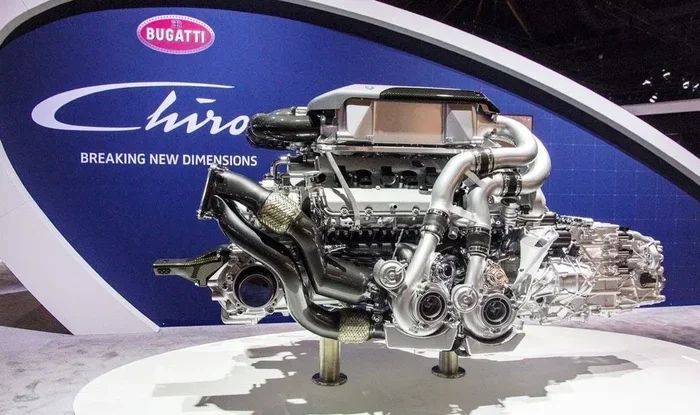
Here is where things get really interesting. Bugatti uses four turbochargers instead of one or two. Each turbocharger is smaller than the ones you would find on a twin-turbo V8. Smaller turbos spool up faster. Faster spooling means less turbo lag. Less lag means the power builds smoothly and predictably.
The four turbochargers are arranged in pairs. Two turbos feed the front cylinder banks. Two turbos feed the rear cylinder banks. This pairing ensures balanced air distribution. Balanced air distribution means each cylinder gets the same amount of air. Equal air means equal power from every cylinder.
The turbochargers are driven by exhaust gases. As the engine burns fuel, it produces hot exhaust gases. These gases spin the turbine wheel inside each turbo. The turbine wheel is connected to a compressor wheel on the same shaft. The compressor wheel pulls in fresh air and compresses it. Compressed air is denser air. Denser air carries more oxygen. More oxygen allows the engine to burn more fuel. More fuel equals more power.
Intercooling System
Compressing air creates heat. Hot air is less dense than cool air. Less dense air means less oxygen. Less oxygen means less power. To fix this problem, Bugatti uses a large intercooling system.
The intercooler acts like a radiator for the intake air. It cools the compressed air before it enters the engine. Cooler air is denser. Denser air carries more oxygen. More oxygen means the engine can burn more fuel safely. More fuel burned means more horsepower and torque.
The intercooler system on the quad-turbo setup is massive. It takes up significant space in the front of the car. But the space is well worth it. Without proper intercooling, the engine would lose power and could suffer damage. The intercooler keeps everything running at optimal temperatures.
Pro Tip: If you own a high-performance car, always check your intercooler pipes for leaks. Even a small leak can cause a noticeable drop in power. A well-maintained intercooler system keeps your engine running strong.
Understanding Forced Induction
Forced induction is the key to the quad-turbo system. It is the process of pushing more air into the engine than it could pull in on its own. Normally aspirated engines rely on atmospheric pressure to fill their cylinders. Forced induction engines use a compressor to force extra air in.
Turbochargers are one type of forced induction device. Superchargers are another. Both do the same job but work differently. A supercharger is driven by the engine’s crankshaft. A turbocharger is driven by exhaust gases. Each approach has its pros and cons.
Turbocharger vs. Supercharger
Turbochargers use waste energy from exhaust gases. This makes them more efficient than superchargers. Superchargers draw power directly from the engine. That means they steal some power to make power. Turbochargers do not have this problem.
However, turbochargers suffer from lag. There is a delay between when you press the throttle and when the turbo spools up. Bugatti solved this problem with four small turbos instead of two large ones. Smaller turbos have less rotational mass. Less mass means they spin up faster. Faster spooling means the lag is almost eliminated.
Superchargers provide instant response because they are connected directly to the engine. But they are less efficient overall. Most modern high-performance cars use turbocharging. Bugatti’s quad-turbo approach takes this technology to the extreme.
Boost Pressure and Air-to-Fuel Ratio
Boost pressure measures how much pressure the turbochargers push into the engine. Higher boost pressure means more air. More air means more fuel can be burned. More fuel burned means more power. Bugatti’s system runs at very high boost pressures to achieve its massive output.
The air-to-fuel ratio is also critical. The engine needs the right mix of air and fuel to run properly. Too much fuel and the engine runs rich. Too little fuel and the engine runs lean. Both conditions can cause damage over time. Bugatti’s engine management system constantly monitors and adjusts this ratio. It makes thousands of calculations per second to keep everything perfectly balanced.
For those curious about fuel economy in high-performance engines, check out our article on 1 Litre Petrol How Many Km In Car to understand how efficiency works in smaller engines. The principles of air-to-fuel ratio and combustion efficiency apply across all engine types.
The Role of the Exhaust System
The exhaust system plays a dual role in the quad-turbo setup. First, it channels hot gases away from the engine. Second, it feeds those gases to the turbochargers. Without a properly designed exhaust system, the turbos cannot spin efficiently.
Bugatti uses equal-length exhaust runners for each cylinder bank. Equal-length runners ensure that exhaust pulses arrive at the turbochargers evenly. Even pulses mean smooth and consistent turbo spooling. Smooth spooling translates to linear power delivery.
The exhaust gases also spin the turbine wheels at incredible speeds. Each turbine wheel can spin over 100,000 RPM. These speeds generate a lot of heat. Heat management is critical. Bugatti uses specialized ceramic coatings on the turbine housings. These coatings reflect heat and reduce thermal stress on the metal.
Wastegate and Boost Control
Each turbocharger has a wastegate valve. The wastegate controls how much exhaust gas flows through the turbine. When boost pressure reaches a target level, the wastegate opens. It diverts excess exhaust gas away from the turbine. This prevents the turbo from spinning too fast.
Too much boost pressure can damage the engine. The wastegate acts as a safety mechanism. It keeps everything within safe operating limits. Bugatti’s electronic wastegate controllers are incredibly precise. They adjust boost pressure in real time based on driving conditions.
On the topic of engine efficiency and how different setups affect fuel consumption, you might find our piece on 1 Liter Petrol How Many Km Car helpful for understanding the relationship between engine design and fuel economy.
Engine Cooling and Thermal Management
A quad-turbocharged engine generates enormous amounts of heat. Managing that heat is essential for reliability and performance. Bugatti uses a multi-stage cooling system that goes far beyond what you find in standard cars.
The engine oil system is one of the first lines of defense. High-performance oil circulates through the block and head. It picks up heat and carries it away to the oil cooler. The oil cooler works like a small radiator dedicated to the oil. It keeps the oil at the right temperature at all times.
The coolant system is equally important. Bugatti uses a large-capacity radiator with dedicated circuits for the engine and the intercooler. Separate circuits mean each system can be optimized independently. The engine coolant stays at a different temperature than the intercooler coolant. This separation improves overall cooling efficiency.
Why Thermal Management Matters
Heat is the enemy of performance. As engine temperatures rise, the air inside the cylinders expands. Expanded air takes up more space. Less space means less air-fuel mixture. Less mixture means less power. This is called “thermal throttle.” It is why engines lose power on hot days.
Bugatti’s cooling system fights thermal throttle directly. By keeping temperatures low, the engine maintains full power even in hot climates. The intercooler also plays a big role here. Cooler intake air means denser air. Denser air means more power. It is a cycle where cooling leads to more performance.
For car owners who want to keep their engines running cool, regular maintenance is key. Change your oil on schedule. Check your coolant levels frequently. Inspect hoses and connections for wear. A well-maintained cooling system prevents overheating and extends engine life.
Power Output and Performance Numbers
So what does all this engineering actually produce? The numbers speak for themselves. Bugatti’s quad-turbo W16 engine generates over 1,000 horsepower in its most powerful form. That is more power than most supercars produce from two cylinders fewer.
Torque figures are equally impressive. The engine produces around 1,250 lb-ft of torque. This massive twisting force launches the car from 0 to 60 mph in under 2.5 seconds. The top speed exceeds 250 mph in some configurations. These numbers place Bugatti at the very top of the performance car world.
How the Power Reaches the Wheels
All that power does the engine no good if it cannot reach the wheels. Bugatti uses a sophisticated all-wheel-drive system. The power goes through a seven-speed dual-clutch transmission. This transmission shifts gears in milliseconds. It feels seamless and almost instantaneous.
The all-wheel-drive system sends power to all four wheels. This maximizes traction. More traction means the car can put all that power down without spinning the tires. The result is incredible acceleration and stability at high speeds.
The combination of quad-turbocharging, all-wheel drive, and a rapid-shift transmission creates a driving experience unlike anything else. Every component works together to deliver power smoothly and efficiently. It is engineering at its finest.
Common Mistakes with High-Performance Turbocharged Engines
Owning a car with a quad-turbo engine comes with responsibility. Many owners make mistakes that can shorten the engine’s lifespan. Here are some common pitfalls to avoid.
- Skipping oil changes: High-performance engines burn oil faster. Dirty oil causes increased wear on bearings and turbocharger components.
- Ignoring coolant levels: Overheating can warp the cylinder head and blow head gaskets. Check your coolant regularly.
- Revving the engine cold: Cold oil does not lubricate properly. Let the engine warm up for at least 30 seconds before driving hard.
- Neglecting turbo inspections: Turbochargers have seals that can fail over time. Regular inspections catch small problems before they become expensive repairs.
- Using low-quality fuel: High-compression, high-boost engines need premium fuel. Lower octane fuel can cause knocking and long-term damage.
Avoiding these mistakes will keep your quad-turbo engine running strong for years. Prevention is always cheaper than repair.
Expert Insights on Quad-Turbo Technology
Engine designers at Bugatti have spoken publicly about their approach to turbocharging. They emphasize balance above all else. Every component must work in harmony with every other component. The turbochargers, the intercoolers, the fuel injectors, and the engine management system must all communicate seamlessly.
One engineer noted that the quad-turbo design was not just about making more power. It was about making power more efficiently. Four smaller turbos waste less energy than two large ones. The smaller turbos respond faster and spool up with less exhaust energy. This means the engine produces usable power across a wider RPM range.
The team also focused on durability. A 1,000-horsepower engine needs to last. They used forged internals and high-grade materials throughout. The result is an engine that can handle extreme conditions without breaking down. This durability is what sets Bugatti apart from competitors who prioritize peak power over long-term reliability.
Another key insight is about the driver experience. Bugatti wanted the quad-turbo engine to feel natural. They did not want the power delivery to feel abrupt or overwhelming. The four turbos work together to create a smooth, linear power curve. The driver can apply throttle gently or hammer it to the floor. The response is always predictable and controlled.
Key Takeaways
- Four turbochargers provide balanced air delivery: Each turbo serves a specific set of cylinders, ensuring even power distribution across all 16 cylinders.
- The W16 layout is compact yet powerful: Two VR8 banks combined into one engine create a unique configuration that saves space while maximizing output.
- Forced induction multiplies engine efficiency: By pushing more air into the cylinders, the engine burns fuel more completely and produces more power per displacement liter.
- Advanced cooling systems prevent thermal damage: Separate oil and coolant circuits, plus a large intercooler, keep temperatures in check even under extreme load.
- Wastegates protect the engine from over-boosting: Electronic wastegate controllers adjust boost pressure in real time for safety and performance.
- Regular maintenance is essential for longevity: Oil changes, coolant checks, and turbo inspections keep the quad-turbo system running at its best.
Conclusion
Bugatti’s quad-turbocharged powerplant represents the pinnacle of automotive engineering. Four turbochargers, a massive W16 engine, and advanced cooling systems all work together to create something truly extraordinary. The result is an engine that produces over 1,000 horsepower while maintaining smooth, predictable power delivery.
Understanding how this system works gives you a deeper appreciation for what Bugatti has achieved. Every component serves a purpose. Every design choice has a reason. From the exhaust-driven turbines to the intercooler that keeps the intake air dense, nothing is left to chance.
If you own a turbocharged vehicle or are considering one, the lessons from Bugatti’s engineering apply. Maintain your oil, check your coolant, and never ignore warning signs. A well-cared-for turbocharged engine will reward you with years of thrilling performance.
The quad-turbo powerplant is more than just an engine. It is a statement about what is possible when engineering meets ambition. Bugatti proved that forced induction can deliver both brutal power and everyday usability. That balance is what makes the quad-turbo W16 one of the greatest engines ever built.
Frequently Asked Questions
What does quad-turbocharged mean?
Quad-turbocharged means the engine uses four turbochargers to compress intake air. Each turbocharger is driven by exhaust gases from a specific set of cylinders. This setup provides more consistent boost pressure and reduces turbo lag compared to fewer, larger turbos.
How much horsepower does Bugatti’s quad-turbo W16 produce?
The most powerful versions of Bugatti’s W16 quad-turbo engine produce over 1,000 horsepower. This enormous output comes from the combination of 16 cylinders, four turbochargers, and advanced fuel injection technology working together seamlessly.
Why does Bugatti use four turbochargers instead of two?
Four smaller turbochargers spool up faster than two large ones. Faster spooling means less turbo lag and smoother power delivery. The smaller turbos also respond more quickly to changes in throttle input, giving the driver a more natural and predictable driving experience.
What is the role of the intercooler in a quad-turbo system?
The intercooler cools the compressed air coming from the turbochargers before it enters the engine. Cooler air is denser and carries more oxygen. More oxygen allows the engine to burn more fuel safely, which increases power output and helps prevent detonation.
How does the W16 engine stay cool under extreme load?
Bugatti uses a multi-stage cooling system with separate circuits for the engine coolant and the intercooler coolant. The engine oil system also has its own dedicated cooler. Together, these systems keep temperatures under control even during sustained high-speed driving or track use.
Is a quad-turbo engine harder to maintain than a standard engine?
Yes, quad-turbo engines require more attention and specialized maintenance. Regular oil changes, coolant flushes, and turbocharger inspections are essential. However, with proper care, these engines can last for many years and deliver consistent performance throughout their lifespan.