Can You Put Rims on a Tesla Heres What You Need to Know
Can you put rims on a Tesla? The short answer is yes. Tesla owners can upgrade to aftermarket rims, but compatibility with bolt patterns, offset, and wheel size is critical. This guide covers everything you need to know about putting custom rims on a Tesla, from fitment requirements to performance benefits and potential risks.
Key Takeaways
- Yes, you can put aftermarket rims on a Tesla: Most Tesla models accept aftermarket wheels if the bolt pattern and offset match.
- Tesla OEM bolt pattern is 5×114.3: This is the standard for Model S, Model 3, Model X, and Model Y.
- Rim size matters for range: Larger rims can reduce driving range due to increased weight and rolling resistance.
- Wheel adapters exist but come with trade-offs: They allow fitment flexibility but may affect handling and safety.
- Aftermarket rims can improve performance: Lighter alloy rims enhance acceleration, braking, and overall driving feel.
- Check your warranty before upgrading: Improperly fitted rims could void certain Tesla warranty coverage.
- Professional installation is recommended: Improper mounting can lead to vibration, uneven tire wear, and safety issues.
📑 Table of Contents
Can You Put Rims on a Tesla? Here Is Everything You Need to Know
So, you just bought a Tesla and you are thinking about giving it a fresh look. Maybe you want bigger wheels. Maybe you want a different style. Or maybe you just want better performance. Either way, the question on your mind is probably this: can you put rims on a Tesla?
The good news is yes. You absolutely can put aftermarket rims on a Tesla. Tesla vehicles are designed to accept aftermarket wheels, but there are some important details you need to know before you start shopping. Things like bolt pattern, wheel offset, rim size, and material all play a role in whether a set of rims will work with your Tesla.
In this guide, we will walk you through everything you need to know about putting custom rims on a Tesla. We will cover compatibility, benefits, risks, and practical tips to help you make the right choice. Whether you drive a Model 3, Model Y, Model S, or Model X, this article has you covered.
Let us dive in.
Understanding Tesla Wheel Specifications
Before you buy any aftermarket rims, you need to understand your Tesla’s stock wheel specs. Every Tesla model has specific measurements that determine what wheels will fit. Ignoring these specs can lead to serious problems. So let us break it down.
OEM Wheel Specifications by Model
Each Tesla model comes with different factory wheel sizes. Here is a quick look at what Tesla offers from the factory:
- Model 3: 18-inch, 19-inch, or 20-inch wheels depending on the trim
- Model Y: 18-inch, 19-inch, or 21-inch wheels
- Model S: 19-inch, 21-inch, or 22-inch wheels
- Model X: 20-inch, 21-inch, or 22-inch wheels
All Tesla models share the same bolt pattern: 5×114.3. This means five lug nuts spaced 114.3 millimeters apart. This is the key number you need when shopping for aftermarket Tesla rims. If a rim set does not match this bolt pattern, it will not fit your Tesla without adapters.
Bolt Pattern and Fitment Basics
The bolt pattern is the most critical factor. But it is not the only one. You also need to pay attention to wheel offset and hub bore. The offset determines how far the wheel sits in relation to the fender. If the offset is wrong, your wheels could rub against the suspension or the fender wells.
The hub bore is the center hole of the rim. Tesla wheels have a specific hub bore size to ensure a snug fit. Aftermarket rims sometimes have a larger hub bore, which means you will need hub-centric rings to center the wheel properly on the hub.
Pro Tip: Always check the manufacturer’s specifications before purchasing. Most reputable aftermarket rim brands list Tesla compatibility directly in their product descriptions.
Can You Put Aftermarket Rims on a Tesla?
Now that you know the specs, let us answer the big question: can you put aftermarket rims on a Tesla? The answer is yes, with some conditions. Tesla vehicles are designed to accept third-party wheels, but you must match the correct specifications.
Compatibility Considerations
Not all rims are created equal. When shopping for aftermarket Tesla wheels, you need to verify a few things:
- Bolt pattern: Must be 5×114.3 for all Tesla models
- Hub bore: Should match Tesla’s hub size or include adapter rings
- Offset: Must fall within Tesla’s recommended range to avoid rubbing
- Load rating: Aftermarket rims must support the weight of your Tesla
- TPMS compatibility: Your new rims must work with Tesla’s tire pressure monitoring system
If any of these specs do not match, you could run into serious issues. The wheels might not fit, they might rub against the body, or they might compromise your safety on the road.
Rim Size and Offset Explained
Rim size refers to the diameter of the wheel, measured in inches. Tesla models typically range from 18 to 22 inches. You can go bigger, but there are trade-offs. Larger rims mean thinner tires, which can affect ride comfort and range.
Offset is measured in millimeters and tells you how deep the wheel sits inside the wheel well. A positive offset means the mounting surface is closer to the outside of the rim. A negative offset pushes the wheel outward. For Tesla vehicles, staying close to the factory offset is usually the safest bet.
Changing the offset too much can cause the wheels to stick out beyond the fenders. This not only looks awkward but can also be illegal in many states. It can also cause rubbing against suspension components, which leads to premature wear and potential safety hazards.
Benefits of Upgrading Your Tesla Rims
So why would someone want to put new rims on a Tesla? There are actually several great reasons. Let us look at the biggest benefits.
Aesthetic Appeal
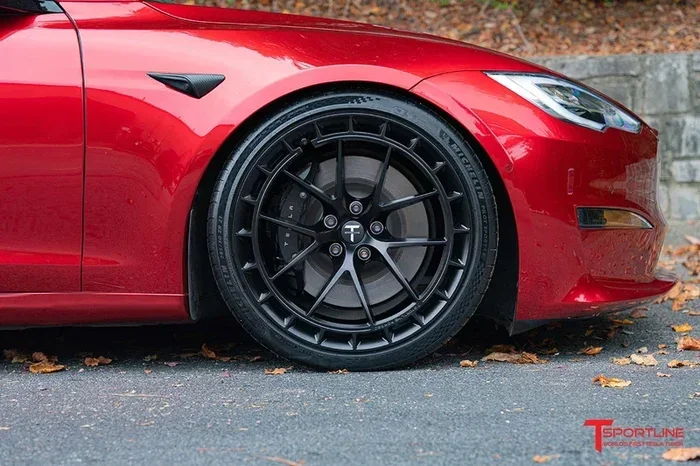
Let us be honest. One of the main reasons people upgrade their wheels is looks. Stock Tesla wheels are decent, but aftermarket rims can completely transform the appearance of your vehicle. Whether you want a sporty look, a sleek modern design, or a bold statement piece, there is an aftermarket rim out there for you.
Popular aftermarket rim styles for Tesla include:
- Forged alloy wheels for a lightweight, high-performance look
- Multi-spoke designs for a premium aesthetic
- Dark or machined finishes for a sleek, modern vibe
- Larger diameter wheels for a more aggressive stance
A fresh set of wheels can make your Tesla look brand new. It is one of the most noticeable upgrades you can make.
Performance Improvements
Upgrading your rims is not just about looks. It can also improve how your Tesla drives. Lighter aftermarket rims reduce unsprung weight, which means your car can accelerate faster, brake better, and handle more responsively. This is especially true if you swap heavy factory wheels for lightweight forged alloy options.
Some aftermarket rim manufacturers design their wheels specifically for electric vehicles. These wheels are optimized for range and efficiency. They feature aerodynamic designs that help reduce drag and improve your Tesla’s driving range.
If you are serious about performance, consider upgrading to a set of lightweight performance rims. The difference on the road is noticeable immediately.
Potential Risks and Drawbacks
Upgrading your Tesla rims is not without risks. Before you make a purchase, you should understand what could go wrong.
Range Reduction Concerns
One of the biggest concerns with aftermarket rims is range loss. Tesla vehicles are engineered for maximum efficiency. The stock wheels are designed to minimize aerodynamic drag and rolling resistance. When you swap in larger or heavier aftermarket rims, you can expect a drop in range.
How much range you lose depends on several factors:
- The weight of the new rims
- The tire size and type
- The aerodynamic profile of the new wheels
- Your driving habits
Some Tesla owners report a 5 to 10 percent reduction in range after upgrading to larger aftermarket wheels. If range is a priority for you, stick with rims that are close to the factory size and weight.
Road Hazard Damage
Larger rims with lower-profile tires are more susceptible to road hazards. Potholes, curbs, and debris can cause damage more easily than with stock wheels. This is especially true if you live in an area with rough roads or harsh winter conditions.
Some Tesla owners have experienced rim damage from potholes that cracked or bent their aftermarket wheels. This is why it is important to choose a rim material and design that can handle real-world driving conditions.
And speaking of road hazards, hitting a deer can total your car if the impact is severe enough. While this is not directly related to rim upgrades, it highlights how important it is to consider the durability of your wheels and tires when driving in areas with wildlife or rough roads.
Warranty Implications
This is something many Tesla owners overlook. Aftermarket rims can potentially affect your Tesla warranty. If a wheel upgrade causes damage to your tires, suspension, or alignment, Tesla may not cover the repairs under warranty. This is because the damage was caused by a non-OEM part.
Before you install aftermarket rims, read your Tesla warranty terms carefully. If you are unsure, contact Tesla service directly to ask about their policy on aftermarket wheel modifications.
How to Choose the Right Rims for Your Tesla
Now that you know the benefits and risks, let us talk about how to choose the right rims. This is where the fun begins.
Material Options
Aftermarket rims come in several materials. Each has its own advantages and disadvantages:
- Alloy ( Aluminum ): Lightweight, good heat dissipation, and affordable. The most popular choice for Tesla owners.
- Forged Aluminum: Even lighter and stronger than cast alloy. More expensive but offers superior performance.
- Carbon Fiber: Extremely lightweight and high-end. Very expensive and less durable in certain conditions.
- Steel: Heavy but durable. Not commonly used for aftermarket Tesla upgrades because of the weight penalty.
For most Tesla owners, forged alloy rims offer the best balance of weight, strength, and price. They are light enough to preserve range while being strong enough to handle everyday driving.
Installing Aftermarket Rims on a Tesla
Once you have chosen your rims, proper installation is critical. Here is what you need to know:
- Get a professional installation. Do not try to install aftermarket rims yourself unless you have experience. Improper torque on lug nuts can be dangerous.
- Use a torque wrench. Tesla specifies a lug nut torque of 140 lb-ft. Over-tightening or under-tightening can cause wheel damage or safety issues.
- Check alignment after installation. New rims and tires can affect your alignment. Get a professional alignment done after the install.
- Monitor your tires. Aftermarket rims may require different tire sizes. Make sure your tires are properly inflated and check them regularly.
Proper installation ensures your new rims look great and perform safely for years to come.
Cost Considerations
Aftermarket Tesla rims range widely in price. You can find decent options for $200 to $400 per wheel. High-end forged or custom designs can cost $800 to $1,500 per wheel or more. Factor in the cost of tires, installation, and alignment when budgeting for your upgrade.
Some people wonder if they can deduct the cost of aftermarket rims on their taxes. While vehicle modifications are generally not deductible for personal use, there are specific circumstances where vehicle sales tax deductions might apply. It is worth consulting a tax professional if you are considering this route.
Final Thoughts
Can you put rims on a Tesla? Absolutely. Tesla vehicles are compatible with a wide range of aftermarket wheels, as long as you match the correct specifications. The key is to do your research before you buy. Check the bolt pattern, offset, hub bore, and load rating. Choose a rim material that fits your budget and driving needs. And always have your new wheels installed by a professional.
Upgrading your Tesla rims can enhance the look, feel, and performance of your vehicle. Just be mindful of the potential trade-offs, like reduced range and warranty considerations. With the right setup, you can enjoy a Tesla that looks and drives exactly the way you want it to.
Take your time, shop around, and find the perfect set of rims for your Tesla. Your vehicle will thank you for it.
Frequently Asked Questions
Can I put any aftermarket rims on my Tesla?
Not just any rim will fit. Your aftermarket rims must match Tesla’s 5×114.3 bolt pattern, correct hub bore, and appropriate offset. Always verify compatibility before purchasing to avoid fitment issues.
Will aftermarket rims reduce my Tesla’s range?
Yes, there is a possibility of range reduction. Heavier or larger aftermarket rims increase rolling resistance and unsprung weight, which can reduce driving range by 5 to 10 percent depending on the wheel size and weight.
Do I need hub-centric rings for aftermarket Tesla rims?
If your aftermarket rims have a larger hub bore than Tesla’s stock size, you will need hub-centric rings. These rings center the wheel properly on the hub and ensure a safe, vibration-free ride.
Can aftermarket rims void my Tesla warranty?
Aftermarket rims themselves do not automatically void your warranty. However, if a wheel upgrade causes damage to other components, Tesla may deny the warranty claim for that specific damage. Always check your warranty terms before making modifications.
What is the best rim material for a Tesla?
Forged aluminum alloy rims are generally the best choice for Tesla vehicles. They are lightweight, strong, and offer a good balance of performance, aesthetics, and affordability compared to other materials.
How much does it cost to upgrade Tesla rims?
Aftermarket Tesla rims typically cost between $200 and $1,500 per wheel depending on the material, brand, and design. Add installation costs of $50 to $100 per wheel and alignment fees for a complete upgrade.
=== CONCLUSION ===
Can you put rims on a Tesla? The answer is a definitive yes. Tesla owners have plenty of options when it comes to upgrading their wheels. Whether you want better looks, improved performance, or a more personalized ride, aftermarket rims can deliver. Just make sure you choose wheels that match your Tesla’s specifications, have them professionally installed, and understand the potential trade-offs like range loss and warranty considerations. With the right approach, a new set of rims can transform your Tesla and make it truly yours.