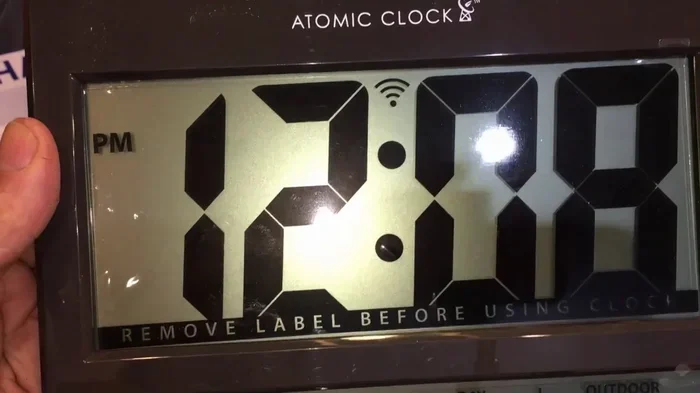
How Do I Reset My Atomic Clock?
Knowing how do I reset my atomic clock can save you from hours of confused timekeeping. This guide walks you through the reset process, fixes common issues, and shares pro tips to keep your clock accurate. Whether you have a wall clock or a watch, you’ll find the solution here.
Have you ever woken up to find your atomic clock showing the wrong time? It happens to more people than you might think. Whether your clock is off by an hour or completely lost track of the date, the fix is often simpler than you think. Learning how do I reset my atomic clock is a skill that takes just a few minutes to master.
Atomic clocks are some of the most accurate timekeeping devices you can own. They sync with official time signals to keep your home or office on schedule. But sometimes, they need a little push to get back on track. That’s where this guide comes in. We’ll walk you through every step of the reset process. You’ll also learn how to fix common problems and keep your clock running smoothly for years to come.
By the end of this article, you’ll know exactly what to do the moment your atomic clock starts acting up. No guesswork. No frustration. Just clear, simple steps that actually work.
Key Takeaways
- Soft reset vs. hard reset: Understand which type of reset your atomic clock needs based on the problem.
- Time zone settings: Learn how to correctly configure your clock’s time zone for accurate synchronization.
- Signal reception matters: Placement and location play a huge role in your clock’s ability to sync.
- Battery health: A weak battery is one of the most common reasons your atomic clock won’t reset properly.
- Troubleshooting basics: Quick fixes for the most common atomic clock problems after a reset.
- When to replace: Know the signs that your atomic clock may need professional help or a replacement.
📑 Table of Contents
What Is an Atomic Clock and Why Does It Need Resetting?
Before we dive into the reset process, let’s quickly cover what makes an atomic clock special. An atomic clock is a timekeeping device that uses the vibration frequency of atoms to measure time. Most home atomic clocks are actually radio-controlled clocks. They receive a low-frequency radio signal from a transmitter, usually operated by the National Institute of Standards and Technology (NIST).
How Atomic Clocks Work
The signal, known as the WWVB signal, broadcasts from Fort Collins, Colorado. It covers most of the United States. Your clock picks up this signal overnight and automatically adjusts itself to the correct time. This process is called time synchronization. It happens automatically, which is why most people never think about it until something goes wrong.
Here’s the thing: even though atomic clocks are incredibly precise, they don’t always sync perfectly. Signal interference, wrong settings, or a dead battery can throw off the whole system. That’s when you need to step in and perform a manual reset.
Common Reasons Your Atomic Clock Needs a Reset
Several things can cause your atomic clock to lose sync. Here are the most common culprits:
- Time zone changes: Moving to a new location or traveling can confuse your clock’s settings.
- Daylight saving time: The biannual clock change sometimes disrupts synchronization.
- Weak battery: A low battery can prevent your clock from receiving the signal properly.
- Signal interference: Electronics, metal objects, or thick walls can block the signal.
- Power outage: A blackout can reset your clock’s internal memory.
- Factory settings: Some clocks ship with incorrect default settings that need adjusting.
Understanding these causes helps you pick the right reset method. It also prevents the problem from happening again.
How Do I Reset My Atomic Clock? Step-by-Step Guide
This is the big question, and the answer depends on what kind of reset you need. There are generally two types: a soft reset and a hard reset. Let’s break both down.
Soft Reset: The Quick Fix
A soft reset is the simplest way to fix minor time issues. It doesn’t erase any settings. Instead, it tells your clock to search for the time signal again. Here’s how to do it:
- Find the reset button. Most atomic clocks have a small button labeled “Reset,” “RC,” or “Sync.” It’s usually on the back or side of the clock.
- Press and hold the button. Hold it for about 3 to 5 seconds. Some clocks require just a quick press.
- Wait for the signal. Your clock will start searching for the WWVB signal. This can take anywhere from a few minutes to overnight.
- Check the time. Once the clock locks onto the signal, the time should update automatically.
That’s it. A soft reset is usually all you need. Think of it like restarting your phone when it freezes. It clears the temporary glitch and gets things running again.
Hard Reset: Starting From Scratch
A hard reset is a more involved process. You use this when a soft reset doesn’t work or when you need to change the time zone settings completely. Here’s what to do:
- Remove the battery. Open the back panel and take out the battery. Wait at least 30 seconds.
- Press and hold the reset button. While the battery is out, press and hold the reset button for 10 to 15 seconds. This drains any remaining power from the memory.
- Reinsert the battery. Put a fresh battery in and close the panel.
- Set the time zone. Use the clock’s controls to select your correct time zone. Most clocks use a number system (1 through 12 for U.S. zones).
- Wait for synchronization. Your clock will search for the signal. Give it at least overnight to connect.
A hard reset essentially brings your clock back to its factory settings. You’ll need to reconfigure everything, but it’s the best way to fix stubborn problems.
Resetting the Time Zone
One of the most common reasons people search for how do I reset my atomic clock is a wrong time zone. If you recently moved or the clock was set to a different region, the time will be off. Here’s how to fix it:
- Check your clock’s manual for the time zone code. Most clocks use a simple number system.
- Press the “Zone” or “TZ” button to cycle through the options.
- Select your correct zone and wait for the next signal update.
Getting the time zone right is crucial. Even a one-hour difference can throw off your schedule. Take your time and double-check before letting the clock sync.
Troubleshooting Common Atomic Clock Problems After a Reset
Sometimes a reset doesn’t solve the problem right away. Don’t worry. This section covers the most common issues and how to fix them.
Clock Not Syncing with Signal
This is probably the most frustrating issue. Your clock resets but just won’t connect to the signal. Here are some things to try:
- Move the clock. Try placing it near a window or on an exterior wall. The signal has trouble passing through thick materials.
- Keep it away from electronics. Computers, TVs, and speakers can create signal interference. Give your clock at least a few feet of space from these devices.
- Try at night. The WWVB signal is strongest between midnight and 4 a.m. Let your clock sync during these hours.
- Check the battery. A weak battery can’t receive the signal properly. Use a fresh, name-brand battery.
If your clock still won’t sync after these steps, you might be in an area with weak signal coverage. In that case, consider a clock calibration device or a GPS-enabled clock as an alternative.
Wrong Time or Date Display
If your clock shows the wrong time after a reset, the time zone is likely still off. Double-check your settings using the steps above. Also, make sure the clock isn’t stuck on standard time when it should be on daylight saving time (or vice versa).
Some clocks handle this automatically. Others require you to manually toggle the daylight saving setting. Check your manual for details on your specific model.
Clock Won’t Turn On After Reset
A hard reset can sometimes leave your clock unresponsive. Before you panic, try these steps:
- Remove and reinsert the battery.
- Make sure the battery is inserted correctly. Check the positive and negative markings.
- Try a different battery. Old batteries can fail unexpectedly.
- Check for a blown fuse inside the clock (some models have one).
If none of these work, the clock may need professional repair or replacement. Don’t force it. A clock troubleshooting guide can help you decide the next step.
Tips to Keep Your Atomic Clock Running Smoothly
Once you’ve successfully reset your atomic clock, you want to keep it running well. Here are some easy maintenance tips that prevent most problems before they start.
Battery Maintenance
The battery is the heart of your clock’s signal reception. A weak battery means weak reception. Here’s how to stay on top of it:
- Replace the battery every 6 to 12 months, even if it still works.
- Use quality batteries from trusted brands. Cheap batteries can leak and damage the clock.
- If you live in a very hot or humid area, check the battery more often. Extreme conditions shorten battery life.
Think of it like oil changes in a car. Small investments now save you big headaches later.
Optimal Placement for Signal Reception
Where you put your clock matters more than you might think. The best spots for signal reception include:
- Near an exterior wall (especially a north-facing wall).
- On a windowsill or close to a window.
- In a room with minimal electronic interference.
Avoid placing your clock in the following spots:
- Inside a metal cabinet or shelf.
- Next to computers, routers, or large appliances.
- In a basement or room with thick concrete walls.
Good placement means fewer resets. It’s a simple fix that many people overlook.
When to Call a Professional or Replace Your Clock
Most atomic clock problems can be solved with a reset and some basic troubleshooting. But what if your clock still won’t cooperate? At some point, it’s time to consider other options.
Here are signs your clock might need professional help or a replacement:
- No signal for more than a week: If your clock can’t sync after a full week, something deeper is wrong.
- Frequent resets: Needing to reset your clock often points to a hardware issue.
- Display problems: If the screen flickers, goes blank, or shows garbled numbers, the unit may be failing.
- Age: Most atomic clocks last 5 to 10 years. If yours is older, technology upgrades may be more cost-effective than repair.
Before you replace it, check if your model is still under warranty. Many manufacturers offer 1 to 3 years of coverage. Also, look into whether a clock manual update or firmware download is available for your model. Some newer clocks support software updates that fix known issues.
Conclusion
So there you have it. You now know exactly how do I reset my atomic clock and how to handle the most common problems that come with it. A soft reset fixes most minor issues. A hard reset handles the stubborn ones. And proper maintenance keeps your clock accurate for years.
Remember, your atomic clock is a precision instrument. It works hard to keep you on time every single day. A little attention goes a long way. Keep your battery fresh, place your clock wisely, and don’t be afraid to hit that reset button when things go sideways.
Now go put this knowledge to work. Your clock is waiting to get back on track, and you’ve got everything you need to make it happen.
Frequently Asked Questions
How long does it take for an atomic clock to sync after a reset?
Most atomic clocks sync within a few minutes to overnight. The WWVB signal is strongest between midnight and 4 a.m., so that’s often the best window. If your clock hasn’t synced after 24 hours, check the battery and placement.
Can I reset my atomic clock without the reset button?
Yes. Many atomic clocks allow you to perform a soft reset by removing and reinserting the battery. For a hard reset, take the battery out, wait 30 seconds, and put it back in. You may need to re-enter your time zone settings afterward.
Why does my atomic clock keep showing the wrong time zone?
This usually happens after a power outage or when the clock is moved to a new location. The time zone setting may have reverted to a default. Use the “Zone” or “TZ” button on your clock to select the correct zone, then let it sync with the signal.
Does daylight saving time affect my atomic clock?
It can. Some atomic clocks update automatically for daylight saving time, but older models may not. If your clock is an hour off after the time change, try a reset and make sure the daylight saving setting is correct for your region.
Is it safe to reset my atomic clock every day?
Yes, a soft reset is completely safe to perform as often as you need. It simply tells the clock to search for the signal again. Just avoid frequent hard resets, as they reset all your custom settings and can be unnecessary.
What’s the difference between an atomic clock and a radio-controlled clock?
For most home users, there’s no practical difference. “Atomic clock” is the common term for clocks that sync with official time signals. Technically, most home clocks are radio-controlled clocks that receive the WWVB signal from the National Institute of Standards and Technology. Both terms refer to the same kind of timekeeping device.