How Long Does It Take for a Mechanic to Replace Brake Fluid
A typical brake fluid replacement takes about 30 minutes to 1 hour at a mechanic shop. The exact time depends on your vehicle type, the brake system condition, and whether you need a full flush or a simple fluid swap. Most drivers can get in and out quickly, but complex jobs may take longer.
Every driver relies on their brakes to stop safely. But how often do you think about the fluid that makes it all work? Brake fluid is the unsung hero of your vehicle’s stopping power. Over time, it absorbs moisture, loses effectiveness, and needs to be replaced. If you have ever wondered, “How long does it take for a mechanic to replace brake fluid?” — you are in the right place.
The answer is simpler than you might think. In most cases, a professional mechanic can complete a brake fluid change in under an hour. However, several factors can stretch or shorten that timeline. Your vehicle model, the condition of your brake system, and the type of fluid used all play a role. Let us break it all down so you know exactly what to expect.
Key Takeaways
- Average Time: A standard brake fluid replacement usually takes 30 to 60 minutes.
- Vehicle Matters: Some cars have harder-to-reach brake lines that add time.
- Full Flush vs. Simple Swap: A complete flush takes longer than just topping off the fluid.
- Brake Fluid Type: DOT 3, DOT 4, and DOT 5 fluids each have different handling requirements.
- Regular Maintenance: Changing brake fluid every 2 years keeps your hydraulic brake system safe.
- DIY vs. Professional: A mechanic ensures proper bleeding and safety checks.
📑 Table of Contents
- What Happens During a Brake Fluid Replacement?
- How Long Does Each Step Take?
- Factors That Affect the Time
- Can You Do It Yourself?
- How Often Should You Replace Brake Fluid?
- Cost Considerations for Brake Fluid Replacement
- Why Brake Fluid Matters for Safe Driving
- Common Mistakes People Make With Brake Fluid
- What to Expect at the Mechanic
- Brake Fluid Replacement vs. Other Brake Services
- Expert Insight: Why Mechanics Recommend Regular Fluid Changes
- Key Takeaways
- Final Thoughts
What Happens During a Brake Fluid Replacement?
Before we talk about timing, it helps to understand the actual process. A mechanic does not just drain a bottle and call it done. A proper brake fluid replacement involves several careful steps.
Step 1: Inspect the Current Fluid
The mechanic starts by checking the color and condition of your existing brake fluid. Fresh fluid is clear or light amber. Dark brown or black fluid signals contamination. A brake fluid tester can also measure moisture content. This quick inspection tells the mechanic whether you need a simple top-off or a full brake fluid flush.
Step 2: Lift and Access the Brake Lines
Next, the vehicle gets raised on a lift or jack stands. The mechanic locates each brake caliper and the brake lines connected to them. Some vehicles have easy access. Others hide lines behind tight engine components, which adds time.
Step 3: Drain the Old Fluid
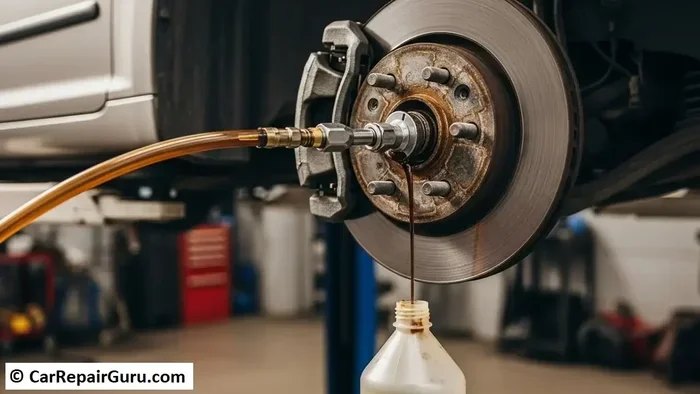
Using a wrench, the mechanic opens the bleed valves on each brake caliper. Old fluid drains out into a collection pan. This step removes contaminated liquid from the hydraulic brake system. The mechanic works through each wheel one at a time.
Step 4: Refill with New Fluid
Once the old fluid is gone, the mechanic refills the reservoir with fresh DOT brake fluid. The type depends on your vehicle. Common grades include DOT 3, DOT 4, and DOT 5. Each has different boiling points and viscosity levels.
Step 5: Bleed the Brakes
This is the most time-consuming part. Bleeding removes air bubbles from the brake lines. Air in the system causes a spongy brake pedal, which is dangerous. The mechanic opens each bleed valve, has an assistant pump the pedal, and closes the valve before fluid escapes. This process repeats at all four wheels.
Step 6: Test and Verify
After bleeding, the mechanic tests the brake pedal feel, checks for leaks, and takes the vehicle for a short test drive. Everything must feel firm and responsive before the job is complete.
How Long Does Each Step Take?
Breaking down the individual steps helps you understand where the time goes. Here is a realistic timeline for a standard brake fluid replacement:
- Inspection: 5 to 10 minutes
- Vehicle lift and access: 5 minutes
- Draining old fluid: 10 to 15 minutes
- Refilling with new fluid: 5 minutes
- Bleeding brakes: 15 to 25 minutes
- Testing and verification: 5 to 10 minutes
Add it all up, and you get roughly 45 minutes to 1 hour for a straightforward job. But remember, not every vehicle is straightforward.
Factors That Affect the Time
Several things can make a brake fluid change take more or less time. Understanding these helps set realistic expectations.
Vehicle Make and Model
Some cars have easily accessible brake lines. A simple sedan might take 30 minutes. A luxury SUV with tight engine bay packaging could take closer to 90 minutes. Japanese sedans and compact cars often have straightforward brake systems. Performance vehicles and trucks may require more effort to reach the bleed valves.
Condition of the Brake System
If your brake lines are rusty or corroded, the mechanic needs extra time to carefully remove and replace damaged parts. Stuck bleed valves can also slow things down. A well-maintained system with no corrosion makes the job faster and smoother.
Full Flush vs. Simple Fluid Swap
A brake fluid flush pushes out all old fluid and replaces it completely. A simple fluid swap just drains the reservoir and refills it. A full flush takes longer but does a better job of removing moisture and contaminants. Most mechanics recommend a full flush for safety.
Type of Brake Fluid
Different DOT brake fluid grades require different handling. DOT 3 and DOT 4 are glycol-based and mix with water over time. DOT 5 is silicone-based and does not absorb moisture. Switching between fluid types requires extra care, which can add time to the process.
Mechanic Experience and Shop Equipment
An experienced mechanic with the right tools works faster. Shops with vacuum bleeders or pressure bleeding machines can complete the job more efficiently than someone working with basic hand tools. This is one reason why brake maintenance schedule adherence matters — a well-equipped shop saves you time.
Can You Do It Yourself?
Some car owners ask whether they can save time by doing a brake fluid change at home. The answer is yes, but with caveats.
A DIY brake fluid swap might take you 1 to 2 hours if you have never done it before. An experienced DIYer might finish in 45 minutes. However, improper bleeding can leave air in the lines, which creates a dangerous brake pedal feel. A spongy or soft pedal means your brake system is not performing at full capacity.
One major advantage of going to a mechanic is the ability to check for other issues. While you are there, a good shop will inspect your brake pads, brake rotors, and brake lines for wear. This comprehensive check adds value beyond just the fluid change itself.
If you do decide to tackle it yourself, make sure you have the correct brake fluid type for your vehicle. Never mix DOT 3 with DOT 5. Always use a clean container, and bleed the brakes in the correct order — typically starting with the wheel farthest from the master cylinder.
How Often Should You Replace Brake Fluid?
Most vehicle manufacturers recommend replacing brake fluid every 2 years or 30,000 miles, whichever comes first. However, driving habits and conditions can change this timeline.
Drivers in humid climates may need more frequent changes because moisture enters the system faster. Towing heavy loads puts extra stress on the brake system, which can degrade fluid more quickly. Frequent stop-and-go city driving also wears through fluid faster than highway cruising.
Watch for these warning signs that your brake fluid needs attention:
- The brake pedal feels spongy or soft
- You need to press harder to stop
- The brake warning light on your dashboard comes on
- The fluid looks dark or dirty
- You hear unusual sounds when braking
Ignoring these signs can lead to brake failure. A brake fluid check is a quick and inexpensive way to stay ahead of potential problems. Most vehicle brake service centers will test your fluid for free during an oil change or routine inspection.
Cost Considerations for Brake Fluid Replacement
While this article focuses on time, cost naturally comes up. A typical brake fluid replacement cost ranges from $70 to $150 at most independent shops. Dealerships may charge more, sometimes up to $200. The price includes the fluid itself, labor, and any disposal fees.
Keep in mind that brake maintenance is one of the most affordable services you can get. It is also one of the most important for your safety. Skipping this service to save a small amount of money can lead to expensive repairs down the road — or worse, an accident.
If you are worried about costs, ask your mechanic about a brake fluid flush during a routine service visit. Bundling services often saves money and keeps your vehicle in top shape.
Why Brake Fluid Matters for Safe Driving
Your brakes rely on hydraulic pressure to stop the wheels. Brake fluid is the medium that transfers force from the pedal to the calipers. Without clean, properly functioning fluid, that transfer breaks down.
Moisture contamination lowers the boiling point of brake fluid. When fluid boils under hard braking, it creates vapor pockets. Vapor compresses, which means your pedal goes to the floor without stopping the car. This is called brake fade, and it is extremely dangerous.
Regular brake fluid replacement prevents this scenario. It keeps your hydraulic brake system working at peak performance. It also extends the life of other brake components by ensuring even pressure distribution.
Think of it this way: you would not drive on worn-out tires. Why would you drive with degraded brake fluid? Both are critical safety components that need regular attention.
Common Mistakes People Make With Brake Fluid
Even well-meaning car owners make mistakes when it comes to brake fluid maintenance. Here are a few to avoid:
- Ignoring the maintenance schedule: Many drivers only think about brakes when they hear a squeal. By then, the fluid may already be contaminated.
- Using the wrong fluid type: Mixing DOT 3, DOT 4, and DOT 5 can damage seals and cause brake failure.
- Overfilling the reservoir: Brake fluid expands with heat. Overfilling can cause leaks and pressure issues.
- Skipping the bleed step: Some people drain and refill without properly bleeding the lines, leaving dangerous air pockets.
- Opening the reservoir without cleaning the area: Dirt and debris falling into the open reservoir can contaminate the entire system.
Avoiding these mistakes keeps your brake system maintenance on track and your car safe to drive.
What to Expect at the Mechanic
When you bring your car in for a brake fluid replacement, here is what the visit typically looks like:
- You check in and describe any brake concerns you have noticed.
- The mechanic inspects the fluid and discusses whether a flush or swap is needed.
- You receive a time estimate and cost estimate before work begins.
- The mechanic performs the replacement following the steps outlined above.
- You are given a report of what was done and any additional recommendations.
Most shops are transparent about timing. If your vehicle requires extra work — like replacing a corroded brake line — the mechanic will let you know before proceeding. You always have the right to approve additional costs.
One thing to keep in mind: if you need your car back quickly, ask about express service options. Some shops offer same-day brake service for straightforward fluid replacements. This is especially helpful if you rely on your car for daily commuting.
Brake Fluid Replacement vs. Other Brake Services
To put the time and importance of a brake fluid change in perspective, here is how it compares to other common brake services:
| Service | Average Time | Frequency | Complexity |
|---|---|---|---|
| Brake Fluid Replacement | 30–60 minutes | Every 2 years | Moderate |
| Brake Pad Replacement | 30–90 minutes | Every 25,000–70,000 miles | Moderate |
| Brake Rotor Resurfacing | 1–2 hours | Every 50,000–70,000 miles | Moderate to High |
| Brake Line Replacement | 1–3 hours | As needed | High |
| Full Brake System Overhaul | 2–4 hours | Rarely | Very High |
As you can see, a brake fluid replacement is one of the quicker and more affordable brake services. It does not require replacing expensive parts. It is a preventive maintenance task that protects everything else in your brake system.
Expert Insight: Why Mechanics Recommend Regular Fluid Changes
Experienced mechanics agree on one thing: brake fluid is often overlooked until something goes wrong. Unlike brake pads, which make noise when they wear down, fluid degradation is silent. You cannot see it, hear it, or feel it until the damage is done.
A mechanic who has seen brake failure firsthand will always push for regular fluid changes. Moisture-contaminated fluid is a ticking time bomb in your hydraulic system. The cost of a fluid change is tiny compared to the cost of replacing a warped rotor, a seized caliper, or — worst case — dealing with an accident caused by brake failure.
Many shops now include a brake fluid moisture test as part of their routine inspection. This simple test takes seconds and gives you real data about the condition of your fluid. Ask your mechanic to run this test at your next visit.
It is also worth noting that if you have ever had issues where your mechanic needed to hold your vehicle until payment is made, staying on top of routine services like brake fluid changes helps build a trustworthy relationship with your shop. Regular maintenance shows you take your car seriously, which goes a long way in any repair relationship.
Key Takeaways
- Average Time: A standard brake fluid replacement usually takes 30 to 60 minutes.
- Vehicle Matters: Some cars have harder-to-reach brake lines that add time.
- Full Flush vs. Simple Swap: A complete flush takes longer than just topping off the fluid.
- Brake Fluid Type: DOT 3, DOT 4, and DOT 5 fluids each have different handling requirements.
- Regular Maintenance: Changing brake fluid every 2 years keeps your hydraulic brake system safe.
- DIY vs. Professional: A mechanic ensures proper bleeding and safety checks.
Final Thoughts
So, how long does it take for a mechanic to replace brake fluid? In most cases, 30 to 60 minutes. It is a quick, affordable service that has an outsized impact on your safety. Do not let this simple maintenance task slip through the cracks.
Your brakes are the most important safety system in your vehicle. The fluid that powers them deserves the same attention you give to oil changes and tire rotations. Schedule a brake fluid replacement today if you are overdue, and your future self — and everyone on the road — will thank you.
Keep your brake system in top shape, drive with confidence, and remember: a few minutes at the shop can save lives.
Frequently Asked Questions
Can I drive my car immediately after a brake fluid replacement?
Yes, most mechanics allow you to drive right away after a brake fluid change. However, they will typically take your car for a short test drive first to ensure the brakes feel firm and responsive. If anything feels off, let the mechanic know before you leave.
How do I know if my brake fluid needs replacing?
Look for dark or brownish fluid, a spongy brake pedal, or increased stopping distance. A brake fluid tester can measure moisture content. Most experts recommend replacing fluid every 2 years regardless of appearance, since moisture absorption happens silently.
Is brake fluid replacement the same as a brake fluid flush?
Not exactly. A brake fluid swap replaces the fluid in the reservoir only. A brake fluid flush removes all old fluid from the entire system, including the lines and calipers. A full flush provides better results and is usually recommended by mechanics.
Can dirty brake fluid cause my brakes to fail?
Yes. Contaminated brake fluid has a lower boiling point, which can lead to brake fade under heavy use. Moisture in the fluid can also corrode internal brake components over time. In extreme cases, this leads to complete brake failure.
Does brake fluid replacement cost a lot?
No. A typical brake fluid replacement cost ranges from $70 to $150. It is one of the most affordable maintenance services available. The price covers the fluid, labor, and proper disposal of the old fluid.
What happens if I use the wrong DOT brake fluid?
Mixing incompatible fluid types — like DOT 3 with DOT 5 — can damage seals, cause leaks, and reduce braking performance. Always check your owner’s manual for the correct brake fluid type before adding or replacing fluid.