How a Car Runs at a Constant Speed and Why It Matters
When a car runs at a constant speed, multiple systems work together to maintain a steady velocity without acceleration or deceleration. This driving approach improves fuel economy, reduces engine wear, and creates a safer, more comfortable ride for everyone on board. Understanding how constant speed works helps you drive smarter and save money over time.
Have you ever noticed how smooth and effortless it feels when a car runs at a constant speed? There is something deeply satisfying about cruising down a long stretch of highway without constantly adjusting the gas pedal. Whether you are on a road trip or just commuting to work, maintaining a steady pace makes the drive more comfortable and predictable.
But constant speed driving is about more than just comfort. It also plays a big role in how much fuel your vehicle uses, how well your engine performs over time, and even how safe your trip feels. When a car runs at a constant speed, several systems work together behind the scenes to keep everything balanced and smooth.
In this guide, we will walk you through exactly how a car runs at a constant speed, what systems make it possible, and why this simple driving habit can save you money and stress. Whether you are a new driver or someone who has been behind the wheel for years, you will find practical tips and insights that make sense.
Key Takeaways
- Constant speed driving saves fuel: Maintaining a steady pace keeps the engine in its most efficient operating range, improving fuel economy by up to 15%.
- Cruise control is your best friend: This system automatically manages throttle position to hold a steady speed and reduce driver fatigue on long trips.
- Multiple forces are always at play: Aerodynamic drag, rolling resistance, and drivetrain friction must be balanced for a car to maintain constant velocity.
- Steady driving reduces wear and emissions: Less stress on the engine, transmission, and brakes means fewer repairs and a cleaner footprint.
- Watch for common problems: Throttle sensor issues, dirty injectors, tire pressure problems, and brake drag can all disrupt steady speed.
- Small habits make a big difference: Regular maintenance, smart route planning, and smooth driving inputs all support constant speed driving.
📑 Table of Contents
- What It Means When a Car Runs at a Constant Speed
- How Cruise Control Helps Maintain Steady Speed
- The Science Behind Constant Speed Driving
- Benefits of Driving at a Constant Speed
- Comparison: Constant Speed vs. Variable Speed Driving
- Common Problems That Disrupt Steady Speed
- Tips for Keeping Your Car at a Constant Speed
- Common Mistakes That Affect Constant Speed Driving
- Conclusion
What It Means When a Car Runs at a Constant Speed
When a car runs at a constant speed, it means the vehicle maintains the same velocity without speeding up or slowing down. The speedometer needle stays steady, the engine hums at a consistent level, and the driver does not need to make frequent adjustments. This state of steady motion is what many people experience when using cruise control on a highway.
At the heart of this process is the balance between the engine’s power output and the forces resisting motion. These resisting forces include aerodynamic drag, rolling resistance from the tires, and the internal friction within the engine and transmission. When these forces are in equilibrium, the car maintains its constant velocity effortlessly.
The Role of the Speedometer
Your speedometer is the first clue that a car runs at a constant speed. It gives you a real-time reading of how fast you are moving. When the needle holds steady on a single number, you know the vehicle is in a state of constant speed. This simple gauge connects you directly to the physics happening beneath the hood.
Forces Acting on the Vehicle
Several forces work against a moving car at all times. Aerodynamic drag increases with speed, meaning the faster you go, the more air resistance you face. Rolling resistance comes from the tires deforming against the road surface. Then there is drivetrain friction, which occurs inside the transmission and differential. Understanding these forces helps you appreciate why maintaining a steady pace requires a finely tuned engine.
How Cruise Control Helps Maintain Steady Speed
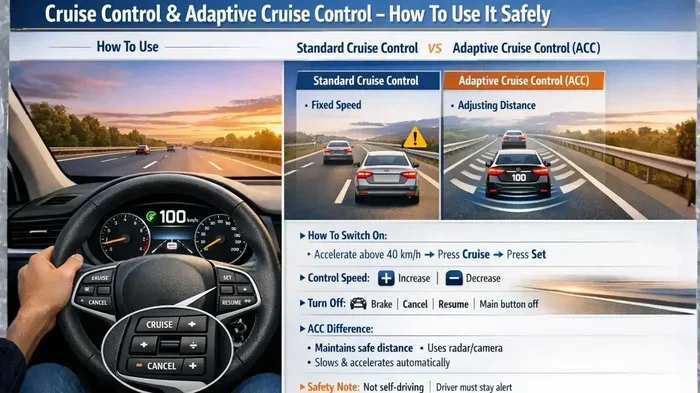
Cruise control is the most common tool drivers use to keep a car running at a constant speed. It is a system that automatically manages the throttle position, adjusting it as needed to maintain your chosen speed without any input from your foot.
How Cruise Control Works
When you activate cruise control, the system takes over the throttle. It uses sensors to monitor your current speed and compares it to the speed you have set. If the car starts to slow down, the system opens the throttle slightly to add power. If the car speeds up, it reduces the throttle to ease off. This constant adjustment happens so smoothly that you barely notice it.
The beauty of cruise control is that it removes the small, unconscious movements you make when driving manually. Those tiny adjustments to the gas pedal can cause speed fluctuations that waste fuel and create an uncomfortable ride. Cruise control eliminates that problem entirely, letting you enjoy a smooth and consistent driving experience.
Modern Adaptive Cruise Control
Today’s vehicles often come with adaptive cruise control. This advanced version uses radar and cameras to detect the speed of vehicles ahead. It can automatically slow your car down if traffic slows and then resume your preset constant speed when the road clears. This technology makes highway driving even more relaxing and safer for everyone on the road.
When to Use Cruise Control
Cruise control works best on flat highways and open roads. It is ideal for long drives where you want to maintain a steady pace and reduce driver fatigue. However, it is not always the best choice. In heavy traffic, on winding roads, or in wet conditions, you should turn it off and take manual control. Using cruise control inappropriately can actually reduce safety and create dangerous situations.
The Science Behind Constant Speed Driving
There is real physics behind why a car runs at a constant speed. Understanding the science can help you become a smarter, more efficient driver.
Newton’s First Law of Motion
Newton’s first law states that an object in motion stays in motion unless acted upon by an external force. This principle applies directly to your vehicle. Once a car reaches a constant speed, it wants to stay at that speed. The engine simply needs to provide enough power to counteract the resisting forces like drag and friction.
This is why a car running at a constant speed on a flat highway requires less energy than one that is constantly accelerating and braking. The engine only needs to fight steady-state resistance, not the extra forces created by changes in velocity. This is one of the fundamental reasons why highway driving is more fuel-efficient than city driving.
Engine Load and Fuel Injection
When a car runs at a constant speed, the engine operates at a steady load. The fuel injection system delivers a precise amount of fuel based on the current demand. This steady state is actually one of the most efficient operating conditions for an engine. The engine does not waste energy constantly changing between high and low power outputs.
Modern fuel injection systems are incredibly precise. They can adjust the fuel-air mixture in milliseconds to keep the engine running smoothly at a constant speed. This precision is a big reason why steady highway driving is so fuel-efficient compared to stop-and-go city driving.
Gear Ratio and Transmission
The gear ratio plays a crucial role in constant speed driving. A higher gear at a steady pace means the engine can run at lower RPMs, which reduces fuel consumption and engine wear. Automatic transmissions are designed to find the optimal gear for your speed, but manual drivers can also shift up early to achieve better efficiency.
Think of it like pedaling a bicycle. When you are in a high gear on flat ground, you can maintain a steady pace with less effort. The same principle applies to your car. Choosing the right gear ratio for your driving conditions makes a noticeable difference in performance and fuel economy.
Benefits of Driving at a Constant Speed
Driving at a steady pace offers many advantages that go beyond just comfort. Let us look at the key benefits in detail.
Improved Fuel Economy
One of the biggest benefits is better fuel economy. When your car runs at a constant speed, the engine operates in its most efficient range. Studies show that maintaining a steady speed on the highway can improve fuel economy by up to 15% compared to frequent acceleration and braking. Over time, this adds up to significant fuel cost savings.
For the average driver who commutes 30 miles a day, that could mean saving several hundred dollars per year on fuel. The savings really add up when you consider the cost of gas and the wear on your vehicle. Better fuel economy also means fewer trips to the gas station, which saves you time and hassle.
Reduced Engine Wear
Constantly changing speeds puts extra stress on the engine, transmission, and brakes. A car that runs at a constant speed experiences less wear on these components. The engine does not need to constantly ramp up and down, which means fewer temperature fluctuations and less strain on internal parts.
Over the life of your vehicle, this reduced wear can translate to fewer repairs and a longer-lasting engine. It is one of those rare cases where good driving habits directly benefit your wallet. Regular constant speed driving on highways is one of the best things you can do for your vehicle’s longevity.
Smoother and Safer Driving
Steady speed driving leads to smoother rides. Passengers experience less jerking and sudden movements. This also improves safety because predictable driving gives other drivers on the road a better sense of your intentions. It reduces the chance of sudden surprises that can lead to accidents.
When you maintain a constant velocity, you are easier for other drivers to predict. This predictability is a cornerstone of safe driving. It helps everyone on the road react appropriately and reduces the risk of collisions. Smooth driving is simply safer driving for everyone.
Lower Emissions
A car that maintains a constant speed produces fewer emissions. The engine runs more cleanly when it is not constantly adjusting to changing power demands. This is better for the environment and can help you pass emissions inspections more easily.
With stricter emissions regulations becoming more common, driving habits that reduce your vehicle’s output matter more than ever. Constant speed driving is a simple way to do your part for the environment while also enjoying a better driving experience. Every little bit helps when it comes to reducing our collective carbon footprint.
Comparison: Constant Speed vs. Variable Speed Driving
| Factor | Constant Speed Driving | Variable Speed Driving |
|---|---|---|
| Fuel Efficiency | Higher – engine runs in optimal range | Lower – frequent changes waste fuel |
| Engine Wear | Less stress on components | More stress from acceleration and braking |
| Passenger Comfort | Smooth, predictable ride | Jerky movements, discomfort |
| Emissions | Lower emissions output | Higher emissions output |
| Safety | More predictable for other drivers | Harder to predict, more sudden changes |
| Driver Fatigue | Less fatigue on long drives | More fatigue from constant adjustments |
The comparison above makes it clear that maintaining a steady pace offers advantages across nearly every category. While variable speed driving is sometimes unavoidable in city traffic, making constant speed driving a habit on highways and open roads is well worth the effort. Even small improvements in your driving style can lead to meaningful results over time.
Common Problems That Disrupt Steady Speed
Even with the best driving habits, several issues can prevent a car from running at a constant speed. Here are the most common culprits you should watch out for.
Throttle Position Sensor Issues
The throttle position sensor tells the engine how much air and fuel to deliver. If this sensor malfunctions, the engine may surge or hesitate, making it impossible to hold a steady speed. You might notice the speedometer needle jumping up and down even when you are not touching the gas pedal.
A faulty throttle position sensor is one of the most common reasons a car cannot maintain a constant speed. If you experience this issue, have the sensor checked by a qualified mechanic as soon as possible. Ignoring it can lead to worse problems and higher repair costs down the road.
Dirty Fuel Injectors
Over time, fuel injectors can become clogged with carbon deposits. Dirty injectors deliver inconsistent fuel amounts, causing the engine to sputter or lose power. This disrupts the constant velocity you are trying to maintain. Regular fuel system cleaning can help prevent this problem.
Using fuel additives or getting a professional fuel system cleaning every 30,000 miles can keep your injectors in good shape. This small maintenance step pays off in smoother driving and better fuel economy. Clean injectors are essential for the engine to run at its best.
Tire Pressure Problems
Underinflated or overinflated tires create uneven rolling resistance. This means the engine has to work harder to maintain a steady pace. Check your tire pressure regularly and keep it at the manufacturer’s recommended level for the best results.
Even a few PSI below the recommended level can increase fuel consumption and make it harder for your car to hold a constant speed. A simple monthly check can make a big difference. Invest in a reliable tire pressure gauge and make it part of your monthly routine.
Brake Drag
Sometimes, a caliper can stick and cause slight brake drag. This creates resistance that makes it hard for the car to hold a constant speed. You might notice the brakes feel warm after driving, or you see a slight drop in fuel economy. Getting this checked early can prevent bigger problems.
Brake drag is a sneaky problem because it does not always produce obvious symptoms. If your car seems to struggle to maintain a steady pace despite a healthy engine, brake drag could be the cause. A quick inspection by a mechanic can identify and fix this issue before it worsens.
Tips for Keeping Your Car at a Constant Speed
Here are some practical tips to help you maintain a steady pace on every drive. These habits are easy to adopt and make a real difference over time.
Use Cruise Control Wisely
Activate cruise control on highways and open roads where it is safe to do so. Set your desired speed and let the system handle the throttle. This not only keeps your car at a constant speed but also reduces foot fatigue on long trips.
Remember that cruise control is a tool, not a replacement for attentive driving. Always stay alert and keep your hands on the wheel. Use cruise control as a way to enhance your driving, not as a reason to zone out. The best drivers use technology to support their skills, not replace them.
Anticipate Road Conditions
Look ahead and anticipate changes in the road. If you see a hill coming, slightly adjust your speed before you reach it. This prevents the engine from working too hard uphill and coasting too fast downhill. Smooth driving leads to better constant speed maintenance.
Experienced drivers develop a habit of looking several cars ahead. This gives them more time to react and make smooth adjustments. The result is a more consistent pace and a more relaxed drive. Practicing this habit will improve your driving within just a few weeks.
Keep Your Vehicle Well Maintained
Regular maintenance is key to steady speed driving. Change your air filters, spark plugs, and oil on schedule. A well-maintained engine runs more smoothly and responds better when you need to hold a consistent pace.
Follow your vehicle’s service schedule and do not skip recommended maintenance. A well-tuned engine is the foundation of constant speed driving. It ensures all systems are working together as they should. Think of maintenance as an investment that pays off every time you drive.
Watch Your Speedometer
Make it a habit to glance at your speedometer regularly. This keeps you aware of your current pace and helps you catch any small speed changes before they become noticeable. Many drivers find that this simple practice improves their overall driving consistency.
Some drivers rely too heavily on cruise control and forget to monitor their speed manually. Even with cruise control active, keep an eye on the speedometer to ensure you are within the safe and legal speed range. Awareness is the first step toward better driving habits.
Plan Your Routes
Choose routes with fewer stops and less traffic when possible. Stop-and-go driving makes it nearly impossible to maintain a constant speed. If you have the option, take the highway or less congested roads for a smoother, more efficient drive.
Routing apps can help you find the best path for your trip. Look for routes with fewer traffic lights and less congestion when constant speed driving is your goal. A little planning goes a long way toward a more enjoyable and efficient drive.
Quick Tips for Constant Speed Driving
- Keep your eyes on the road ahead to anticipate changes in traffic and road conditions.
- Use cruise control on flat, open highways for the best results.
- Check tire pressure at least once a month to maintain even rolling resistance.
- Avoid sudden braking and rapid acceleration whenever possible.
- Keep your vehicle well-maintained with regular service appointments.
- Drive in the highest gear possible without straining the engine.
- Stay relaxed and avoid tensing up while driving to promote smooth inputs.
Expert Insight from Automotive Professionals
Automotive experts agree that constant speed driving is one of the simplest ways to improve fuel economy and reduce vehicle wear. According to many mechanics, drivers who maintain a steady pace on highways tend to have fewer brake and transmission issues over the life of their vehicles. The key is consistency and awareness behind the wheel.
Many driving instructors also emphasize that smooth inputs are the foundation of efficient driving. Gentle steering, gradual acceleration, and steady braking all contribute to a more consistent speed and a safer ride. These habits become second nature with practice and make a noticeable difference in how your vehicle performs day after day.
Common Mistakes That Affect Constant Speed Driving
Even experienced drivers sometimes make habits that work against steady speed driving. Here are the most common mistakes to avoid so you can get the most out of your driving.
Riding the Brake
Some drivers lightly tap the brakes without realizing it. This creates drag that forces the engine to work harder. Over time, riding the brake can wear out your brake pads and reduce fuel efficiency. Make sure your foot is completely off the brake pedal when you are cruising on the highway.
This is a surprisingly common habit, especially among nervous or fatigued drivers. If you find yourself resting your foot near the brake pedal, consciously move it to the floor beside the pedal. This small change can make a big difference in your fuel economy and brake pad longevity.
Overloading the Vehicle
Carrying heavy loads increases the engine load and makes it harder to maintain a constant speed. The engine needs more fuel and power to move a heavier vehicle, which can disrupt your steady pace and increase fuel consumption. Extra weight also puts more stress on your brakes and suspension.
Before a long trip, check your trunk and back seat for unnecessary items. Removing excess weight can improve your car’s ability to maintain a constant speed and boost your fuel economy at the same time. A lighter vehicle is always more efficient and easier to control.
Ignoring Dashboard Warnings
Dashboard warning lights are your vehicle’s way of telling you something needs attention. Ignoring them can lead to problems that affect your car’s ability to maintain a steady speed. If you see a check engine light or any warning, get it checked promptly.
Modern vehicles are full of sensors that monitor everything from engine performance to tire pressure. When a warning light comes on, it is your car telling you something needs attention. Addressing issues early prevents them from becoming bigger problems that disrupt your constant speed driving and cost you more money in repairs.
Conclusion
When a car runs at a constant speed, it is a sign that everything is working in harmony. The engine, transmission, throttle, and even the road conditions all come together to create a smooth, efficient driving experience. This simple state of steady motion offers real benefits, from better fuel economy to reduced wear on your vehicle.
By understanding how the systems work and following the tips in this guide, you can make constant speed driving a regular part of your routine. Use cruise control when it is safe, keep up with maintenance, and stay aware of your driving habits. Small changes can lead to big improvements in how your vehicle performs and how much you spend on fuel.
Take what you have learned here and put it into practice on your next drive. Your wallet, your engine, and your passengers will thank you. A car running at a constant speed is not just a driving technique – it is a smarter, more efficient way to travel every single day.
Frequently Asked Questions
Is driving at a constant speed good for your car?
Yes, driving at a constant speed is generally very good for your vehicle. It reduces stress on the engine, transmission, and brakes because there are no sudden changes in power demand. Over time, this can lead to fewer repairs and a longer-lasting vehicle overall.
How does cruise control work to maintain constant speed?
Cruise control uses sensors to monitor your current speed and compares it to the speed you have set. If your car slows down, the system gently opens the throttle to add power. If you speed up, it reduces the throttle. This automatic adjustment happens continuously and smoothly, keeping your car at a steady pace without any input from your foot.
Does driving at a constant speed save fuel?
Yes, maintaining a constant speed can significantly improve your fuel economy. Studies show that steady highway driving can improve fuel efficiency by up to 15% compared to frequent acceleration and braking. The engine operates in its most efficient range when it does not constantly need to change power output.
What happens if you drive at a constant speed too long?
Driving at a constant speed for long periods is generally not harmful and is actually beneficial for your engine. However, it is important to stay alert and take breaks on long drives. The main risk is driver fatigue, not vehicle damage. Using cruise control can help reduce fatigue by taking the pressure off your foot.
Can a car maintain a constant speed uphill?
It can be challenging for a car to maintain a constant speed uphill because the engine needs more power to overcome gravity. Manual transmission drivers may need to downshift, and cruise control systems may struggle on steep inclines. On gentle hills, most vehicles can handle it with ease, but very steep grades may require driver intervention.
Is constant speed driving safe in all conditions?
Constant speed driving is safe on highways and open roads under normal conditions. However, it is not always appropriate. In heavy traffic, on wet or icy roads, or on winding paths, you should take manual control and adjust your speed frequently. Safety always comes first, and adapting your speed to road conditions is a key part of responsible driving.