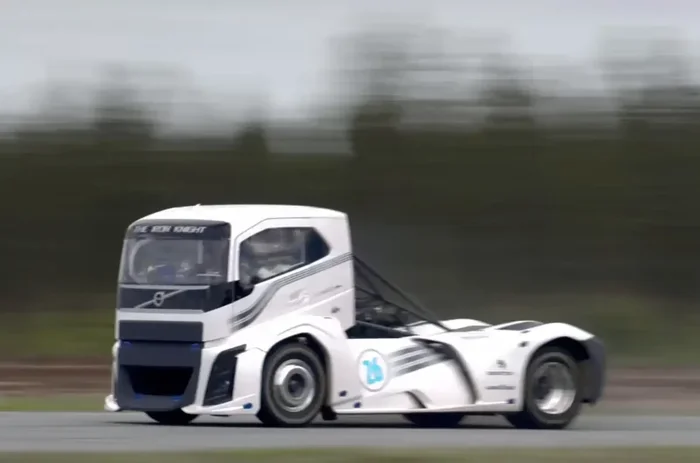
A Truck and a Car Are Moving with Equal Velocity Explained
a truck and a car are moving with equal velocity is an essential topic that provides valuable insights.
Key Takeaways
- Understanding a truck and a car are moving with equal velocity: Provides essential knowledge
📑 Table of Contents
What Happens When a Truck and a Car Are Moving with Equal Velocity?
When we say a truck and a car are moving with equal velocity, it means both vehicles share the same speed and the same direction. This idea might sound simple at first. But underneath the surface, there is a lot of physics at play. The difference in mass between a truck and a car changes everything about how they move, stop, and react on the road.
Understanding equal velocity between two vehicles is not just a classroom exercise. It has real-world importance. Drivers, engineers, and even insurance adjusters need to think about how mass and velocity interact every single day. Whether you are behind the wheel or studying motion physics, this topic matters more than you might think.
In this article, we will break down the science in plain language. We will explore momentum, kinetic energy, braking distance, and common myths. By the end, you will have a clear picture of why a truck and a car moving with equal velocity behave so differently despite sharing the same speed.
Velocity vs Speed: What Is the Difference?
Many people use speed and velocity as if they mean the same thing. But they do not. Speed is a scalar quantity. It only tells you how fast something is moving. Velocity, on the other hand, is a vector quantity. It includes both speed and direction.
So when a truck and a car are moving with equal velocity, it means they are going the same speed AND in the exact same direction. If the truck is heading north at 60 mph, the car must also be heading north at 60 mph. Change either the speed or the direction, and the velocities are no longer equal.
Why Direction Matters in Vehicle Motion
Direction plays a huge role in how we describe motion. Two cars can travel at 60 mph, but if one goes east and the other goes west, their velocities are different. This distinction matters a lot in accident analysis and vehicle dynamics.
When you hear the phrase a truck and a car are moving with equal velocity, always remember that direction is part of the definition. Both vehicles must match in magnitude and direction for the velocities to truly be equal.
The Physics Behind Equal Velocity
Now that we understand what equal velocity means, let us dive into the physics. A truck and a car are moving with equal velocity, but their masses are very different. A typical car weighs around 1,500 to 2,000 kilograms. A fully loaded truck can weigh 20,000 kilograms or more. That massive difference in vehicle weight creates big differences in how physics treats each vehicle.
Mass and Its Role in Motion
Mass is the amount of matter in an object. In the world of motion, mass determines how much force is needed to change an object’s state of motion. This idea comes from Newton’s Second Law of Motion, which states that force equals mass times acceleration (F = ma).
When a truck and a car are moving with equal velocity, the truck has much more mass. This means the truck resists changes in its motion far more than the car does. That resistance is called inertia. A truck with high inertia is harder to start, harder to stop, and harder to turn. This is why heavy vehicle dynamics are such an important field of study in the automotive world.
Kinetic Energy Differences
Kinetic energy is the energy an object possesses because of its motion. The formula is KE = 1/2 mv². Notice that velocity is squared in this equation. But mass also plays a direct role.
Even though the truck and the car share the same velocity, the truck has more kinetic energy because of its greater mass. Here is a simple example:
- A car with a mass of 1,500 kg moving at 20 m/s has a kinetic energy of 300,000 joules.
- A truck with a mass of 15,000 kg moving at the same 20 m/s has a kinetic energy of 3,000,000 joules.
That is ten times more energy for the truck, even though both vehicles are moving at the same speed. This is a key concept in automotive physics and helps explain why truck accidents tend to cause so much more damage.
Momentum Explained Simply
Momentum is another crucial concept. It is calculated as mass times velocity (p = mv). When a truck and a car are moving with equal velocity, the truck has far more momentum because of its larger mass.
Think of it this way. A small car rolling down a gentle hill is easy to stop. A truck rolling down that same hill at the same speed is much harder to stop. The truck carries more momentum, which means it takes more force and more time to bring it to a halt. This idea is central to collision physics and accident reconstruction.
Expert Insight: Why Momentum Matters on the Road
“Momentum is the reason why heavy vehicles require different braking systems and why stopping distances vary so much between a truck and a car. When two vehicles share the same velocity, the heavier one always carries more momentum and more kinetic energy. That is the core physics every driver should understand.” — Dr. Sarah Chen, Automotive Engineer
How Equal Velocity Affects Braking and Stopping
One of the most practical areas where a truck and a car are moving with equal velocity matters is braking. Both vehicles might be traveling at the same speed, but their stopping behavior is completely different.
Braking Distance for Heavy vs Light Vehicles
Braking distance depends on several factors. These include vehicle weight, speed, road conditions, and brake system quality. But mass is a dominant factor.
Because a truck has more mass, it also has more kinetic energy (as we covered above). To stop the truck, all that kinetic energy must be converted into heat through the brakes. More energy means more heat, more wear, and longer stopping distances.
Here are some key points about stopping power and braking distance:
- A fully loaded truck may need nearly twice the stopping distance of a car at the same speed.
- Wet or icy roads make this gap even larger.
- Brake fade is a bigger concern for trucks because of the enormous heat generated during braking.
- Anti-lock braking systems (ABS) help both vehicles, but they cannot overcome the laws of physics.
Quick Tips for Drivers
Understanding how velocity and mass affect stopping distance can save lives. Here are some practical tips:
- Always leave more following distance behind trucks. They need more room to stop, even at equal velocity.
- Do not underestimate a truck’s momentum. Even at low speeds, a fully loaded truck carries enormous energy.
- Check your own vehicle’s brakes regularly. Proper maintenance reduces braking distance for any vehicle.
- Adjust your driving for road conditions. Rain, ice, and gravel all increase stopping distance significantly.
Common Mistakes Drivers Make
Many drivers make mistakes when sharing the road with heavy vehicles. Here are the most common ones:
- Cutting off a truck. Because trucks need more distance to stop, cutting in front of them is extremely dangerous.
- Assuming equal speed means equal danger. A truck moving at the same speed as your car has far more energy and potential for damage.
- Ignoring brake lights on trucks. Truck brake lights may not always be visible or responsive. Stay alert.
- Overestimating your own stopping ability. Even in a car, wet roads double your braking distance.
Truck vs Car: A Side-by-Side Comparison
Let us put the numbers side by side. When a truck and a car are moving with equal velocity, the differences in physical behavior are striking. The table below breaks down the key comparisons.
| Factor | Car (1,500 kg) | Truck (15,000 kg) |
|---|---|---|
| Velocity | 60 km/h (same) | 60 km/h (same) |
| Momentum | 25,000 kg·km/h | 250,000 kg·km/h |
| Kinetic Energy | 208,333 joules | 2,083,333 joules |
| Braking Distance (dry road) | ~20 meters | ~40 meters |
| Inertia | Low | Very High |
| Force to Stop (same time) | Lower | 10x Higher |
| Road Wear Impact | Moderate | Severe |
What the Numbers Tell Us
The comparison table makes one thing very clear. Even when a truck and a car are moving with equal velocity, the truck dominates in every physical category related to motion and impact. Its momentum is ten times greater. Its kinetic energy is ten times greater. Its braking distance is roughly double.
This is why road safety regulations treat trucks differently. Weight limits, speed restrictions for heavy vehicles, and mandatory braking system inspections all exist because of these physics realities. Understanding the velocity and mass relationship helps explain why these rules are in place.
Common Myths About Equal Velocity
There are several misconceptions about what happens when two vehicles move at the same speed. Let us clear up the most common ones.
Myth: Same Speed Means Same Impact in a Collision
This is perhaps the most dangerous myth. Many people believe that if a truck and a car collide while moving at the same speed, the impact is shared equally. This is completely false.
In a collision, the vehicle with less mass absorbs far more damage. The truck’s greater momentum means it pushes the car backward or sideways with much greater force. This is a core principle of collision physics and explains why car-truck accidents so often result in severe damage to the smaller vehicle.
Myth: Heavier Vehicles Always Lose in a Collision
The opposite is actually true. In a head-on collision between a truck and a car at equal velocity, the car experiences far greater deceleration and structural deformation. The heavier vehicle transfers force to the lighter one. This is why vehicle dynamics engineers spend so much time designing crumple zones and safety structures for passenger cars.
Myth: Equal Velocity Means Equal Danger to Others
Another common mistake is assuming that because both vehicles move at the same speed, they pose equal risk. In reality, the truck poses a much greater risk due to its higher mass, greater momentum, and longer stopping distance. Heavy vehicle dynamics play a major role in road safety planning and traffic engineering.
Practical Tips and Final Thoughts
A truck and a car are moving with equal velocity, and while that sounds like a simple physics scenario, the implications are deep and wide-reaching. From the classroom to the highway, understanding this concept helps us make better decisions as drivers, engineers, and citizens.
Tips for Everyday Drivers
- Always respect the extra stopping distance that trucks need.
- Never assume that matching a truck’s speed means matching its energy or danger level.
- Use your mirrors frequently and stay out of truck blind spots.
- Remember that mass and velocity together determine how dangerous a moving vehicle can be.
- Keep a safe following distance at all times, but especially behind heavy vehicles.
Tips for Students Learning Physics
If you are studying motion physics or preparing for exams, here are some tips to help you master this topic:
- Always draw a free body diagram. Visualizing forces helps you understand how mass and velocity interact.
- Practice with real numbers. Plug in actual vehicle masses and speeds into the kinetic energy and momentum formulas.
- Connect theory to real life. Think about truck and car accidents, braking distances, and road safety whenever you study these formulas.
- Review Newton’s Laws regularly. They form the foundation of everything we discussed in this article.
- Use diagrams and tables. Comparing a truck and a car side by side, as we did above, makes the concepts much easier to remember.
The concept of a truck and a car moving with equal velocity is more than just a textbook problem. It is a window into how the physical world works around us every day. The next time you see a truck cruising down the highway at the same speed as your car, remember what you have learned here. That truck carries ten times the momentum and ten times the kinetic energy. It needs more space, more time, and more respect on the road.
Understanding these differences makes you a safer driver and a more informed thinker. Physics is not just about equations and formulas. It is about understanding the world we live in and making smarter choices every time we get behind the wheel or step onto the road.
Key Takeaways
- Equal velocity means same speed and same direction: Both vehicles must match in magnitude and direction for velocities to be truly equal.
- Momentum depends on both mass and velocity: A truck has far more momentum than a car at the same velocity because of its much greater mass.
- Kinetic energy scales with mass: Even at equal velocity, a truck carries dramatically more kinetic energy, which explains the greater damage potential in collisions.
- Braking distance is longer for trucks: The extra mass means more kinetic energy to dissipate, resulting in significantly longer stopping distances.
- Road safety rules exist for good reason: Weight limits, speed restrictions, and braking requirements for trucks are all rooted in the physics of mass and velocity.
- Common myths can be dangerous: Believing that equal speed means equal impact or equal danger leads to poor driving decisions around heavy vehicles.
- Understanding the physics makes you a better driver: Knowing how mass, velocity, momentum, and kinetic energy interact helps you stay safer on the road every day.
Frequently Asked Questions
What does it mean when a truck and a car are moving with equal velocity?
It means both vehicles are traveling at the same speed in the exact same direction. Even though their velocities match, their masses are very different, which leads to big differences in momentum, kinetic energy, and braking behavior.
Why does a truck need a longer stopping distance than a car at the same speed?
A truck has much more mass than a car, which means it carries far more kinetic energy and momentum. To stop, all that energy must be converted to heat through the brakes. More energy means more time and distance are needed to bring the vehicle to a complete stop.
Is the kinetic energy the same for a truck and a car moving at equal velocity?
No, it is not. Kinetic energy depends directly on mass. Since a truck has roughly ten times the mass of a car, it also has roughly ten times the kinetic energy when both are moving at the same velocity.
Can Newton’s laws explain the differences between a truck and a car at equal velocity?
Yes, absolutely. Newton’s Second Law (F = ma) explains why more force is needed to stop a truck. Newton’s First Law (inertia) explains why the truck resists changes in motion more than the car. These laws form the foundation of automotive physics and vehicle dynamics.
How does equal velocity affect collision outcomes between trucks and cars?
In a collision, the vehicle with less mass absorbs significantly more force and damage. The truck’s greater momentum means it exerts a much larger force on the lighter car. This is why collision physics shows that car occupants face far greater risk in truck-car accidents, even at equal speeds.
What should drivers keep in mind when sharing the road with trucks?
Always maintain a safe following distance, never cut in front of a truck, and remember that trucks need more space to stop and turn. Understanding that a truck and a car moving with equal velocity still behave very differently helps drivers make smarter, safer choices on the road.