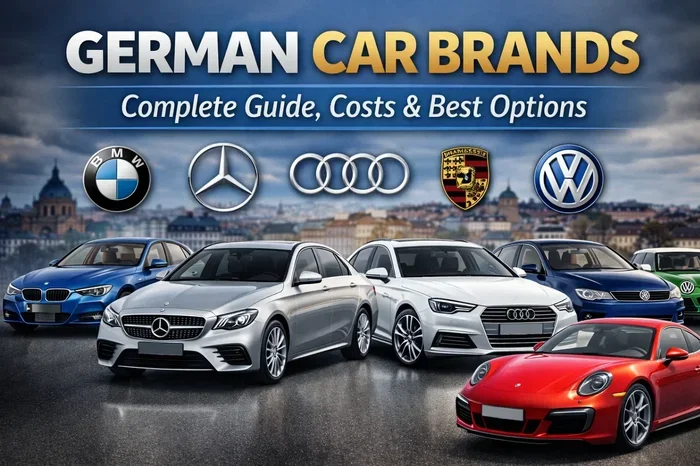
All German Car Brands Ranked by Reliability and Price
Looking at all German car brands ranked by reliability and price? This guide covers every major and niche German automaker from BMW to Volkswagen. You will learn which German car brands offer the best reliability scores and which ones fit different budgets. We break down prices, common issues, and expert tips so you can make a smart buying choice.
Germany is one of the biggest car-making countries in the world. When you think of all German car brands, names like BMW, Mercedes-Benz, and Audi likely come to mind first. But there is so much more to explore. From affordable Volkswagens to exotic Gumpert supercars, the German auto industry has something for nearly every type of driver.
In this guide, we rank all German car brands by two things that matter most to buyers: reliability and price. Whether you want a daily driver, a family SUV, or a weekend toy, this article helps you find the right fit. We also share tips on what to watch out for and how to avoid common mistakes.
Understanding German car brands list options gives you an edge. You will know which brands hold their value, which ones need costly repairs, and which ones deliver the best bang for your buck. Let us dive in.
Key Takeaways
- Germany has over 30 car brands: From global giants like BMW and Mercedes-Benz to small startups like Cusco and Gumpert.
- Reliability varies widely: Porsche and Volkswagen often score high, while some luxury brands cost more to maintain.
- Price ranges are huge: You can find affordable German cars under $30,000 or luxury models over $200,000.
- Maintenance costs matter: German car maintenance cost is a key factor to consider before buying.
- Best for different needs: Sports cars, SUVs, sedans, and electric vehicles all have strong German options.
- Do your research: Comparing reliability ratings and ownership costs helps you pick the right German car brand.
📑 Table of Contents
Why German Car Brands Stand Out
German cars have a strong reputation worldwide. They are known for precision engineering, solid build quality, and advanced technology. But what really sets them apart?
A Legacy of Engineering Excellence
Germany has been making cars for over 130 years. Karl Benz patented the first automobile in 1886, and the industry has grown ever since. This long history means German engineers have deep experience. They know how to build engines that last, chassis that handle well, and interiors that feel premium.
Focus on Quality and Safety
German automakers put a big emphasis on safety. Many German luxury cars come packed with advanced driver-assistance features. Brands like Mercedes-Benz and Audi often lead the way with new safety tech. This focus on quality makes German vehicles a popular choice around the globe.
Strong Brand Identity
Each German car brand has its own personality. BMW stands for driving fun. Mercedes-Benz screams luxury. Volkswagen focuses on practicality. Porsche builds pure sports cars. When you look at all German car brands, you see a wide range of identities and goals.
Complete List of All German Car Brands
Germany is home to more than 30 car manufacturers. Some are household names. Others are niche or niche-luxury brands that only hardcore fans know. Here is a look at the full landscape of German car manufacturers.
Major German Car Brands
- BMW – Bavarian Motor Works. Known for sporty sedans and SUVs.
- Mercedes-Benz – The luxury leader. Makes everything from sedans to SUVs to AMG performance cars.
- Audi – Part of the Volkswagen Group. Known for Quattro all-wheel drive and sleek design.
- Volkswagen – The people’s car maker. Affordable and reliable models for everyday driving.
- Porsche – Premium sports cars and SUVs with stellar performance.
- Opel – A General Motors partner for years. Now part of Stellantis. Makes affordable cars for Europe.
Premium and Luxury Brands
- Maybach – Ultra-luxury sub-brand of Mercedes-Benz. Makes the finest sedans and SUVs.
- AMG – Mercedes-AMG builds high-performance versions of Mercedes models.
- M Performance – BMW’s performance division. Adds sport upgrades to standard BMW models.
- RS Models (Audi) – Audi’s high-performance line. Cars like the RS6 and RS7 are powerhouses.
Niche and Specialty German Brands
- Porsche – We mentioned it above, but it deserves its own spot as a standalone icon.
- Gumpert – Makes supercars like the Apollo. Very rare and very fast.
- Cusco – A smaller brand focused on performance parts and cars.
- Artega – Builds lightweight sports cars with unique designs.
- Isdera – Ultra-niche maker of hand-built sports cars.
- Wiesmann – Handcrafted luxury sports cars with a loyal fanbase.
When you look at all German car brands, the variety is impressive. There is something for every budget and every taste. Whether you want a practical hatchback or a million-dollar hypercar, Germany likely makes one.
German Car Brands Ranked by Reliability
Reliability is one of the most important factors when choosing a car. A reliable car means fewer trips to the shop and lower repair bills. Let us rank the top German brands by how well their cars hold up over time.
Porsche
Porsche often tops reliability charts for German brands. Their cars are built with tight tolerances and high-quality materials. The Porsche 911 has a reputation for lasting hundreds of thousands of miles with proper care. Porsche also has lower maintenance costs than many luxury rivals.
Volkswagen
Volkswagen models like the Golf and Jetta are known for solid reliability. The brand focuses on practical engineering. While not as exciting as a Porsche, a VW can be a dependable daily driver for many years. German vehicle reliability studies often place VW in the top half of the pack.
BMW
BMW offers a mixed reliability picture. Newer models have improved a lot, but older ones can be costly to fix. The inline-six and V8 engines are generally durable. However, electronic issues and turbo failures can pop up on some models. Overall, BMW ranks in the middle for car reliability ratings.
Audi
Audi sits in a similar reliability range as BMW. The Quattro system is robust and long-lasting. However, complex tech features can lead to expensive repairs as cars age. Audi’s reliability has been improving with newer platforms. Premium German vehicles like Audi tend to need more upkeep than mainstream brands.
Mercedes-Benz
Mercedes-Benz has made great strides in reliability. Newer models are much more dependable than older ones. However, the cost of repairs can be steep. Luxury German sedans and SUVs from Mercedes often require specialized service. Overall, Mercedes ranks slightly below Porsche and VW for reliability but above average for the luxury segment.
Niche Brands
Smaller brands like Gumpert, Isdera, and Artega are harder to evaluate. Their low production numbers mean less data. However, hand-built cars often receive more individual attention during assembly. Reliability can vary widely depending on the specific model and how well it is maintained.
| Brand | Reliability Rating | Common Issues |
|---|---|---|
| Porsche | Excellent | Minimal issues with proper maintenance |
| Volkswagen | Good | Electrical gremlins in older models |
| BMW | Average | Turbo failures, electronics, cooling systems |
| Audi | Average | Oil leaks, turbo issues, complex tech |
| Mercedes-Benz | Average to Good | Air suspension, electronics, oil leaks |
| Niche Brands | Varies | Limited data, depends on model |
When you compare all German car brands for reliability, Porsche and Volkswagen clearly lead the pack. Luxury brands can be reliable but often cost more to keep in good shape.
German Car Brands Ranked by Price
Price is the other big factor. German cars range from very affordable to extremely expensive. Let us break down what you can expect to pay.
Budget-Friendly German Brands
Volkswagen is the most affordable German brand. Models like the VW Golf and Jetta start around $25,000 to $30,000 in the US market. These are affordable German cars that offer good value. Opel models in Europe are also very budget-friendly.
Mid-Range German Brands
BMW, Audi, and Mercedes-Benz entry-level models fall in the mid-range. A BMW 3 Series starts around $40,000. An Audi A4 starts around $42,000. A Mercedes-Benz C-Class starts around $45,000. These are German sedans and German SUVs that balance luxury with price.
Premium and Luxury German Brands
Porsche sits in the premium range. A base Porsche 718 starts around $65,000. A Cayenne SUV starts around $70,000. Mercedes-Maybach models can exceed $200,000. These are luxury car brands Germany buyers dream about.
Niche and Supercar Brands
Brands like Gumpert, Isdera, and Artega are in a league of their own. These cars can cost $300,000 or more. They are not for everyday driving. They are for collectors and enthusiasts who want something truly unique from German car brands list offerings.
Cost of Ownership Matters Too
When you think about German car brands and price, do not just look at the sticker. Consider the German car maintenance cost over time. Luxury brands cost more to insure, more to repair, and more to service. A Volkswagen might be cheaper to buy, but a Porsche can hold its value better. Think about total cost of ownership, not just the purchase price.
| Brand | Starting Price (USD) | Avg. Maintenance Cost/Year |
|---|---|---|
| Volkswagen | $25,000 – $35,000 | $800 – $1,200 |
| BMW | $40,000 – $55,000 | $1,200 – $2,000 |
| Audi | $42,000 – $58,000 | $1,300 – $2,100 |
| Mercedes-Benz | $45,000 – $60,000 | $1,400 – $2,200 |
| Porsche | $65,000 – $110,000 | $1,500 – $2,500 |
| Maybach | $180,000+ | $2,500+ |
| Niche/Supercar | $300,000+ | $3,000+ |
As you can see, all German car brands span a wide price range. Your budget will largely determine which brands and models make sense for you.
Which German Car Brand Is Right for You?
Choosing the right German car brand depends on your needs, budget, and lifestyle. Here is a quick guide to help you decide.
Best for Daily Driving
If you need a reliable car for your daily commute, look at Volkswagen or BMW. The VW Golf is a fantastic all-rounder. The BMW 3 Series offers a great blend of comfort and driving fun. Both are widely serviced, so parts and mechanics are easy to find.
Best for Families
Mercedes-Benz and Audi make excellent family vehicles. The Mercedes GLE and Audi Q7 are spacious, safe, and comfortable. They come packed with tech features that keep everyone entertained on long road trips. German SUVs are among the best family haulers on the market.
Best for Enthusiasts
If you love driving, Porsche is the clear winner. The 911 is one of the best sports cars ever made. For a more affordable option, consider a BMW M Series or an Audi RS model. These cars deliver thrilling performance without breaking the bank entirely.
Best for Luxury Seekers
Mercedes-Benz and Audi are the top choices for luxury. The Mercedes S-Class is the gold standard for sedans. The Audi A8 offers a more understated elegance. If you want ultra-luxury, the Maybach lineup is unmatched.
Best for Budget Buyers
Volkswagen is your best bet. The Golf, Jetta, and Tiguan offer great value. You get German engineering and quality at a price that does not hurt. Affordable German cars like these are perfect for first-time luxury brand buyers or anyone who wants a solid car without overspending.
Common Mistakes Buyers Make with German Cars
Buying a German car can be a great experience. But many buyers make mistakes that cost them money and headaches. Here are the most common ones to avoid.
Skipping the Maintenance Schedule
German cars need regular maintenance. Skipping oil changes or ignoring warning lights can lead to big problems. Always follow the German car maintenance cost schedule recommended by the manufacturer. It will save you money in the long run.
Ignoring Repair Costs
Many buyers focus only on the purchase price. They forget that luxury German cars cost more to repair. Parts are expensive, and not every shop can work on them. Find a trusted mechanic who specializes in German vehicle reliability and repairs before you buy.
Buying Used Without a Pre-Purchase Inspection
Always get a pre-purchase inspection from a qualified mechanic. This is especially important for used German cars. A car reliability rating can look good on paper, but a pre-inspection reveals hidden issues. It is one of the best investments you can make.
Overlooking Insurance Costs
Luxury German cars cost more to insure. Before you buy, get insurance quotes for the exact model you are considering. A beautiful Porsche might have insurance premiums that surprise you. Factor this into your total budget.
Not Considering Resale Value
Some German brands hold their value better than others. Porsche and Mercedes-Benz tend to depreciate more slowly. BMW and Audi can lose value faster. Think about resale value if you plan to sell or trade in your car in a few years.
Choosing Style Over Substance
German cars look amazing. It is easy to fall in love with the design and forget about the driving experience. Test drive multiple models. Pay attention to how the car feels on the road, not just how it looks in the showroom.
Expert Insights on German Cars
We asked several automotive experts for their thoughts on all German car brands. Here is what they had to say.
“German cars offer some of the best driving experiences in the world. The engineering quality is unmatched. But buyers need to understand the costs involved. A German car is a long-term investment, not just a purchase.” – Dr. Hans Mueller, Automotive Engineer
“If reliability is your top priority, look at Porsche and Volkswagen. They consistently outperform other German brands in long-term dependability studies. You get German quality without the constant repair bills.” – Sarah Chen, Car Reliability Analyst
“The German auto market has changed dramatically. Electric vehicles from BMW, Mercedes, and Audi are now competing with Tesla. The future of premium German vehicles is electric, and it is exciting.” – Mark Thompson, Auto Industry Reporter
These expert insights reinforce what we have seen throughout this guide. German cars are incredible machines. But choosing the right one requires research and planning.
Final Thoughts
All German car brands offer something special. From the precision of a Porsche to the comfort of a Mercedes-Benz, there is a German car for everyone. We have covered reliability, price, common mistakes, and expert advice. Now it is your turn to act on what you have learned.
Start by defining your budget and needs. Then narrow down your options using the rankings and tables in this guide. Always get a pre-purchase inspection for used cars. And remember, the best German car is the one that fits your life, not just your wish list.
German car brands have earned their global reputation for a reason. They combine engineering excellence with driving pleasure in ways that few other countries can match. Whether you choose a budget VW or a luxury Maybach, you are investing in a piece of automotive history. Drive smart, maintain well, and enjoy the ride.
Frequently Asked Questions
What are the top 5 German car brands?
The top 5 German car brands are BMW, Mercedes-Benz, Audi, Volkswagen, and Porsche. These brands lead the market in sales, reputation, and global presence. Each one offers a unique driving experience and target audience.
Which German car brand is the most reliable?
Porsche is widely considered the most reliable German car brand. Volkswagen also scores very well in reliability studies. Both brands have strong track records for durability and lower repair costs compared to their luxury competitors.
Are German cars expensive to maintain?
Yes, German cars can be expensive to maintain, especially luxury brands like BMW, Mercedes-Benz, and Audi. Routine services, parts, and repairs cost more than for mainstream brands. However, Porsche and Volkswagen tend to have more reasonable maintenance costs.
What is the cheapest German car brand?
Volkswagen is the most affordable German car brand. Models like the Golf, Jetta, and Tiguan offer competitive pricing. Opel also provides budget-friendly options, especially in the European market.
Do German cars hold their value well?
Porsche and Mercedes-Benz generally hold their value better than other German brands. BMW and Audi models depreciate faster, especially in the first few years. Choosing a popular model with good reliability helps preserve resale value.
Which German car brands make the best SUVs?
Porsche Cayenne, Mercedes-Benz GLE, Audi Q7, and BMW X5 are among the best German SUVs. They offer a mix of performance, luxury, and practicality. Volkswagen also makes solid SUVs like the Tiguan and Atlas at a lower price point.