Can a Wrapped Car Go Through a Car Wash Without Damage
Yes, a wrapped car can go through a car wash, but not all washes are safe. Touchless and hand washes are the best options for protecting your vinyl wrap. Learn what to avoid and how to keep your wrap looking great for years.
Key Takeaways
- Touchless car washes are the safest option for vehicles with vinyl wraps, as they eliminate the risk of brush abrasion and physical contact damage.
- Avoid automatic brush car washes that use rotating bristles or cloth strips, as these can lift, peel, or scratch the wrap surface over time.
- Hand washing is the gold standard for wrapped vehicles, giving you full control over water pressure, soap choice, and drying technique.
- High-pressure water jets can compromise wrap edges and lift the adhesive, so always keep the pressure low and the nozzle at a safe distance.
- Regular wrap maintenance extends lifespan significantly, with well-cared-for vinyl wraps lasting 5 to 7 years or more.
- Always check your wrap warranty terms, as some manufacturers void coverage if improper washing methods cause damage.
- Dry your wrapped car thoroughly after washing to prevent water spots and soap residue from degrading the vinyl material.
📑 Table of Contents
- Can a Wrapped Car Go Through a Car Wash Without Damage?
- Understanding Car Wraps and Their Vulnerability
- Types of Car Washes and Their Impact on Wraps
- Best Practices for Washing a Wrapped Car
- Common Mistakes People Make When Washing Wrapped Cars
- How Car Washes Affect Wrap Lifespan
- Expert Insights on Caring for a Wrapped Vehicle
- Quick Tips for Safe Car Washing with a Wrap
- What About Paint Protection Film and Wraps Together?
- FAQ Section
- Conclusion
Can a Wrapped Car Go Through a Car Wash Without Damage?
If you have a wrapped car, you have probably wondered about this exact question. Maybe you are driving toward a car wash and suddenly panic. Or maybe you just got your vehicle vinyl-wrapped and want to know how to care for it properly. Either way, you are in the right place.
The short answer is yes. A wrapped car can go through a car wash. But the longer answer is more nuanced. Not every car wash is safe for a vinyl wrap. Some methods will damage your investment quickly. Others will keep it looking brand new for years.
This guide covers everything you need to know. You will learn which washes are safe, which ones to avoid, and how to maintain your wrapped vehicle properly. We will also share expert tips that most car owners do not know about. By the end, you will feel confident about washing your car without worrying about damage.
Let us dive right in. Your car wrap is a significant investment. It can cost anywhere from a few hundred to several thousand dollars depending on the material and coverage. Protecting that investment starts with understanding how washing affects the vinyl.
Understanding Car Wraps and Their Vulnerability
Before we talk about car washes, it helps to understand what a car wrap actually is. A vinyl wrap is a thin layer of specially engineered polymer film applied directly to your vehicle’s surface. It adheres to the paint using a pressure-sensitive adhesive. This adhesive is designed to hold firmly but also release cleanly when removed.
The top layer of the wrap is a clear protective coating. This layer guards against UV rays, minor scratches, and weather damage. Beneath that is the color or design layer. And at the bottom is the adhesive layer that bonds to your car.
Now here is the key thing to understand. Vinyl wrap material is durable but not indestructible. It can handle normal driving conditions just fine. But certain forces can weaken the adhesive or scratch the surface. This is exactly why the type of car wash matters so much.
How Vinyl Wrap Adhesive Works
The adhesive on a car wrap bonds to the vehicle’s clear coat. It forms a strong but flexible connection. When done correctly, the wrap can last anywhere from 5 to 7 years. Some high-quality wraps even last longer with proper care.
The problem arises when external forces start to interfere with that bond. Water pressure, friction, harsh chemicals, and heat can all weaken the adhesive over time. This is where car wash selection becomes critical.
What Happens When a Car Wash Goes Wrong
Imagine this scenario. You drive your freshly wrapped car through a brush car wash. The rotating bristles scrub against the vinyl surface. At first, nothing seems wrong. But after several washes, you notice the edges of the wrap are starting to lift. Small scratches appear where the bristles dragged across the design. The adhesive underneath begins to weaken.
This is not a rare occurrence. It happens more often than you might think. Many car owners do not realize that the very thing meant to clean their car is slowly destroying their wrap. The damage builds up gradually until it becomes irreversible.
Types of Car Washes and Their Impact on Wraps
Not all car washes are created equal. Some are perfectly fine for wrapped cars. Others can cause serious harm. Let us break down the most common types so you know exactly what to expect.
Touchless Car Washes
Touchless car washes use high-pressure water jets and specialized cleaning chemicals. There are no brushes, cloths, or physical contact with the vehicle. This makes them the safest option for wrapped vehicles.
Most wrap professionals agree that touchless washes are the best choice. The water pressure is strong enough to remove dirt and grime without touching the surface. The chemicals break down grease and road buildup safely.
However, there is one caveat. If the water pressure is set too high, it can force water under the edges of the wrap. This can slowly loosen the adhesive. So always choose a touchless wash with adjustable pressure settings if possible.
Automatic Brush Car Washes
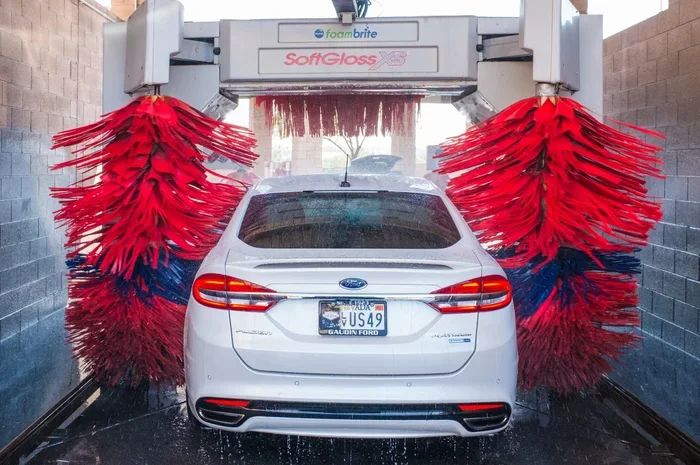
Automatic brush car washes use rotating cylinders, soft cloth strips, or bristles to scrub the vehicle. These are the most common type found at gas stations and standalone wash facilities. Unfortunately, they are also the most dangerous for car wraps.
The bristles and cloth strips create friction against the vinyl surface. Over time, this friction can cause micro-scratches. These scratches accumulate and dull the appearance of the wrap. Worse still, the mechanical action can lift the edges of the wrap, compromising the adhesive bond.
Some people argue that “soft” brush washes are fine. While they are less aggressive than hard-bristle washes, they still pose a risk. The safest rule is simple: avoid brush washes entirely if you have a vinyl wrap.
Hand Car Washes
Hand washing is widely considered the gold standard for wrapped vehicles. When done correctly, it provides the safest and most thorough cleaning. You control every aspect of the process. You decide the water pressure, the type of soap, and how much pressure you apply.
Professional hand wash services are also a great option. Many car detailers specialize in wrapped vehicle care. They use gentle techniques and products specifically designed for vinyl surfaces.
The main downside of hand washing is time and effort. It takes longer than drive-through washes. But for the protection it offers, most wrap owners agree it is well worth it.
Self-Service Car Wash Bays
Self-service car wash bays give you control over the water pressure and soap application. These can work well for wrapped cars if you are careful. Use a low-pressure setting and keep the nozzle at least 12 inches from the surface.
Avoid using the high-pressure jet directly on the edges of the wrap. This is where the adhesive is most vulnerable. Also, skip the brush attachments. Even soft brushes can cause damage to vinyl over time.
Waterless Car Wash Products
Waterless car wash sprays are another option for maintaining a wrapped vehicle. These products use lubricants and cleaning agents that lift dirt without water. They are convenient for quick touch-ups between full washes.
However, waterless sprays work best for light dust and minor dirt. For heavy buildup or road grime, they may not be enough. You might need to rinse first and then apply the spray for best results.
Best Practices for Washing a Wrapped Car
Now that you know which washes to avoid, let us talk about how to wash your wrapped car the right way. These car wash tips will help you protect your investment and keep the wrap looking fantastic.
Use the Right Water Pressure
Water pressure is the single most important factor when washing a wrapped car. Too much pressure can force water under the wrap edges and weaken the adhesive. Too little pressure might not clean the surface effectively.
For touchless washes, choose a setting labeled “gentle” or “sensitive.” If you are hand washing, use a garden hose with a standard nozzle. A pressure washer can work, but keep it below 1,200 PSI and hold the nozzle at least 12 inches away from the surface.
Choose the Right Soap
Not all car soaps are safe for vinyl wraps. Harsh chemicals can degrade the vinyl material and cause discoloration. Always use a pH-neutral car wash soap designed for automotive use.
Avoid household detergents, dish soap, and all-purpose cleaners. These products strip away the protective layer on the wrap. Over time, this leaves the vinyl exposed and vulnerable to damage.
Many wrap manufacturers offer their own recommended cleaning products. Using these ensures compatibility with the vinyl material. They are worth the investment if you want maximum wrap durability.
Dry Your Car Properly
Drying your wrapped car is just as important as washing it. Water left on the surface can create spots and streaks. More importantly, trapped moisture can seep under the wrap edges and compromise the adhesive bond.
Use a soft microfiber towel or a chamois cloth to dry the vehicle gently. Pat the surface rather than rubbing it. Rubbing creates friction that can scratch the vinyl over time.
Pay extra attention to the edges and seams of the wrap. These areas are most prone to moisture buildup. Make sure they are completely dry before you close the doors or start driving.
Avoid Direct Sunlight When Washing
Wash your wrapped car in the shade whenever possible. Direct sunlight causes the soap and water to dry too quickly. This leaves residue that can be difficult to remove and may dull the wrap’s finish.
Washing in cooler temperatures also gives you more working time. You can thoroughly rinse and soap the vehicle without worrying about premature drying. This leads to a cleaner result and better protection for the vinyl.
Wash Frequently but Gently
Regular washing prevents dirt and contaminants from building up on the wrap. Bird droppings, tree sap, road salt, and bug splatter can all damage vinyl if left too long. The longer these substances sit on the wrap, the harder they are to remove.
Aim to wash your wrapped car every one to two weeks. If you drive in harsh conditions like coastal areas or winter roads, wash more frequently. But always remember: gentle methods are better than aggressive ones.
Common Mistakes People Make When Washing Wrapped Cars
Even with the best intentions, many car owners make mistakes that damage their wraps. Here are the most common errors to avoid.
Using High-Pressure Washers Too Close
This is the number one mistake. People use pressure washers thinking they are cleaning more effectively. But the high pressure forces water under the wrap edges. Over time, this lifts the adhesive and creates bubbles or peeling.
Always keep the pressure washer nozzle at a safe distance. Never aim directly at the edges, seams, or corners of the wrap. These are the weakest points of any vinyl coating.
Skipping the Drying Step
Some people wash their car and just let it air dry. This might seem convenient, but it is harmful to wrapped vehicles. Air drying leaves water spots that can etch into the vinyl surface. It also allows moisture to work its way under the wrap edges.
Take the extra five minutes to dry your car properly. Your wrap will thank you for it.
Using Abrasive Tools
Avoid using stiff brushes, sponges with rough textures, or anything abrasive on your wrapped car. These tools create micro-scratches that dull the finish and compromise the protective layer.
Stick to soft microfiber cloths, lambswool mitts, or plush sponges. These are gentle on the vinyl while still removing dirt effectively.
Ignoring Wrap Damage After Washing
After washing, always inspect your wrap for any signs of damage. Look for lifted edges, bubbles, scratches, or areas where the color seems faded. Catching these issues early makes repair much easier and less expensive.
If you notice any damage, address it immediately. Small problems can grow into major issues if left untreated. A quick visit to your wrap installer can save you hundreds of dollars in the long run.
How Car Washes Affect Wrap Lifespan
The way you wash your car directly impacts how long your wrap lasts. A well-maintained wrap can look great for 5 to 7 years or even longer. But poor washing habits can cut that lifespan in half.
Think of it this way. A car wrap is like a protective shield for your vehicle’s paint. The shield itself needs care and maintenance to do its job properly. If you neglect the shield, it deteriorates and stops protecting the surface underneath.
Studies from wrap installation professionals show that cars washed with proper techniques maintain their appearance significantly longer. The vinyl stays flexible, the adhesive remains strong, and the protective clear coat stays intact. On the other hand, cars subjected to harsh washing methods show visible wear within the first year.
Wrap lifespan depends on several factors: the quality of the vinyl, the skill of the installer, the environment the car is driven in, and of course, the washing method used. You have control over the washing method. That alone can make a huge difference.
Expert Insights on Caring for a Wrapped Vehicle
We spoke with several professional wrap installers and detailers to get their top tips. Here is what they had to say about maintaining a wrapped vehicle through regular washing.
Installers’ Top Recommendations
Tip 1: Wait at least 48 hours before washing your newly wrapped car. The adhesive needs time to fully cure and bond to the vehicle’s surface. Washing too early can compromise this bond and cause the wrap to shift or peel.
Tip 2: Always use a wrap-specific cleaning product. Regular car soaps may contain chemicals that are too harsh for vinyl. Wrap-safe cleaners maintain the material’s flexibility and protective coating.
Tip 3: Waxing is generally not recommended. Many wax products contain abrasives or solvents that can damage vinyl wraps. If you want extra shine, use a vinyl-safe sealant instead. Check with your installer for their specific recommendation.
Tip 4: Address stains immediately. The longer a stain sits on the wrap, the harder it is to remove. Bird droppings, sap, and fuel spills should be cleaned as soon as possible using a gentle, wrap-safe cleaner.
Tip 5: Keep a maintenance log. Tracking your wash dates and any issues you notice helps you spot patterns. This is especially useful for identifying problems early before they become costly repairs.
What Detailers Wish Every Wrap Owner Knew
Professional detailers see wrapped cars every day. They notice the difference between cars that are washed properly and those that are not. The most common issue they encounter is edge lifting caused by improper washing techniques.
“The edges of a wrap are its Achilles heel,” says one experienced detailer. “If water or pressure gets under those edges, the adhesive weakens. Within a few months, you can see the wrap starting to peel. It is completely preventable with proper washing habits.”
Another professional shared this insight: “People think their wrap is indestructible because it is vinyl. But vinyl is a flexible material. It responds to how you treat it. Gentle care leads to a long-lasting, beautiful finish.”
Quick Tips for Safe Car Washing with a Wrap
Here is a quick reference guide you can follow every time you wash your wrapped car:
- Choose a touchless or hand wash method whenever possible
- Use pH-neutral, wrap-safe soap
- Keep water pressure below 1,200 PSI
- Stay at least 12 inches away from the wrap surface with the nozzle
- Avoid the edges, seams, and corners of the wrap
- Dry the vehicle thoroughly with a soft microfiber cloth
- Inspect the wrap after each wash for any signs of damage
- Wash in the shade or on a cloudy day
- Never use abrasive tools or harsh chemicals
- Follow up with a vinyl-safe sealant if desired
What About Paint Protection Film and Wraps Together?
Some car owners apply paint protection film (PPF) underneath their vinyl wrap. This combination provides maximum protection against chips, scratches, and environmental damage. But it also raises additional questions about washing.
The good news is that the same washing guidelines apply. Touchless and hand washing remain the safest methods. The PPF adds an extra layer of protection, but it does not make the wrap immune to damage from aggressive washing.
If you have both PPF and a wrap, be extra gentle around the seams where the two materials meet. These transition points are more vulnerable to lifting and edge damage. Use low pressure and mild soap in these areas.
FAQ Section
Can I take a wrapped car through an automatic car wash?
It depends on the type of automatic car wash. Touchless automatic washes are generally safe for vinyl wraps. However, automatic brush washes should be avoided because the rotating bristles and cloth strips can scratch and lift the wrap material over time.
How long does a car wrap last with regular washing?
With proper washing techniques, a quality car wrap can last between 5 and 7 years. Using gentle methods like hand washing or touchless washes significantly extends the lifespan compared to aggressive brush washes.
Will a car wash ruin my vinyl wrap?
A car wash will not ruin your wrap if you choose the right method. Brush car washes and high-pressure washes are the main culprits that cause damage. Stick to touchless or hand washing, and your wrap will stay in excellent condition.
Can I use a pressure washer on a wrapped car?
Yes, but with caution. Keep the pressure below 1,200 PSI and maintain a distance of at least 12 inches from the wrap surface. Never aim the jet directly at the edges or seams of the wrap, as this can force water under the vinyl and weaken the adhesive bond.
Is hand washing really better than machine washing for wrapped cars?
Hand washing is widely considered the safest option for wrapped vehicles. It gives you complete control over water pressure, soap type, and drying method. You can ensure that no abrasive contact occurs and that the wrap edges remain fully sealed.
What soap should I use on a wrapped car?
Always use a pH-neutral car wash soap specifically formulated for automotive use. Avoid household detergents, dish soap, and harsh chemicals. Many wrap manufacturers sell their own recommended cleaning products that are designed to be safe and effective on vinyl materials.
Conclusion
So, can a wrapped car go through a car wash without damage? Absolutely. The key is choosing the right washing method and following proper techniques. Touchless washes and hand washing are your two best options. They clean effectively while protecting the vinyl material and the adhesive bond underneath.
Avoid brush car washes at all costs. They may seem convenient, but the long-term damage they cause is not worth the few minutes you save. Instead, invest a little extra time in gentle washing methods. Your car wrap will look better for longer, and you will protect the value of your investment.
Remember the quick tips we shared. Use the right soap, control the water pressure, dry thoroughly, and inspect your wrap regularly. These small habits make a massive difference over time. A well-maintained wrap can last for years and keep your vehicle looking stunning.
Your wrapped vehicle deserves the best care you can give it. Now that you know exactly how to wash it safely, you can hit that car wash with confidence. Take care of your wrap, and it will take care of your car for the long haul.