Can a Subaru Forester Tow a Camper Here Is the Answer
The Subaru Forester can tow a camper, but the answer depends on your model year, trim level, and the weight of your trailer. Most Forester models offer a towing capacity between 1,500 and 2,000 pounds, which opens the door to lightweight campers and small travel trailers. Understanding your vehicle’s limits and setting up the right towing equipment is essential for a safe and enjoyable trip.
So you own a Subaru Forester and you are thinking about hitting the open road with a camper in tow. Maybe you have your eye on a small travel trailer for weekend getaways, or perhaps you want to explore national parks with a lightweight pop-up camper. Either way, the big question is simple: can your Forester handle the job? The short answer is yes, but there are important details you need to know before you start towing.
The Subaru Forester has long been a favorite among outdoor enthusiasts. It offers standard all-wheel drive, a boxy shape that maximizes cargo space, and a reputation for reliability. But when it comes to camper towing, not every Forester is created equal. Your model year, trim level, and engine all play a role in determining what you can safely tow.
In this article, we will walk you through everything you need to know about towing a camper with a Subaru Forester. We will cover towing capacity, the right type of camper, towing setup, safety tips, and real-world experiences from Forester owners. By the end, you will have a clear picture of whether your Forester is ready for the adventure of a lifetime.
Key Takeaways
- Towing Capacity Varies: The Subaru Forester towing capacity ranges from 1,500 to 2,000 pounds depending on the model year and trim level.
- Light Campers Work Best: Small travel trailers, pop-up campers, and lightweight tent trailers are the best match for the Forester.
- Proper Setup Matters: Using the right towing hitch, wiring harness, and weight distribution system makes a huge difference in safety and control.
- Fuel Economy Drops: Towing a camper will reduce your fuel efficiency, so plan for more frequent fuel stops.
- Safety First: Always respect tongue weight limits, use trailer brakes when needed, and check your mirrors before driving.
- AWD Helps: The Subaru Forester AWD system provides better traction and stability when towing, especially in varied weather conditions.
- Know Your Limits: Exceeding the Subaru Forester towing capacity can damage your vehicle and create dangerous driving conditions.
📑 Table of Contents
Subaru Forester Towing Capacity Explained
Before you hitch up any camper, you need to understand what your Forester can actually handle. The Subaru Forester towing capacity is not a single number. It changes based on several factors, and knowing these numbers is the first step toward safe towing.
Towing Specs by Model Year
The towing capacity of the Forester has evolved over the years. Here is a general breakdown of what different model years offer:
- 2019 and Newer Models: Most recent Subaru Forester models come with a towing capacity of around 1,500 pounds. This is the base figure for the standard 2.5-liter four-cylinder engine.
- Older Models (2013-2018): Earlier Forester generations often had a towing capacity of 1,500 pounds as well, but some trims and configurations could handle slightly more.
- Forester XT (Turbocharged): The turbocharged Forester XT models from certain years offered a slightly higher towing capacity, sometimes reaching up to 2,000 pounds. This makes the XT a better choice if you plan to tow regularly.
Always check your owner’s manual or the door jamb sticker for the exact towing specifications of your specific vehicle. These numbers are determined by Subaru engineers and represent the safe maximum for your particular model.
What Affects Towing Capacity
Several factors influence your Forester’s subaru forester towing capacity. Understanding these will help you make smarter decisions about what to tow.
- Engine Size and Type: The standard 2.5-liter engine is the most common, but the turbocharged XT engine can handle more weight.
- Transmission: The continuously variable transmission (CVT) in most Foresters is designed to handle moderate towing loads.
- Drivetrain: The standard Subaru Forester AWD system provides better traction and stability when towing, especially on wet or uneven roads.
- Trim Level: Higher trims may include a factory towing package that increases capacity or adds towing-specific features.
- Payload Capacity: Towing capacity is different from payload capacity. Your payload includes the weight of passengers, cargo, and the tongue weight of your trailer. You must stay within both limits.
Can You Actually Tow a Camper With a Forester?
The short answer is yes, but the type of camper matters a lot. A Subaru Forester is not designed to haul a large fifth-wheel or heavy travel trailer. Instead, it excels at towing lightweight campers that stay within its capacity limits.
Types of Campers That Fit
Not all campers are created equal when it comes to towing with a Forester. Here are the types of campers that work well:
- Pop-Up Campers: These lightweight trailers typically weigh between 600 and 1,200 pounds. They are an excellent match for the Forester and offer a comfortable sleeping space without exceeding towing limits.
- Small Travel Trailers: Compact travel trailers in the 1,000 to 1,500-pound range can work, but you need to be mindful of your total weight, including gear and passengers.
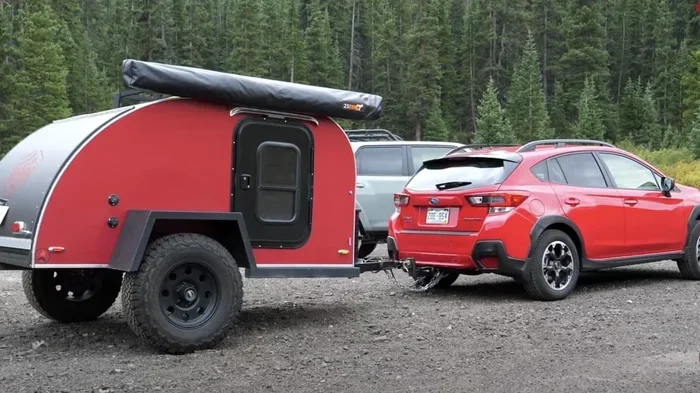
- Teardrop Trailers: These tiny, aerodynamic trailers usually weigh under 1,000 pounds. They are perfect for Forester owners who want to go camping without the hassle of a large trailer.
- Tent Trailers: Some tent trailers are light enough for the Forester, but always check the weight before you buy.
- Toy Haulers (Small): A small, lightweight toy hauler might work, but many are too heavy for the Forester’s towing limits.
Weight Considerations You Cannot Ignore
When camper towing with a Forester, weight is everything. You need to understand three key weight measurements:
- Gross Vehicle Weight Rating (GVWR): This is the maximum total weight of your Forester, including passengers, cargo, fuel, and the tongue weight of the trailer.
- Tongue Weight: This is the downward force the trailer puts on the hitch. A good rule of thumb is that tongue weight should be about 10 to 15 percent of the total trailer weight.
- Curb Weight: This is the weight of your Forester without any passengers or cargo. You subtract this from the GVWR to find your available payload for towing.
If you exceed any of these limits, you risk damaging your vehicle, reducing braking performance, and creating unsafe driving conditions. Always weigh your camper and gear before you hit the road.
The Right Towing Setup for Your Forester
Having the right equipment makes all the difference when towing a camper with a Subaru Forester. A proper setup improves safety, handling, and overall confidence on the road.
Hitch Options for the Forester
The Forester uses a receiver-style hitch, and the size depends on your model year. Most modern Foresters use a Class II receiver hitch, which is rated for towing loads up to 1,500 to 2,000 pounds. Here are your options:
- Fixed Drawbar Hitch: This is the simplest and most affordable option. It provides a solid connection but does not allow for height adjustment.
- Adjustable Ball Mount: This lets you raise or lower the hitch ball to level your trailer. This is important for proper weight distribution and safe towing.
- Weight Distribution Hitch: If you are towing near the upper limit of your Forester’s capacity, a weight distribution hitch helps spread the tongue weight evenly across all axles. This improves stability and prevents the front of the Forester from lifting.
When choosing a hitch, make sure it is rated for your Forester’s towing capacity and that it is installed correctly. A poorly installed hitch can be dangerous. If you are not comfortable installing it yourself, have a professional handle the job.
Wiring and Lighting
Your camper needs working brake lights, turn signals, and tail lights. You will need a wiring harness that connects your Forester’s electrical system to the trailer. Most aftermarket hitches come with a wiring kit, but make sure it is compatible with your specific Forester model. A simple plug-and-play harness makes installation quick and hassle-free.
Towing Mirrors
When towing a camper, your rear visibility is reduced. The Subaru Forester already has large rear windows, but a trailer can still block your view. Consider installing extended towing mirrors so you can see both sides of your trailer clearly. This is especially important when changing lanes or merging onto highways.
Safety Tips for Towing a Camper
Towing a camper changes the way your Forester handles on the road. It takes longer to stop, the vehicle feels heavier, and wind gusts can affect stability more than you might expect. Following these safety tips will help you stay safe on every trip.
Weight Distribution and Loading
How you load your camper matters more than you think. Heavier items should be placed low and centered over the axle. Avoid putting too much weight at the back of the trailer, as this increases tongue weight and can cause the trailer to sway. A well-loaded trailer tracks straighter and is much easier to control.
Braking Systems
If your camper weighs more than 1,500 pounds, you may need a trailer braking system. Some states require trailer brakes for any trailer over a certain weight. Even if it is not legally required, a trailer brake controller gives you an extra layer of safety. It lets you apply the trailer’s brakes independently, which reduces stopping distance and takes stress off your Forester’s brakes.
Driving Habits When Towing
Adjusting your driving style is essential when you are pulling a camper. Here are some tips that experienced Forester owners swear by:
- Increase Following Distance: Your stopping distance increases when towing. Leave at least four to five seconds of following distance instead of the usual two to three.
- Slow Down on Highways: Driving at high speeds with a trailer creates more wind resistance and heat. Reduce your speed slightly and let the Forester work at a comfortable pace.
- Avoid Sudden Maneuvers: Sharp turns and sudden lane changes can cause the trailer to sway. Make smooth, gradual inputs when steering or braking.
- Take Breaks on Long Trips: Stop every couple of hours to check your hitch, tire pressure, and cargo. This also gives you a chance to rest and stay alert.
Can a Car Overheat in the Winter While Towing?
Many people assume overheating only happens in summer, but towing a camper in cold weather can also cause issues. The Forester’s engine works harder when pulling a trailer, and cold temperatures can thicken fluids and reduce cooling efficiency. If you are towing in winter, monitor your temperature gauge closely and give your engine extra time to warm up before hitting the road.
Real-World Towing Experiences and Fuel Economy
The best way to understand what towing a camper with a Forester is really like is to hear from actual owners. The Subaru Forester community is active and helpful, and many owners have shared their towing experiences online and in forums.
What Owners Say
Most Forester owners who tow campers report a positive experience. The Forester’s standard all-wheel drive provides confident traction, and the boxy shape helps the vehicle track straight behind a trailer. Owners typically tow pop-up campers, teardrop trailers, and small travel trailers without major issues.
However, owners also note that the Forester is not a powerhouse. It is a commuter SUV that happens to have towing capability, not a dedicated towing vehicle. If you expect to tow frequently or over long distances with heavy loads, you may want to consider a larger SUV or truck. Some owners compare the Forester’s towing ability to vehicles with larger engines and find that a V6 engine can pull heavier trailers more comfortably. If you want to explore other towing options, you might check out whether a V6 can handle a travel trailer for comparison.
Fuel Economy While Towing
Towing a camper will always reduce your fuel economy. The Forester is already not the most fuel-efficient SUV, and adding a trailer makes it worse. Here is what owners typically report:
- Without a Trailer: The Forester gets an average of 26 to 31 miles per gallon, depending on driving conditions and model year.
- With a Lightweight Camper: Expect fuel economy to drop to around 20 to 25 miles per gallon when towing a small camper.
- With a Heavier Trailer: Towing near the maximum capacity can push fuel economy below 20 miles per gallon.
Do you really save on gas with a hybrid? That is a question many car owners ask, but the Forester is not a hybrid vehicle. Its fuel economy is already modest, and towing makes it even less efficient. Plan your fuel stops accordingly and budget for more frequent fill-ups on long trips.
Insurance and Towing Considerations
Before you start towing, it is worth checking your insurance policy. Some policies have specific coverage requirements for towing trailers. If you have modified your Forester with a towing hitch or upgraded suspension, make sure your policy reflects those changes. This protects you in case of an accident or damage while on the road.
Is the Subaru Forester the Right Tow Vehicle for You?
The Subaru Forester is a versatile and capable SUV, but it is not the best choice for every towing situation. Let us compare the Forester to other popular options and help you decide if it is the right vehicle for your camping needs.
Forester vs Other SUVs for Towing
When comparing towing vehicles, the Forester holds its own in the compact SUV segment. It offers standard all-wheel drive, which gives it an advantage over many front-wheel-drive competitors. However, larger SUVs with bigger engines can tow significantly more weight.
- Subaru Forester: 1,500 to 2,000 pounds towing capacity. Best for lightweight campers and small trailers.
- Toyota RAV4: Similar towing capacity, around 1,500 pounds. A close competitor in the compact SUV towing space.
- Honda CR-V: Limited towing capacity, usually around 1,500 pounds. Not all trims support towing.
- Ford Explorer: Much higher towing capacity, up to 5,300 pounds. A better choice if you need to tow heavier loads.
If your camping style involves lightweight gear and small trailers, the Forester is a great choice. It offers reliability, fuel efficiency for an SUV, and standard all-wheel drive. But if you plan to tow larger campers or travel frequently with heavy loads, you may want to explore vehicles with higher towing ratings.
Final Verdict: Can a Subaru Forester Tow a Camper?
Yes, a Subaru Forester can tow a camper, and it does so quite well within its limits. The key is knowing your vehicle’s towing capacity, choosing a camper that stays within those limits, and setting up the right towing equipment. With the right approach, a Forester can take you on memorable camping trips without any issues.
The Forester is not meant to be a heavy-duty towing machine. It is a practical, reliable SUV that happens to have enough capability for light to moderate towing. If you respect its limits and prepare properly, you will have a safe and enjoyable towing experience every time.
Before you buy a camper, weigh it. Before you hitch up, check your hitch and wiring. Before you drive, adjust your mirrors and driving habits. These simple steps will keep you and your Forester safe on the road for many camping adventures to come.
Whether you are a first-time tower or a seasoned camper, the Subaru Forester proves that you do not need a massive truck to enjoy the outdoors. It just takes a little planning, the right equipment, and a willingness to stay within your vehicle’s capabilities. Happy trails!
Frequently Asked Questions
What is the Subaru Forester towing capacity?
The Subaru Forester towing capacity typically ranges from 1,500 to 2,000 pounds, depending on the model year and trim level. The turbocharged Forester XT models may have a slightly higher towing capacity than the standard engine models. Always check your owner’s manual for the exact towing rating of your specific vehicle.
Can a Subaru Forester tow a travel trailer?
Yes, a Subaru Forester can tow a small travel trailer as long as the trailer weight stays within the Forester’s towing capacity. Lightweight travel trailers between 1,000 and 1,500 pounds are the best match. Make sure you account for the tongue weight, gear, and passengers when calculating your total towing load.
Do I need a special hitch to tow a camper with a Forester?
You will need a Class II receiver hitch rated for your Forester’s towing capacity. Most modern Foresters use a standard 2-inch receiver hitch. A weight distribution hitch is recommended if you are towing near the upper limit of your vehicle’s capacity. Always have your hitch installed by a professional if you are unsure about the setup.
Does towing a camper affect Subaru Forester fuel economy?
Yes, towing a camper will reduce your fuel economy significantly. Most Forester owners report a drop from around 26 to 31 mpg down to 20 to 25 mpg when towing a lightweight camper. The reduction is even more noticeable with heavier trailers. Plan for more frequent fuel stops on longer trips.
Is the Subaru Forester AWD better for towing?
The standard Subaru Forester AWD system provides better traction and stability when towing compared to front-wheel-drive vehicles. AWD helps distribute power to all four wheels, which improves grip on wet roads, gravel, and uneven terrain. This makes the Forester a solid choice for towing in varied driving conditions.
Can I tow a camper with a Subaru Forester in winter?
Yes, you can tow a camper with a Forester in winter, but you need to take extra precautions. Cold temperatures can affect your vehicle’s fluids and cooling system, especially under the added strain of towing. Monitor your temperature gauge, allow extra warm-up time, and drive more cautiously on icy or snowy roads. The Forester’s standard AWD system helps with traction in winter conditions.
=== CONCLUSION ===
The Subaru Forester is a capable and reliable SUV that can tow a camper, but only within its specified limits. Understanding your vehicle’s towing capacity, choosing the right camper, and setting up the proper towing equipment are all essential steps for a safe and enjoyable experience. Whether you are heading to a campsite for the weekend or planning a cross-country adventure, the Forester can handle the job when you respect its boundaries.
Remember to check your towing capacity, invest in a quality hitch and wiring setup, and always follow safety best practices. The Subaru Forester may not be a heavy-duty towing vehicle, but for the right camper and the right trip, it is more than up to the task. Happy camping and safe travels!