Can a Subaru Jump Start Another Car in an Emergency
Yes, a Subaru can jump start another car in an emergency. You just need jumper cables, a working battery, and basic safety knowledge. This guide walks you through every step, from connecting cables to avoiding common mistakes. Whether you drive a Subaru Outback, Forester, or WRX, you will find clear instructions here.
There is nothing worse than turning your key or pressing the start button and hearing nothing but silence. Your Subaru is running fine, but the other car just will not turn over. You wonder, can a Subaru jump start another car? The short answer is yes. But the full answer involves a few important steps, safety precautions, and model-specific details that every Subaru owner should know.
Whether you are stranded in a parking lot or on a dark highway, knowing how to use your Subaru to help another driver can make you a hero. This guide covers everything you need to know about jump starting another vehicle with your Subaru. We will walk through the process step by step, highlight common mistakes, and answer the most frequently asked questions.
Jump starting a car is one of the most basic roadside skills every driver should have. A dead battery can happen to anyone, anytime. Cold weather, old batteries, and leaving lights on are all common causes. Your Subaru is more than capable of serving as a power source for another vehicle. Let us get into the details.
Key Takeaways
- Subarus can jump start other vehicles: Most Subaru models have enough battery power to help start a dead car safely.
- Safety comes first: Always follow proper jumper cable connection order and keep flammable materials away from the battery.
- Know your Subaru model: Different Subaru models may have slightly different battery locations and terminal placements.
- Hybrid models need extra care: Subaru hybrid vehicles have both a 12-volt battery and a high-voltage hybrid battery, which changes the jump start process.
- Portable jump starters work too: A portable jump starter is a great alternative if you do not have another vehicle nearby.
- Prevent future dead batteries: Regular battery maintenance and voltage checks can save you from unexpected breakdowns.
📑 Table of Contents
- Can a Subaru Jump Start Another Car?
- Step-by-Step Guide to Jump Starting Another Car
- Subaru Model-Specific Jump Start Details
- Common Mistakes to Avoid When Jump Starting
- When to Call for Roadside Assistance Instead
- Using a Portable Jump Starter as an Alternative
- How to Prevent a Dead Battery in the First Place
- Expert Insights on Jump Starting with a Subaru
- Key Takeaways
- Conclusion
Can a Subaru Jump Start Another Car?
The simple answer is yes. A Subaru can jump start another car. Your Subaru’s 12-volt battery provides enough power to help crank a dead engine and get it running again. This works whether you have a Subaru Outback, Subaru Forester, Subaru Crosstrek, Subaru Legacy, Subaru Impreza, or even a Subaru WRX.
However, there are a few things you should keep in mind. The jumping process depends on the battery health of both vehicles, the correct cable connections, and following safety protocols. A Subaru battery is designed to handle the demands of starting the engine, and it can share that power with another car in need.
What You Need Before You Start
Before you attempt to jump start another vehicle, make sure you have these items ready:
- Jumper cables – Make sure they are in good condition with no frayed wires.
- A running vehicle – Your Subaru needs to be running to charge the dead battery.
- Safety gloves and glasses – Protect yourself from sparks or battery acid.
- A flat, stable surface – Both cars should be parked close but not touching.
Having these items ready before you approach the other driver will make the process smooth and safe.
Step-by-Step Guide to Jump Starting Another Car
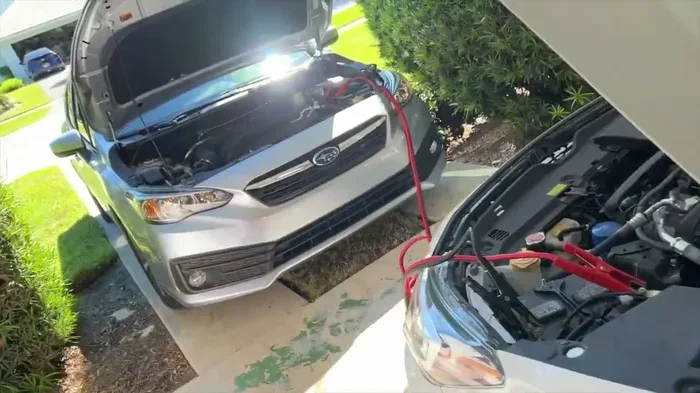
Follow these steps carefully to jump start another vehicle using your Subaru. The order of connections matters a lot, so do not skip or rearrange steps.
Step 1: Park Both Cars Safely
Position both vehicles close enough that the jumper cables can reach. Make sure both cars are in park or neutral with the engines off. Turn off all electronics in both cars, including lights, radio, and air conditioning. This reduces the risk of electrical surges.
Step 2: Identify the Battery Terminals
Open the hood of both vehicles. Locate the battery terminals. You will see a positive terminal marked with a plus sign (+) and a negative terminal marked with a minus sign (-). The positive terminal is usually red, and the negative terminal is usually black. Clean any corrosion off the terminals with a cloth if needed.
Step 3: Connect the Jumper Cables in the Correct Order
This is the most important part. Follow this exact order:
- Connect the red clamp to the positive terminal of the dead battery.
- Connect the other red clamp to the positive terminal of your Subaru’s battery.
- Connect the black clamp to the negative terminal of your Subaru’s battery.
- Connect the remaining black clamp to an unpainted metal surface on the dead car’s engine block. Do not connect it directly to the negative terminal of the dead battery if possible.
This order reduces the risk of sparks near the battery, which could ignite hydrogen gas. Always keep sparks and flames away from the battery area.
Step 4: Start Your Subaru First
Start your Subaru and let it idle for a few minutes. This allows the alternator in your Subaru to send power through the cables to the dead battery. Letting your car run for two to three minutes gives the dead battery a chance to build up some charge.
Step 5: Try Starting the Dead Car
After a few minutes, try starting the car with the dead battery. If it does not start right away, wait another minute or two and try again. Do not keep trying repeatedly for more than a few seconds at a time, as this can damage the starter motor.
Step 6: Disconnect the Cables in Reverse Order
Once the dead car starts, remove the jumper cables in the reverse order of how you connected them:
- Remove the black clamp from the dead car’s engine block.
- Remove the black clamp from your Subaru’s negative terminal.
- Remove the red clamp from your Subaru’s positive terminal.
- Remove the red clamp from the dead battery’s positive terminal.
Keep the clamps away from each other during removal to avoid sparks.
Subaru Model-Specific Jump Start Details
Different Subaru models may have unique battery locations or terminal placements. Here are some things to keep in mind depending on your model.
Subaru Outback and Forester
The Subaru Outback and Forester typically have easily accessible batteries located under the hood. The battery terminals are clearly marked, making it straightforward to connect jumper cables. These models have generous engine bay space, which makes the jump start process comfortable and easy.
Subaru Crosstrek
The Subaru Crosstrek has a slightly smaller engine bay, but the battery is still accessible under the hood. The positive and negative terminals are clearly labeled. If you own a Crosstrek, you can absolutely use it to help jump start another car without any special adapters.
Subaru Hybrid Models
If you drive a Subaru hybrid, the process is a bit different. Subaru hybrid vehicles have both a standard 12-volt battery and a high-voltage hybrid battery pack. You should never attempt to jump start a hybrid using the high-voltage system. Instead, use the 12-volt battery for jump starting, just like you would with any other Subaru model.
If you are unsure about your hybrid model’s battery setup, it is always a good idea to consult your owner’s manual. You can also read our article on Can You Jump Start A Hybrid for more detailed guidance on hybrid jump starting procedures.
Subaru WRX and STI
The Subaru WRX and STI are performance-oriented vehicles, but their jump start process is the same as any other Subaru. The battery is located under the hood, and the terminals are standard. These models have powerful batteries that can easily handle the task of jump starting another car.
Common Mistakes to Avoid When Jump Starting
Jump starting a car seems simple, but mistakes can cause serious damage or even danger. Here are the most common errors to avoid:
Connecting Cables in the Wrong Order
Always connect the positive cables first and the negative cable last. Reversing the order can cause electrical shorts or damage to the vehicle’s electronics. The order matters more than most people realize.
Letting the Jumper Cable Clamps Touch
Never let the red and black clamps touch each other while connected to a battery. This creates a short circuit that can melt the cable insulation or cause sparks. Keep the clamps separated at all times.
Starting the Dead Car Before Your Subaru
Always start your Subaru first and let it run for a few minutes. Starting the dead car first can cause a voltage drop that may damage your Subaru’s electrical system. Let your car do the heavy lifting first.
Ignoring Battery Corrosion
If you see white or blueish buildup on the battery terminals, clean it off before connecting the cables. Corrosion prevents a good electrical connection, which means your jump start attempt may fail. A simple mixture of baking soda and water works well for cleaning corrosion.
Jump Starting a Severely Damaged Battery
If the dead battery is cracked, leaking, or visibly damaged, do not attempt to jump start it. A damaged battery can explode or leak harmful chemicals. In this case, call for roadside assistance or replace the battery.
When to Call for Roadside Assistance Instead
There are times when jump starting is not the right solution. You should call for professional help if:
- The dead car has been sitting for weeks or months with a completely drained battery.
- The battery is cracked, leaking, or visibly damaged.
- The car makes a grinding or clicking sound but will not turn over even after a jump.
- You notice a burning smell or smoke near the battery area.
- The alternator in the dead car has failed, meaning the battery will drain again immediately.
Sometimes what looks like a dead battery is actually a deeper electrical problem. If you have tried jump starting and the car still will not stay running, it is time to call a professional. A mechanic can diagnose whether the issue is the alternator, the starter motor, or something else entirely.
Also, if you find yourself frequently dealing with a dead battery, it might be time for a replacement. Regular battery maintenance including voltage checks can help you stay ahead of battery failure. A healthy battery should read around 12.6 volts when the engine is off and 13.7 to 14.7 volts when the engine is running.
Using a Portable Jump Starter as an Alternative
If you do not have another vehicle nearby, a portable jump starter is an excellent alternative. These compact devices fit in your trunk and can start your car without needing another vehicle. Many Subaru owners keep one in their emergency kit just in case.
A portable jump starter works by providing its own power source to crank the engine. You connect the clamps to your battery terminals just like you would with jumper cables, and the device delivers enough power to start the car. Some models even include built-in USB chargers and flashlights, which add extra value.
The main advantage of a portable jump starter is independence. You do not need another car, and you do not need to worry about cable connection order as much. However, you will still need to recharge the device periodically to keep it ready for emergencies.
How to Prevent a Dead Battery in the First Place
The best way to deal with a dead battery is to prevent one from happening. Here are some simple tips to keep your Subaru battery healthy:
- Check your battery voltage regularly. A simple multimeter test takes seconds and can warn you of a failing battery.
- Turn off all lights and electronics when you exit the car. This sounds obvious, but it happens more often than you think.
- Drive your Subaru regularly. Short trips may not give the alternator enough time to fully recharge the battery.
- Clean battery terminals periodically. Remove any corrosion with a wire brush and baking soda solution.
- Replace your battery every three to five years. Even if it seems fine, age is the biggest factor in battery failure.
- Keep a portable jump starter in your trunk. It is a small investment that can save you from a major inconvenience.
Taking these simple steps can save you from the frustration of a dead battery and the hassle of needing someone else to jump start your car. Prevention is always easier than cure.
Expert Insights on Jump Starting with a Subaru
Automotive experts agree that Subaru vehicles are reliable and capable jump start providers. The Subaru boxer engine design and efficient electrical system mean that the battery delivers consistent power. Subaru owners can confidently help other drivers in need without worrying about damaging their own vehicle.
One thing experts emphasize is the importance of patience. If the dead car does not start immediately, do not keep trying over and over. Let the dead battery charge for a few more minutes and then try again. Rushing the process can strain both batteries and the charging systems of both vehicles.
Experts also recommend keeping your Subaru’s owner’s manual handy. The manual contains specific information about your model’s battery capacity, terminal locations, and any special precautions. This information is invaluable in an emergency situation.
If you have experienced issues where your car cranks but won’t start, it could be related to battery health or other electrical components. Understanding the car cranks but won’t start causes can help you diagnose problems faster and determine whether a jump start will solve the issue or if a deeper repair is needed.
Key Takeaways
- Subarus can jump start other vehicles: Most Subaru models have enough battery power to help start a dead car safely.
- Safety comes first: Always follow proper jumper cable connection order and keep flammable materials away from the battery.
- Know your Subaru model: Different Subaru models may have slightly different battery locations and terminal placements.
- Hybrid models need extra care: Subaru hybrid vehicles have both a 12-volt battery and a high-voltage hybrid battery, which changes the jump start process.
- Portable jump starters work too: A portable jump starter is a great alternative if you do not have another vehicle nearby.
- Prevent future dead batteries: Regular battery maintenance and voltage checks can save you from unexpected breakdowns.
Conclusion
So, can a Subaru jump start another car in an emergency? Absolutely. Your Subaru is more than capable of serving as a reliable power source for a dead battery. Whether you drive a Subaru Outback, Forester, Crosstrek, Legacy, Impreza, WRX, or a hybrid model, the jump start process is straightforward and safe when you follow the proper steps.
Remember to always connect the cables in the correct order, start your Subaru first, and keep safety at the top of your priority list. A dead battery is one of the most common car problems, and being prepared to help yourself or another driver is one of the best skills you can have.
Keep jumper cables in your trunk, maintain your battery regularly, and consider investing in a portable jump starter. These simple preparations can turn you from a stranded driver into a roadside hero. The next time someone asks for help, you will know exactly what to do. Stay prepared, stay safe, and let your Subaru do what it does best.
For more information on related topics, check out our article on Car Cranks But Won’t Start Causes Explained to understand common starting issues. You may also want to read about Car Stopped Running While Driving And Won’t Start for troubleshooting tips when your vehicle dies unexpectedly on the road.
Frequently Asked Questions
Can any Subaru model jump start another car?
Yes, virtually any Subaru model with a functioning 12-volt battery can jump start another car. This includes the Outback, Forester, Crosstrek, Legacy, Impreza, and WRX. Just make sure your Subaru’s battery is healthy and fully charged before attempting the jump start.
Is it safe to jump start a car with a Subaru hybrid?
Yes, it is safe to use the 12-volt battery in a Subaru hybrid to jump start another car. However, never attempt to use the high-voltage hybrid battery for jump starting. Always use the standard 12-volt battery terminals, and refer to your owner’s manual for specific hybrid jump start instructions.
How long should I let my Subaru run before trying to start the dead car?
Let your Subaru idle for about two to three minutes after connecting the jumper cables. This gives the dead battery time to receive a charge from your Subaru’s alternator. Waiting a few extra minutes can make the difference between a successful start and a failed attempt.
What should I do if the dead car still won’t start after a jump?
If the dead car will not start after a proper jump, the battery may be too damaged to accept a charge, or there could be a deeper electrical issue. Do not keep trying repeatedly. Instead, call for roadside assistance or have the vehicle towed to a mechanic for diagnosis.
Can I use my Subaru to jump start a truck or SUV?
Yes, you can use your Subaru to jump start a larger vehicle like a truck or SUV. The key requirement is that both vehicles share a compatible 12-volt electrical system. Make sure your Subaru’s battery is in good condition and has enough charge to handle the additional load of a larger engine.
What are the signs that my Subaru battery needs replacement?
Common signs of a failing Subaru battery include slow engine cranking, dim headlights, a swollen battery case, and frequent need for jump starts. If your battery is more than three to five years old, consider having it tested at an auto parts store or dealership to determine if replacement is needed.