Can I Drive with a Blinking Tire Pressure Light on a Toyota
So, can I drive with a blinking tire pressure light on a Toyota? The short answer is: proceed with caution, but don’t panic. A blinking tire pressure light on a Toyota usually signals a serious TPMS issue that needs attention fast. While you can often drive a short distance safely, ignoring the light risks tire damage and unsafe driving conditions. This guide covers exactly what the blinking light means, how to check your tire pressure, and the steps to fix it.
Key Takeaways
- A blinking TPMS light means urgent attention: Unlike a steady light, a blinking tire pressure light on a Toyota signals a malfunction in the system, not just low pressure.
- You can drive short distances carefully: Reduce speed and avoid highway driving until you check your tire pressure.
- Common causes include sensor failure and temperature changes: Cold weather, a bad sensor, or a slow leak are the top culprits.
- Checking tire pressure is simple: Use a tire pressure gauge at a gas station or check your Toyota’s recommended PSI on the driver’s door jamb.
- Resetting the light is possible after fixing the issue: Most Toyota models let you reset the TPMS light in just a few steps.
- Don’t ignore the light: Driving on underinflated tires can cause blowouts, reduce fuel economy, and wear tires unevenly.
- See a mechanic if the light keeps blinking: A persistent blinking light often means a sensor or system problem that needs professional diagnosis.
📑 Table of Contents
- Can I Drive with a Blinking Tire Pressure Light on a Toyota?
- What Does a Blinking Tire Pressure Light Mean on a Toyota?
- Is It Safe to Drive with a Blinking Tire Pressure Light?
- Common Causes of a Blinking Tire Pressure Light on Toyota
- How to Check Your Tire Pressure on a Toyota
- How to Reset the Tire Pressure Light on a Toyota
- What Happens If You Ignore the Blinking Tire Pressure Light?
- Preventing Future Tire Pressure Light Issues
- When to See a Mechanic for a Blinking Tire Pressure Light
- Final Thoughts
Can I Drive with a Blinking Tire Pressure Light on a Toyota?
You’re cruising down the road, and suddenly your Toyota dashboard lights up with a blinking tire pressure warning. Your heart drops. What does it mean? Can I drive with a blinking tire pressure light on a Toyota, or should I pull over right now?
Here’s the good news: you probably don’t need to stop immediately. A blinking tire pressure light on a Toyota is a warning, not a breakdown call. But it’s not something you should ignore either. The light means your Toyota’s Tire Pressure Monitoring System (TPMS) has detected a problem. Sometimes it’s a simple fix like low air. Other times, it signals a sensor issue that needs professional help.
In this article, we’ll walk you through everything you need to know. We’ll cover what the blinking light actually means, whether it’s safe to keep driving, common causes, how to check your tire pressure, and how to reset the light. By the end, you’ll feel confident handling this situation like a pro.
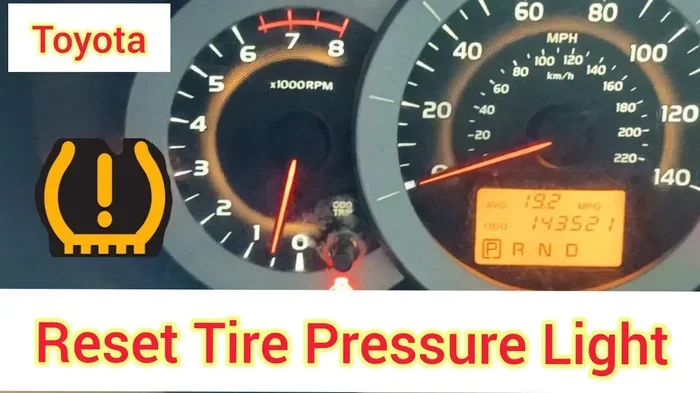
The tire pressure warning light is one of the most common dashboard alerts Toyota owners see. It looks like a horseshoe shape with an exclamation point in the middle. When it blinks instead of staying solid, the problem is usually more urgent. A steady light often means low pressure. A blinking light often means a TPMS malfunction or a very serious pressure drop.
What Does a Blinking Tire Pressure Light Mean on a Toyota?
Understanding what your Toyota is trying to tell you is the first step. The TPMS system monitors the air pressure inside each tire. When pressure drops below a safe level, the system triggers the warning light. But a blinking tire pressure light specifically means something different than a steady glow.
A steady light usually means one or more tires are underinflated. A blinking light, especially one that stays on for 60 to 90 seconds after startup, typically indicates a problem with the TPMS itself. This could be a failed sensor, a dead battery in the sensor, or a communication error between the sensors and the car’s computer.
Steady Light vs. Blinking Light
It’s important to know the difference between a steady and blinking tire pressure warning light. Here’s a quick comparison:
- Steady Light: One or more tires have low air pressure. Check your tire pressure as soon as possible.
- Blinking Light (60-90 seconds then steady): A TPMS sensor or system malfunction has been detected. The system needs diagnosis.
- Rapid Blinking (immediately after startup): This is less common but signals a serious TPMS fault that needs immediate attention.
If you notice your Toyota’s TPMS light blinking, don’t assume it’s just a false alarm. Even if your tires look fine visually, the sensor is telling you something is wrong. The best approach is to check your tire pressure right away and pay attention to how the car handles.
Is It Safe to Drive with a Blinking Tire Pressure Light?
This is the question most Toyota owners want answered. The honest answer depends on a few factors. How low is your tire pressure? How fast are you driving? How far do you need to go?
Generally speaking, you can drive a short distance with a blinking tire pressure light on a Toyota if you take precautions. Reduce your speed and avoid highway driving. Underinflated tires can overheat, which increases the risk of a blowout. Driving slowly gives you time to find a safe place to check your tires or pull over.
If the blinking light started after you hit a pothole or curb, a tire may have been damaged. In that case, driving far could make things worse. Similarly, if you notice the car pulling to one side, vibrating, or feeling sluggish, stop safely and inspect the tires.
Think of it this way: driving with a blinking tire pressure light is a lot like driving with the Trac Off light on. You can usually get where you’re going, but you should address the issue promptly. The same goes for a blinking TPMS light. Short trips to a gas station or mechanic are fine. Long highway drives are not recommended.
Also, keep in mind that driving on underinflated tires reduces your fuel economy and causes uneven tire wear. So even if it’s “safe” to drive a little, it’s costing you money in the long run. Addressing the issue quickly saves both your tires and your wallet.
Common Causes of a Blinking Tire Pressure Light on Toyota
So what’s actually causing that annoying blinking light? There are several common reasons why a Toyota’s TPMS light starts blinking. Let’s break them down.
1. Low Tire Pressure
The most obvious cause is simply low air in one or more tires. This can happen gradually over time or suddenly after hitting a sharp object. Temperature changes also play a big role. Cold weather can drop tire pressure by 1 to 2 PSI for every 10-degree drop in temperature. So if it was warm last week and now it’s freezing, your tires might be underinflated.
Most Toyota models recommend tire pressure between 32 and 35 PSI, but always check the sticker on the driver’s door jamb for your specific model’s tire pressure recommended PSI.
2. TPMS Sensor Failure
The TPMS sensors inside each tire have small batteries that typically last 5 to 10 years. When the battery dies, the sensor can’t send data to the car’s computer. This triggers the blinking light. Sensor failure is one of the most common reasons for a persistent TPMS light blinking, especially in older Toyotas.
3. Damaged or Missing Sensor
If you’ve recently had tires rotated or replaced, a sensor might have been damaged or not reinstalled properly. Some older Toyota models use valve-stem-mounted sensors that can be knocked loose or damaged during tire service.
4. Temperature and Altitude Changes
Rapid changes in altitude or temperature can temporarily trigger the TPMS light. If you’ve just driven through mountain passes or experienced a sudden cold front, the light might blink for a bit and then go away. However, if it stays on, you still need to check your tire pressure.
5. System Malfunction
Sometimes the TPMS system itself has an electrical or software glitch. This can happen after a battery disconnect, a flat tire repair, or even a software update. A system malfunction usually requires a diagnostic scan tool to identify and fix.
How to Check Your Tire Pressure on a Toyota
Checking your tire pressure is easy and takes just a few minutes. Here’s exactly what to do.
- Find the recommended PSI: Look at the sticker on the driver’s door jamb or in your owner’s manual. Don’t use the PSI number printed on the tire itself — that’s the maximum pressure, not the recommended pressure.
- Remove the valve cap: Unscrew the small cap on the tire’s valve stem.
- Press the gauge onto the valve: Push the tire pressure gauge firmly onto the valve stem. You’ll hear a brief hiss of air — that’s normal.
- Read the number: The gauge will show you the current PSI. Compare it to the recommended number.
- Repeat for all tires: Check all four tires plus the spare if you have one.
If any tire is low, add air at a gas station air pump. Most stations let you set the desired PSI. If you overfill, just press the small pin inside the valve stem to release a little air.
For a more accurate reading, consider buying your own tire pressure gauge. Digital gauges are inexpensive and give precise readings. Gas station gauges are often inaccurate or poorly maintained.
Pro tip: Check your tire pressure when the tires are cold — meaning the car has been parked for at least three hours or driven less than a mile. Hot tires give false high readings.
How to Reset the Tire Pressure Light on a Toyota
Once you’ve fixed the problem — whether it was low pressure or a sensor issue — you’ll want to reset the tire pressure light on your Toyota. The reset process varies slightly by model, but here are the most common methods.
Method 1: Reset Button
Many Toyota models have a TPMS reset button located under the steering wheel or on the dash. With the engine running, press and hold the reset button until the TPMS light blinks three times. Then release it. Drive the car for a few minutes, and the light should turn off.
Method 2: Steering Wheel Menu
Newer Toyota models with touchscreen displays let you reset the TPMS through the settings menu. Go to Vehicle Settings, find the TPMS or Tire Pressure option, and select “Reset.” The system will recalibrate after you drive a few miles.
Method 3: Visit a Mechanic
If the light won’t reset or keeps coming back, it’s time to see a professional. A mechanic can run a diagnostic scan to identify which sensor is failing or if there’s a deeper system issue. This is especially important if the TPMS light blinking persists even after you’ve confirmed your tire pressure is correct.
Remember, resetting the light doesn’t fix the underlying problem. It just clears the warning. Make sure you’ve actually addressed the cause before resetting.
What Happens If You Ignore the Blinking Tire Pressure Light?
We get it — sometimes life gets busy and a warning light feels like it can wait. But ignoring a blinking tire pressure light on a Toyota can lead to real problems.
Underinflated tires reduce your car’s handling and braking performance. In wet or icy conditions, this can be dangerous. The tires can also overheat from increased friction, leading to premature wear or even a dangerous blowout. Blowouts at high speeds are one of the most serious tire-related accidents.
Beyond safety, driving on low tires kills your fuel economy. Studies show that tires underinflated by just 10 PSI can reduce gas mileage by up to 3%. Over time, that adds up at the pump.
Uneven tire wear is another costly consequence. Underinflated tires wear out the outer edges of the tread much faster than the center. This means you’ll need to replace tires sooner — and tires aren’t cheap.
Think of it this way: ignoring the blinking light is like ignoring the overheating light on your car. You might get away with it for a little while, but eventually, something serious will break down. And the repair bill will be much higher.
On the flip side, some people worry too much about every dashboard light. If you’ve ever driven with the steering assist light on, you know that not every warning means immediate danger. But the tire pressure light is one you should take seriously because it directly affects your safety on the road.
Preventing Future Tire Pressure Light Issues
The best way to deal with a blinking tire pressure light is to prevent one from happening in the first place. Here are some simple habits that keep your Toyota’s TPMS happy.
- Check tire pressure monthly: Make it a routine. A quick check at the gas station takes just five minutes.
- Invest in a quality tire pressure gauge: A digital gauge costs under $15 and gives accurate readings every time.
- Keep a tire pressure log: Write down your PSI readings so you can spot trends or slow leaks early.
- Replace TPMS sensors when needed: If your Toyota is over 10 years old, the sensor batteries may be nearing the end of their life.
- Check tire pressure before long trips: A quick check before a road trip can save you from a flat tire or TPMS light on the highway.
- Rotate your tires regularly: This helps sensors stay in good condition and promotes even tire wear.
Taking these small steps means fewer surprises and safer driving. Plus, properly inflated tires last longer and save you money on fuel. It’s a win-win.
When to See a Mechanic for a Blinking Tire Pressure Light
Sometimes a blinking tire pressure light on a Toyota needs professional attention. Here’s when you should make an appointment.
- The light keeps blinking even after you’ve checked and corrected tire pressure.
- One or more TPMS sensors are more than 10 years old.
- You’ve recently had a tire repair or replacement and the light won’t reset.
- The car’s TPMS diagnostic tool shows a specific sensor error code.
- You notice a slow leak that can’t be found with a standard gauge.
A mechanic can run a full TPMS diagnostic and replace faulty sensors quickly. Most Toyota dealerships and independent shops can handle this in under an hour. The cost for a single TPMS sensor replacement typically ranges from $50 to $100 per sensor, depending on your Toyota model and the type of sensor.
While you’re at the shop, it’s a good idea to ask them to check your tire pressure sensor battery life. If multiple sensors are old, it might make sense to replace them all at once to avoid dealing with this issue again in a few months.
Also, if you’ve been putting off other maintenance — like an oil change or brake check — this is a good time to address those too. A blinking warning light is a reminder that your Toyota needs attention, and catching small issues early prevents bigger problems down the road.
Final Thoughts
So, can I drive with a blinking tire pressure light on a Toyota? Yes, but carefully and only for short distances. The blinking light is your Toyota’s way of telling you something needs attention. Whether it’s low tire pressure, a failed sensor, or a system malfunction, the sooner you address it, the safer and more efficient your driving will be.
Check your tire pressure as soon as you notice the light. Reset the system once the problem is fixed. And don’t ignore the light — even if it seems to go away on its own. A persistent tire pressure warning light is your car asking for help, and responding quickly keeps you safe and saves you money.
Your Toyota is a reliable machine, and the TPMS is there to protect you. Treat that blinking light with the respect it deserves, and you’ll enjoy many more miles of safe, worry-free driving.
Frequently Asked Questions
How far can I drive with a blinking tire pressure light on my Toyota?
You can drive a short distance — typically a few miles — to reach a safe location or gas station. However, avoid highway driving or long trips. Reduce your speed and get your tire pressure checked as soon as possible. Continuing to drive with a blinking TPMS light risks tire damage and unsafe handling.
Why does my Toyota tire pressure light blink for 60 seconds and then stay on?
A blinking TPMS light for 60 to 90 seconds after startup, followed by a steady light, indicates a TPMS system malfunction. This is different from a steady light that simply means low tire pressure. The system has detected a sensor error or communication problem that needs diagnosis. Check your tire pressure first, then have the TPMS system scanned by a mechanic if the light persists.
Can cold weather cause a blinking tire pressure light on a Toyota?
Yes, cold weather is a very common cause. As temperatures drop, tire pressure decreases — sometimes enough to trigger the TPMS light. A 10-degree drop in temperature can reduce tire pressure by 1 to 2 PSI. If the light appears in winter, check your tire pressure and add air if needed. The light should go away after you inflate the tires to the recommended level.
How much does it cost to replace a TPMS sensor on a Toyota?
Replacing a single TPMS sensor typically costs between $50 and $100 for parts and labor at a standard repair shop. Toyota dealerships may charge slightly more, especially for newer models with advanced sensor technology. If multiple sensors need replacement, ask about package pricing to save money.
Can I reset the TPMS light myself without going to a mechanic?
Yes, in most cases you can reset the TPMS light yourself after fixing the underlying issue. Most Toyota models have a reset button under the steering wheel or a reset option in the vehicle settings menu on the touchscreen. Just make sure your tire pressure is correct before resetting. If the light comes back, there’s an unresolved issue that needs professional diagnosis.
Is it safe to drive on the highway with a blinking tire pressure light?
No, highway driving is not recommended with a blinking tire pressure light. Underinflated tires can overheat at high speeds, increasing the risk of a blowout. If you’re already on the highway, exit at the next safe opportunity and check your tire pressure. Reduce speed and avoid aggressive driving until the issue is resolved.