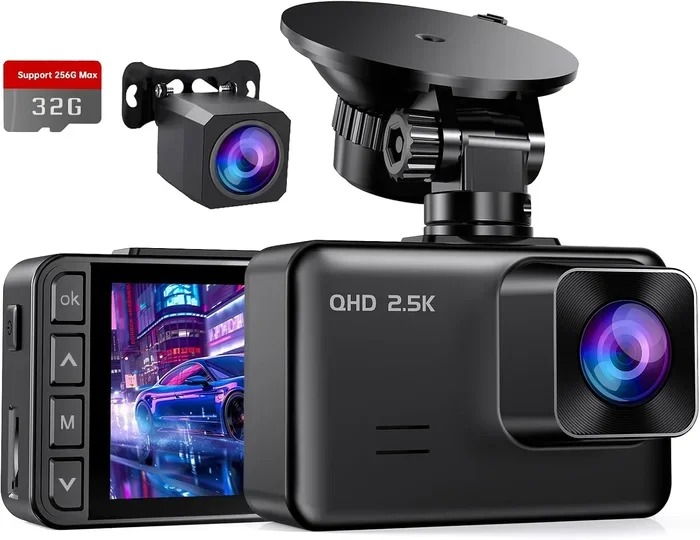
Car Camera Front and Rear The Complete Buying Guide
Protect your car with the right front and rear camera setup. This guide covers everything you need to know about choosing a car camera front and rear system, from key features to installation tips. Learn what to look for and avoid common buying mistakes.
Key Takeaways
- Dual coverage matters: A car camera front and rear setup captures both directions, giving you full protection on the road.
- Resolution is king: Look for at least 1080p front and rear video to ensure clear evidence when you need it most.
- Night vision is non-negotiable: A good dual camera system should record clean footage even in low light conditions.
- Easy installation saves time: Many modern dash cam kits come with simple mount designs and plug-and-play setup.
- Parking mode adds value: This feature keeps your rear-facing camera and front lens active when your car is parked.
- Wi-Fi connectivity makes review easy: You can quickly transfer clips to your phone without removing the memory card.
- Avoid common mistakes: Don’t skip G-sensor calibration or overlook loop recording when choosing your system.
📑 Table of Contents
Why a Car Camera Front and Rear Is Essential
Road trips are fun. But accidents happen. A car camera front and rear setup gives you peace of mind every time you hit the road. It captures everything happening in front of your vehicle and behind it.
Think about this. You are driving down a busy highway. Someone cuts you off without warning. You hit the brakes hard. Without a dual camera system, you have no proof of what happened. With one, you have clear video evidence.
These systems do more than just record crashes. They also help with parking. A rear-facing camera shows you exactly what is behind your car. This makes backing into tight spots much easier and safer.
Insurance companies love dash cam footage too. If you file a claim, a car camera front and rear system can speed things up. You simply share the clip, and your provider can review the evidence right away.
Many drivers also use their cameras for trip documentation. Road trips, daily commutes, or weekend drives — a front-facing camera captures it all. Some people even use their footage to improve their driving habits over time.
The bottom line is simple. A car camera front and rear system protects you financially and legally. It is one of the smartest upgrades you can make to your vehicle.
Who Benefits Most From a Dual Camera Setup
Almost every driver benefits from a car camera front and rear system. But some groups benefit even more. Ride-share drivers spend hours on the road every day. A dual camera system gives them protection against false claims.
Parents with teenage drivers also find great value. They can monitor how their kids drive and feel reassured knowing there is a rear-facing camera recording the road behind.
People who live in high-traffic cities benefit too. Stop-and-go traffic increases the risk of minor collisions. A dash cam with front and rear coverage catches every incident.
How Dual Camera Systems Work
A car camera front and rear system uses two separate lenses. One lens faces forward through the windshield. The other lens faces backward, usually mounted on the rear windshield or tailgate.
Both cameras record simultaneously. They store footage on a memory card, usually a microSD card. Some systems use cloud storage, which uploads clips to the internet automatically.
The front-facing camera typically has a wider field of view. It needs to capture the full road ahead. A wide angle lens helps it see more of the scene. Most front cameras offer between 120 and 170 degrees of coverage.
The rear-facing camera has a narrower view but still covers a useful area. It helps you see what is behind your vehicle when parking or reversing.
Understanding Front and Rear Camera Sync
One important feature is camera sync. A good car camera front and rear system keeps both recordings perfectly aligned. This means the timestamps match up. If an event happens, you can review both angles at the exact same moment.
Some systems use a single cable and power source for both cameras. Others have separate power inputs. A single-cable setup is usually easier to install and keeps your dashboard cleaner.
The G-sensor plays a big role here. When the system detects a sudden impact, it locks the current footage. This prevents the loop recording feature from overwriting the important clip. Both the front and rear recordings get protected at the same time.
Video Resolution and Frame Rate Explained
Video resolution matters a lot. A car camera front and rear system should record at least 1080p Full HD. Higher resolution means clearer details. You can read license plates from farther away.
Frame rate is also important. Most dash cam systems record at 30 frames per second (fps). Some premium models offer 60 fps. The higher frame rate makes the footage smoother. It is especially helpful when reviewing fast-moving incidents.
For the rear-facing camera, 1080p at 30 fps is usually enough. You do not always need the same ultra-high resolution in the back. But having matching quality on both sides is a nice bonus.
Key Features to Look For
Not all car camera front and rear systems are the same. Some have amazing features. Others are basic and bare-bones. Knowing what to look for helps you choose the right one.
Night Vision Capability
Night driving is a reality for many people. Your car camera front and rear system must perform well in the dark. Look for models with enhanced night vision technology.
Good night vision uses larger sensors and advanced processing. It captures clear footage even with very little light. Cheap cameras often produce grainy, blurry clips at night. Avoid those.
Some dual camera systems use infrared sensors for better low-light performance. Others rely on smart software to brighten dark scenes. Both approaches work well when done right.
Wi-Fi and Smartphone Connectivity
Wi-Fi connectivity is a game-changer for modern dash cam users. You can connect your phone to the camera wirelessly. This lets you view, download, and share clips without removing the memory card.
Most car camera front and rear systems with Wi-Fi use a dedicated app. The app is usually free and works on both iOS and Android. You just download it, connect to the camera, and start reviewing footage.
Some systems also allow live streaming to your phone. This is helpful when you want to check what your rear-facing camera sees while parking.
Parking Mode and Motion Detection
Parking mode is one of the most valuable features a car camera front and rear system can offer. When your car is parked and turned off, the camera goes into a low-power state.
Motion detection wakes the camera up when something moves near your vehicle. If someone bumps your car, the front-facing camera and rear-facing camera both start recording. This gives you full coverage even when you are not there.
Some systems also offer hit-and-run protection. If your parked car gets hit and the driver leaves, the camera captures the whole event. This is incredibly useful for filing insurance claims.
GPS Tracking and Speed Logging
GPS tracking adds another layer of useful data to your dash cam footage. The system records your speed and location on the video timeline.
This is helpful for proving your driving habits. If you get a speeding ticket you disagree with, the GPS data can help your case. It also adds context to your car camera front and rear recordings.
Not every system includes GPS. If this feature matters to you, check the specs before buying. Some cameras connect to your phone’s GPS instead of having a built-in module.
Top Things to Consider Before Buying
Buying a car camera front and rear system is an investment. You want to make sure you get the right one for your needs and budget.
Budget and Price Range
Car camera front and rear systems come in a wide price range. Basic dual-camera kits start around $50. Premium systems with advanced features can cost $300 or more.
You do not need to spend a fortune. A mid-range dual camera system between $100 and $200 offers excellent value. You get good resolution, solid night vision, and reliable build quality.
Set a budget before you shop. Decide which features are must-haves. Then find the best system within your price range. Do not get tempted by features you will never use.
Ease of Installation
Installation is a big factor. Some car camera front and rear kits are plug-and-play. You mount the cameras, plug them into your cigarette lighter, and you are done.
Other systems require hardwiring into your vehicle’s electrical system. This gives a cleaner look but needs more technical skill. If you are not comfortable with car electronics, stick with a simple mount-and-plug setup.
The windshield mount design is the most common. It uses adhesive or suction cups to hold the camera in place. Make sure the mount is secure. A loose camera can vibrate and blur your footage.
Storage and Memory Cards
Storage matters a lot. A car camera front and rear system records continuously. This uses a lot of memory over time.
Most systems work with microSD cards. Look for cards rated as high-speed Class 10 or U3. These handle the constant writing of video files without issues.
A 64GB card is usually enough for most drivers. It can store several days of footage. A 128GB card gives you even more room. Always format your memory card regularly to keep the system running smoothly.
Build Quality and Weather Resistance
Your dash cam will sit on your windshield in all weather conditions. Heat, cold, rain, and dust all take a toll. Choose a system with solid build quality.
Look for cameras rated for a wide temperature range. A good car camera front and rear system should work from minus 20 degrees to plus 70 degrees Celsius. This ensures reliable performance year-round.
The lens quality also matters. Glass lenses are sharper and more durable than plastic ones. They resist scratches and maintain clarity over time.
Installation Tips and Best Practices
Installing your car camera front and rear system the right way makes a big difference. Good placement means better footage and fewer problems.
Front Camera Placement
Mount the front camera behind the rearview mirror. This gives it the best view of the road ahead. It also keeps the camera out of your line of sight.
Clean the windshield where you place the mount. Any dust or grease can cause the adhesive to fail over time. A clean surface ensures a secure hold.
Angle the front camera slightly downward. This captures the road close to your vehicle as well as the distant horizon. A wide angle lens helps cover more ground without losing detail.
Rear Camera Placement
The rear camera usually goes on the rear windshield or the back of the vehicle. Make sure it has a clear view of the road behind you.
Avoid placing the rear camera near brake lights or license plates that might block the view. The rear-facing camera needs an unobstructed sightline to work properly.
Route the rear camera cable carefully. Use the headliner trim to hide the wire. This keeps the interior looking clean and prevents the cable from rattling while driving.
Power and Cable Management
Most car camera front and rear systems draw power from the vehicle’s electrical system. Use the provided cables and adapters.
Route the front camera cable down the center console. Tuck it behind the trim pieces. This keeps it hidden and prevents it from interfering with your driving.
For the rear camera, the cable usually runs along the headliner and down the back of the vehicle. Take your time with this step. Rushing can lead to pinched cables or loose connections.
Common Mistakes to Avoid
Many people make mistakes when buying and using a car camera front and rear system. Avoiding these pitfalls saves you time and frustration.
Skipping loop recording: Loop recording is essential. Without it, your memory card fills up quickly and stops recording. Make sure this feature is enabled from day one.
Ignoring the G-sensor: The G-sensor detects impacts and locks important footage. Check that it is calibrated correctly. A poorly set G-sensor means you might lose critical incident evidence.
Choosing cheap memory cards: Not all memory cards are equal. Low-quality cards can corrupt your footage. Always use reputable brands rated for high-speed video recording.
Poor camera placement: Mounting the camera too low or too high ruins the footage angle. Take the time to position both cameras correctly for the best results.
Forgetting to update firmware: Manufacturers release updates that fix bugs and improve performance. Check for updates regularly to keep your dual camera system running at its best.
Final Verdict and Recommendations
A car camera front and rear system is one of the most practical upgrades you can make to your vehicle. It provides protection, evidence, and peace of mind every time you drive.
Focus on the features that matter most to you. Video resolution, night vision, Wi-Fi connectivity, and parking mode are the top priorities for most drivers. A dual camera system that covers all these bases delivers excellent value.
Do not overlook the importance of proper installation. Even the best dash cam will underperform if it is not set up correctly. Follow the placement tips and cable management advice in this guide.
Remember, the goal is protection. A car camera front and rear system captures what happens on the road. It gives you clear evidence when accidents occur. It helps with insurance claims and protects you from false accusations.
Take your time choosing the right system. Compare features, read reviews, and pick the car camera front and rear setup that fits your budget and driving needs. You will not regret the investment.
Drive safely. Drive confidently. And know that your car camera front and rear system has your back — literally and figuratively.
Frequently Asked Questions
What is the best resolution for a car camera front and rear system?
At minimum, look for 1080p Full HD on both the front and rear cameras. This resolution provides clear and detailed footage. If your budget allows, 4K front recording offers even sharper details for license plates and road signs.
Can I install a car camera front and rear system myself?
Yes, most modern dash cam kits are designed for easy DIY installation. They come with windshield mounts and simple plug-and-play cables. If you are comfortable with basic car accessories, you can have it set up in under 30 minutes.
Do car cameras work well in low light or at night?
Good car camera front and rear systems perform well in low light thanks to advanced sensors and night vision technology. Look for models with large aperture lenses and high ISO ratings. These capture cleaner footage even in darkness.
How much storage do I need for a dual camera system?
A 64GB microSD card is usually sufficient for most drivers. It can store several days of continuous footage. If you have a long daily commute or use loop recording frequently, a 128GB card gives you extra buffer space.
Will a car camera front and rear system drain my car battery?
Most systems draw very little power when the car is off. Parking mode uses minimal energy and should not drain a healthy battery. If you are concerned, choose a system with a low-power parking mode or a voltage cutoff feature.
What should I do after a car accident with a dash cam?
First, make sure everyone is safe and call emergency services if needed. Then, save the footage immediately. Do not let loop recording overwrite the clip. Share the car camera front and rear footage with your insurance company and any law enforcement involved.