Does Traction Control Affect the Engine Performance
Traction control is a safety system designed to prevent wheel slip, but it can also influence how your engine delivers power. Does traction control affect the engine? The answer is yes — it can reduce throttle response and limit engine output to keep your vehicle stable. Understanding this connection helps you drive smarter and respond correctly when the traction control system activates.
You are cruising down a wet highway, and suddenly your foot presses the gas pedal, but the car hesitates. Your traction control system has kicked in, and you might wonder: does traction control affect the engine? The short answer is yes. Your traction control system does more than just prevent wheel spin. It directly communicates with your engine to adjust power delivery, throttle response, and even fuel usage in certain situations.
Many drivers never think about how their traction control system works behind the scenes. They just know it flashes on the dashboard when the road gets slippery. But understanding the connection between traction control and your engine can help you become a safer, more informed driver. It also helps you know what to do when something goes wrong.
In this article, we will break down everything you need to know. We will look at how the system interacts with your engine, what happens when you turn it off, and how to spot warning signs of a traction control malfunction. By the end, you will have a clear picture of how this important safety feature affects your vehicle’s performance every single day.
Key Takeaways
- Point 1: Traction control reduces engine power to prevent wheel slip on slippery surfaces like wet pavement and icy roads.
- Point 2: Turning off traction control gives the engine full power but removes a key safety feature for everyday driving.
- Point 3: The powertrain control module manages how the system communicates with the engine through sensor inputs from the ABS sensor and wheel speed sensors.
- Point 4: A traction control warning light should never be ignored, as it can signal issues that affect engine performance.
- Point 5: Common malfunctions include faulty wheel speed sensors, ABS system problems, and wiring issues that alter engine behavior.
- Point 6: Traction control improves driving safety most noticeably on wet, icy, and loose surfaces.
- Point 7: Regular maintenance of traction control components keeps both the system and your engine running smoothly.
📑 Table of Contents
- What Is Traction Control and How Does It Work?
- How Traction Control Interacts With the Engine
- Does Turning Off Traction Control Affect Engine Performance?
- Warning Signs That Traction Control Is Affecting Your Engine
- Traction Control and Driving Safety
- Common Myths About Traction Control and the Engine
- Conclusion
What Is Traction Control and How Does It Work?
The Basic Mechanism
Traction control is an electronic safety system designed to prevent your drive wheels from spinning out of control. When you accelerate on a surface with low grip — like wet pavement or icy roads — your wheels can lose contact with the road. The system detects this loss of traction and steps in to slow down the spinning wheel. It does this by reducing engine power or applying the brakes to the individual wheel that is slipping.
The system relies on several components working together. Wheel speed sensors monitor how fast each wheel is turning. These sensor inputs send real-time data to the powertrain control module, which acts as the brain of the operation. When the module detects that one wheel is spinning faster than the others, it sends a signal to the engine to reduce power. This whole process happens in milliseconds, often before you even notice it happening.
How the System Reads Road Conditions
Your car is constantly monitoring its environment. The traction control system uses data from multiple sensors to determine whether you are losing grip. These include the ABS sensor, which is part of the anti-lock braking system, and the wheel speed sensors at each corner of the vehicle.
When road conditions change — say, you hit a patch of ice or a muddy section — the system detects the sudden change in wheel speed. It then adjusts engine performance accordingly. This is why you might feel your car hesitate slightly when you press the gas on a slippery surface. That hesitation is the traction control system doing its job.
The Role of the Powertrain Control Module
The powertrain control module (PCM) is the central computer that manages how your engine and transmission work together. It also oversees the traction control system. When the PCM receives a signal that a wheel is slipping, it can take several actions:
- Reduce the amount of fuel delivered to the engine
- Delay ignition timing to lower power output
- Limit throttle response so the engine does not rev too high
- Apply the brakes to the spinning wheel individually
All of these actions work together to keep your vehicle stable. The PCM is always working in the background, making tiny adjustments that you may never consciously notice. But these adjustments have a real impact on how your engine performs moment to moment.
How Traction Control Interacts With the Engine
Throttle Response and Engine Power
One of the most direct ways traction control affects the engine is through throttle response. When you press the accelerator, you expect an immediate and proportional increase in power. But when the traction control system detects wheel slip, it can delay or reduce that response.
This engine power reduction is intentional. The system is telling the engine to produce less power so the wheels can maintain grip. On a dry road, you probably will never notice this happening. But on a gravel road or a rain-soaked highway, the difference can be very obvious. Your car might feel sluggish or unresponsive when you really need to accelerate quickly.
Some drivers find this frustrating, especially when merging onto highways or passing other vehicles. However, this power reduction is a safety feature. It prevents your wheels from spinning uncontrollably, which could lead to a loss of traction and a potential accident.
When the System Steps In
Traction control activates under specific conditions. Here are the most common scenarios where you will feel its effect on the engine:
- Accelerating on wet pavement — the system reduces power to prevent hydroplaning
- Driving on icy roads — power is limited to maintain grip on frozen surfaces
- Taking off on gravel or dirt — the system prevents wheels from digging in
- Cornering on uneven surfaces — power is adjusted to keep the car stable
- Sudden throttle inputs — the system softens aggressive acceleration to maintain control
In each of these situations, the system is communicating directly with the engine. It is not just a passive safety net. It actively changes how your engine delivers power to the drive wheels. This is the core of how traction control affects engine performance.
The Connection Between ABS and Engine Performance
The ABS sensor plays a crucial role in the traction control system. ABS and traction control share many of the same components, including the wheel speed sensors and the powertrain control module. When the ABS system detects that a wheel is about to lock up during braking, it pulses the brakes. When traction control detects a spinning wheel during acceleration, it reduces engine power.
Because these systems are so closely linked, a problem with your ABS can also affect how traction control interacts with the engine. If your ABS sensor is faulty, the traction control system may not receive accurate data. This can lead to either unnecessary engine power reduction or a failure to reduce power when it is needed.
Does Turning Off Traction Control Affect Engine Performance?
What Happens When You Disable It
When you turn off traction control, the engine is free to deliver its full power to the drive wheels without any intervention. This means your throttle response becomes sharper and more immediate. Some drivers notice a noticeable difference in how the car feels when the system is disabled.
Without traction control, your engine will not reduce power when a wheel starts to spin. On a dry, clean road, this can actually improve your acceleration and make the car feel more responsive. However, on a slippery surface, turning off the system can be dangerous. Your wheels may spin freely, and you could lose control of the vehicle entirely.
Many people ask whether disabling traction control improves fuel economy. The answer is complicated. In some cases, the system does use a small amount of fuel when it intervenes. But the difference is so small that most drivers will never notice it at the pump. The real trade-off is between performance and safety.
When It Makes Sense to Turn It Off
There are a few situations where turning off traction control is actually helpful:
- Driving in deep snow or mud — sometimes you need wheel spin to gain traction
- Recovery from a stuck position — spinning wheels can help you rock free
- Track driving or racing — performance drivers often disable it for better acceleration
- Winter tire installation — some drivers prefer manual control with dedicated winter tires
In these scenarios, the engine performs better without the system limiting its output. But remember, these are controlled situations. For everyday driving, keeping traction control on is the safest choice.
The Risks of Driving Without Traction Control
Driving with traction control disabled removes a key layer of protection. Your engine will deliver full power regardless of road conditions. On wet roads or icy surfaces, this can lead to wheel spin, fishtailing, and even collisions.
If you do choose to turn off the system, be extra cautious. Reduce your speed on slippery surfaces. Avoid sudden acceleration. And always be prepared to react if your wheels start to slide. The system is there for a reason, and disabling it means you take on more responsibility for maintaining control.
Warning Signs That Traction Control Is Affecting Your Engine
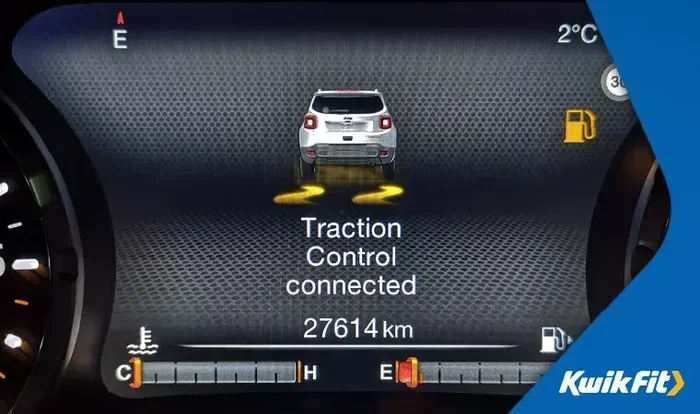
The Traction Control Warning Light
One of the clearest signs that something is wrong with your traction control system is the warning light on your dashboard. When this light stays on or flashes frequently, it means the system has detected a problem. In some cases, the issue is as simple as a dirty ABS sensor. In other cases, it could be a more serious problem with the powertrain control module or the wiring between components.
If you notice the traction control warning light, do not ignore it. A malfunctioning system can affect how your engine delivers power. You might experience unexpected power reductions or, worse, a complete failure of the system when you need it most.
If you are unsure whether you can safely drive with the light on, check our guide on Can I Drive My Car With The Trac Off Light On for more details. The traction control light and the trac off light are related, and understanding the difference is important for your safety.
Common Malfunctions
Several issues can cause the traction control system to behave erratically or fail entirely. Here are the most common problems:
- Faulty wheel speed sensors — these sensors provide the data the system needs to function. When they fail, the system cannot detect wheel slip accurately.
- Damaged wiring or connectors — corrosion or physical damage can disrupt the signals between sensors and the PCM.
- ABS system failure — since traction control shares components with ABS, an ABS problem can cascade into traction control issues.
- PCM software glitches — occasionally, a software update or reset is needed to restore proper function.
- Low battery voltage — the powertrain control module needs stable electrical power to operate correctly.
Any of these issues can change how your engine responds when traction control is active. You might notice rough idling, hesitation during acceleration, or sudden power cuts that seem to come out of nowhere.
Diagnostic Trouble Codes
When the traction control system detects a problem, it stores a diagnostic trouble code (DTC) in the PCM. A mechanic can read these codes using an OBD-II scanner to pinpoint the exact issue. Common codes related to traction control and engine performance include:
- C0034 — Wheel Speed Sensor Range/Performance
- C0040 — Left Front Wheel Speed Sensor Malfunction
- C1200 — ABS Control Module Communication Error
- P0500 — Vehicle Speed Sensor Malfunction
If you see any of these codes, addressing them quickly is important. A traction control malfunction does not just affect your safety. It can also alter how your engine performs in everyday driving conditions.
Traction Control and Driving Safety
Benefits on Wet and Icy Roads
The primary purpose of traction control is to improve driving safety. On wet roads or icy surfaces, the difference between having the system active and having it turned off can be the difference between a controlled drive and a dangerous skid.
The system works by constantly monitoring your drive wheels and comparing their speed to the other wheels. If one wheel starts to spin faster than the others, the system intervenes. It reduces engine power and applies brakes as needed to keep the vehicle stable. This is especially important during sudden acceleration, such as when merging onto a highway or climbing a hill on a wet road.
For drivers in colder climates, the benefits are even more pronounced. If you live in an area with harsh winters, you know how quickly road conditions can change. A clear road can become icy in minutes, and traction control gives you an extra layer of protection during those moments.
When Traction Control Helps the Most
Not all driving situations benefit equally from traction control. Here are the scenarios where the system provides the most value:
- Rainy weather — water on the road reduces tire grip significantly
- Snow and ice — the system prevents wheel spin on low-friction surfaces
- Gravel and loose surfaces — it keeps the car from digging in and losing momentum
- Emergency acceleration — it helps maintain control when you need to speed up quickly to avoid a hazard
- Cornering on wet roads — the system helps keep the car stable through turns
In each of these situations, the system communicates with the engine to adjust power delivery. This is the core way traction control affects your vehicle’s overall performance and safety.
Quick Tips for Using Traction Control
Here are some practical tips to get the most out of your traction control system:
- Keep it on by default — only turn it off when you have a specific reason
- Check your tire condition — worn tires reduce the effectiveness of traction control
- Clean your wheel speed sensors — dirt and debris can interfere with sensor readings
- Do not rely on the system alone — safe driving habits are still the most important factor
- Address warning lights promptly — a lit traction control light means the system needs attention
These simple habits can help ensure that your traction control system continues to work properly and that your engine performance stays consistent.
Common Myths About Traction Control and the Engine
Myth vs Reality
There are several misconceptions about how traction control affects the engine. Let us clear up some of the most common ones:
Myth 1: Traction control damages your engine over time. Reality: The system is designed to work with your engine, not against it. It simply adjusts power delivery temporarily. It does not cause wear or damage to engine components.
Myth 2: Turning off traction control always improves performance. Reality: While it can improve acceleration on certain surfaces, it also removes a critical safety feature. On most roads and in most conditions, keeping it on is the better choice.
Myth 3: Traction control reduces fuel economy significantly. Reality: The impact on fuel economy is minimal. The system only activates when it detects wheel slip, which is a brief and infrequent event in normal driving.
Myth 4: Traction control and electronic stability control are the same thing. Reality: They are related but different systems. Electronic stability control helps prevent skidding during turns, while traction control focuses specifically on preventing wheel spin during acceleration.
Expert Insights
According to automotive engineers, the traction control system is one of the most misunderstood safety features in modern vehicles. Many drivers assume it only matters in extreme conditions. In reality, the system works silently in the background during everyday driving, making constant micro-adjustments to how your engine delivers power.
Experts also emphasize that a well-maintained traction control system contributes to overall driving safety and can even extend the life of your tires by preventing excessive wheel spin. If you notice any changes in how your vehicle accelerates or handles, it is worth having the system checked by a professional.
For more information on related vehicle systems, check out our article on Can A Car Overheat In The Winter to learn how cold weather can impact your vehicle’s electronic systems and overall performance.
Conclusion
So, does traction control affect the engine? Absolutely. The system is deeply integrated with your engine’s computer and constantly influences how power is delivered to the drive wheels. Whether you are navigating wet pavement, driving on icy roads, or simply accelerating on a dry highway, traction control is working behind the scenes to keep you safe.
The key is understanding when the system helps and when it might be appropriate to turn it off. For the vast majority of driving situations, keeping traction control enabled is the right choice. It protects your engine from unnecessary strain, improves driving safety, and gives you confidence on unpredictable road surfaces.
If you ever notice the traction control warning light or feel unusual changes in how your engine responds, do not wait. Have the system inspected by a qualified mechanic. A properly functioning traction control system is one of the best investments you can make in your vehicle’s long-term performance and your safety on the road.
Frequently Asked Questions
Can I Drive My Car If The Trac Off Light Is On?
Yes, you can generally drive your car with the trac off light illuminated, but it is not recommended for normal driving conditions. The light indicates that the traction control system has been manually disabled or has detected a malfunction. Without the system active, your vehicle loses an important safety feature that helps prevent wheel spin and maintain stability, especially on slippery surfaces like wet pavement or icy roads. If the light comes on unexpectedly, it could be related to issues with the traction control system or wheel speed sensors. Have your vehicle inspected as soon as possible to rule out any underlying problems.
Does Turning Off Traction Control Damage the Engine?
No, turning off traction control does not cause any damage to your engine. The system is designed to work alongside the engine by temporarily reducing power when wheel slip is detected. When you disable it, the engine simply operates without that intervention. However, driving without traction control on slippery surfaces can put extra stress on your tires and drivetrain if you lose control and need to make sudden corrections. It is always best to keep the system enabled for regular driving unless you have a specific reason to turn it off, such as being stuck in deep snow or mud.
How Does the ABS Sensor Relate to Traction Control?
The ABS sensor and the traction control system are closely linked because they share the same wheel speed sensors and often the same control module. The ABS sensor monitors how fast each wheel is rotating and sends this data to the powertrain control module. When the traction control system detects that one wheel is spinning faster than the others, it uses this information to reduce engine power or apply the brakes to the slipping wheel. If the ABS sensor fails or becomes dirty, the traction control system may not function properly, which can lead to unexpected changes in how your engine delivers power.
Can Traction Control Improve Fuel Economy?
Traction control has a minimal impact on fuel economy, and in most cases, the effect is negligible. The system only activates when it detects wheel slip, which is a brief event during normal driving. However, in some situations, the system’s interventions — such as reducing throttle response or cutting fuel delivery temporarily — can slightly increase fuel consumption. Overall, the safety benefits of keeping traction control enabled far outweigh any tiny changes in fuel usage. If maximizing fuel economy is a priority, focus on maintaining proper tire pressure, regular engine tune-ups, and smooth driving habits rather than disabling safety systems.
What Should I Do If the Traction Control Warning Light Keeps Coming On?
If the traction control warning light stays on or keeps flashing, it is a sign that the system has detected a problem. Common causes include a faulty wheel speed sensor, a damaged ABS sensor, low battery voltage, or issues with the powertrain control module. Start by having a mechanic read the diagnostic trouble codes with an OBD-II scanner to identify the specific issue. In the meantime, you can usually still drive the vehicle safely, but you should exercise extra caution on slippery surfaces since the traction control system may not be functioning properly. Addressing the problem promptly helps ensure both your safety and consistent engine performance.
Is It Safe to Drive Without Traction Control in Winter Weather?
Driving without traction control in winter weather is generally not recommended, as the system provides critical protection against wheel spin on snow and ice. However, there are specific situations where turning it off can be helpful, such as when you are stuck in deep snow and need the wheels to spin to gain momentum. In those cases, briefly disabling the system and then re-enabling it once you are moving is a common practice. For everyday winter driving, keeping traction control on significantly improves stability and reduces the risk of accidents. Always remember that traction control works best when paired with proper winter tires and safe driving habits.