Honda Accord Wont Start but Has Power Here Is Why
When a Honda Accord won’t start but has power, it can be frustrating and confusing. The dashboard lights up, the radio works, but turning the key or pressing the start button does nothing. This guide covers the most common reasons for this issue and gives you clear steps to diagnose and fix the problem.
Key Takeaways
- Battery connections and voltage are the most common culprits when your Honda Accord has power but won’t start.
- A faulty ignition switch or starter motor can prevent cranking even with full electrical power.
- Fuel pump failure and immobilizer lockouts are frequent causes that mimic a no-start condition.
- Simple fixes like checking fuses, relays, and the neutral safety switch can save you a costly tow.
- Knowing when to call a professional saves time and prevents further damage to your Accord.
📑 Table of Contents
Why Your Honda Accord Won’t Start but Has Power
You turn the key or push the start button. The dash lights glow. The radio still works. But the engine refuses to turn over. This is one of the most common problems Honda Accord owners face, and it can happen to any model year. When your Honda Accord won’t start but has power, the issue usually lies somewhere between the battery and the starter system.
Here is the good news. Most of the time, this problem has a simple explanation. You do not need to be a mechanic to understand what is going on. You just need to know where to look. This guide walks you through every likely cause, from the easiest fix to the more complex ones. By the end, you will know exactly what to check and how to get your Accord back on the road.
Let us break this down step by step. We will cover the electrical system, the fuel system, the security features, and everything in between. Whether your Accord is a ninth-generation sedan or a tenth-year model, the causes and solutions below apply broadly.
What Does “Has Power But Won’t Start” Actually Mean?
Before diving into causes, it helps to understand what this symptom really means. When we say your Honda Accord has power, we mean the 12-volt electrical system is alive. The lights work. The accessories function. The dashboard displays information normally.
But when you turn the key or press the start button, the engine does not crank. It does not fire. It does not even try. This tells us the problem is not a dead battery in the traditional sense. Instead, something is blocking the starting process. That something could be a failed component, a broken connection, or a safety lockout.
There is also a related scenario worth mentioning. Sometimes your Accord cranks but will not fire. That is a different problem entirely. If your engine turns over but does not start, you may want to check our article on car cranks but won’t start causes explained for a deeper dive into fuel delivery and spark issues.
Common Causes of Honda Accord Starting Problems
Several components work together to start your Honda Accord. The battery sends power to the starter motor. The starter motor turns the engine. The fuel pump delivers gas. The spark plugs ignite the fuel. When even one of these fails, you get the dreaded no-start condition. Below are the most common reasons your Honda Accord won’t start but has power.
1. Corroded or Loose Battery Connections
This is the number one cause of starting problems in Honda Accords. Your battery may be fully charged and working fine. But if the terminals are corroded or the cables are loose, power cannot flow properly to the starter motor. You get all the dashboard lights and accessories, but not enough juice to crank the engine.
Here is how to check. Open the hood and look at the battery terminals. Do you see a white or greenish crusty buildup? That is corrosion. Are the cables tight when you wiggle them? If they move easily, that is your problem.
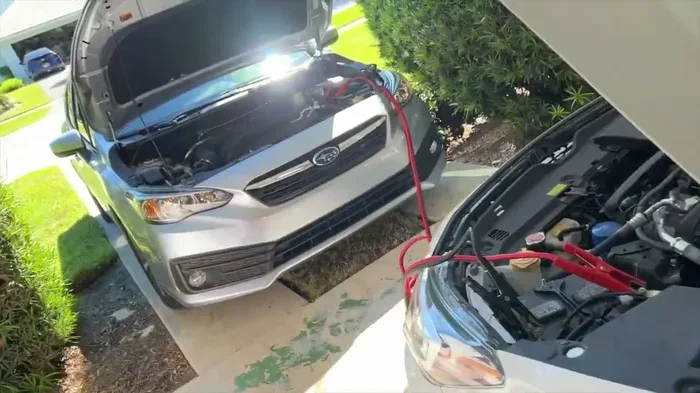
Quick fix: Disconnect the negative cable first, then the positive. Clean the terminals with a wire brush or a mixture of baking soda and water. Reconnect the positive cable first, then the negative. This simple step resolves the issue more often than people realize.
2. Weak Battery or Low Voltage
Even though your Accord has power for the lights and radio, the battery might not have enough voltage to engage the starter motor. A healthy battery should read 12.6 volts or higher with the engine off. If it reads below 12.0 volts, it may not have the punch to turn over the engine.
Cold weather makes this worse. Batteries lose strength in low temperatures. If you live in a colder climate, this could be a seasonal issue. Consider testing your battery with a multimeter or having it tested at an auto parts store. Most stores offer free battery testing.
Also, check the ground wire between the battery and the chassis. A corroded ground wire can cause all sorts of electrical gremlins. This is a quick Honda Accord troubleshooting step that many people overlook.
3. Faulty Starter Motor
The starter motor is the electric motor that cranks your engine. When it fails, you get nothing when you turn the key. No click. No crank. Just silence, even though everything else is powered up.
Starter motors wear out over time, especially in higher-mileage Accords. You might hear a single click when you turn the key. That click is the starter solenoid engaging, but the motor itself is dead. In some cases, you might hear a grinding noise, which means the starter gear is worn.
Replacing a starter motor on a Honda Accord is a moderate repair. It is not the cheapest job, but it is also not the most expensive. A mechanic can typically do it in one to two hours. If you are handy, you can do it yourself with basic tools.
4. Bad Ignition Switch
The ignition switch is the component that sends the electrical signal to start the engine. When it fails, your Honda Accord has power but won’t start. The dash lights work, but turning the key does nothing.
Ignition switch failures are common in certain Honda Accord model years. If you notice your accessories flickering or the key getting stuck in the ignition, these are warning signs. The ignition switch is a relatively inexpensive part, but labor can vary depending on the model year.
Quick tip: Try wiggling the key gently while turning it. If the switch is going bad, this sometimes temporarily gets it to engage. But this is a band-aid fix. Replace the switch as soon as you can.
5. Fuel Pump Failure
Your Honda Accord needs fuel to start. The fuel pump pushes gas from the tank to the engine. When the fuel pump fails, the engine cranks (or tries to) but will not fire. However, some drivers describe this as having power but no start because the dash is fully lit and the radio works fine.
You can test this by listening for a hum when you turn the key to the ON position (not START). You should hear a brief buzzing sound from the back of the car. That is the fuel pump priming. No sound? The fuel pump may be dead.
Fuel pump replacements can be costly on some Honda models, especially if the pump is inside the tank. But it is a necessary repair. Without fuel delivery, your Accord simply will not start.
6. Immobilizer or Security System Lockout
Modern Honda Accords come with an immobilizer system. This is a security feature that prevents the engine from starting unless the correct key or key fob is recognized. When the system malfunctions, your Accord may have full power but refuse to start.
This often happens when the key fob battery is low. If you drive a keyless start Accord, try replacing the battery in your key fob. It is a CR2032 battery, and it costs just a few dollars. This is one of the easiest and cheapest fixes for a Honda Accord starting problem.
Another cause is a faulty transponder chip in the key itself. If the chip is damaged, the immobilizer will not recognize the key. You may need a new key programmed at a dealership or a locksmith.
If you are dealing with a keyless car that won’t start, our article on can you start a keyless car with a key offers helpful backup options when your key fob fails.
7. Neutral Safety Switch Issues
The neutral safety switch prevents your Honda Accord from starting unless the transmission is in Park or Neutral. When this switch goes bad, you can have full power but no start. It is a simple and often overlooked cause.
Try this. Shift your transmission to Neutral and try starting the car. If it starts in Neutral but not in Park, the neutral safety switch is likely the culprit. This is an easy and inexpensive fix.
Some drivers also report that rocking the shifter slightly while pressing the start button can temporarily bypass the issue. But again, this is a temporary workaround, not a permanent solution.
8. Blown Fuse or Bad Relay
Your Honda Accord has a fuse box under the hood and another inside the cabin. A blown fuse in the starter circuit can prevent the engine from cranking, even though everything else works. Similarly, a faulty starter relay can cut power to the starter motor.
Check your owner’s manual for the fuse box diagram. Look for fuses related to the starter, ignition, or fuel pump. Swap the suspected fuse with one of the same amperage to test it. This takes about two minutes and costs nothing.
Relays are even easier to check. The starter relay is usually located in the under-hood fuse box. You can swap it with a similar relay to test. If your Accord starts after the swap, you have found your problem.
How to Diagnose the Problem Step by Step
Diagnosing a no-start condition on a Honda Accord follows a logical process. You start with the simplest checks and work your way to the more complex ones. Here is a systematic approach.
Step 1: Check the Dashboard Lights
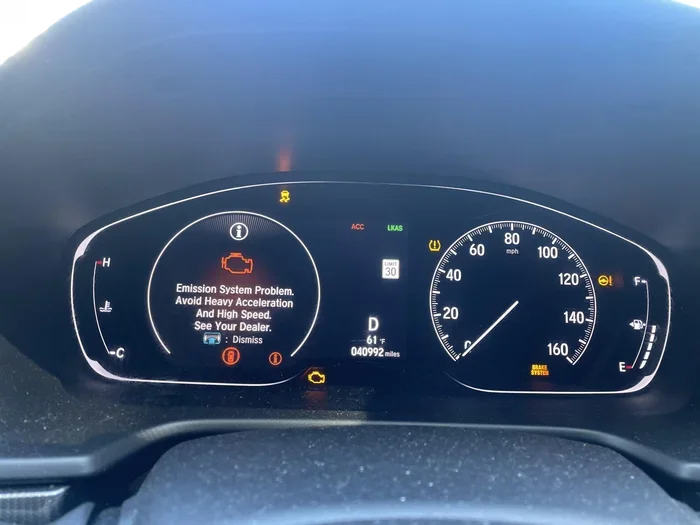
When you turn the key to ON (or press the start button without braking), do all the dashboard lights come on normally? If some lights are dim or missing, your battery or connections are likely the issue. If all lights work fine, move to the next step.
Step 2: Listen for Clicks and Sounds
Turn the key to START. Do you hear a single click? A rapid clicking? Complete silence? Each sound tells a different story.
- Single click: The starter solenoid is engaging but the motor is not turning. This points to a bad starter or a locked engine.
- Rapid clicking: The battery has enough power to engage the solenoid but not enough to turn the starter. This usually means a weak battery or poor connections.
- Complete silence: The ignition switch, neutral safety switch, or a blown fuse could be blocking the signal entirely.
Step 3: Check the Battery Voltage
Use a multimeter to test the battery. A reading of 12.6 volts or higher is good. Anything below 12.0 volts means the battery needs charging or replacement. Even if the battery passes a voltage test, a load test will reveal if it can deliver enough current to start the car.
Step 4: Test the Starter Circuit
Have someone turn the key while you check the starter solenoid for voltage. If voltage reaches the solenoid but the starter does not engage, the starter motor is bad. If no voltage reaches the solenoid, trace the circuit back through the ignition switch and neutral safety switch.
Step 5: Verify Fuel Delivery
Listen for the fuel pump hum when you turn the key to ON. Check the fuel pressure with a gauge if you have one. No fuel pump activity means you need to inspect the fuel pump relay, fuse, and the pump itself.
When to Seek Professional Help
Not every Honda Accord starting problem is a DIY fix. Some issues require professional diagnostic equipment and expertise. Here are signs that it is time to call a mechanic.
- The engine turns over normally but will not fire. This could indicate a deeper problem with the fuel injectors, ignition coils, or the PCM (Powertrain Control Module).
- You smell gasoline near the car. A fuel leak is dangerous and needs immediate attention.
- The check engine light is flashing. A flashing light often indicates a serious misfire or catalytic converter issue that could damage your engine further.
- The problem is intermittent. If your Accord sometimes starts and sometimes does not, the issue may be electrical and hard to pin down without professional tools.
If your Accord stopped running while driving and now will not start, the situation is more serious. You may have a failed ignition coil, a broken timing belt, or a flooded engine. Check our article on car stopped running while driving and won’t start for guidance on this specific scenario.
Sometimes the problem is intermittent and seems to resolve itself. If your car won’t start then starts later, the issue could be a heat-sensitive component or a failing relay. Visit our car won’t start then starts later article for more details on this frustrating condition.
Preventive Maintenance to Avoid Future No-Start Issues
The best way to deal with a Honda Accord that won’t start is to prevent the problem from happening in the first place. Here are some simple maintenance habits that keep your Accord reliable.
- Check your battery terminals every six months. Clean any corrosion and ensure tight connections.
- Replace the battery every four to five years. Even if it seems fine, batteries degrade over time.
- Keep your fuel tank at least a quarter full. This prevents the fuel pump from overheating and failing prematurely.
- Replace the key fob battery annually. A weak key fob battery can cause immobilizer lockouts.
- Listen for unusual sounds when starting. A new grinding or clicking noise is worth investigating early.
Final Thoughts on Honda Accord Won’t Start Problems
A Honda Accord won’t start but has power situation is stressful, but it is almost always fixable. The key is to work through the common causes systematically. Start with the simplest possibilities like battery connections and fuses before moving to more complex issues like the starter motor or fuel pump.
Most of the time, the fix is inexpensive and straightforward. Corroded terminals, a weak battery, or a blown fuse are problems you can handle yourself with basic tools. Other issues like a failed starter or fuel pump will require a trip to the shop, but at least you will know what you are dealing with.
Remember that every Honda Accord starting problem has a cause. It is just a matter of finding it. Use the diagnostic steps in this guide, trust your instincts, and do not be afraid to ask for help when you need it. Your Accord is a reliable car, and with a little attention, it will keep starting strong for years to come.
If you are dealing with a completely dead car with no power at all, our article on car has no power at all covers that different but related scenario in detail.
Frequently Asked Questions
Why does my Honda Accord have power but won’t start?
The most common reason is corroded battery terminals, a weak battery, or a faulty starter motor. Your Accord’s electrical system is working, but something is preventing the engine from cranking. Check your battery connections first, then move on to the starter and ignition switch.
Can a bad key fob battery cause a Honda Accord not to start?
Yes, absolutely. Modern Honda Accords use a keyless start system that relies on the key fob’s transponder signal. A low key fob battery can prevent the immobilizer from recognizing the key, resulting in a no-start condition even though the car has full power.
How do I know if my fuel pump is bad in a Honda Accord?
Turn the key to the ON position without starting the engine. Listen for a brief humming sound from the back of the car. That is the fuel pump priming. If you hear nothing, the fuel pump may be dead. Other signs include stalling at high speeds and loss of power under acceleration.
Is it safe to drive a Honda Accord with a no-start condition?
No. If your Accord will not start, do not attempt to drive it. A car that will not start could leave you stranded in a dangerous location. Have the car towed to a safe location or a repair shop instead.
What should I do if my Honda Accord clicks but won’t start?
A clicking sound usually means the starter solenoid is receiving power but the starter motor is not turning. This is often caused by a weak battery, corroded terminals, or a failing starter motor. Check your battery voltage and connections first. If those are fine, the starter motor is likely the culprit.
How much does it cost to fix a Honda Accord that won’t start?
The cost varies widely depending on the cause. Battery terminal cleaning costs nothing. A new battery runs $100 to $200. Starter motor replacement typically costs $300 to $500. Fuel pump replacement can range from $400 to $800. Always get a diagnosis before committing to a repair.
=== CONCLUSION ===
A Honda Accord won’t start but has power problem is one of the most common issues Accord owners face. The good news is that the causes are well understood and usually fixable. Whether it is a simple corroded terminal, a weak battery, a bad starter motor, or a security system lockout, you now have the knowledge to diagnose and address the issue.
Start with the basics. Check your battery connections and voltage. Listen for clicks and sounds when you try to start. Work your way through the fuel system, ignition system, and safety switches. Most importantly, do not panic. Your Honda Accord is a durable and reliable car, and this problem has a solution.
Use the diagnostic steps and tips in this guide to save time and money. And remember, when in doubt, a professional mechanic can always provide a second opinion. Keep this guide bookmarked for future reference, and share it with fellow Honda Accord owners who might be dealing with the same frustrating issue.