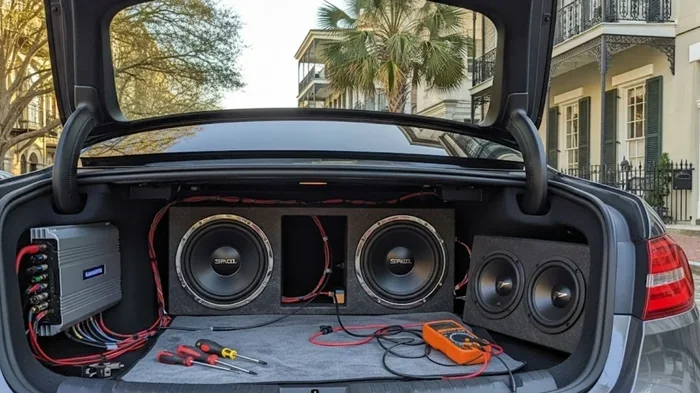
3 Way Car Speakers Are The Best Upgrade For Your Ride
Upgrading to 3 way car speakers transforms your car audio experience with clearer highs, richer mids, and deeper bass. These speakers use three separate drivers to handle different sound frequencies, giving you studio-quality sound on the road. This guide covers everything you need to know about choosing, installing, and enjoying 3 way car speakers in your vehicle.
Key Takeaways
- Better Sound Quality: Three drivers work together to deliver crisp highs, clear mids, and powerful bass.
- Easy Upgrade: Swapping in 3 way car speakers is simpler than most car owners think.
- Wider Frequency Range: These speakers cover more of the audio spectrum than standard 2-way options.
- Great Value: You get premium sound without needing a full-blown audio system overhaul.
- Compatible with Most Vehicles: 3 way car speakers fit a wide range of car models and budgets.
- Pairs Well with Other Upgrades: Combine them with a 7 inch music system for car or a 6 inch car woofer for even better results.
📑 Table of Contents
- Why 3 Way Car Speakers Are the Best Upgrade for Your Ride
- What Exactly Are 3 Way Car Speakers?
- How Do 3 Way Car Speakers Work?
- Top Benefits of Upgrading to 3 Way Car Speakers
- 3 Way Car Speakers vs. Other Speaker Types
- How to Choose the Right 3 Way Car Speakers
- Installation Tips for 3 Way Car Speakers
- Common Mistakes to Avoid When Buying 3 Way Car Speakers
- Expert Insights on Car Audio Upgrades
- Conclusion
Why 3 Way Car Speakers Are the Best Upgrade for Your Ride
If you drive every day, your car audio matters more than you might think. Good music makes boring commutes bearable. It turns long road trips into adventures. And it even makes your car feel more personal.
But most factory car speakers sound flat. They lack depth. They distort at higher volumes. If this sounds familiar, it is time to consider an upgrade.
3 way car speakers are one of the best upgrades you can make. They split sound into three separate frequency ranges. Each range gets its own dedicated driver. The result is cleaner, louder, and more detailed audio. Whether you love rock, hip hop, or classical music, 3 way car speakers bring your playlists to life.
In this guide, we will walk you through everything you need to know. You will learn how they work, why they are better, and how to pick the right set for your car. By the end, you will be ready to upgrade your sound system with confidence.
What Exactly Are 3 Way Car Speakers?
Let us start with the basics. A 3 way car speaker is a speaker system that uses three separate drivers. Each driver handles a different range of sound frequencies. This design is what sets them apart from standard speakers.
Most car speakers are either 2 way or 3 way. A 2 way speaker uses two drivers. A 3 way speaker system adds a third driver for even better sound separation. Here is how the three drivers typically break down:
- Tweeter: Handles the highest frequencies. This is where you hear cymbals, vocal sibilance, and bright melodies.
- Midrange Driver: Covers the middle frequencies. This is where vocals and most instruments live.
- Woofer: Handles the low frequencies. This gives you the bass and depth in music.
Having three dedicated drivers means each one focuses on what it does best. No single driver is stretched thin. The result is cleaner sound across the entire spectrum.
How Is This Different from 2 Way Speakers?
2 way speakers use a tweeter and a woofer. They split sound into two ranges. This works well for basic listening. But the midrange frequencies often get shared between the two drivers.
3 way car speakers add a dedicated midrange driver. This means the mid frequencies get their own specialized component. The clarity improves significantly. Instruments sound more distinct. Vocals sound richer and more natural.
Think of it like a painting. A 2 way speaker uses two colors. A 3 way car speaker uses three. More colors mean more detail and depth in the final picture.
How Do 3 Way Car Speakers Work?
Understanding how 3 way car speakers work helps you appreciate the upgrade. The process is actually quite simple once you break it down.
First, your car stereo sends an audio signal to the speakers. This signal contains all frequencies mixed together. The speaker system then separates these frequencies using something called a crossover network.
The crossover network acts like a traffic director. It sends high frequencies to the tweeter. It sends mid frequencies to the midrange driver. It sends low frequencies to the woofer. Each driver then reproduces its assigned frequencies with precision.
The Role of the Crossover Network
The crossover network is the brain of a 3 way speaker system. It ensures each driver only receives the frequencies it can handle best. This prevents distortion and damage.
There are two types of crossovers:
- Passive Crossover: Built into the speaker itself. It uses capacitors and inductors to filter frequencies. This is the most common type in car audio.
- Active Crossover: An external electronic device. It filters frequencies before the signal reaches the amplifiers. This gives you more control but costs more.
Most 3 way car speakers on the market use passive crossovers. They are easy to install and work great for most car audio setups.
Why Frequency Separation Matters
When each driver handles only its frequency range, several good things happen:
- Less distortion: Drivers are not forced to reproduce frequencies outside their range.
- Louder clean volume: Each driver can focus its energy on its specific range.
- Better imaging: Sound seems to come from specific points in the car.
- Improved detail: You hear subtle nuances in music you never noticed before.
This is why 3 way car speakers sound so much better than single or dual driver setups. The separation creates a more immersive listening experience.
Top Benefits of Upgrading to 3 Way Car Speakers
Still not sure if 3 way car speakers are worth it? Here are the top benefits that make them a smart investment.
1. Superior Sound Clarity
The biggest advantage of 3 way car speakers is clarity. Because each driver handles a specific frequency range, the sound is much cleaner. You can hear every instrument and vocal with precision.
When you listen to a complex song with multiple instruments, 3 way speakers let you pick out each one. The guitar is distinct from the piano. The vocals sit perfectly in the mix. This level of detail is hard to achieve with simpler speaker setups.
2. Better Bass Response
The dedicated woofer in a 3 way speaker system handles bass more effectively. It does not have to share the workload with other drivers. This means deeper, tighter bass that really fills your car.
If you love music with heavy bass lines, you will notice the difference immediately. The bass sounds punchy and controlled, not muddy or distorted.
3. Wider Soundstage
Soundstage refers to how music feels in space. Good 3 way car speakers create a wide soundstage. It feels like the band is playing right in front of you.
This happens because each driver produces sound at different points. Your brain uses these differences to locate sounds in space. The result is a more engaging and immersive listening experience.
4. Higher Power Handling
3 way speakers typically handle more power than 2 way speakers. This is because the power is distributed across three drivers. Each driver handles a portion of the total power load.
Higher power handling means you can turn up the volume without distortion. You can push your car audio system harder and still get clean, clear sound.
5. Great Value for the Price
You might think 3 way speakers are expensive. But many quality options are very affordable. You can get excellent 3 way car speakers for a reasonable price. The sound improvement over factory speakers is dramatic.
Compared to replacing your entire audio system, upgrading speakers is the most cost-effective improvement. You get 80% of the benefit for 20% of the cost.
3 Way Car Speakers vs. Other Speaker Types
Not sure how 3 way car speakers compare to other options? Here is a detailed look at the differences.
3 Way vs. 2 Way Speakers
2 way speakers use a tweeter and a woofer. They split sound into two ranges. 3 way car speakers add a dedicated midrange driver for a third range.
The advantage of 3 way is clear: better midrange clarity. Vocals and instruments sound more natural and detailed. The trade-off is slightly more complex installation.
3 Way vs. Component Speakers
Component speakers take this idea further. They separate the tweeter, midrange, and woofer into individual units. Each component is mounted separately for optimal positioning.
3 way car speakers combine all three drivers into one unit. This makes installation easier. Component speakers offer slightly better sound but require more work and cost more.
3 Way vs. Coaxial Speakers
Coaxial speakers are the most common factory speakers. They stack a tweeter on top of a woofer. Most are 2 way designs.
3 way car speakers improve on this by adding a midrange driver. The sound is noticeably better. If your current speakers are coaxial, upgrading to 3 way is a huge step forward.
| Feature | 2 Way Speakers | 3 Way Speakers | Component Speakers |
|---|---|---|---|
| Number of Drivers | 2 | 3 | 3+ individual units |
| Midrange Clarity | Good | Very Good | Excellent |
| Installation Ease | Easy | Easy | Moderate |
| Price Range | Budget | Mid-Range | Premium |
| Soundstage Width | Average | Wide | Very Wide |
| Best For | Basic Upgrade | Balanced Sound | Enthusiast Setup |
How to Choose the Right 3 Way Car Speakers
Choosing the right 3 way car speakers can feel overwhelming. There are so many options. But a few key factors will guide you to the right choice.
1. Check Your Car Compatibility
Not all speakers fit all cars. Before buying, check the speaker size required for your vehicle. Common sizes include 6.5 inches, 6×9 inches, and component sets.
You can usually find this information in your car manual. Or check online for your specific make and model. A proper fit ensures the best sound and easiest installation.
2. Consider Power Handling
Power handling is measured in watts. It tells you how much power a speaker can handle comfortably.
If you have a factory stereo, look for speakers with 20-50 watts RMS. If you have an aftermarket amplifier, you can go higher. Matching power ratings prevents distortion and damage.
3. Look at Frequency Response
Frequency response tells you the range of sounds a speaker can produce. For 3 way car speakers, look for a range of about 30 Hz to 22 kHz.
A wider frequency range means more complete sound reproduction. You get deeper bass and brighter highs in the same speaker.
4. Set a Budget
3 way car speakers come in a wide price range. Budget options start around $30 to $50 per pair. Mid-range options cost $80 to $150 per pair. Premium options can go above $200.
For most car owners, the mid-range offers the best value. You get excellent sound quality without breaking the bank.
5. Read Reviews
Before making a final decision, read user reviews. Look for feedback on sound quality, durability, and ease of installation. Real-world experiences help you make a confident choice.
Quick Tips for Choosing Speakers
- Match speakers to your existing audio setup.
- Choose speakers with a sensitivity rating of 90 dB or higher for louder sound from a factory head unit.
- Consider pairing your new 3 way car speakers with a 7 inch touch screen for car to upgrade your interface and audio control.
- Buy from reputable brands known for car audio quality.
Installation Tips for 3 Way Car Speakers
Installing 3 way car speakers is easier than most people expect. You can do it yourself with basic tools. Here are some tips to make the process smooth.
What You Will Need
- Screwdriver set (Phillips and flathead)
- Wire stripper
- Speaker wire
- Electrical tape
- Socket wrench set
- Panel removal tools
Step-by-Step Installation Guide
Step 1: Disconnect the battery. Always start by disconnecting the negative terminal. This prevents electrical shorts and keeps you safe.
Step 2: Remove the old speakers. Use panel removal tools to take off the door panels. Unscrew the factory speakers and disconnect the wiring.
Step 3: Prepare the wiring. Strip the ends of your new speaker wire. Connect the positive and negative wires to the corresponding terminals on the new speakers.
Step 4: Mount the new speakers. Place the 3 way car speakers into the mounting brackets. Secure them with screws. Make sure they fit snugly without any gaps.
Step 5: Reconnect the battery. Once everything is connected, reconnect the battery. Turn on your stereo and test the sound.
Step 6: Adjust the settings. Fine-tune your equalizer settings to get the best sound from your new speakers. Boost the midrange slightly to hear the full benefit of the dedicated midrange driver.
When to Get Professional Help
While DIY installation is doable, some situations call for a professional. If your car has complex wiring or custom audio setups, consider getting help. A professional installer can also add sound deadening material for even better results.
Pair Your Speakers with Other Upgrades
For the best experience, consider pairing your new 3 way car speakers with other audio upgrades. A quality 6 inch car woofer can add even more bass depth. A 7 inch music system for car can improve your overall control and sound quality.
These combinations create a complete audio upgrade that transforms how your car sounds. Each component enhances the others for a truly impressive listening experience.
Common Mistakes to Avoid When Buying 3 Way Car Speakers
Avoiding common mistakes saves you time, money, and frustration. Here are the pitfalls to watch out for.
- Ignoring impedance matching: Make sure your speakers match your head unit impedance. Mismatched impedance can cause poor performance or damage.
- Skipping the crossover: A good crossover is essential for 3 way speaker systems. Never buy speakers without a quality crossover network.
- Overspending on features you do not need: Focus on sound quality first. Extra features like Bluetooth connectivity are nice but not essential for the speaker itself.
- Wrong speaker size: Always double-check the size before ordering. A speaker that does not fit properly will sound worse and vibrate excessively.
- Neglecting door sealing: Poor door sealing causes sound leaks and rattles. Use weatherstripping or sound deadening material for a tighter fit.
By avoiding these mistakes, you ensure your 3 way car speakers deliver their full potential for years to come.
Expert Insights on Car Audio Upgrades
Car audio experts agree that speaker upgrades deliver the biggest bang for your buck. A good set of 3 way car speakers can transform even an older vehicle’s sound system.
Many enthusiasts start with speakers and work outward. After speakers, they add an amplifier. Then they might upgrade the head unit. This gradual approach builds a better system without overwhelming your budget.
The key is starting with quality speakers. They form the foundation of your entire car audio experience. Everything else builds on top of them.
If you are serious about sound quality, invest in 3 way car speakers from a reputable brand. Brands like JBL, Pioneer, and Rockford Fosgate offer excellent options at various price points. Do your research, read reviews, and choose the set that best fits your car and your music preferences.
Conclusion
3 way car speakers are truly the best upgrade for your ride. They offer superior sound clarity, better bass, wider soundstage, and great value for the price. Whether you are a casual listener or an audio enthusiast, the difference is immediately noticeable.
The installation process is straightforward. The benefits are long-lasting. And the cost is reasonable compared to the massive improvement in sound quality you get.
Take the time to choose the right set for your car. Follow the installation tips in this guide. And enjoy a completely transformed listening experience every time you turn the key.
Your car deserves better sound. 3 way car speakers deliver exactly that.
Frequently Asked Questions
What makes 3 way car speakers different from regular speakers?
3 way car speakers use three dedicated drivers: a tweeter for high frequencies, a midrange driver for mid frequencies, and a woofer for bass. This separation gives you cleaner, more detailed sound compared to standard 2 way speakers that share some frequency duties between fewer drivers.
Are 3 way car speakers hard to install?
Not at all. Most 3 way car speakers are designed for straightforward bolt-in installation. If you can change a tire, you can likely install them yourself. Just make sure to disconnect your battery first and follow the wiring carefully.
How much do 3 way car speakers cost?
Prices vary widely. Budget options start around $30 to $50 per pair. Mid-range speakers cost $80 to $150. Premium options can exceed $200. For most car owners, the mid-range offers the best balance of quality and affordability.
Can I use 3 way car speakers with my factory stereo?
Yes, absolutely. 3 way car speakers work great with factory stereos. Look for speakers with high sensitivity (90 dB or above) so they get loud enough even without a powerful aftermarket head unit.
Do I need an amplifier for 3 way car speakers?
You do not need an amplifier, but one helps. A factory stereo can power most 3 way car speakers adequately. Adding an amplifier gives you more headroom, louder clean volume, and better overall sound quality.
What brands make the best 3 way car speakers?
Top brands include JBL, Pioneer, Rockford Fosgate, and Infinity. These manufacturers are known for producing reliable, high-quality 3 way speaker systems that deliver excellent sound at various price points. Read reviews and compare specs to find the best fit for your needs.