How to Wash a Wrapped Car and Keep It Looking Great
Learning how to wash a wrapped car the right way keeps your vinyl looking sharp and lasts longer. A wrapped car needs gentle care, the right products, and a simple routine to avoid damage. This guide covers everything from hand washing to drying and protecting your wrap for long-lasting shine.
Keeping a wrapped car clean is not the same as washing a regular paint job. Your vinyl wrap is a big investment, and it needs the right care to look its best. Many car owners make the mistake of treating a wrapped car just like any other vehicle. That can lead to premature wear, fading, and even peeling. In this guide, we will walk you through everything you need to know about washing a wrapped car safely and effectively.
Whether you have a full car wrap or just a partial one, the cleaning method matters a lot. The wrong products or tools can ruin the finish in a matter of weeks. But with the right approach, your wrap can stay vibrant and protected for years. Let us dive into the simple steps and best practices that will keep your wrapped car looking incredible.
Key Takeaways
- Always hand wash your wrapped car: Harsh automatic washes can peel or lift the edges of your vinyl wrap.
- Use pH-neutral soap designed for wraps: Regular car soap can strip the finish and dull the appearance over time.
- Avoid high-pressure washing near edges: Strong water pressure can push water under the wrap and cause bubbling or lifting.
- Dry with a soft microfiber cloth: This prevents scratches and keeps the wrap surface smooth and glossy.
- Apply a wrap-safe sealant every few months: This adds a protective layer and makes future washes easier.
- Avoid waxing a vinyl wrap: Traditional car wax can damage the vinyl material and reduce adhesion.
- Wash your wrap every one to two weeks: Regular cleaning prevents buildup of dirt, bird droppings, and tree sap that can degrade the vinyl.
📑 Table of Contents
- Why Proper Washing Matters for Your Wrapped Car
- What You Need to Wash a Wrapped Car
- Step-by-Step Guide to Washing a Wrapped Car
- Common Mistakes to Avoid When Washing a Wrapped Car
- How Often Should You Wash a Wrapped Car
- Additional Tips for Keeping Your Wrapped Car Looking Great
- Comparing Hand Washing vs. Automatic Washing for Wrapped Cars
- Expert Insights on Car Wrap Cleaning
- Final Thoughts on Washing Your Wrapped Car
Why Proper Washing Matters for Your Wrapped Car
A vinyl wrap is not just a sticker. It is a layer of engineered material bonded directly to your car’s surface. When you wash it correctly, you protect both the wrap and the original paint underneath. Improper washing can cause a range of problems that are easy to avoid.
Here are some reasons why proper car wrap maintenance is so important:
- Preserves the finish: Dirt and grime can slowly break down the vinyl surface if left too long.
- Extends wrap life: A well-maintained wrap can last five to seven years or even longer.
- Keeps the look fresh: Regular cleaning prevents fading and dullness caused by environmental contaminants.
- Protects the underlying paint: The wrap shields your original paint, but only if the wrap itself stays in good condition.
- Saves money: Proper care means fewer repairs and longer intervals between wrap replacements.
Think of your wrapped car like a pair of quality shoes. If you take care of them, they last much longer and look better. The same principle applies to your vinyl wrap care routine. A little effort goes a long way.
What You Need to Wash a Wrapped Car
Before you start washing, gather the right supplies. Using the wrong products is one of the biggest mistakes people make. You do not need anything expensive, but you do need the right tools.
Essential Supplies for Hand Washing a Wrapped Car
- pH-neutral car wash soap: This is gentle on vinyl and will not strip the finish. Look for products specifically labeled as safe for wrapped cars.
- Two buckets: One for soapy water and one for rinsing your wash mitt. This method prevents dragging dirt across the wrap.
- Soft microfiber wash mitts: Avoid sponges or rough cloths that can create micro scratches on the vinyl surface.
- Clean microfiber drying towels: These are soft and absorbent, perfect for drying without leaving lint or streaks.
- A gentle water hose with a nozzle: You want control over the water pressure, not a powerful jet.
- Wrap-safe sealant or coating: This adds an extra layer of protection after washing.
Avoid using a pressure washer directly on the wrap. While a light mist is fine, high-pressure water can force its way under the edges of the wrap. This can cause lifting and allow moisture to reach the underlying paint. Always use a gentle stream or a garden hose setting.
Step-by-Step Guide to Washing a Wrapped Car
Now that you have your supplies ready, let us walk through the actual washing process. Follow these steps in order for the best results every time.
Step 1: Rinse the Car Thoroughly
Start by rinsing the entire car with clean water. This removes loose dirt, dust, and debris that could scratch the wrap during washing. Use a gentle stream and work from the top down. Pay extra attention to areas around the wheel wells and lower panels where grime tends to build up.
Do not skip this step. Rinsing first makes the rest of the wash much easier and safer. It also prevents you from pushing abrasive particles across the vinyl surface.
Step 2: Prepare Your Soap Solution
Fill one bucket with cool or lukewarm water and add your pH-neutral wash soap. Follow the instructions on the product label for the correct ratio. Fill the second bucket with clean water for rinsing your mitt between passes.
Always wash in the shade. Washing a wrapped car in direct sunlight can cause the soap to dry too quickly, leaving residue and water spots. A shaded spot or a garage is ideal.
Step 3: Wash Using the Two-Bucket Method
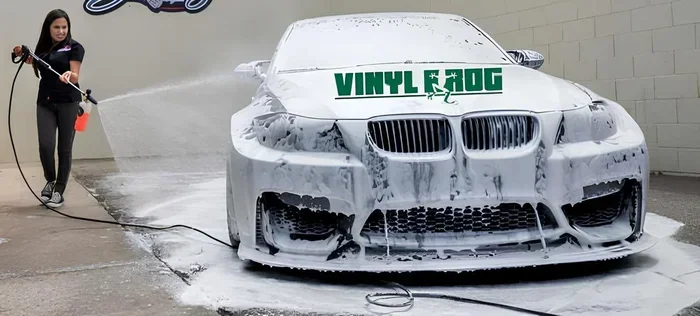
Dip your microfiber mitt into the soapy water and wash one section at a time. Start from the top of the car and work your way down. After each pass, rinse your mitt in the clean water bucket before dipping it back into the soap.
This method is called the two-bucket technique, and it is one of the best practices in car wash care. It keeps dirty water and grit away from the wrap surface, reducing the risk of scratches.
Be gentle. You do not need to press hard or scrub aggressively. Let the soap and the soft mitt do the work. For stubborn spots like bird droppings or tree sap, let the soap sit for a minute or two to soften the residue before gently wiping it away.
Step 4: Rinse Completely
Once you have washed the entire car, rinse it thoroughly with clean water. Make sure to remove all soap residue. Soap left on the wrap can create a dull film and attract more dirt over time.
Use a gentle flow and rinse from the top down. Check that no suds are hiding in crevices, around mirrors, or along the edges of the wrap.
Step 5: Dry the Car Properly
Drying is just as important as washing. Use a clean, soft microfiber towel to pat the car dry. Do not rub the wrap vigorously. Instead, gently blot and drag the towel across the surface to absorb water.
Pay special attention to areas where water tends to pool, such as around door handles, side mirrors, and the edges of panels. Leaving water to air dry can cause water spots and mineral deposits that are hard to remove later.
Step 6: Apply a Wrap-Safe Sealant
After the car is completely dry, you can apply a sealant designed specifically for vinyl wraps. This step is optional but highly recommended. A good sealant adds a protective layer that repels water, dirt, and UV rays.
Apply a thin, even layer using a soft applicator pad. Let it cure according to the product instructions. This simple step can significantly extend the life of your car wrap and make future washes easier.
Common Mistakes to Avoid When Washing a Wrapped Car
Even with the best intentions, mistakes happen. Here are some common errors that can damage your wrapped car and how to avoid them.
Using Automatic Car Washes
Brush-style automatic car washes are one of the worst things for a vinyl wrap. The rotating brushes can scratch, peel, and lift the edges of the wrap. Even touchless car washes can be too harsh because they use strong chemicals and high-pressure water jets. Stick to hand washing for the safest results.
Applying Traditional Car Wax
You might be tempted to wax your wrapped car like you would a painted vehicle. Do not do this. Traditional car wax contains abrasives and solvents that can damage vinyl. They can also break down the adhesive that holds the wrap in place. Always use products that are specifically formulated for vinyl wraps and vinyl wrap care.
Washing in Direct Sunlight
Washing your car in the hot sun might seem convenient, but it is bad for the wrap. The heat causes soap and water to dry too quickly, leaving streaks, water spots, and residue. Choose a cool, shaded area or wash your car in the early morning or late evening.
Ignoring Small Damages
Small chips, tears, or lifted edges might seem minor, but they can lead to bigger problems if ignored. Water can seep under the wrap through these openings and cause bubbling or corrosion of the underlying paint. Inspect your wrap regularly and address any damage promptly.
Using Harsh Chemicals or Household Cleaners
Avoid using household cleaners like dish soap, window cleaner, or all-purpose spray. These products are not designed for vinyl and can dry out, crack, or discolor the wrap. Always choose cleaning products that are pH-neutral and safe for automotive vinyl.
How Often Should You Wash a Wrapped Car
The frequency of washing depends on your driving conditions and environment. As a general rule, washing your wrapped car every one to two weeks is a good practice. Here are some factors that might change how often you need to wash:
- Living near the coast: Salt air can be tough on vinyl wraps. You may need to wash more frequently to remove salt residue.
- Driving on dirt or gravel roads: Mud and road debris can build up quickly and should be rinsed off regularly.
- Parking under trees: Bird droppings and tree sap are acidic and can damage the wrap if left too long.
- Daily commuting in city traffic: Exhaust fumes, road grime, and bug splatter all take a toll on the wrap surface.
Creating a regular wrap maintenance schedule is one of the easiest ways to keep your car looking great. Set a reminder on your phone or mark your calendar. Consistency is key when it comes to car wrap durability and appearance.
Additional Tips for Keeping Your Wrapped Car Looking Great
Washing is just one part of maintaining a wrapped car. Here are some extra tips that will help you get the most out of your investment.
Hand Dry After Every Rain
If your car gets rained on, try to hand dry it when you can. Rainwater can contain minerals and pollutants that leave spots on the vinyl surface. A quick wipe-down after a rainstorm goes a long way in preserving the look of your wrap.
Be Careful with Parking
Try to park away from areas where other cars might scrape or bump your vehicle. Parking under a tree might feel nice, but dripping sap and bird droppings can damage the wrap over time. A covered parking spot or a carport is ideal for protecting your investment.
Address Stains Immediately
If you notice bird droppings, tree sap, or other stubborn stains, deal with them as soon as possible. The longer they sit on the wrap, the harder they are to remove and the more damage they can cause. Use a mild soap solution and a soft cloth to gently clean the affected area.
Get Professional Detailing Periodically
Even if you wash your car at home regularly, consider getting a professional wrapped car detailing done a few times a year. A professional has access to specialized products and techniques that can restore the shine and address minor imperfections you might miss at home.
Avoid Abrasive Accessories
When cleaning around your wrapped car, avoid using rough brushes, abrasive pads, or stiff sponges. Even on areas not covered by the wrap, these tools can scratch adjacent vinyl and paint surfaces. Stick to soft microfiber cloths and gentle wash mitts for the entire vehicle.
Comparing Hand Washing vs. Automatic Washing for Wrapped Cars
Let us look at a quick comparison to help you understand why hand washing is the clear winner for wrapped cars.
| Factor | Hand Washing | Automatic Car Wash |
|---|---|---|
| Safety for Vinyl Wrap | Very safe when done correctly | High risk of damage |
| Control Over Pressure | Full control | No control |
| Product Choice | You choose wrap-safe products | Harsh chemicals used |
| Cost | Low (supplies you already own) | Pay per wash |
| Time Required | 30 to 45 minutes | 5 to 10 minutes |
| Overall Wrap Protection | Excellent | Poor to moderate |
As you can see from the table, hand washing gives you complete control and is far safer for your vinyl wrap. While it takes a bit more time, the protection it provides is well worth the effort.
Expert Insights on Car Wrap Cleaning
Professional installers and detailers who work with wraps every day agree on a few key principles. First, always use products designed for vinyl. Second, never use high-pressure washers near the edges or seams of the wrap. Third, keep up with a consistent cleaning routine. These professionals also recommend applying a ceramic coating or sealant every three to four months for maximum protection.
One expert tip from seasoned detailers is to use a quick detailer spray between full washes. This keeps the wrap looking fresh without the need for a complete hand wash every time. A quick spray and wipe can remove light dust and water spots in just a few minutes. It is a simple habit that makes a big difference in the long run.
Another important insight is to never use a squeegee directly on the wrap. While squeegees are great for windows, they can scratch vinyl surfaces. Always use a soft towel or cloth for drying instead. These small details separate a good wrap maintenance routine from a great one.
Final Thoughts on Washing Your Wrapped Car
Taking care of a wrapped car does not have to be complicated or time-consuming. With the right supplies, a simple routine, and a little patience, you can keep your wrap looking brand new for years. Remember to always hand wash with pH-neutral soap, avoid harsh chemicals and automatic washes, dry thoroughly with a microfiber towel, and apply a wrap-safe sealant regularly.
The effort you put into car wrap maintenance pays off in both appearance and longevity. A clean, well-maintained wrap not only looks better but also protects the paint underneath and preserves the value of your vehicle. Follow the steps in this guide, avoid the common mistakes, and enjoy the stunning look of a freshly washed wrapped car every time you hit the road.
Your wrapped car is a reflection of your style and attention to detail. Give it the care it deserves, and it will keep turning heads wherever you go. Start your wrapped car cleaning routine today, and you will thank yourself every time you see that glossy, vibrant finish shining in the sunlight.
Frequently Asked Questions
Can I use a pressure washer on a wrapped car?
You should avoid using a pressure washer directly on a vinyl wrap. The high pressure can force water under the edges of the wrap, causing lifting and potential damage to the underlying paint. If you must use one, keep it on the lowest setting and hold it at least 12 inches away from the surface.
Is it okay to wax a vinyl car wrap?
No, traditional car wax is not safe for vinyl wraps. Wax contains abrasives and solvents that can damage the vinyl material and weaken the adhesive. Always use products specifically designed for vinyl wrap care instead.
How long does a car wrap last with proper washing and care?
With regular maintenance and proper washing techniques, a high-quality vinyl wrap can last between five and seven years. Some wraps have even lasted longer with exceptional care and consistent maintenance routines.
What kind of soap is safe for a wrapped car?
Use a pH-neutral car wash soap that is specifically formulated for vinyl wraps or delicate automotive surfaces. Avoid dish soap, household cleaners, and any products with harsh chemicals or abrasive ingredients.
Should I wash my wrapped car more often if I live near the ocean?
Yes, coastal environments expose your wrap to salt air and moisture, which can accelerate wear and degradation. Washing your wrapped car every week or every other week is a good idea if you live near the ocean. Rinsing off salt residue promptly helps preserve the vinyl and extend its lifespan.
Can I use a quick detailer spray between full washes?
Absolutely. A quick detailer spray is a great way to keep your wrap looking fresh between full hand washes. Just make sure the product you choose is safe for vinyl wraps. Spray it onto a microfiber cloth and gently wipe the surface for a quick refresh.
=== CONCLUSION ===
Learning how to wash a wrapped car properly is the foundation of long-lasting wrap beauty and durability. By following the simple steps outlined in this guide, you protect your investment and keep your car looking its absolute best. Stick with hand washing, use the right products, and maintain a consistent schedule. Your wrapped car will reward you with a stunning, showroom-quality finish that turns heads every single time.