Is an F-550 a 2-Ton Truck – The Truth Will Surprise You
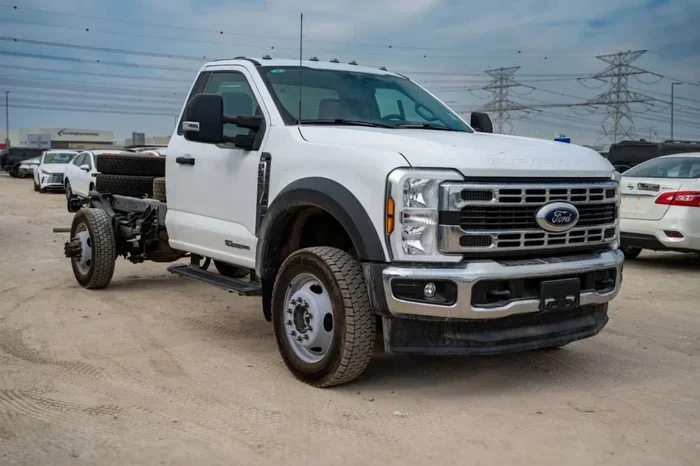
The Ford F-550 is not simply a 2-ton truck. It belongs to the Super Duty family and sits in a unique class that blends heavy-duty capability with commercial-grade performance. Many people assume the “550” designation means it is a two-ton pickup, but the real answer involves payload ratings, GVWR, and how Ford classifies its trucks. This guide breaks down the truth so you can understand exactly what the F-550 is and who should buy one.
Have you ever stood in a truck dealership and felt completely confused by all the numbers and letters? You see F-150, F-250, F-350, and then there it is. The F-550. Big, beefy, and sitting there like it owns the place. But here is the question that keeps popping up: is an F-550 a 2-ton truck? The short answer might surprise you. The long answer is even more interesting.
Truck naming conventions have been confusing people for decades. Ford uses numbers like 150, 250, 350, and 550 to label its pickup trucks. But what do those numbers actually mean? Do they tell you how much the truck weighs? How much it can carry? Or are they just marketing tricks that mean nothing? The truth is, the “ton” system is outdated. It does not tell the full story anymore. And the F-550 is one of the best examples of why that system fails.
In this article, we are going to break everything down. You will learn how trucks are classified, what the F-550 really is, how it compares to other Ford models, and whether you actually need one. We will look at payload numbers, towing power, and the real-world uses that make this truck special. By the end, you will have a clear answer to the question that started it all. So let us dive in.
Key Takeaways
- The F-550 is not a 2-ton truck in the traditional sense. It falls into a heavier classification that goes beyond the simple half-ton, three-quarter-ton, and one-ton labels.
- The Ford F-550 is part of the Super Duty lineup, which includes the F-250, F-350, F-450, F-550, and F-650. Each model serves a different purpose.
- Payload capacity is the real story. The F-550 offers some of the highest payload ratings in the pickup truck world, often exceeding 4,000 pounds.
- GVWR (Gross Vehicle Weight Rating) determines truck class, not the “ton” label you see on the tailgate.
- The F-550 is ideal for commercial work, towing heavy equipment, and anyone who needs serious cargo and hauling power.
- Regular consumers may not need an F-550. If you are towing a boat or hauling furniture, an F-150 or F-250 may be a better fit.
- The “ton” naming system is outdated and confusing. Modern truck classifications rely on GVWR and payload data, not marketing labels.
📑 Table of Contents
Understanding How Trucks Are Classified
What Does “Ton” Really Mean?
The word “ton” in truck names like half-ton, three-quarter-ton, and one-ton has a long history. Back in the day, these numbers referred to how much cargo a truck could carry in its bed. A half-ton truck could haul about 1,000 pounds. A three-quarter-ton truck could handle around 1,500 pounds. And a one-ton truck could carry 2,000 pounds or more. Simple enough, right?
But here is the problem. Those numbers stopped matching reality a long time ago. Today, a half-ton truck like the Ford F-150 can carry well over 1,300 pounds in some configurations. That is more than the old “three-quarter-ton” label promised. So the ton system has become more of a marketing term than an accurate description of what a truck can do.
The F-550 does not fit neatly into any of these old categories. It is bigger and stronger than a traditional one-ton truck. That is why people get confused. The number 550 does not map cleanly onto the half-ton, three-quarter-ton, or one-ton system. It exists in a space that goes beyond those simple labels.
The GVWR System Explained
Today, the real way trucks are classified is through something called GVWR, which stands for Gross Vehicle Weight Rating. This is the maximum total weight a truck can be, including the vehicle itself, passengers, cargo, and trailer weight. The government uses GVWR to set truck classes from Class 1 all the way up to Class 8.
Here is how the classes break down in simple terms:
- Class 1: GVWR up to 6,000 pounds. Think small pickups like the Ford Ranger.
- Class 2: GVWR between 6,001 and 10,000 pounds. This includes the F-150, F-250, and F-350.
- Class 3: GVWR between 10,001 and 14,000 pounds. The F-450 and F-550 live here.
- Class 4: GVWR between 14,001 and 16,000 pounds. Medium-duty trucks start here.
- Class 5 through 8: These are heavy-duty commercial trucks with GVWRs above 16,000 pounds.
The F-550 sits in Class 3. That is a key piece of the puzzle. It is not a half-ton, three-quarter-ton, or one-ton truck by the modern classification system. It is a Class 3 truck, which means it is built for serious work and heavy hauling.
Why Classifications Matter
You might wonder why any of this matters. Does it really make a difference what class your truck is? The answer is yes, especially if you plan to use the truck for work, towing, or hauling heavy loads. Class affects things like licensing requirements, registration fees, and even insurance costs in some states.
For everyday buyers, understanding truck class helps you pick the right tool for the job. If you just need a truck for weekend errands and light towing, a Class 2 truck like the F-150 or F-250 is plenty. But if you are running a business that needs to haul equipment, tools, and materials every day, a Class 3 truck like the F-550 becomes much more relevant.
What the Ford F-550 Actually Is
The F-550 in the Ford F-Series Lineup
Ford builds several pickup truck lines. The F-150 is the most popular and is considered a light-duty truck. Then there is the Super Duty lineup, which includes the F-250, F-350, F-450, F-550, and F-650. The F-550 sits near the top of this lineup, just below the F-650, which is a medium-duty commercial truck.
The F-550 is built on a much heavier frame than the F-150. It has stronger springs, heavier-duty axles, and a more robust chassis overall. This is a truck designed to handle serious weight and tough working conditions. It is not a weekend warrior truck. It is a workhorse.
One of the things that makes the F-550 unique is its dual identity. It can be configured as a pickup truck with a standard bed, or it can be set up as a chassis cab for commercial applications. This flexibility makes it popular with businesses, contractors, and organizations that need a strong, reliable platform for custom builds.
F-550 vs F-250 vs F-350 vs F-450
To really understand what the F-550 is, it helps to compare it to the other trucks in the Super Duty family. Each model serves a different purpose and has different capabilities.
The F-250 is a heavy-duty pickup that falls in the half-ton to three-quarter-ton range. It is great for towing trailers, boats, and RVs. The F-350 is a one-ton truck with even more towing and payload capacity. The F-450 steps up into Class 3 territory and offers even higher payload ratings. And then the F-550 takes things further still.
The F-550 has a higher GVWR than the F-450, which means it can carry more weight and tow heavier loads. It is the bridge between the Super Duty pickup trucks and the medium-duty commercial trucks like the F-650. That positioning is exactly why it does not fit the simple “2-ton” label.
Key Specs That Define the F-550
Let us talk about numbers. The Ford F-550 comes with a powerful engine lineup. The standard engine is a 6.8-liter V10 gasoline engine that produces around 400 horsepower. There is also a 6.7-liter Power Stroke turbo diesel engine available that delivers even more torque. Torque is what gives a truck its pulling and hauling strength, and the F-550 has plenty of it.
The payload capacity of the F-550 varies depending on the configuration, but it typically ranges from about 3,500 pounds to over 4,500 pounds. That is a massive amount of carrying capacity for a pickup truck. The towing capacity can reach up to 20,000 pounds or more when properly equipped with the right hitch and axle ratio.
The curb weight of the F-550 is also quite high. It typically weighs between 6,000 and 7,500 pounds depending on the configuration. This heavy weight is part of what gives it the strength and stability needed for heavy-duty work. It is a truck that is built to carry serious loads without breaking a sweat.
Payload and Towing: The Numbers That Matter
Payload Capacity Breakdown
Payload capacity is the weight of everything you can put in and on the truck. That includes passengers, cargo in the truck bed, cargo in the cab, and any accessories you have added. The F-550 offers one of the highest payload capacities available in a pickup truck format.
Here is a simple way to think about it. The average pickup truck can carry about 1,000 to 1,500 pounds in its bed. The F-550 can carry well over 3,500 pounds. That is enough to haul heavy construction materials, large equipment, or tons of supplies for a work crew. For comparison, the F-150 maxes out around 1,400 pounds in many configurations. The F-550 more than doubles that.
The exact payload number depends on several factors. The axle ratio, bed length, cab style, and engine choice all play a role. A dual-rear-wheel F-550 will have a different payload rating than a single-rear-wheel version. Always check the specific payload rating for the exact configuration you are looking at.
Towing Power of the F-550
When it comes to towing power, the F-550 is a beast. With the right setup, it can tow trailers, equipment haulers, and large recreational vehicles with ease. The diesel engine option is especially strong for towing because diesel engines produce high torque at low RPMs, which is exactly what you need when pulling heavy loads.
Most F-550 configurations can tow between 16,000 and 21,000 pounds. Some configurations with the right axle ratio and hitch setup can even exceed that. This makes the F-550 a popular choice for people who need to tow large horse trailers, equipment trucks, or heavy machinery.
It is important to remember that towing capacity depends on the truck being properly equipped. You need the right hitch, the right brakes, and the right axle ratio to reach the maximum towing numbers. Always check the specific towing rating for your exact truck configuration before making a purchase.
Real-World Examples
Let us put these numbers into perspective. Imagine you are a contractor who needs to haul a dump trailer loaded with gravel. A typical dump trailer weighs around 5,000 pounds when empty and can carry another 10,000 pounds of material. The F-550 can handle the weight of the loaded trailer with ease. An F-150 would struggle badly in that same scenario.
Or picture a farmer who needs to transport a large hay baler to different fields. The baler might weigh 4,000 pounds, and the F-550 can tow it without any issues. The truck also has the payload capacity to carry spare parts, tools, and supplies alongside the trailer. That kind of versatility is what makes the F-550 so valuable for work professionals.
How the F-550 Compares to Other Ford Trucks
Side-by-Side Comparison
To really understand where the F-550 fits, it helps to see it side by side with other Ford trucks. Here is a simple comparison table that shows the key differences.
| Model | Class | Payload Capacity | Towing Capacity | Best For |
|---|---|---|---|---|
| F-150 | Class 2 | Up to 1,400 lbs | Up to 13,500 lbs | Daily driving, light towing |
| F-250 | Class 2 | Up to 2,200 lbs | Up to 18,000 lbs | Medium towing, work use |
| F-350 | Class 2 | Up to 3,200 lbs | Up to 21,000 lbs | Heavy towing, heavy hauling |
| F-450 | Class 3 | Up to 3,700 lbs | Up to 24,000 lbs | Commercial work, large trailers |
| F-550 | Class 3 | Up to 4,500 lbs | Up to 21,000 lbs | Heavy commercial, equipment hauling |
As you can see, the F-550 offers the highest payload capacity in the Ford pickup lineup. That is its biggest strength. It is not the best tow truck in the Super Duty family, but when it comes to carrying weight in and on the truck, it is hard to beat.
When to Choose Each Model
If you are wondering which Ford truck is right for you, here are some quick guidelines. Choose the F-150 if you need a versatile daily driver that can handle light towing and occasional hauling. It is the most popular pickup truck for a reason. It is comfortable, capable, and efficient.
Pick the F-250 or F-350 if you need stronger towing and payload capacity for regular use. These trucks are great for people who tow RVs, horse trailers, or work equipment on a weekly basis. They offer a good balance of capability and everyday drivability.
Choose the F-450 or F-550 if you need serious commercial-grade capability. These trucks are built for businesses, contractors, and organizations that need to haul heavy loads every day. The F-550 is the best choice when payload capacity is your top priority.
Who Really Needs an F-550?
Commercial and Work Use
The F-550 shines in commercial and work environments. Contractors, landscapers, utility companies, and municipal workers all use this truck for its incredible payload and durability. If your business requires you to carry heavy tools, equipment, and materials regularly, the F-550 is a fantastic choice.
Many organizations also use the F-550 as a chassis cab for custom upfits. This means they strip the truck bed and build a custom body on the chassis. You see F-550 chassis cabs converted into bucket trucks, utility trucks, fire support vehicles, and mobile command centers. The strong frame and heavy-duty components make it a perfect platform for these kinds of builds.
Personal and Recreational Use
Can a regular person buy and use an F-550 for personal purposes? Absolutely. Some people love these trucks for their imposing presence and serious capability. If you need to tow a large fifth-wheel camper, haul firewood, or transport heavy recreational equipment, the F-550 can do the job.
However, there are some things to consider. The F-550 is not as comfortable or easy to drive as a lighter truck like the F-150. It is bigger, heavier, and less maneuverable in tight spaces. Fuel economy is also lower because of the truck’s size and weight. If you do not need the extreme payload and towing capacity, a lighter truck might make more sense for your daily life.
The Bottom Line on Suitability
The honest answer is that most everyday truck buyers do not need an F-550. If you are towing a small boat, hauling a few bags of mulch, or using the truck for general errands, an F-150 or F-250 will serve you just fine. The F-550 is a specialized tool for specialized needs. It is not a truck for everyone, but for those who need it, nothing else comes close.
The Verdict: So Is It a 2-Ton Truck?
Clearing Up the Confusion
So let us go back to the original question. Is an F-550 a 2-ton truck? The answer is no, not in the traditional sense. The old ton labeling system does not apply to the F-550 in a meaningful way. The truck is classified as a Class 3 vehicle based on its GVWR, and it sits above the one-ton trucks in the Ford lineup.
The “550” in F-550 does not mean two tons. It is simply part of Ford’s numbering system that has evolved over decades. The numbers started as simple designations and grew into a complex system that reflects the truck’s position in the lineup. The higher the number, the heavier-duty the truck.
What the Numbers Really Tell Us
When you look at the F-550 through the lens of payload capacity and GVWR, the picture becomes much clearer. This is a truck designed for heavy commercial work, serious towing, and hauling large loads. It is not a 2-ton truck by any reasonable modern definition.
The truth is that the “ton” labels are outdated and misleading. They were useful in the past when trucks were simpler and their capabilities were more predictable. Today, trucks are far more capable than those old labels suggest, and the F-550 is the perfect example of that evolution. It is a Class 3 heavy-duty truck that defies the old ton system entirely.
If someone asks you whether the F-550 is a 2-ton truck, you can confidently tell them the truth. It is much more than that. It is a heavy-duty commercial truck with payload and towing capabilities that go well beyond what the old ton labels could ever describe. And that is exactly what makes it so valuable for the people who need it most.
So the next time you see an F-550 rolling down the road, remember what you have learned here. It is not just a number on a badge. It is a serious work truck with real capability and real purpose. And now you know exactly what that purpose is.
Frequently Asked Questions
What does the F-550 stand for in Ford’s naming system?
The “F” stands for Ford, and the “550” is part of the truck’s model number within the F-Series lineup. Higher numbers indicate heavier-duty trucks. The F-550 sits in the Super Duty range and is classified as a Class 3 vehicle based on its GVWR.
Can I drive an F-550 with a regular driver’s license?
In most states, yes. The F-550 is still under the GVWR threshold that requires a commercial driver’s license for personal use. However, regulations vary by state and by how you use the truck. If you are using it for commercial purposes, check your local laws and licensing requirements.
How much does an F-550 cost?
The price of an F-550 varies widely depending on the configuration, engine, and options. New F-550 trucks typically start around $40,000 and can go well above $60,000 when fully loaded with options. Used F-550s can be found at lower prices depending on mileage and condition.
Is the F-550 the same as the F-650?
No, they are different trucks. The F-550 is a Class 3 pickup truck, while the F-650 is a medium-duty commercial truck. The F-650 is larger, heavier, and designed for even more demanding commercial applications than the F-550.
What is the fuel economy like on an F-550?
The F-550 is not a fuel-efficient truck. Because of its heavy weight and powerful engines, it typically gets lower MPG than lighter Ford trucks. Expect city fuel economy in the low teens and highway fuel economy in the mid-teens, depending on the engine and configuration.
Should I buy an F-550 if I only need a truck for weekend projects?
Probably not. The F-550 is overkill for light weekend use. An F-150 or F-250 would be a much better fit for occasional hauling and towing. The F-550 is best suited for people who need its extreme payload and towing capacity on a regular basis.