What Do Car Detailers Use to Clean Leather Car Seats
Car detailers rely on pH-balanced leather cleaners, quality conditioners, and protective sealants to clean leather car seats effectively and safely. The process involves gentle cleaning, deep conditioning, and protective sealing to keep leather looking showroom-ready. Learn exactly what products and tools the pros use in this complete guide.
Have you ever sat in a car with leather seats that look like they belong in a showroom? That smooth, clean, rich smell hits you right away. It makes the whole car feel premium. But keeping leather seats looking that good takes more than a quick wipe with a damp cloth.
So what do car detailers use to clean leather seats? The answer is a mix of specialized products and proven techniques that most people never think about. Professional detailers know that clean leather car seats need more than just soap and water. They need the right cleaner, the right tool, and the right process.
In this guide, we will walk you through exactly what the pros use. We will cover the best products, the tools they reach for, and the step-by-step process they follow. Whether you want to detail your own car or just keep your seats looking great, this guide has you covered. Let us dive in.
Key Takeaways
- pH-balanced leather cleaners are the go-to choice for safely removing dirt without damaging the material.
- Leather conditioner and protectant keep seats soft, supple, and protected from cracks and UV damage.
- Microfiber cloths and soft brushes are essential tools that detailers use for gentle yet effective cleaning.
- Regular maintenance every two to four weeks prevents buildup and extends the life of leather seats.
- Avoiding common mistakes like using household cleaners or skipping conditioning can save you from costly repairs.
- Steam cleaning and detailing brushes help lift deep-seated grime from leather upholstery.
📑 Table of Contents
What Do Car Detailers Use to Clean Leather Seats?
Car detailers have a toolkit full of products designed specifically for leather seat cleaning. Unlike regular household cleaners, these products are formulated to work with the unique texture and pores of leather. They clean without stripping away natural oils or causing damage.
The main goal of any detailer is to remove dirt, stains, and grime while keeping the leather soft and protected. To do this, they use a combination of cleaning solutions, conditioning agents, and protective coatings. Each product plays a specific role in the process.
When it comes to cleaning leather car seats, detailers start with a pH-balanced leather cleaner. This is the foundation of any good leather care routine. From there, they move on to conditioning and protection. The entire process is gentle but thorough.
Why Regular Cleaners Do Not Work on Leather
You might be tempted to use dish soap or all-purpose cleaner on your leather seats. Resist that urge. Regular household cleaners are too harsh for automotive leather. They can strip the natural oils that keep leather soft and supple.
Over time, using the wrong cleaner leads to cracking, fading, and dryness. Leather is a natural material that needs special care. Professional detailers avoid these problems by using products made specifically for automotive leather upholstery.
The Role of pH Balance in Leather Cleaning
pH balance matters a lot when cleaning leather. Leather has a natural pH level that keeps it healthy and durable. Cleaners that are too acidic or too alkaline can throw off this balance.
A pH-balanced leather cleaner works in harmony with the material. It lifts dirt and stains without breaking down the leather fibers. This is why every professional detailer reaches for a pH-balanced product first. It is the safest and most effective starting point for leather seat maintenance.
The Essential Cleaning Products for Leather Seats
Professional detailers stock a specific set of products for leather car interior cleaning. Each product serves a purpose. Let us break down the essentials so you know exactly what to buy.
Leather Cleaner
A quality leather cleaner is the first product any detailer reaches for. These cleaners are designed to lift dirt, body oils, and light stains from the surface of the leather. They come in spray, foam, and liquid forms.
Look for a cleaner that is pH-balanced and free of harsh chemicals. Some popular brands among detailers include Chemical Guys, Meguiar’s, and Koch Chemie. A good leather cleaner will foam on contact, which helps lift dirt away without heavy scrubbing.
When choosing a cleaner, check the label for keywords like “safe for automotive leather” and “pH-balanced.” These are signs that the product is designed for the job. Avoid anything that says “all-purpose” or “general cleaner.” Those are not formulated for leather.
Leather Conditioner
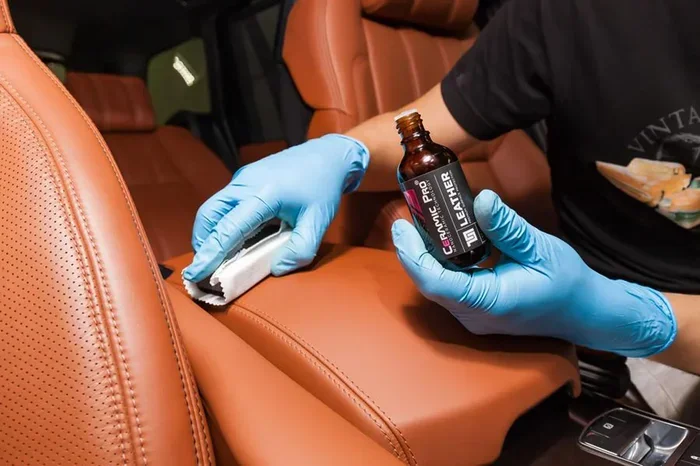
After cleaning, the next step is conditioning. Leather conditioner replaces the natural oils that cleaning removes. It keeps the leather soft, prevents cracking, and adds a subtle protective layer.
Detailers use conditioners that penetrate deep into the leather fibers. Look for conditioners with ingredients like lanolin, beeswax, or vitamin E. These natural ingredients nourish the leather without leaving a greasy residue.
A good conditioner also helps with color retention. Over time, sunlight and wear can fade leather. A quality conditioner helps maintain the original color and prevents premature aging of the seats.
Leather Protectant or Sealant
The final step in the cleaning process is protection. A leather protectant or sealant creates a barrier on the surface of the leather. This barrier shields against UV rays, spills, and everyday wear.
Detailers often use water-based protectants because they do not clog the pores of the leather. Silicone-based products are popular too, but they can make the seat slippery. The best protectant depends on your preference and how you use your car.
Some detailers also use leather coatings that bond chemically with the leather surface. These coatings offer longer-lasting protection and are a favorite for high-end vehicles. If you want your leather seats to stay protected for months, a quality sealant is a must.
Leather Deglazer
A leather deglazer is a product that detailers use when the leather has a shiny, worn-out look. It removes the old surface layer and prepares the leather for conditioning or recoloring.
You do not need a deglazer for routine cleaning. It is used more for restoration work. If your leather seats look faded or have a patchy appearance, a deglazer can help prep them for the next step in the restoration process.
Step-by-Step Process Detailers Follow
Professional detailers do not just spray and wipe. They follow a systematic process to get the best results. Here is how they do it.
Step 1: Vacuum the Seats
Before any product touches the leather, detailers vacuum the seats thoroughly. This removes loose dirt, crumbs, and debris that could scratch the surface during cleaning.
Use a soft brush attachment on your vacuum. Pay extra attention to the seams and crevices where dirt likes to hide. A handheld vacuum with a crevice tool works great for this step.
Step 2: Apply Leather Cleaner
Next, the detailer sprays the leather cleaner onto the seat or onto a microfiber cloth. They then gently work the cleaner into the leather using circular motions. This helps lift dirt and oils from the pores.
Do not soak the leather. Use a damp cloth, not a wet one. Excess moisture can seep through the seams and damage the foam cushioning underneath. Work in sections, cleaning one area at a time.
Step 3: Wipe and Dry
After applying the cleaner, the detailer wipes away the dirt with a clean, damp microfiber cloth. Then they dry the seat with a separate dry microfiber cloth. This two-cloth method ensures no cleaner residue is left behind.
Let the seats air dry completely before moving to the next step. This usually takes about 15 to 30 minutes depending on the humidity and temperature in your garage or workspace.
Step 4: Apply Conditioner
Once the leather is clean and dry, the detailer applies conditioner. They use a soft applicator pad or a microfiber cloth to work the conditioner into the leather in thin, even layers.
Let the conditioner absorb for 10 to 15 minutes. Then buff off any excess with a clean microfiber cloth. The leather should feel soft and look slightly glossy after conditioning.
Step 5: Apply Protectant
The final step is applying a leather protectant. Detailers spray or wipe on a thin layer and let it cure according to the product instructions. This creates a protective barrier that keeps your seats looking great for weeks.
Some detailers use a dressing applicator for even coverage. Others prefer a spray-on product for convenience. Either method works well as long as you apply a thin, even coat.
Common Mistakes People Make When Cleaning Leather
Even with the best products, mistakes can happen. Here are the most common errors people make when trying to clean leather car seats at home.
Using Household Cleaners
This is the number one mistake. People reach for dish soap, all-purpose spray, or window cleaner because they are handy. These products are too harsh for leather. They strip away the natural oils and can cause permanent damage over time.
Always use a cleaner that is specifically formulated for automotive leather. It might cost a little more, but it will save your seats from long-term damage.
Skipping the Conditioning Step
Cleaning without conditioning is like washing your hands without moisturizer. The leather might look clean at first, but it will dry out and crack over time. Conditioning is not optional. It is a critical part of the process.
Make sure you condition your leather seats after every cleaning session. This keeps the material hydrated and prevents premature aging.
Using Too Much Product
More product does not mean better results. Using too much cleaner or conditioner can leave a greasy residue on the leather. It can also clog the pores and prevent the leather from breathing properly.
Less is more when it comes to leather care. Apply a small amount to your cloth and work it in gently. You can always add more if needed.
Scrubbing Too Hard
Leather is a delicate material. Scrubbing aggressively with a rough brush or abrasive cloth can scratch and damage the surface. Always use gentle, circular motions with a soft cloth or brush.
If a stain is stubborn, let the cleaner sit for a few minutes before gently working it out. Patience is your best friend when cleaning leather seats.
Ignoring the Seams and Edges
The seams and edges of leather seats are where dirt and moisture love to hide. Detailers pay special attention to these areas because they are prone to staining and cracking.
Use a soft-bristle brush to clean along the seams. Be gentle but thorough. These areas often need extra conditioner too, since they tend to dry out faster than the flat surfaces.
How Often Should You Clean Leather Car Seats?
The frequency of cleaning depends on how you use your car. A daily commuter will need more frequent cleaning than a weekend cruiser. Here is a general guide to follow.
For most car owners, a deep clean every four to six weeks is ideal. This keeps dirt and oils from building up and causing long-term damage. If you have kids or pets, you may need to clean more often.
In between deep cleans, do a quick wipe-down with a damp microfiber cloth. This removes surface dust and keeps the seats looking fresh. A quick vacuum once a week also helps prevent debris from grinding into the leather.
Conditioning should happen every two to three months, or after each deep cleaning session. This keeps the leather supple and protected year-round.
Seasonal Considerations for Leather Seat Care
Different seasons bring different challenges for leather seats. In summer, intense sunlight can fade and dry out leather. In winter, salt from boots and cold air can cause cracking.
During summer, use a UV protectant to shield your seats from sun damage. In winter, wipe down your seats more often if you carry salt or moisture into the car. Adjusting your cleaning routine with the seasons helps your leather seats last longer.
Expert Tips for Keeping Leather Seats in Top Shape
Professional detailers know tricks that go beyond basic cleaning. Here are some expert tips that will help you maintain beautiful leather seats for years.
Test Any New Product First
Before applying any product to your entire seat, test it on a small hidden area. Wait 24 hours to check for discoloration or adverse reactions. This simple step can save you from a big mistake.
Use a Steamer for Deep Cleaning
Detailers often use a handheld steamer to deep clean leather seats. The steam loosens dirt and grime from deep within the leather pores without the need for harsh chemicals.
Hold the steamer about six inches from the surface and move it slowly across the seat. Follow up with a microfiber cloth to wipe away the loosened dirt. This method works wonders on seats that have not been cleaned in a long time.
Invest in Quality Microfiber Cloths
Not all cloths are created equal. Microfiber cloths are the gold standard for leather cleaning. They are soft, lint-free, and absorb moisture better than cotton or other fabrics.
Detailers use different colored cloths for different steps. For example, they might use a white cloth for cleaning and a separate colored cloth for conditioning. This prevents cross-contamination and ensures the best results.
Keep Leather Away from Direct Heat
After cleaning, do not park your car in direct sunlight with wet leather seats. The heat can cause the leather to dry unevenly and may lead to cracking.
Always let your seats air dry in a shaded, well-ventilated area. If you need to speed up the process, use a fan or a towel to gently blot excess moisture.
Consider Professional Detailing Once a Year
Even if you clean your seats regularly, a professional detailer once a year can do wonders. They have access to commercial-grade products and equipment that are not available for consumer use.
A yearly professional detailing session can restore faded leather, remove deep stains, and apply a high-quality protective coating. Think of it as a spa day for your car seats.
Address Stains Immediately
The longer a stain sits on leather, the harder it is to remove. If you spill something on your seats, blot it immediately with a clean cloth. Do not rub, as this can spread the stain.
For tough stains like ink, grease, or dye transfer, use a specialized leather stain remover. These products are formulated to target specific types of stains without damaging the leather surface.
Conclusion
Keeping your leather car seats clean and protected does not have to be complicated. The secret is using the right products and following a consistent process. As we have covered, clean leather car seats start with a pH-balanced cleaner, followed by conditioning and protection.
Professional detailers use specialized tools and products that are designed specifically for automotive leather. By following the steps and tips in this guide, you can achieve similar results at home. The key is to be gentle, be consistent, and never skip the conditioning step.
Your leather seats are a significant investment in the look and value of your car. With the right care, they will stay soft, supple, and beautiful for years to come. Start with the basics, build a routine, and enjoy the satisfaction of driving a car that looks as good as it feels.
Remember, cleaning leather car seats is not just about appearance. It is about preservation. Every time you clean and condition your seats, you are adding years to their lifespan. So grab your microfiber cloth, pick up a quality leather cleaner, and give your seats the care they deserve.
Frequently Asked Questions
Can I Use Baby Wipes to Clean Leather Seats?
Baby wipes are not ideal for cleaning leather seats. Most baby wipes contain ingredients that can dry out leather over time. They may seem gentle, but they are not formulated for automotive leather. Stick to a dedicated leather cleaner for the best results.
Is It Safe to Use a Steam Cleaner on Leather Seats?
Yes, steam cleaning is safe for leather seats when done correctly. Use a low-pressure setting and hold the steamer at least six inches from the surface. Do not saturate the leather with steam. After steaming, dry the seat thoroughly to prevent moisture damage.
How Do I Remove a Coffee Stain from Leather Seats?
Blot the stain immediately with a clean microfiber cloth to absorb as much liquid as possible. Then apply a small amount of leather cleaner to the stain and gently work it in with a soft brush. Wipe away with a damp cloth and dry thoroughly. Avoid rubbing the stain, as this can spread it.
What Is the Best Leather Conditioner for Car Seats?
The best conditioner depends on your specific needs. Look for conditioners with natural ingredients like lanolin or beeswax. Popular choices among detailers include Leather Honey, 303 Aerospace Protectant, and Meguiar’s Gold Class Leather Conditioner. Always choose a conditioner designed for automotive use.
Can I Use Saddle Soap on Leather Car Seats?
Saddle soap is too harsh for automotive leather seats. It can strip away the natural oils and cause the leather to dry out and crack. Professional detailers avoid saddle soap and instead use pH-balanced leather cleaners specifically formulated for car interiors.
How Can I Tell if My Leather Seats Need Conditioning?
Signs that your leather seats need conditioning include dryness, stiffness, fading color, and visible cracks. If the seats feel rough to the touch or look dull, it is time to condition them. A good rule of thumb is to condition every two to three months, or more often in harsh climates.