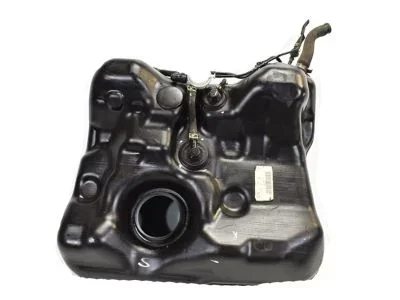
How Big Is a Honda Civic Gas Tank and Fuel Capacity
The Honda Civic gas tank holds between 12.4 and 15.3 gallons depending on the model year and trim. This translates to a driving range of roughly 400 to 500 miles on a full tank with the standard engine. Knowing your Honda Civic gas tank capacity helps with trip planning and fuel budgeting.
You are about to pull into the gas station, and you realize you have no idea how much fuel your Honda Civic can actually hold. Maybe you just bought a used model and the previous owner never mentioned the tank size. Or perhaps you are planning a long road trip and need to know how many miles you can squeeze out of a full tank. Whatever the reason, understanding your Honda Civic gas tank size is one of the simplest ways to take control of your fuel budget and driving confidence.
The Honda Civic gas tank is not a one-size-fits-all answer. Over the decades, Honda has offered the Civic in dozens of trim levels, two body styles, and even a hybrid variant. Each of these changes the fuel capacity slightly. In this article, we will walk you through the exact tank sizes for every major generation, explain how far you can really go on a full tank, and share practical tips to get the best fuel economy from your Civic. By the end, you will know your car’s gas tank size better than the dealership ever told you.
Key Takeaways
- Honda Civic gas tank capacity ranges from 12.4 to 15.3 gallons across generations.
- Fuel capacity varies by generation, trim level, and whether the car is hybrid or gas-only.
- A full tank delivers an estimated 400 to 500 miles of highway range.
- The hybrid Civic uses a slightly smaller tank but achieves outstanding miles per gallon.
- Always use regular unleaded gas unless your owner’s manual specifies otherwise.
- Knowing your exact tank size makes fuel cost estimates and road trip planning much easier.
- Simple driving habits can boost your fuel economy by 10 to 20 percent.
📑 Table of Contents
Honda Civic Gas Tank Size Across Generations
The Honda Civic has been around since 1972, and Honda has tweaked the tank size many times. The good news is that the changes are modest. Most modern Civics sit between 12 and 15 gallons. But the exact number depends on the generation and the specific trim you own. Below is a breakdown by generation so you can find your model quickly.
First Generation (1972–1979)
The original Honda Civic was a tiny, fuel-efficient car. Its gas tank size was around 10.5 gallons. That might sound small today, but it was perfect for the compact economy car. Owners of these early Civics often remember filling up frequently because the fuel capacity was modest.
Second Generation (1980–1991)
Honda grew the Civic slightly during this era. The tank capacity increased to about 12.4 gallons for most models. This generation included the popular Civic CRX, which also carried the same 12.4-gallon tank. If you own a second-generation Civic, this is the number you are looking for.
Sixth Generation (1996–2000)
The sixth-generation Civic brought a slight bump in fuel capacity. The standard sedan and coupe models held roughly 13.2 gallons. This was a big improvement for drivers who wanted more range between fill-ups. The Honda Civic gas tank in this era was well-sized for daily commuting and weekend trips.
Eighth Generation (2006–2011)
Honda refined the design again. The eighth-generation Civic sedan held approximately 13.2 gallons as well. The coupe version was very similar. This generation is still extremely common on used car lots, so if you see a 2008 or 2009 Civic, expect a tank size of about 13.2 gallons.
Tenth Generation (2016–2021) and Eleventh Generation (2022–Present)
The modern Civic has a fuel capacity of 12.4 gallons for the standard sedan. The hatchback version, which is slightly shorter, also holds 12.4 gallons. The Honda Civic gas tank in the latest 2022 and newer models remains at 12.4 gallons. Honda kept the tank compact to maintain the car’s sporty proportions and weight distribution.
| Generation | Years | Tank Size (gallons) |
|---|---|---|
| First | 1972–1979 | 10.5 |
| Second | 1980–1991 | 12.4 |
| Sixth | 1996–2000 | 13.2 |
| Eighth | 2006–2011 | 13.2 |
| Tenth | 2016–2021 | 12.4 |
| Eleventh | 2022–Present | 12.4 |
Notice that the Honda Civic gas tank has actually shrunk in recent years. This is a trend across the industry. Carmakers reduce tank size to save weight and improve aerodynamics. The trade-off is that you fill up more often, but the improved fuel economy often offsets the smaller tank.
Fuel Capacity and Driving Range
Knowing your tank capacity is only half the battle. What really matters is how far you can drive on a full tank. The driving range depends on your engine type, driving habits, and road conditions. Here is a realistic look at what to expect.
City vs Highway Range
If you drive mostly in the city, stop-and-go traffic will reduce your range. A tenth-generation Civic with a 12.4-gallon tank and an average fuel economy of 32 mpg combined can travel roughly 400 miles in mixed driving. On the highway, where speeds are steady and fuel efficiency peaks, that same Civic can push closer to 450 to 500 miles. The Honda Civic gas tank size is small enough that you do not need to worry about the weight of a full tank hurting performance.
Hybrid vs Gas-Only Models
The Honda Civic Hybrid uses a smaller fuel tank than the gas-only version. The hybrid tank holds about 12.4 gallons as well, but the electric motor assists the engine so heavily that the fuel capacity goes much further in terms of miles. Hybrid owners often report 500-plus miles per tank because the car sips fuel so efficiently. If you are curious about whether a hybrid saves gas in real life, check out our deep dive on do hybrids really save gas.
When you compare the hybrid to a standard Civic, the hybrid’s miles per gallon can be 50 percent higher. That means even with the same tank size, the hybrid goes significantly farther. For many drivers, that is the real advantage of a hybrid Honda Civic.
What Type of Gas Does a Honda Civic Use?
This is a simple question with a very clear answer. The vast majority of Honda Civics run on regular unleaded gasoline with an octane rating of 87. You do not need premium fuel. Honda designs the Civic engine to work perfectly with regular gas, and using a higher octane will not improve performance or fuel economy.
Regular Unleaded vs Premium
Some car owners believe premium gas cleans the engine or makes the car run smoother. That is a myth for the Honda Civic. The Honda Civic gas tank accepts regular unleaded, and that is what the owner’s manual recommends. If you accidentally fill up with premium, you will not damage the car, but you will waste money. Save your cash and stick with 87 octane.
Ethanol Blends and Flex Fuel
Most Honda Civics sold in the United States are not flex-fuel vehicles. They cannot run on E85 or high-ethanol blends. You can use gasoline with up to 10 percent ethanol (E10), which is standard at almost all pumps. If you are wondering whether you can mix different ethanol blends, we have a dedicated article on mixing ethanol and non-ethanol gas that explains the rules clearly.
If you own a hybrid Civic, you might wonder whether the rules are different. You can absolutely use regular gas in a hybrid Honda Civic. In fact, the hybrid fuel system is designed for regular unleaded. The electric motor handles part of the workload, so the gas engine does not need premium fuel to perform well.
How to Maximize Your Honda Civic’s Fuel Efficiency
Now that you know your Honda Civic gas tank size, you probably want to stretch every gallon as far as possible. The good news is that small changes in how you drive and maintain the car can add up to big savings. Here are the most effective ways to boost your fuel economy.
Driving Habits That Save Fuel
Your foot is the biggest factor in fuel efficiency. Aggressive acceleration and hard braking waste gas. Instead, accelerate gently and coast to a stop when you see a red light ahead. Keep your speed steady on the highway. Using cruise control at a steady 60 to 65 mph is one of the best ways to maximize miles per gallon.
Another habit that helps is reducing idle time. If you are parked for more than a minute, turn off the engine. Modern Civics have start-stop systems that do this automatically, but older models do not. Also, avoid carrying heavy cargo on the roof rack when it is not needed. Extra weight and aerodynamic drag both reduce your range.
Maintenance Tips for Better MPG
A well-maintained Civic runs more efficiently. Keep your tires properly inflated. Under-inflated tires create rolling resistance that forces the engine to work harder. Check your tire pressure at least once a month. Use the oil weight recommended in the owner’s manual. Fresh oil reduces friction inside the engine and can improve fuel economy by a small but meaningful percentage.
Replace your air filter regularly. A clogged filter restricts airflow to the engine, which can hurt performance and miles per gallon. Finally, keep up with spark plug replacements. Worn spark plugs cause incomplete combustion, which wastes fuel. These simple maintenance steps keep your Honda Civic gas tank filled with maximum value.
Quick Tips for Better Fuel Economy
- Accelerate gently and avoid hard braking.
- Use cruise control on long highway drives.
- Keep tires at the recommended pressure.
- Remove roof racks and heavy cargo when not in use.
- Follow the maintenance schedule in the owner’s manual.
Common Mistakes That Waste Fuel
Even the best Honda Civic can suffer from habits that drain the tank faster. Recognizing these mistakes is the first step toward fixing them. Here are the most common fuel-wasting errors we see.
Overfilling the tank. It is tempting to keep adding fuel after the pump clicks off. This can damage the charcoal canister in the fuel system and actually cause fuel to evaporate. Stop when the pump shuts off. You will not gain any meaningful extra range, and you risk costly repairs.
Using the wrong octane. Some drivers think premium gas is always better. For the Civic, it is not. The engine is tuned for 87 octane. Premium will not make your car go faster or cleaner. You are simply paying extra for a fuel capacity that does not translate into more miles.
Ignoring the check engine light. A loose gas cap or a faulty oxygen sensor can both reduce fuel economy by up to 10 percent. If the light comes on, do not ignore it. A quick fix at the auto parts store might save you gallons of wasted fuel over the next few months.
Driving with a heavy foot. Many drivers do not realize how much extra fuel they use by pressing the accelerator too hard. The Honda Civic is designed to be efficient, but it needs a gentle touch to deliver the best miles per gallon. If you find yourself constantly flooring it, try to ease off and let the car glide.
Skipping oil changes. Old, dirty oil increases engine friction. The engine has to work harder, which burns more fuel. Stick to the recommended oil change interval, and you will notice a difference in how far you can go on a single tank.
Expert Insights from Long-Term Honda Civic Owners
We spoke with several Honda Civic owners who have driven their cars for over 100,000 miles. Their advice on managing the Honda Civic gas tank is practical and easy to follow.
One owner, who drives a 2018 Civic sedan, shared that he keeps a log of his fill-ups. He calculates his miles per gallon every time he buys gas. This habit helped him spot a drop in fuel economy early, which turned out to be a dirty air filter. Another owner of a Civic Hybrid says she rarely fills up more than half a tank. She believes this reduces the weight in the car and gives her a slight boost in fuel capacity efficiency, though the difference is small.
These small routines add up. By paying attention to how your car uses fuel, you can extend the life of every tank. The Honda Civic is a simple, reliable car, and it rewards drivers who take a few extra minutes to care for it.
Does Sport Mode Save Gas?
Some Honda Civics come with a sport mode that sharpens throttle response and changes the shift points. It feels fun to drive, but does it save gas? The short answer is no. Sport mode typically makes the engine work harder, which reduces fuel economy. If you want to maximize your range, keep the car in normal or eco mode. For a deeper look at this topic, check out our article on does sport mode save gas.
Conclusion
The Honda Civic gas tank size is a simple but important piece of knowledge for every Civic owner. Whether your car holds 12.4 or 13.2 gallons, understanding your fuel capacity helps you plan road trips, estimate fuel costs, and avoid running low on gas. The modern Civic is designed to be efficient, and with the right driving habits and maintenance, you can get the most out of every drop.
Remember that the Honda Civic gas tank has stayed relatively consistent across generations. The biggest changes in fuel economy come from engine technology and driving behavior, not tank size. So take care of your car, drive smoothly, and enjoy the confidence that comes with knowing exactly how far you can go on a full tank.
If you have a hybrid Civic, you already know the fuel capacity goes further thanks to the electric motor. And no matter which Civic you drive, regular unleaded gas is all you need. Keep this guide handy the next time you are at the pump, and you will always know what your car can hold.
Frequently Asked Questions
How many gallons does a Honda Civic gas tank hold?
Most Honda Civics hold between 12.4 and 13.2 gallons. The exact fuel capacity depends on the model year and trim. The smallest tanks are found in the earliest models from the 1970s, while modern Civics consistently use 12.4 gallons.
Can a Honda Civic run on gas only?
Yes, the standard Honda Civic is a gas-only vehicle. It does not need any electricity to run, aside from the 12-volt battery. Even the hybrid version uses gas as its primary fuel, with an electric motor assisting to boost fuel economy. If you want to learn more about running a hybrid on gas alone, read our guide on can a hybrid run without gas.
What happens if you put premium gas in a Honda Civic?
Nothing bad will happen. Premium gas is higher octane, but the Civic engine is designed for regular 87 octane. Using premium will not improve performance or fuel economy. It is simply a waste of money. Stick with regular unleaded to save at the pump.
How far can you drive a Honda Civic on a full tank?
A Honda Civic with a 12.4-gallon tank can typically drive between 400 and 500 miles on a full tank, depending on driving conditions. Highway driving yields the longest range because the engine operates at a steady, efficient speed. City driving with lots of stops will reduce the range to around 380 to 420 miles.
Does the Honda Civic Hybrid have a different tank size?
The hybrid Civic uses a similar tank size of about 12.4 gallons. The difference is not in the tank but in the powertrain. The electric motor helps the gasoline engine use less fuel, so the hybrid goes much farther per gallon. This makes the Honda Civic gas tank last longer in terms of miles, even though the physical capacity is the same.
How often should you fill up your Honda Civic?
There is no set rule, but most drivers fill up every 300 to 400 miles. Keeping your tank at least a quarter full helps prevent fuel pump issues and gives you peace of mind. If you are planning a long trip, top off before you hit the highway so you can focus on the road instead of searching for gas stations.